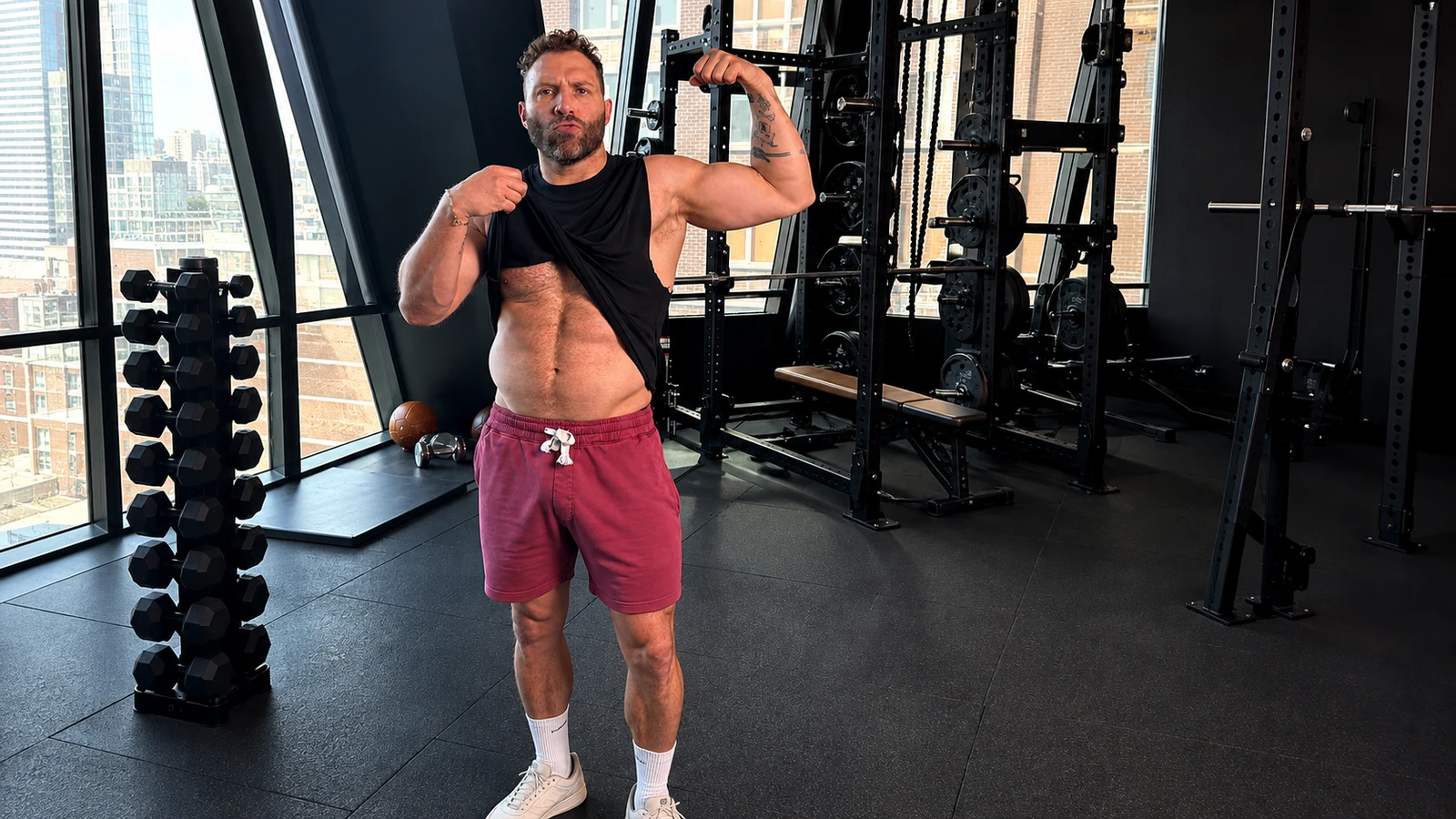

Jai Courtney has built noticeable muscle for movie roles more than once.
He is not a one time transformation story. He is a repeat customer.
Courtney bulked up to play Captain Boomerang in Suicide Squad in 2016. He bulked up again to play Kyle Reese in Terminator Genisys the following year. Reports on his training for those roles describe heavy compound lifts paired with a high calorie, high protein diet, the same basic formula strength coaches have used for decades.
That pattern says something useful about how real muscle actually gets built. It rarely happens fast. It usually gets repeated.
Who Is Jai Courtney
Jai Courtney is an Australian actor born in 1986 in Sydney.
He built his early career in Australian television before breaking into Hollywood action films. His role as Captain Boomerang in the 2016 Suicide Squad drew mixed reviews for the film overall. He returned to the role in the 2021 follow up film, The Suicide Squad, which was better received by critics.
In between those two films, he played Kyle Reese in 2015’s Terminator Genisys.
The role required a noticeably muscular build. One reviewer at the time described him as too buff for the part. That kind of criticism is its own strange evidence. It means the physical transformation was real and visible enough on screen to draw comment.
Courtney worked on both films around the same period, which meant his body had to look convincingly different for two separate franchises within a short window of time.
A Pattern, Not a One Time Event
Most celebrity fitness stories focus on a single dramatic before and after.
Courtney’s story is different. He has repeated the same basic transformation process for more than one role, years apart. That repetition is actually the more interesting part of his story, not the size itself.
Building visible muscle once can be explained by a lot of things. A temporary crash diet can do it. So can short term water retention tricks common in film and photography.
Building it again, years later, for a different role, points to something more durable. It points to a person who understands and can repeat a real training and nutrition process, not just a one time camera trick.
The Two Ingredients: Heavy Lifting and Enough Food
Reports on Courtney’s preparation for these roles consistently mention two things. He lifted heavy compound exercises. He ate a high calorie, high protein diet.
Neither ingredient is exotic or secret. Both are exactly what exercise science has consistently found to be the two real drivers of muscle growth, decade after decade of research.
What the Research Says About Progressive Overload
The first ingredient, heavy compound lifting done consistently, works through a principle called progressive overload.
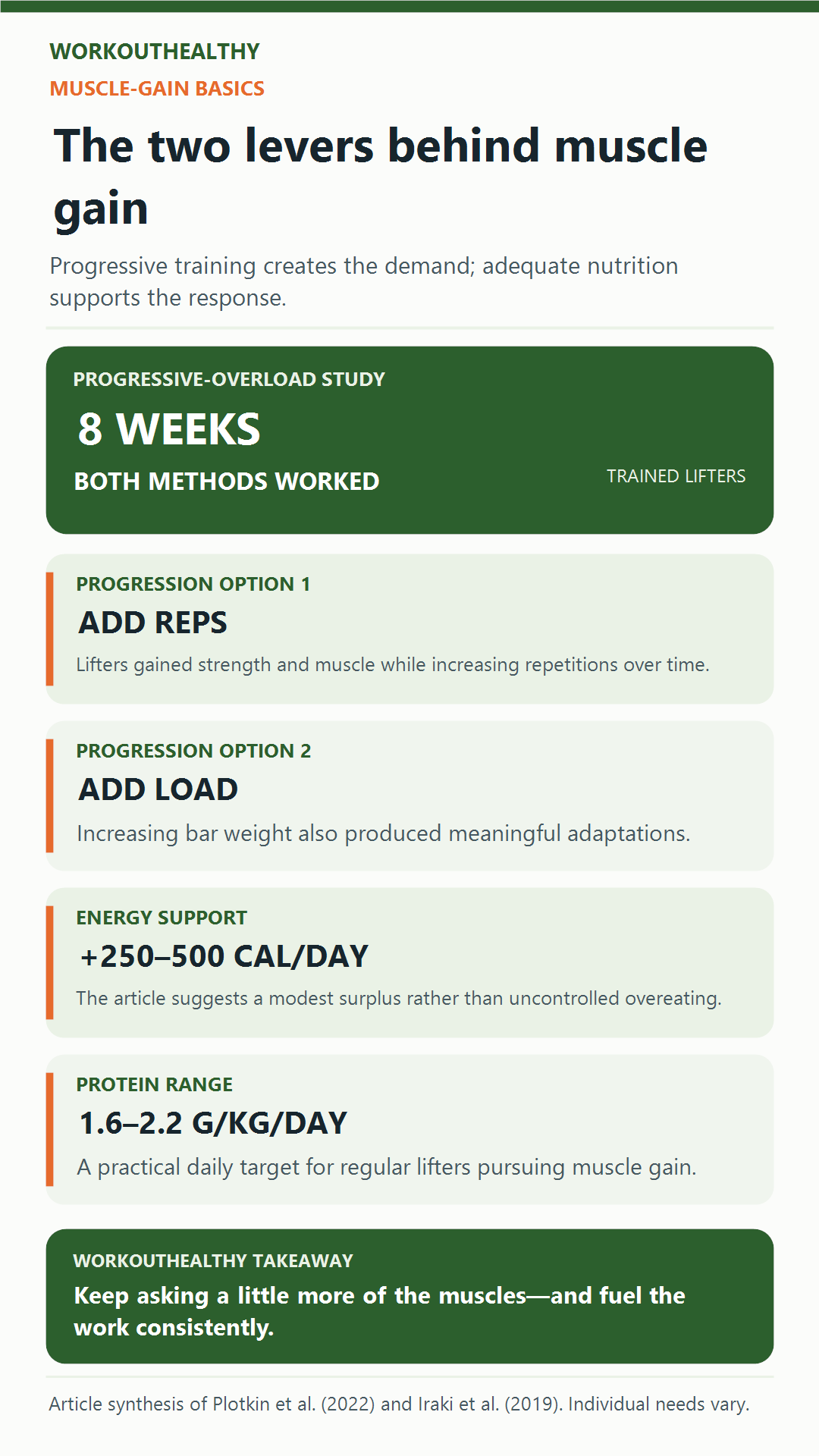
A 2022 study published in the journal PeerJ tested this directly. Researchers led by Daniel Plotkin, working with a team that included well known muscle growth researcher Brad Schoenfeld, split lifters into two groups over an eight week training block. One group kept the same weight on the bar but did more reps each week. The other group kept the same reps but added more weight to the bar each week.
Both groups built real strength and real muscle. Neither approach beat the other by a meaningful margin.
The real driver was not which specific method the lifters used. It was that both groups kept demanding more from their muscles, week after week, in some measurable way.
That finding matters here. It helps explain how an actor could repeat a transformation for two different roles. The core requirement is not a secret exercise or a special machine. It is a program that keeps asking a little more of the body over time, run long enough to matter.
What the Research Says About Eating for Muscle
The second ingredient, the high calorie, high protein diet, has its own solid research base.
A 2019 narrative review published in the journal Sports was written by Juma Iraki and colleagues.
The review laid out evidence based nutrition guidance for building muscle. That guidance was written for an off season style training block, the exact kind of block Courtney reportedly used for these two roles. It found that a moderate calorie surplus, combined with adequate protein intake, supports muscle growth more reliably than either large calorie surpluses or very high protein intake alone.
The review also found something else worth knowing. Gaining weight too fast, by eating far more calories than needed, tends to add more fat than muscle. A controlled, moderate surplus produces a better ratio of muscle gain to fat gain over the same stretch of time.
This lines up with Courtney’s reported pattern. A high calorie, high protein diet paired with heavy lifting is not a shortcut. It is simply giving the body the raw materials it needs to respond to the demands being placed on it in the gym. A famous, extreme example of eating for size is Jay Cutler’s teenage diet, which shows just how far the same basic surplus and protein idea can be pushed at the far end of the spectrum.
What This Evidence Does Not Prove
It is worth being clear about the limits of what is publicly known here.
No detailed, verified training log for either film has been published by Courtney himself. The general description, heavy compound lifts and a high calorie, high protein diet, comes from entertainment press coverage of his roles, not from a peer reviewed case study or a confirmed interview transcript.
It is also true that actors preparing for action roles often have resources most people do not have.
That includes dedicated trainers and prepared meals. It also includes a schedule with real time set aside for training. The underlying training and nutrition principles still apply to anyone trying to build muscle. The pace at which most people can realistically follow them will simply look different from a film production timeline.
Why Recovery Matters As Much As the Workout
A part of this process that rarely makes it into entertainment headlines is recovery.
Heavy compound lifts create a lot of stress on the body. That stress hits the muscles, joints, and nervous system all at once. It is also the signal that tells the body to adapt and grow. The actual growth, though, happens afterward, during rest.
Sleep plays a direct role in this. Growth hormone release rises during deep sleep, and poor sleep has been linked in multiple studies to reduced strength gains and slower recovery between sessions.
A training block for a role also usually includes planned rest days. Those rest days sit between sessions that target the same muscle groups again. Training a muscle group before it has recovered from the last session can blunt progress instead of speeding it up.
This is easy to overlook when the headline is simply “actor bulks up for movie role.”
The training itself is often the most visible part of the story. The sleep, the rest days, and the recovery routines around it usually are not. They still carry a lot of the actual work.
Common Mistakes People Make Chasing This Kind of Transformation
A few mistakes show up again and again when people try to copy this kind of muscle building push.
The first mistake is skipping the progressive part of progressive overload. Lifting the same weights for the same reps month after month will maintain muscle. It will not build much new muscle.
The second mistake is undereating while trying to build muscle. Some people cut calories and expect to gain size at the same time. That combination works against the body’s ability to build new tissue.
The third mistake is overeating without a plan. A surplus that is too large adds unnecessary fat gain without speeding up muscle growth much beyond a moderate surplus.
The fourth mistake is expecting fast results. Courtney’s reported transformations for these two films took place over dedicated training blocks, not a couple of weeks. Real muscle growth generally takes several months of consistent effort to become clearly visible.
How to Apply This Approach Yourself
Anyone can borrow the same two ingredient approach without needing a movie contract.

Start with a simple lifting program built around compound lifts. Squats, deadlifts, bench presses, overhead presses, and rows form a strong foundation for most muscle building goals.
Add weight or reps gradually, session by session or week by week. Small, steady increases beat occasional big jumps for long term progress.
Eat in a modest calorie surplus, generally somewhere around 250 to 500 calories above maintenance needs for most people trying to build muscle without adding excess fat.
Aim for roughly 1.6 to 2.2 grams of protein per kilogram of body weight each day.
That range shows up consistently across sports nutrition research. It is generally enough to support muscle growth in people who train regularly, without needing an extreme, hard to sustain protein intake.
Give the process real time. A training block of three to six months is a more realistic window for visible change than a few weeks, even with everything else done correctly. Anyone worried about the opposite problem, unwanted muscle loss alongside weight loss, can find more detail in this piece on why weight loss and muscle mass often drop together and how to prevent it.
The Takeaway
Jai Courtney’s repeated muscle transformations are not proof of some secret Hollywood shortcut.
They show two principles found in almost every muscle building program. Those two principles are progressive overload in the gym and consistent, adequate nutrition outside it. The fact that he has reportedly done it more than once is the strongest evidence available. It suggests the process, not a one time trick, is what actually worked both times.
References
Plotkin, D., Coleman, M., Van Every, D., Maldonado, J., Oberlin, D., Israetel, M., Feather, J., Alto, A., Vigotsky, A. D., and Schoenfeld, B. J. (2022). Progressive overload without progressing load? The effects of load or repetition progression on muscular adaptations. PeerJ, 10, e14142. https://doi.org/10.7717/peerj.14142
Iraki, J., Fitschen, P., Espinar, S., and Helms, E. (2019). Nutrition recommendations for bodybuilders in the off season: A narrative review. Sports, 7(7), 154. https://doi.org/10.3390/sports7070154
Wikipedia. Jai Courtney. Retrieved September 2026.
This article is for general information and is not medical or fitness advice. Talk with a doctor before starting a new exercise or nutrition program, especially if you have an existing health condition. Individual results from any training plan will vary.