
Ellie Kemper spent years playing upbeat, relentlessly cheerful characters on television.
Erin Hannon on The Office.
The title character on Unbreakable Kimmy Schmidt.
So when she ran her first marathon in 2022 and described it honestly, the honesty stood out.
She did not perform positivity for the cameras.
She called it one of the hardest days of her life, then admitted she felt genuine relief once she crossed the finish line.
Who Ellie Kemper Is
Kemper graduated from Princeton University with a degree in English before moving into comedy and acting.
Her breakout television role came on The Office, where she played the receptionist Erin Hannon starting in 2009.
She went on to lead Unbreakable Kimmy Schmidt, earning multiple Emmy and Screen Actors Guild nominations for the role.
She has also appeared in films including Bridesmaids and 21 Jump Street.
None of that background is running specific.
Like a lot of first time marathoners, she came to the sport as an outsider, not a lifelong athlete.
What Actually Happened
In November 2022, Kemper ran the TCS New York City Marathon.
She finished in 5 hours, 17 minutes, and 39 seconds.
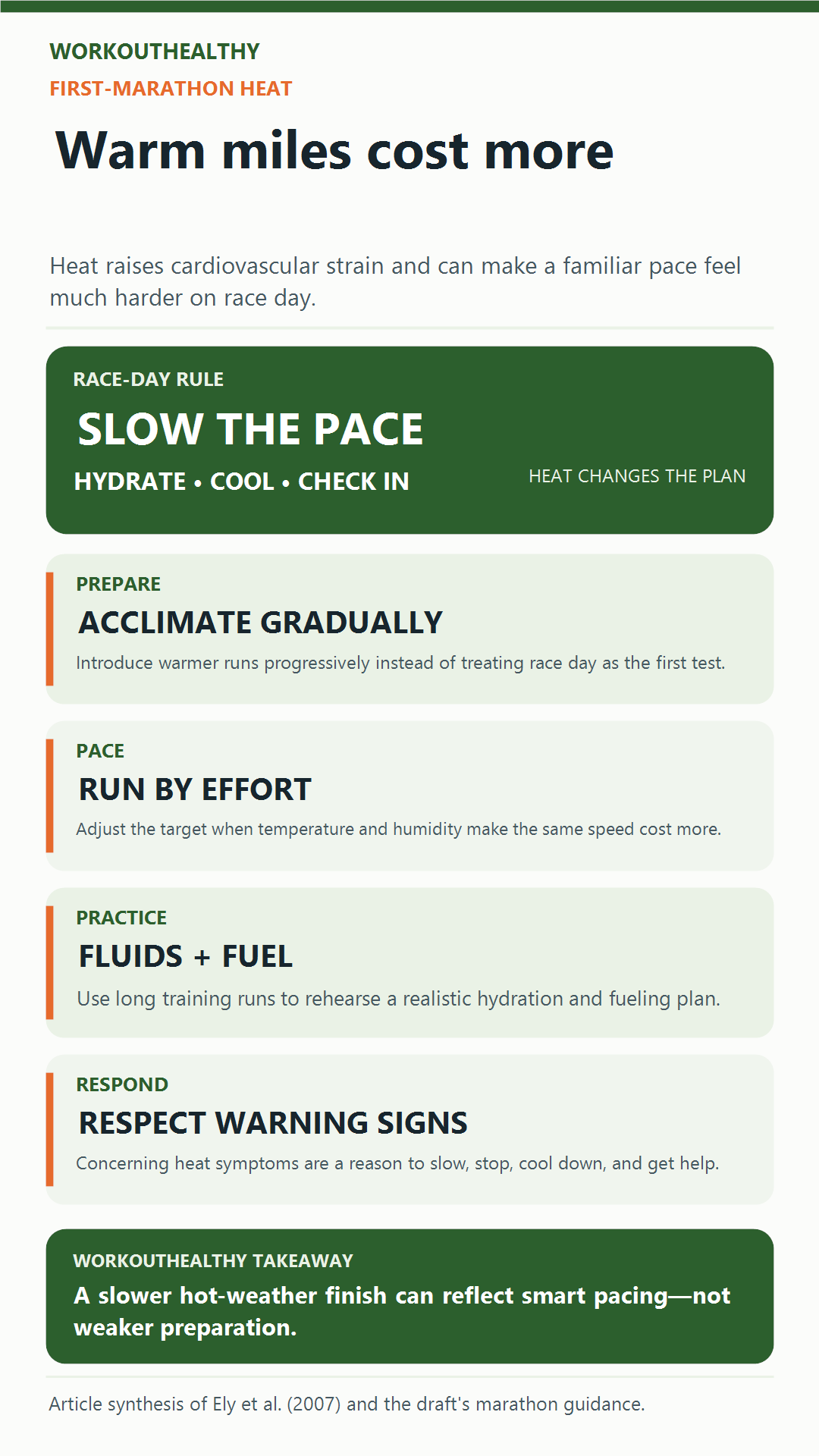
The race fell on an unusually warm day for early November, which made the miles even tougher for the entire field, not just for her.
Marathon day weather is not a small detail.
Heat changes how hard a marathon actually is, no matter how well a runner trained.
Kemper later described the experience in blunt terms, at one point calling it the worst day of her life.
That kind of honesty stands out in a sport where finish line photos usually only show the smile.
Her Own Words
Kemper has been direct about how the race actually felt while she was running it.
She has described the day as brutal, not inspirational, while it was happening.
She has also been clear that finishing brought real relief, not a triumphant high.
That combination, calling something the worst day of your life and still finishing it, captures something a lot of first time marathoners feel but rarely say out loud.
Most public marathon stories skip straight to the celebration.
Kemper’s account included the miles in between.
Crossing the line still counts, even on the days it barely feels like a celebration.
Why the New York City Marathon Draws So Many First Timers
The TCS New York City Marathon is one of the largest marathons in the world, with tens of thousands of finishers each year.
A large share of that field is running their first marathon, not chasing a personal record.
The course winds through all five boroughs of New York City, with huge crowds cheering along nearly the entire route.
That atmosphere is part of why so many first timers pick this particular race.
It is also part of why the honest, difficult moments can feel surprising against such a celebratory backdrop.
A crowd cheering does not make the thirteenth mile hurt any less.

Why Heat Makes Such a Big Difference
The idea that a warm marathon day is simply less pleasant undersells what actually happens physiologically.
A widely cited study in Medicine and Science in Sports and Exercise looked directly at how weather affects marathon performance (Ely et al., 2007).
It found that as temperature rises above a fairly mild threshold, average finishing times get slower across the board, not just for elite runners.
The effect showed up most clearly in slower runners, the ones who spend more total time exposed to the heat during the race.
Heat forces the body to send more blood to the skin to cool down.
That is blood the muscles do not get to use for the actual work of running.
A hot marathon is not just uncomfortable.
It is a genuinely harder physical event than the same course would be on a cool day.
The Psychology of “Hitting the Wall”
Kemper’s description of the race as one of the hardest days of her life lines up with a well documented experience among marathon runners.
A study in the Journal of Applied Sport Psychology examined how recreational marathoners experience and cope with what runners call “hitting the wall” (Buman et al., 2008).
It found that this experience is not just physical exhaustion.
It comes with a real psychological component too, including doubt, frustration, and a strong urge to stop.
Runners who made it through described leaning on specific coping strategies in that moment, like breaking the remaining distance into smaller chunks or focusing on a specific reason for finishing.
The research also found that this experience is common, not a sign that something went wrong with training.
Even well prepared runners hit a point where the race stops feeling manageable.
What This Evidence Does Not Prove
Neither of these studies describes Kemper’s race specifically.
Her training history, pacing strategy, and specific experience on race day are not part of any published research.
What the research does support is that her described experience, a genuinely hard day followed by relief rather than euphoria, is a normal and common one.
It is not evidence that something went wrong, and it is not unique to her.
How This Compares to General Marathon Guidance
Most marathon training plans focus heavily on building weekly mileage and a long run.
Fewer plans spend real time preparing runners for the psychological side of race day, especially the middle miles when motivation drops.
Race organizers also cannot control the weather, which means even a well trained runner can face a harder day than expected.
Realistic expectations matter as much as physical training.
A first marathon that feels brutal in the moment is common, not a sign of failure.
Common Mistakes First Time Marathoners Make
Starting too fast in the first few miles is one of the most common mistakes.
Adrenaline and a fresh crowd make an easy pace feel too easy, which leads to a painful back half of the race.
Ignoring heat and adjusting the goal pace accordingly is another frequent error.
A time goal set for ideal weather does not hold up on an unusually warm day.
Skipping a race day nutrition and hydration plan, or trying something completely new on race morning, causes problems for many first timers.
Underestimating the mental side of the race is common too.
Many runners train their legs for months and never plan for the moment their motivation runs out somewhere around mile 20.
Wearing brand new shoes or gear on race day is another classic mistake.
Anything worn for the first time on race day, from shoes to shorts, can cause blisters or chafing that months of training would have caught in advance.
How to Prepare for Your First Marathon
Build weekly mileage gradually, with most experts recommending no more than a 10 percent increase from one week to the next.
Practice your race day nutrition and hydration plan during training runs, not for the first time on race day.
Train at a range of paces, including some effort close to your actual goal pace, not just easy miles.
Prepare a heat contingency plan, including a slower backup goal pace, in case race day turns out warmer than expected.
Break the race into smaller mental chunks in advance, like planning to focus on one five mile stretch at a time.
Line up a specific reason for finishing, whether that is a cause, a person, or a personal goal, to lean on when motivation drops.
Expect a hard patch somewhere in the second half of the race, and plan a specific strategy for getting through it rather than being surprised by it.
Give yourself permission to feel relief instead of triumph at the finish line.
Both are a completely normal way to feel after 26.2 miles.
Rest and recovery deserve as much planning as the training itself.
Muscle soreness, fatigue, and even mild swelling in the legs are common in the days right after a marathon.
Gentle walking, hydration, and sleep tend to help more than jumping straight back into hard training.
Most coaches recommend a light schedule for at least one to two weeks after a first marathon before resuming normal training.
It is also worth checking in on the mental side after the race, not just the physical one.
A flat or even sad mood after a huge goal is met is common enough that it has its own informal name among runners, the post race blues.
That reaction usually fades within a week or two as normal routines return.
If low mood lingers much longer than that, it is worth mentioning to a doctor, the same way any persistent mood change would be.
A simple fitness test can give a rough sense of your current cardiovascular base.
See what a four flight stair climb can tell you.
Endurance training and strength training both have real fans, and real tradeoffs.
Here is what WorkoutHealthy readers said when asked to choose between them.
Training for a long event is easier with support around you.
Here is what the research says about training with a partner.
References
- Ely, M. R., Cheuvront, S. N., Roberts, W. O., & Montain, S. J. (2007). Impact of weather on marathon-running performance. Medicine and Science in Sports and Exercise, 39(3), 487-493. https://doi.org/10.1249/mss.0b013e31802d3aba
- Buman, M. P., Omli, J. W., Giacobbi, P. R., Jr., & Brewer, B. W. (2008). Experiences and coping responses of “hitting the wall” for recreational marathon runners. Journal of Applied Sport Psychology, 20(3), 282-300. https://doi.org/10.1080/10413200802078267
This article is for general educational purposes only.
It is not a substitute for individualized medical or coaching advice.
Talk to a doctor before beginning marathon training, especially if you have an existing heart, joint, or health condition.