
Michael Beach turned a simple habit into a public progress record: one photograph each week for two months.
The actor, then 62 and approaching 63, shared the images while describing changes to his diet, creatine use, and a mostly whole-food eating pattern.
The pictures are striking. They are also only one part of the story. A photo can document appearance, but it cannot show the full training plan, health status, strength, mobility, or recovery behind it.
That makes Beach’s post most useful as a lesson in consistent tracking—not as a template everyone should copy.
What Michael Beach Shared
Beach’s post described a two-month experiment. He took weekly photographs while adjusting how he ate, then placed those images together so the changes were easier to see.
He also said he uses creatine and eats mostly whole foods. Those details offer context, but they do not amount to a complete routine. The post did not provide a full exercise schedule, training history, calorie intake, sleep record, medical background, or standardized photo setup.
That distinction matters. Social posts compress months or years of experience into a few sentences. Beach’s visible muscularity may reflect long-term training and many factors that cannot be reconstructed from one update.
The strongest takeaway is narrower: regular photos helped him compare changes over time, and sharing the sequence gave his audience a clear visual record.
What the Photos Can and Cannot Show
Progress photos can reveal visible changes that are easy to miss day to day. Taken consistently, they may show shifts in muscular definition, posture, or body shape.
But lighting, camera angle, distance, muscle tension, hydration, and time of day can all change how a body looks. A photograph also cannot measure strength, aerobic fitness, balance, pain, blood pressure, or whether a routine is sustainable.
This is why the early before-and-after records in Archibald MacLaren’s training experiment are still instructive: images become more useful when they sit beside repeatable measurements and clear context.
A progress photo records appearance. A useful fitness check also records strength, function, and recovery.
Why Strength Training Still Matters After 60
Beach’s photos are not proof of a universal anti-aging formula. They do point toward a more grounded idea: adults can continue training and pursuing performance goals as they get older.
Public-health guidance for older adults combines aerobic activity, muscle-strengthening work, and balance practice. The goal is broader than looking lean. It includes maintaining physical capacity and supporting everyday function.
For someone starting later in life, the sensible entry point is usually smaller than a celebrity photo suggests. Our four-week guide to weight lifting after 60 focuses on whole-body practice, gradual progression, and adjustments for the person doing the work.
The most productive comparison is not with Beach’s physique. It is with your own recent baseline: the movement quality, workload, and daily tasks you can repeat safely.
Creatine Is One Detail, Not the Explanation
Creatine is one of the most studied sports supplements. Research supports its ability to improve high-intensity exercise capacity and, when paired with resistance training, it may help some people gain strength or lean mass.
That does not mean creatine explains Beach’s appearance. A supplement cannot replace training, recovery, adequate food, or time. Individual results vary, and a social post cannot separate the contribution of one variable from everything else.
Anyone with kidney disease, a complex medical history, or medications that raise concerns should discuss supplement use with a qualified clinician. Product quality and dosing also deserve attention; “he takes it” is not the same as a personal recommendation.
Whole Foods Is a Pattern, Not a Formula
“Mostly whole foods” can be a useful shorthand for meals built around minimally processed ingredients. It still leaves major questions unanswered: how much food, how much protein, how meals fit the person’s energy needs, and how flexible the pattern is in real life.
Beach’s statement should therefore be read as a description of his current approach. It is not evidence that one menu produces one body type.
A better way to apply the idea is to build repeatable meals that support training, include foods you tolerate and enjoy, and can be sustained without turning every choice into a test of discipline.
A Four-Marker Progress Check
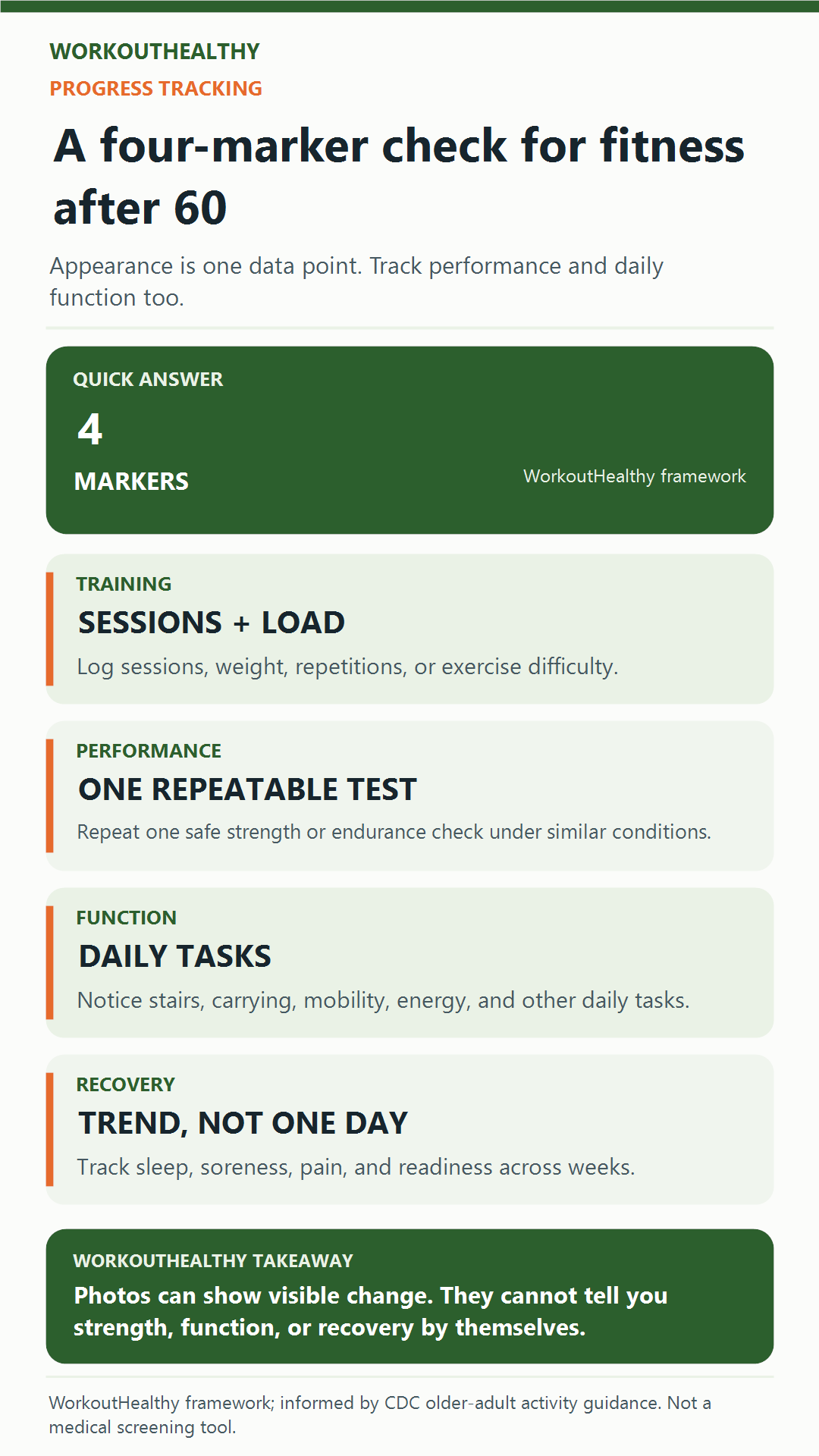
Beach used weekly photos. WorkoutHealthy’s framework adds three other markers so appearance does not carry the entire verdict.
- Training: record sessions completed, then note changes in load, repetitions, or exercise difficulty.
- Performance: choose one repeatable, appropriate strength or endurance test and use similar conditions each time.
- Function: notice stairs, carrying, mobility, energy, and other daily activities that matter to you.
- Recovery: follow sleep, soreness, pain, and readiness as trends across weeks—not as one-day judgments.
Keep photos optional. If you use them, match the lighting, distance, pose, and time of day as closely as practical. Review the set monthly rather than reacting to every image.
For the training side, progressive overload and training specificity matter more than copying someone else’s exercise list.
The best tracking system catches progress without turning one body into everyone’s standard.
Who Should Be Cautious
People returning after a long layoff, managing pain, recovering from surgery, or living with heart, kidney, metabolic, or joint conditions may need a more gradual plan and clinical guidance.
Stop and seek appropriate care for chest pain, fainting, severe shortness of breath, sudden weakness, or other alarming symptoms. Persistent joint pain is also a reason to adjust the exercise and get it evaluated rather than pushing through for the sake of a photo.
Progress tracking should support training. If photos worsen body-image distress or encourage extreme eating, remove them and keep the performance, function, and recovery markers instead.
The Bottom Line
Michael Beach’s two-month photo series offers a motivating example of consistency at 62. It does not reveal a complete program, and it cannot prove that creatine, whole foods, or any single habit caused what viewers see.
The transferable lesson is to make progress visible in more than one way. Track what you did, what you can perform, how daily life feels, and whether you are recovering well. Let photos be one optional data point—not the final score.
This article is for general information only and is not medical advice. Consult a qualified healthcare professional before starting a new exercise program or supplement, especially if you have a medical condition, take medication, or have been inactive.