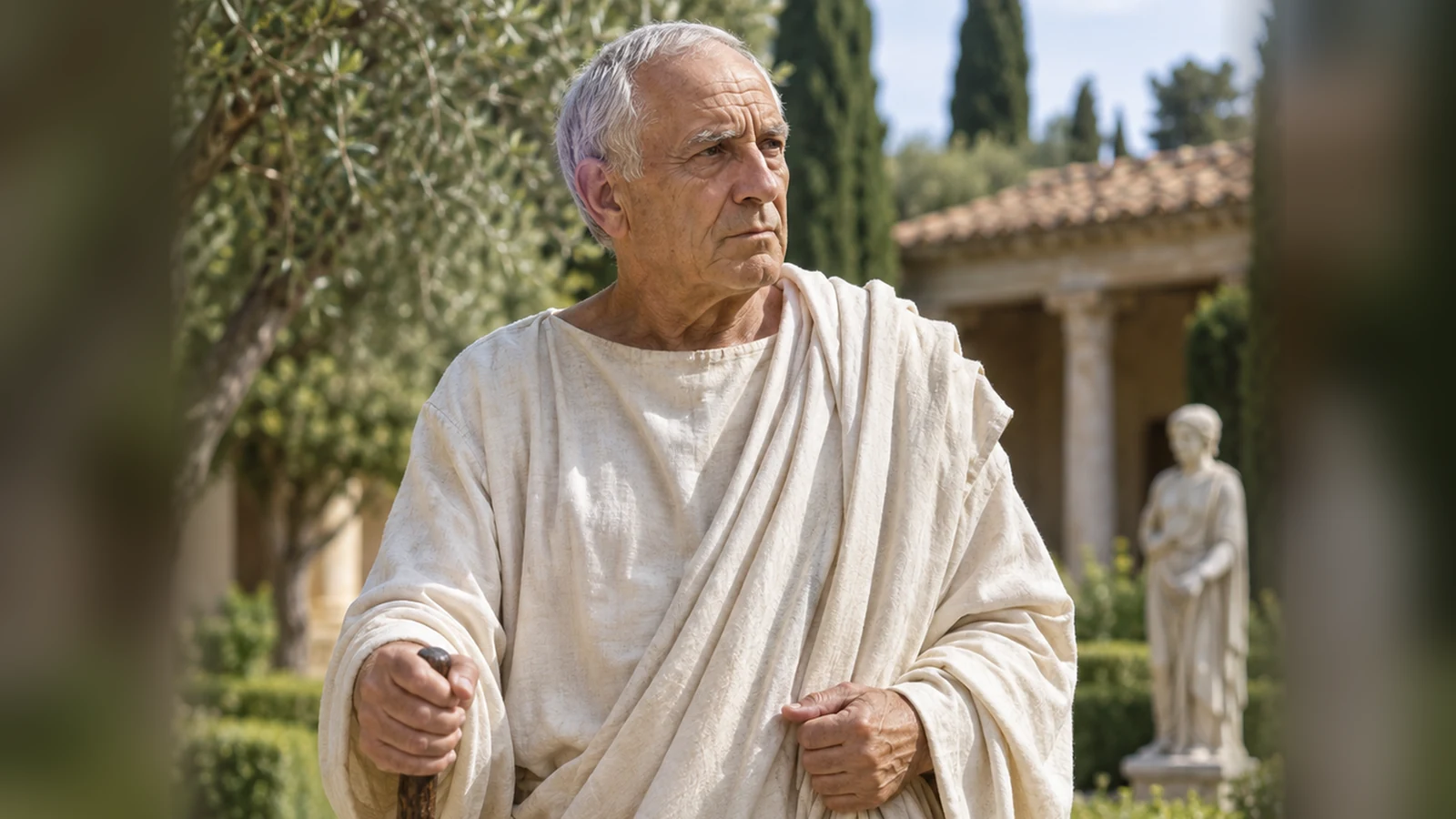

More than 2,000 years ago, a Roman statesman wrote a short book defending old age.
The writer was Cicero, and the book is usually called On Old Age, or De Senectute.
A popular post says Cicero argued that older people should keep exercising moderately to preserve the strength they still have.
That is a fair summary of one key passage. A few details make the story more interesting.
Who Cicero Was
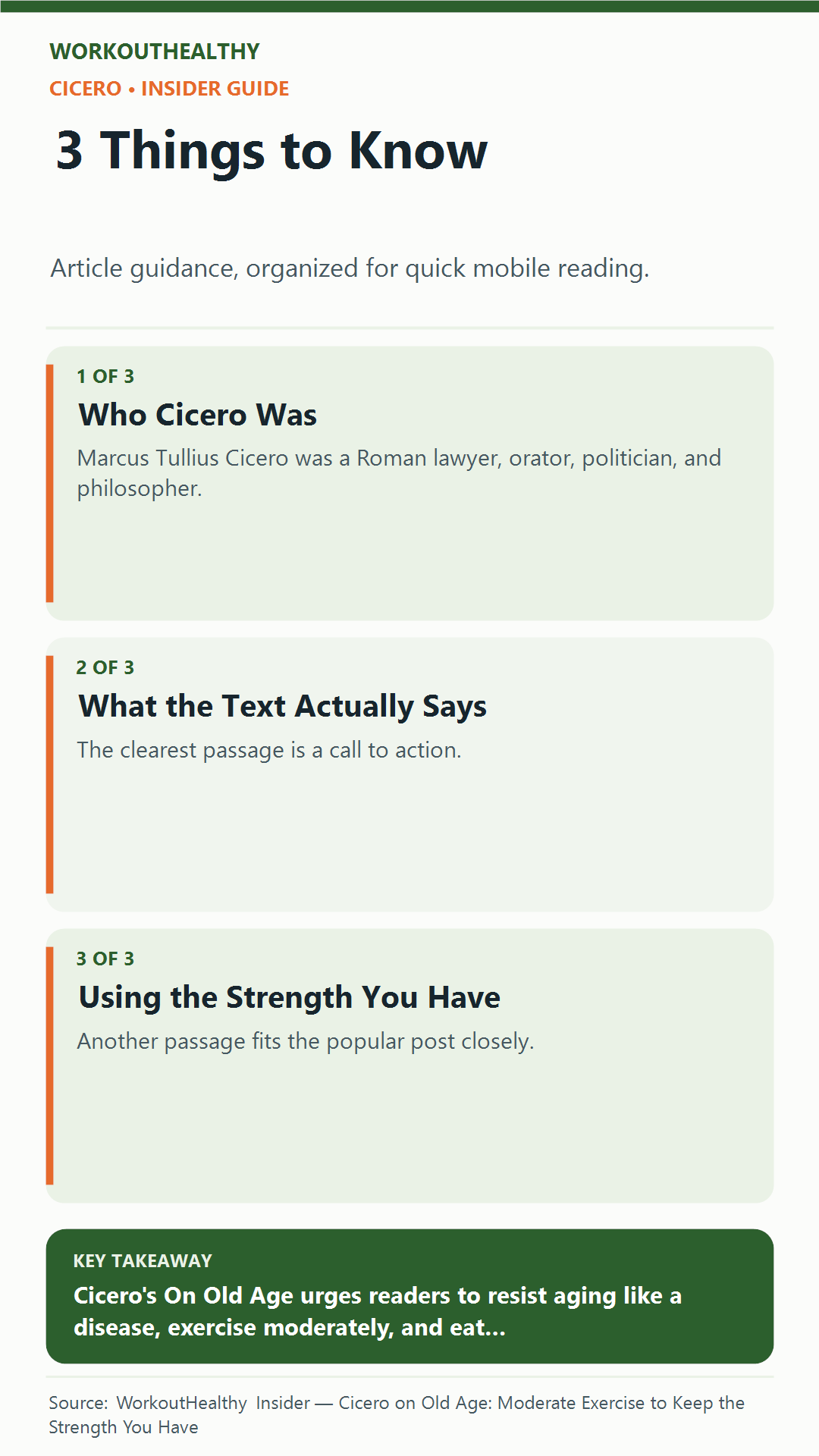
Marcus Tullius Cicero was a Roman lawyer, orator, politician, and philosopher.
He wrote On Old Age late in his life, and it is commonly dated to 44 BCE.
The book is a dialogue.
Cicero puts his ideas in the mouth of Cato the Elder, a famous Roman statesman speaking in his old age.
In the text, Cato says he is in his eighty fourth year and that age has not shattered him.
So when people quote “Cicero” here, they are quoting Cicero’s portrait of Cato.
What the Text Actually Says
The clearest passage is a call to action.
“It is our duty, my young friends, to resist old age; to compensate for its defects by a watchful care; to fight against it as we would fight against disease.”
The speaker then says we should practice moderate exercise.
He adds that we should take just enough food and drink to restore our strength, not to overburden it.
He also stresses the mind.
It needs even more care, he says, because like a lamp it grows dim unless kept supplied with oil.
Using the Strength You Have
Another passage fits the popular post closely.
The speaker says each person should make proper use of his strength and strive to his utmost.
Do that, he argues, and you will not regret the strength you lack.
He even compares the famous wrestler Milo with the philosopher Pythagoras, asking which gift is better to have.
The message is not “act young.” It is “use well what you still have.”
What the Popular Version Misses
Some versions suggest Cicero listed specific activities for older adults.
The text is less sporty than that.
In one line, the speaker happily leaves weapons, horses, spears, fencing, ball games, swimming, and foot races to the young.
For old men, he says, leave the dice and knucklebones.
He does praise farming as a great pleasure of old age.
He says a well tilled farm is something old age does not block, and even invites.
So Cicero did recommend moderate exercise and an active life. He did not lay out a workout plan.
Farming in the ancient world was also real physical work, from planting to pruning and harvest.
Praising it as a pleasure of old age quietly praises staying physically useful.
What Modern Research Says
On the core idea, modern science agrees with Cicero, and then goes further.
In 2019, the National Strength and Conditioning Association published a position statement on resistance training for older adults.
Its authors, led by Maren Fragala, note that aging is linked with losses in muscle mass, strength, and function, even without chronic disease.
They describe resistance training as a powerful way to counter those losses.
The statement links it to better mobility, independence, chronic disease management, well being, and quality of life.
Cicero’s point about the mind also has modern support.
A 2018 meta analysis by Northey and colleagues pooled randomized trials in adults over 50.
Exercise improved cognitive function, with a small to moderate effect.
Aerobic exercise, resistance training, combined programs, and tai chi all showed benefits.
Sessions of 45 to 60 minutes at moderate intensity or higher were linked with better results.
Where Moderate Is Not Enough
Cicero’s word “moderate” is wise for safety, but it can be read too softly.
The NSCA statement is about resistance training that challenges muscles, not just gentle movement.
Many older adults can train harder than they think, with good coaching and a gradual build.
Leaving the physical challenges to the young, as Cato jokes, is exactly what modern experts would advise against.
What the Research Does Not Prove
The NSCA statement is a summary of evidence and expert recommendations, not a single new trial.
The Northey review found benefits on average, but individual results vary.
Its effect size was modest, so exercise is one helpful tool for the aging brain, not a cure.
Neither source tests Cicero’s specific mix of moderate exercise, modest eating, and farming.
The ancient text offers wisdom and motivation. The modern studies supply the measured details.
How to Apply Cicero’s Advice Today
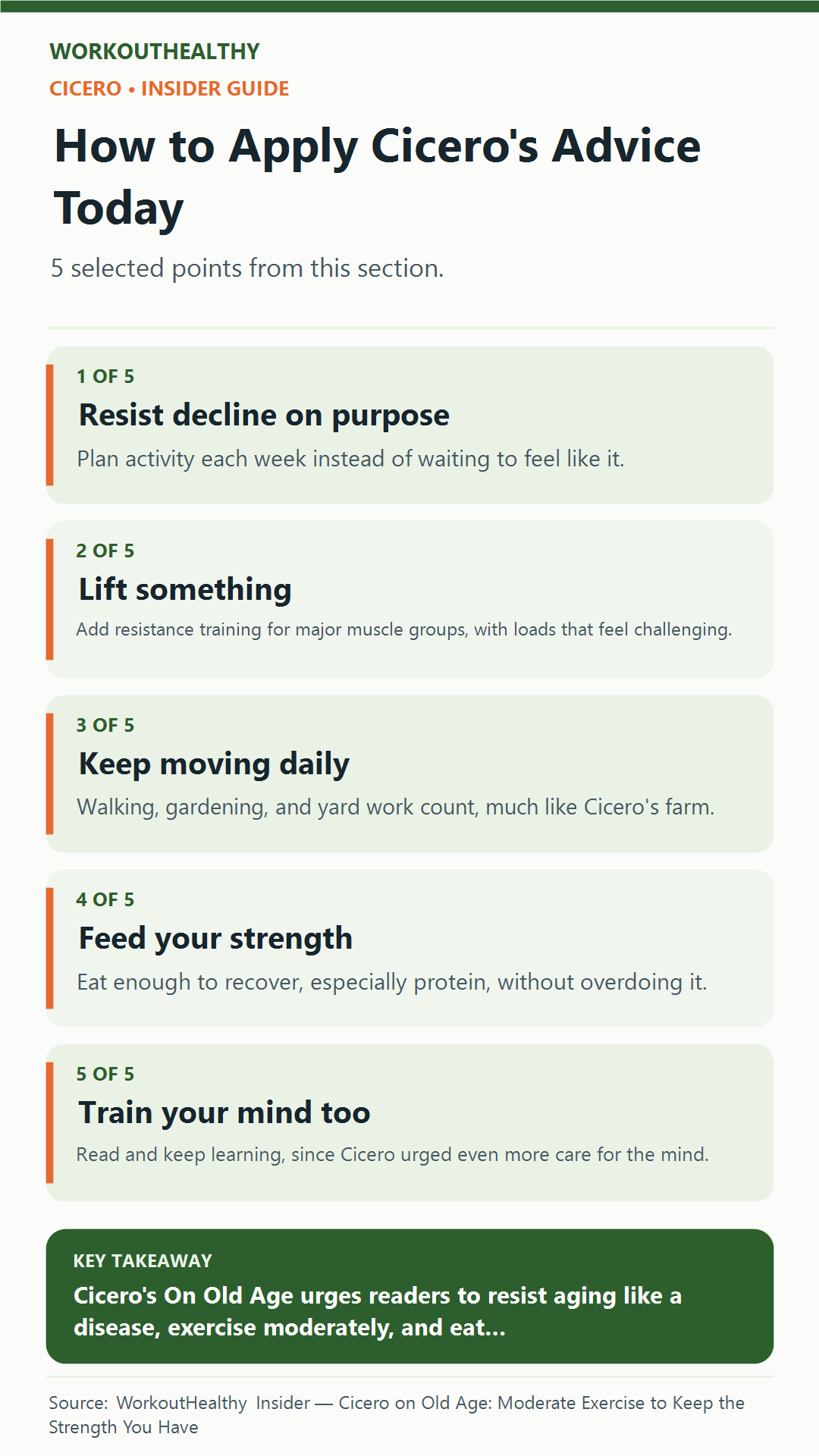
- Resist decline on purpose. Plan activity each week instead of waiting to feel like it.
- Lift something. Add resistance training for major muscle groups, with loads that feel challenging.
- Keep moving daily. Walking, gardening, and yard work count, much like Cicero’s farm.
- Feed your strength. Eat enough to recover, especially protein, without overdoing it.
- Train your mind too. Read and keep learning, since Cicero urged even more care for the mind.
- Use what you have. Adjust exercises to your current body instead of comparing yourself to your younger self.
For a practical example of heavier training later in life, see our guide to deadlifting after 50.
Nutrition matters too, as our look at a protein study in older men explains.
Who Should Be Careful
Older adults with heart disease, osteoporosis, balance problems, or joint replacements should get medical guidance first.
Start with lighter loads and learn technique before adding weight.
Stop and seek care for chest pain, dizziness, or new sharp pain.
If you have memory concerns, see a doctor rather than relying on exercise alone.
The Bottom Line
Cicero’s On Old Age urges readers to resist aging like a disease, exercise moderately, and eat sensibly.
It gives no workout plan, and it jokingly leaves sports to the young.
Modern research backs the core message and adds that strength training is especially valuable with age.
Keep using the strength you have, and keep building it.
Want more stories like this? Subscribe to WorkoutHealthy Insider for practical explanations behind popular fitness claims.
References
- Cicero, M. T. (1923). Cato maior de senectute (Loeb Classical Library translation). LacusCurtius. https://penelope.uchicago.edu/Thayer/E/Roman/Texts/Cicero/Cato_Maior_de_Senectute/text*.html
- Fragala, M. S., Cadore, E. L., Dorgo, S., Izquierdo, M., Kraemer, W. J., Peterson, M. D., & Ryan, E. D. (2019). Resistance training for older adults: Position statement from the National Strength and Conditioning Association. Journal of Strength and Conditioning Research, 33(8), 2019 to 2052. https://doi.org/10.1519/JSC.0000000000003230
- Northey, J. M., Cherbuin, N., Pumpa, K. L., Smee, D. J., & Rattray, B. (2018). Exercise interventions for cognitive function in adults older than 50: A systematic review with meta-analysis. British Journal of Sports Medicine, 52(3), 154 to 160. https://doi.org/10.1136/bjsports-2016-096587
This article is for general information only and is not medical advice. If you have an injury, ongoing pain, or a medical condition, talk to a doctor or physical therapist before you change how you train or eat.