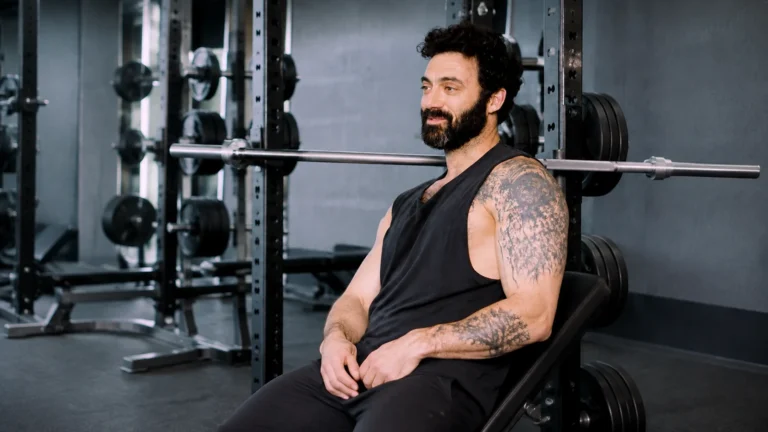

Rauw Alejandro built one of the biggest concert tours in Latin music around a schedule most performers would find exhausting.
Born Raúl Alejandro Ocasio Ruiz, he is a Puerto Rican artist who blends reggaeton, Latin R&B, urbano, Latin trap, and pop into a sound critics have compared to Broadway level production.
His breakthrough came with his 2020 debut album Afrodisíaco, and he has since released six studio albums and won two Latin Grammy Awards.
His Cosa Nuestra World Tour ran from April to November 2025, spanning roughly 70 shows across North America, Europe, and Latin America.
That is a demanding pace for any performer, and Alejandro has talked about how he stays physically ready for it.
Rolling Stone has called him the greatest showman in Latin music and compared his live concerts to Broadway productions, a description that reflects how physically involved his shows actually are.
His performances combine singing, choreographed dance sequences, and constant movement across a large stage, often for two hours or more at a time.
Performers in this kind of high output show face physical demands that overlap in real ways with competitive athletics, even though the setting is a concert stage rather than a ring or a field.
Sustaining that level of output across dozens of shows in a single year takes real physical preparation, not just natural stamina.
A Performer Who Trains Like He Competes
Alejandro played soccer from age six to twenty, before an injury forced him to stop.
That early athletic background shaped how he approaches fitness now, even though his current career is built around music instead of sport.
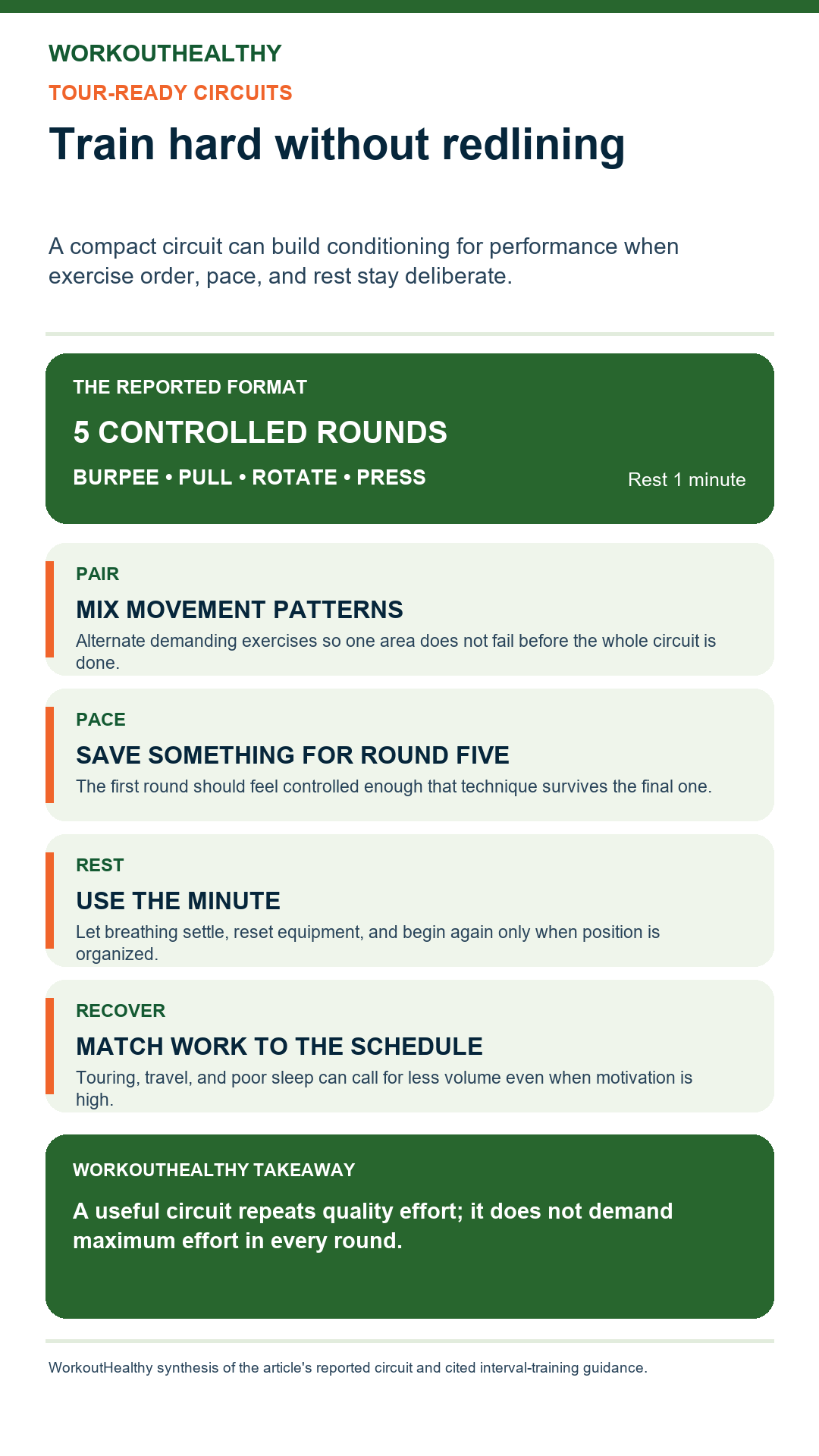
His touring workout draws on Muay Thai style circuit training, structured around five rounds of paired exercises with a minute of rest between each round.
The exercises include burpees, pull-ups, kettlebell woodchops, and landmine presses, chosen to keep his heart rate elevated in short, intense bursts rather than long steady sessions.
That structure matches the physical demands of his own live shows, which involve extended dance sequences and high energy performance night after night.
What Alejandro Has Said About Training and Touring
Alejandro has described exercise as something that keeps him balanced mentally and physically while he is constantly moving between cities.
He has credited morning burpees specifically with using up excess energy before the day gets started.
That kind of routine fits a touring schedule where recovery time is limited and energy has to be carefully managed across back to back travel days and shows.
Cardio built like a fight camp doubles well as tour survival training.
Detailed, word for word quotes from Alejandro about his specific training philosophy are limited in public reporting, so this article treats the described circuit structure and stated purpose as the verified core of his approach.
What the Research Says About Circuit and Interval Training
The training style Alejandro describes, short rounds of varied exercises with brief rest between them, fits a well studied category called high intensity interval training.
A 2012 review in The Journal of Physiology examined the physiological effects of this style of training.
Researchers Martin Gibala, Jonathan Little, Maureen MacDonald, and John Hawley led that review.
They found that short bursts of intense effort, separated by brief recovery periods, can produce cardiovascular and metabolic improvements similar to much longer sessions of steady state cardio.
That efficiency is part of why interval style training appeals to people with limited, unpredictable schedules, exactly the situation a touring performer faces.
A 2014 systematic review and meta-analysis in the British Journal of Sports Medicine looked further into the cardiovascular benefits of this training style.
Researchers Kassia Weston, Ulrik Wisløff, and Jeff Coombes led that review.
They found that interval training produced meaningful improvements in cardiovascular fitness across the studies included, supporting its use as an efficient way to build and maintain heart health.
The specific combat sport structure Alejandro describes also has direct research behind it.
A 2009 study in Applied Physiology, Nutrition, and Metabolism measured the physiological demands of a simulated Muay Thai match.
Researchers Antonio Crisafulli and colleagues found that Muay Thai style training involves both the aerobic and anaerobic energy systems working together, producing a high overall energy cost during a session.
That combination, aerobic base plus anaerobic bursts, closely matches what a performer needs to sustain a physically demanding show night after night on tour, similar to the pacing questions raised in this breakdown of George Foreman’s return to boxing in his forties.
What This Research Does Not Prove
None of these three studies followed Alejandro personally or measured his specific circuit routine.
They describe general patterns found in interval and combat sport training, not a guarantee tied to his exact combination of exercises.
The Muay Thai study specifically measured trained male athletes performing a simulated match, not a touring performer doing a shortened circuit version of similar movements.
The intensity and duration of Alejandro’s actual sessions have not been independently documented in detail.
The interval training research also does not prove that harder is always better.
Several studies on interval training found that moderate, well recovered intensity produced results as good as, or better than, constantly maximal effort.
That distinction matters for anyone trying to copy the general structure rather than guess at exact intensity.
How This Compares to General Guidance
Exercise guidelines generally recommend a mix of both moderate steady activity and higher intensity interval work for well rounded cardiovascular fitness.
Alejandro’s circuit structure, built around short rounds with defined rest periods, aligns closely with that general recommendation.
The approach also solves a practical problem many people with unpredictable schedules face.
A short, structured circuit can be done in a hotel gym or a small space, which matters for someone moving between cities every few days.
That kind of flexibility is part of why circuit and interval training has become a popular option well beyond combat sports and touring musicians.
It also appeals to people balancing a demanding job or family schedule, since a full session can be completed in well under an hour.
A twenty to thirty minute circuit, done consistently, can produce meaningful fitness gains for someone who cannot commit to longer gym sessions several days a week.
Common Mistakes People Make With Circuit and Interval Training
One common mistake is treating every round as an all out sprint from the very first session.
Interval training is demanding, and building up intensity gradually reduces injury risk while still producing real cardiovascular benefits.
Another mistake is skipping the rest periods or cutting them too short.
The recovery windows between rounds are part of what makes this style of training effective, not a break from the real work.
Many people also use poor form once fatigue sets in during the later rounds.
Exercises like kettlebell woodchops and landmine presses require control, and rushing through them while tired raises the risk of a strain.
Doing this style of training every single day without rest is another frequent mistake.
High intensity work is taxing on the nervous system, and most guidance recommends at least one or two full recovery days a week.
Finally, some people expect faster results than the training style actually delivers.
Circuit and interval training builds real fitness, but visible physique changes still take weeks to months of consistent effort.
Cardiovascular fitness itself tends to improve faster, often within a few weeks, which is a useful early signal that the training is working even before physical changes show up.

How to Build a Simple Touring Style Circuit
Choose four or five exercises that combine strength and cardio, such as burpees, kettlebell swings, pull-ups, and a pressing movement.
Perform each exercise for a set amount of time, such as thirty to forty five seconds, before moving to the next.
Rest for a full minute after completing all the exercises in one round.
Repeat the full circuit for three to five rounds, depending on your current fitness level.
Start with three rounds if you are new to this style of training, then add rounds gradually over several weeks.
Use minimal equipment so the circuit travels well, since a kettlebell, a resistance band, and bodyweight movements cover most of what this style of training needs.
A jump rope is another lightweight option worth packing, and this look at how many calories jumping rope actually burns shows how efficient a short rope session can be.
Schedule the circuit for mornings if your goal is Alejandro’s stated purpose, using up excess energy before a demanding day.
Keep at least one or two full rest days in the week, even during a busy stretch.
Recovery is part of what allows this style of training to keep working without breaking the body down.
Pay attention to hydration and sleep, especially if your own schedule involves travel or irregular hours the way touring does.
Interval training places extra demand on the body, and both hydration and sleep directly affect how well a person recovers between sessions.
If your own schedule is unpredictable, keep the exercise list flexible rather than locked to specific equipment you might not always have access to.
A bodyweight version of the same circuit structure, using push-ups, squats, mountain climbers, and burpees, delivers a similar training effect when a kettlebell is not available.
The core structure, short rounds paired with brief rest, matters more than any single piece of equipment used to fill the rounds.
References
Gibala, M. J., Little, J. P., MacDonald, M. J., & Hawley, J. A. (2012). Physiological adaptations to low-volume, high-intensity interval training in health and disease. The Journal of Physiology, 590(5), 1077-1084.
Weston, K. S., Wisløff, U., & Coombes, J. S. (2014). High-intensity interval training in patients with lifestyle-induced cardiometabolic disease: A systematic review and meta-analysis. British Journal of Sports Medicine, 48(16), 1227-1234.
Crisafulli, A., Vitelli, S., Cappai, I., Milia, R., Tocco, F., Melis, F., & Concu, A. (2009). Physiological responses and energy cost during a simulation of a Muay Thai boxing match. Applied Physiology, Nutrition, and Metabolism, 34(2), 143-150.
This article is for general educational purposes only.
It is not personalized fitness or medical advice. Talk with a doctor before starting a new high intensity training program, especially if you have a heart condition or have been inactive for an extended period.