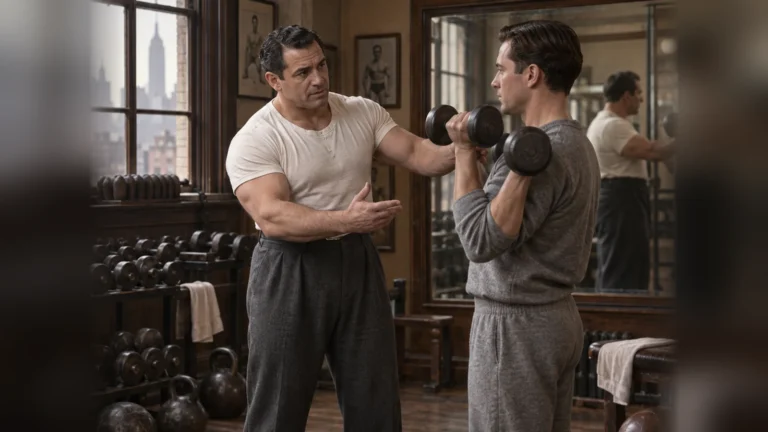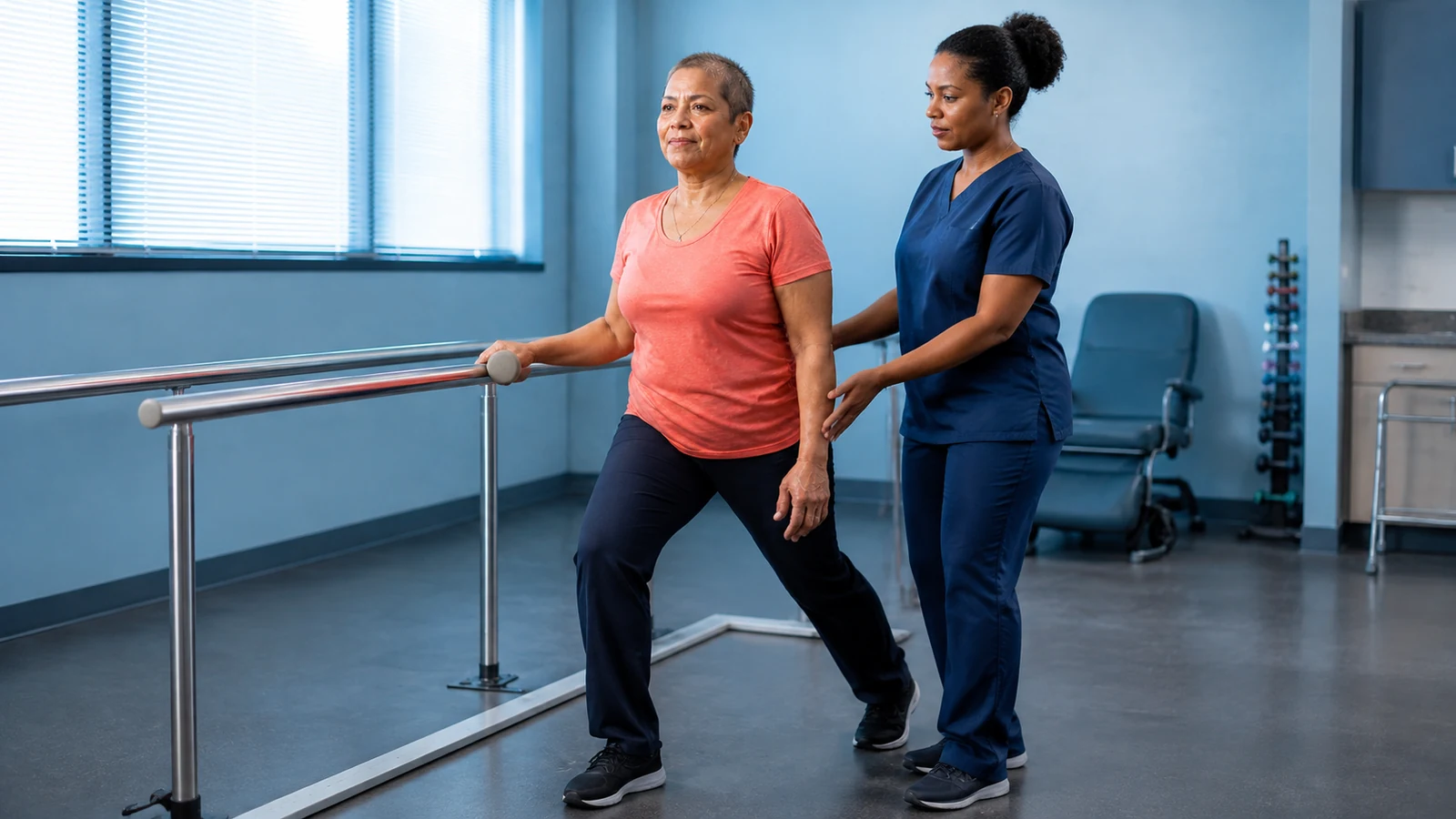

Chemotherapy and radiation do more than fight cancer cells.
They can also weaken the systems a person needs just to walk safely across a room.
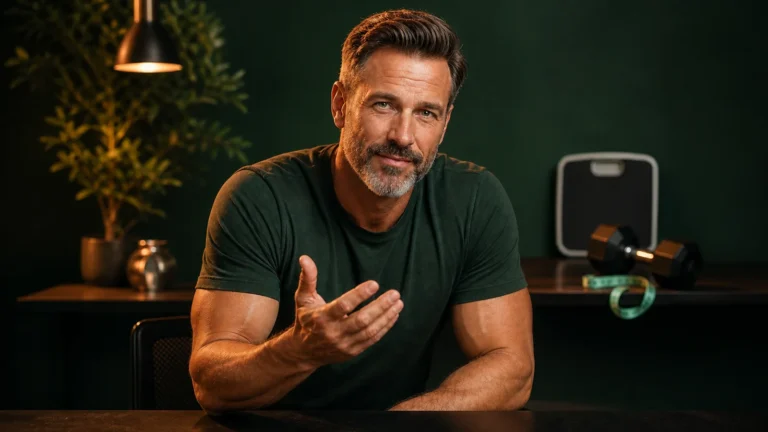
A video from the YouTube channel Cancer Support Community South Bay features Dr. Philip Chang, DO, talking about exactly that problem.
He describes balance, strength, and bone health as three systems cancer treatment often weakens together.
His message is that gentle, guided exercise can help rebuild all three.
This article checks that idea against the real, published research on exercise during and after cancer treatment.
Who Is Dr. Philip Chang, and What Does the Video Claim
Cancer Support Community South Bay is a nonprofit that offers free support services to people affected by cancer.
Its support services are free, but an individual exercise or rehabilitation option may depend on the local chapter, clinician availability, and the patient’s medical needs. Ask the cancer team or support organization what supervised programs are currently offered; do not assume every exercise service is available at no cost in every location.
Public provider records list Philip Chang as a licensed Doctor of Osteopathic Medicine who specializes in physical medicine and rehabilitation.
That specialty is often called physiatry.
Physiatrists focus on restoring function after illness or injury, rather than performing surgery or prescribing chemotherapy themselves.
We could not independently confirm his specific hospital or clinic affiliation from public sources checked for this article.
That does not make his message wrong.
It does mean the claims should be judged by the evidence behind them, not by the credential alone.
The video frames its message around three specific problems tied to chemotherapy and radiation: worse balance, lost strength, and weaker bone.
That framing lines up closely with a large and growing field of research called exercise oncology.
What the Major Cancer Exercise Guidelines Actually Say
Exercise oncology is not a fringe idea anymore.
In 2019, a large international panel of exercise and cancer researchers published a formal consensus statement on exercise for people with cancer (Campbell et al., 2019).
The panel included exercise scientists, oncologists, and physical therapists from multiple countries.
Their statement concluded that exercise is generally safe for most people during and after cancer treatment.
It also found that exercise can improve physical function, ease fatigue, and reduce anxiety and depression across several cancer types (Campbell et al., 2019).
The guideline recommends a mix of aerobic activity and resistance training, adjusted to each patient’s specific diagnosis and treatment stage.
It does not prescribe one fixed workout for every patient.
Instead, it calls for individualized programming, ideally guided by a professional trained in oncology exercise.
A major international consensus statement now stands behind exercise during cancer treatment. It does not stand behind one identical workout for every patient.
How Chemotherapy and Radiation Actually Affect Balance
Balance is easy to take for granted until it starts to fail.
Chemotherapy is a major reason it can fail during cancer treatment.
Certain chemotherapy drugs can damage the nerves in the hands and feet.
Doctors call that damage chemotherapy induced peripheral neuropathy, often shortened to CIPN.
CIPN can dull the feeling in the feet, and that lost sensation makes balance measurably harder.
A 2017 study in the Journal of Clinical Oncology looked directly at this problem in women who had been treated for breast cancer (Winters-Stone et al., 2017).
The researchers followed women who still had CIPN symptoms after finishing chemotherapy and compared them with women who did not have those symptoms.
Women with lasting CIPN symptoms had significantly worse balance, weaker leg strength, and a much higher rate of falls over the prior six months (Winters-Stone et al., 2017).
Many also reported real limits on daily activities, from walking outside to climbing stairs (Winters-Stone et al., 2017).
That is a direct, measured link between a common chemotherapy side effect and a fall risk that can cause real injury.
It is also exactly the problem the video’s framing points to.
How Cancer Treatment Weakens Bone
Bone loss is a less visible side effect, but it is a well documented one.
Certain chemotherapy drugs and some hormone therapies used in cancer treatment can speed up bone loss.
Estrogen and testosterone both help protect bone density.
Many cancer treatments intentionally lower one or both hormones as part of fighting the cancer itself.
Faster bone loss raises fracture risk, sometimes years after treatment ends.
A randomized controlled trial published in Osteoporosis International tested whether exercise could push back against this specific problem (Winters-Stone et al., 2013).
The study enrolled breast cancer survivors who had gone through early menopause because of their treatment, a group at especially high risk for rapid bone loss.
Women assigned to a year of combined resistance training and supervised impact exercise, like stepping and light jumping drills, kept significantly more bone density at the hip and spine than women who did not train this way (Winters-Stone et al., 2013).
The untrained group kept losing bone over that same year.
The impact portion of that program appears to matter.
Bone tends to respond to load that arrives in short, varied bursts, not steady, repetitive motion alone.
Women who trained with resistance and impact exercise for a year kept more of their bone density than women who did not, in a group already losing bone quickly because of cancer treatment.
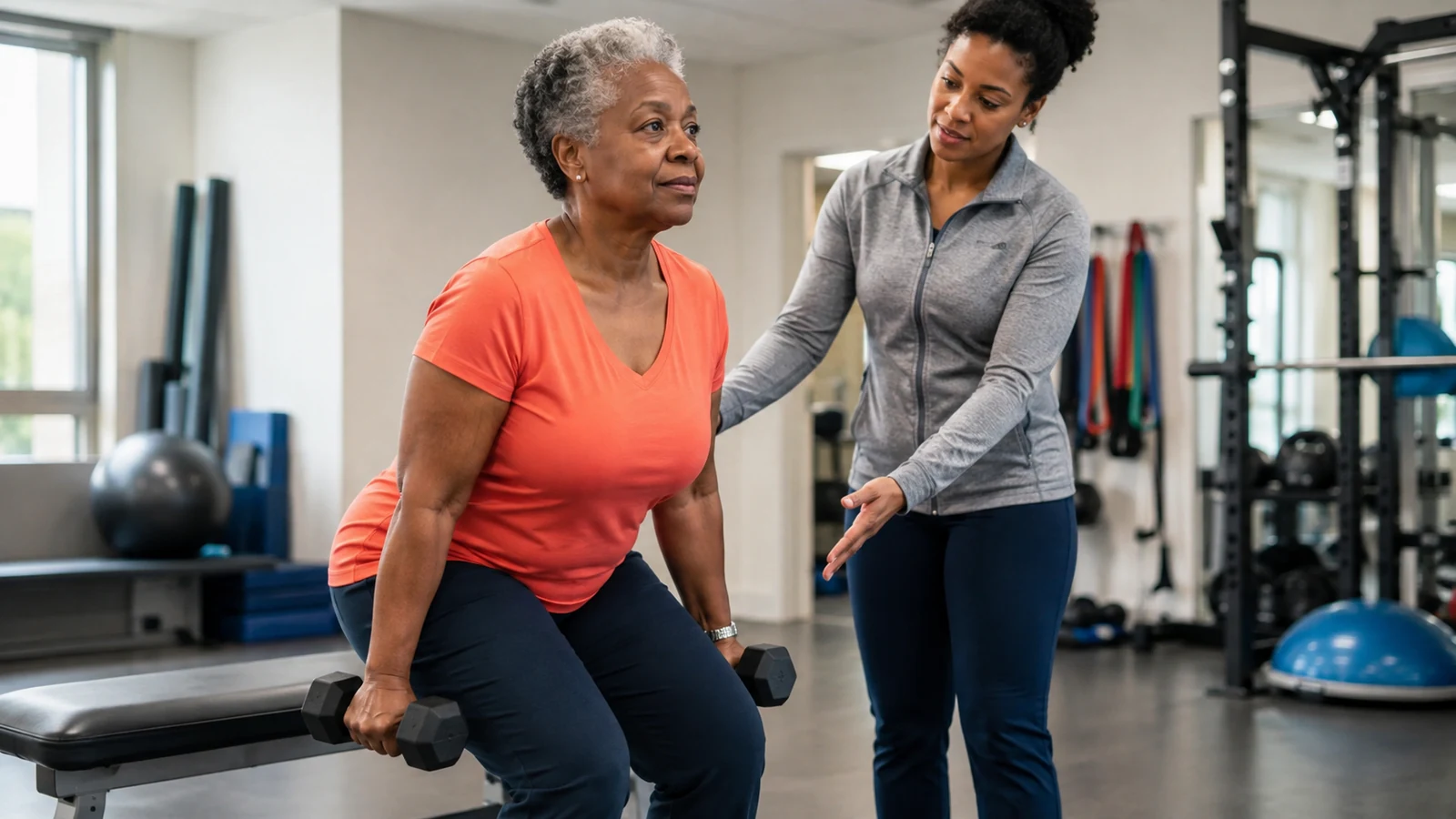
The Mechanism: Why Movement Can Rebuild What Treatment Breaks Down
Three separate mechanisms are at work here, one for each system the video names.
For strength, resistance exercise sends a direct signal to muscle tissue to repair and rebuild itself.
A meta-analysis pooling data across multiple resistance training trials in cancer survivors found consistent, meaningful gains in muscle strength compared with usual care (Strasser et al., 2013).
That signal for muscle repair does not depend on the hormone levels that chemotherapy or hormone therapy can disrupt.
For bone, mechanical loading from resistance and impact exercise activates bone forming cells directly.
That pathway works largely independent of the hormonal changes cancer treatment can cause.
For balance, the mechanism is more about retraining a damaged sensory system than building new tissue.
Balance depends partly on feeling from the feet, and CIPN can dull that feeling.
Structured balance and strength training appears to help patients compensate by relying more on vision and inner ear signals when foot sensation is reduced.
None of these three mechanisms require reversing the underlying nerve or hormone changes from treatment.
They work around the damage, not against it.
What This Evidence Does Not Prove
This research base is real, but it has limits worth stating plainly.
The falls and balance study compared women with CIPN symptoms to women without them, so it shows a strong association, not a guaranteed cause and effect chain running straight from CIPN to a fall (Winters-Stone et al., 2017).
The bone density trial was a true randomized controlled trial, but it studied one specific population: breast cancer survivors in early menopause, not every cancer type or every treatment.
The resistance training meta-analysis pooled many smaller trials, and small trials often cannot detect rare side effects (Strasser et al., 2013).
None of this research suggests exercise can replace chemotherapy, radiation, or any other prescribed cancer treatment.
Every guideline discussed here treats exercise as something added to standard treatment, never as a substitute for it.
The research is also strongest for breast and prostate cancer specifically, since those are the cancer types studied most often in this field.
Rarer cancer types have far fewer dedicated exercise trials behind them.
Common Mistakes People Make
Waiting until treatment fully ends before starting to move again is one common mistake.
The bone density trial above found benefit from exercise started during and shortly after active treatment, not only afterward (Winters-Stone et al., 2013).
Going too hard on a good day is another common mistake.
Fatigue and blood counts can shift quickly during cancer treatment, so yesterday’s workout is not always a safe guide for today.
Skipping resistance training and doing cardio only is a third common mistake.
Walking alone supports the heart and lungs, but the bone and strength evidence above points specifically to resistance and impact work, not walking by itself.
Our guide to what actually protects muscle mass covers the same basic resistance training principle in a general population, and the logic holds here too.
Ignoring numb or tingling feet is a fourth common mistake.
That sensation is exactly the CIPN symptom linked to higher fall risk in the research above, and it is a signal to add balance focused training, not to ignore the feet.
Who Should Check With a Doctor First
Cancer treatment affects every patient differently, so exercise decisions should never be made without a clinician’s input.
Anyone with a low platelet count or a low white blood cell count needs specific clearance, since intense exercise can carry added risk during that window.
Patients with bone metastases need individualized guidance, since some movements or impact levels may not be safe for weakened bone.
Anyone with treatment related heart risk should get clearance before starting aerobic exercise.
People with confirmed CIPN symptoms, meaning numbness, tingling, or burning in the hands or feet, should ask specifically about a balance focused exercise plan.
A physical therapist or exercise physiologist trained in oncology is usually the right professional to design the actual program.
That is a different question from whether and when a general personal trainer is the right fit, since a trainer is not a substitute for medical clearance during active cancer treatment.
The goal is always the same.
Movement should support treatment, never delay it or interfere with it.
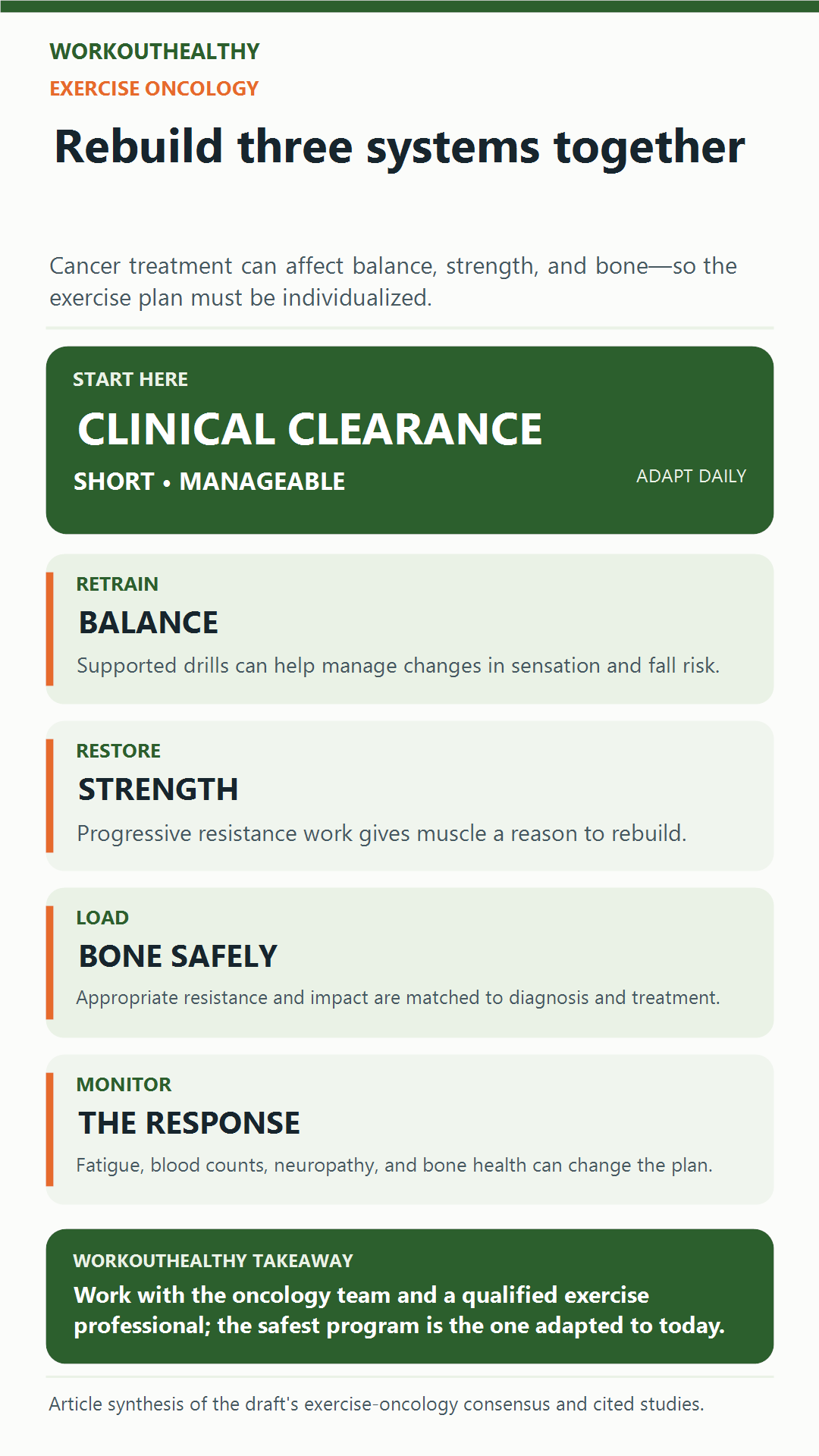
A Step by Step Way to Rebuild Balance, Strength, and Bone Safely
- Start with your oncology team’s clearance, not a fitness app or a generic program.
- Ask specifically about your blood counts, any bone metastases, and any numbness or tingling before choosing exercises.
- Begin with short sessions, ten to fifteen minutes, rather than a full hour.
- Track a simple daily step count first, since walking is a low pressure way to build a base before adding harder work.
- Once cleared, add two short resistance sessions a week that use the major muscle groups, following the same basic resistance training principles that protect muscle in any population.
- If you have any numbness or tingling in your feet, add balance specific drills, such as standing near a sturdy counter and slowly shifting your weight side to side.
- A single leg stance held near something sturdy to grab is another reasonable balance drill once a clinician has approved it.
- Add gentle impact work, like marching in place or light step ups, only after a clinician confirms your bone health can handle it.
- Track a simple functional marker over time, such as how a familiar flight of stairs feels, rather than obsessing over day to day fluctuation.
- Increase load, repetitions, or duration slowly, week over week, rather than jumping ahead.
- Stop and call your care team for new chest pain, unusual shortness of breath, sudden severe fatigue, or a fall, rather than pushing through it.
Watch the Original Video
Want more like this? Subscribe to WorkoutHealthy Insider for practical explanations behind popular fitness claims.
References
Campbell, K. L., Winters-Stone, K. M., Wiskemann, J., May, A. M., Schwartz, A. L., Courneya, K. S., Zucker, D. S., Matthews, C. E., Ligibel, J. A., Gerber, L. H., Morris, G. S., Patel, A. V., Hue, T. F., Perna, F. M., & Schmitz, K. H. (2019). Exercise guidelines for cancer survivors: Consensus statement from International Multidisciplinary Roundtable. Medicine & Science in Sports & Exercise, 51(11), 2375 to 2390. https://doi.org/10.1249/mss.0000000000002116
Strasser, B., Steindorf, K., Wiskemann, J., & Ulrich, C. M. (2013). Impact of resistance training in cancer survivors: A meta-analysis. Medicine & Science in Sports & Exercise, 45(11), 2080 to 2090. https://doi.org/10.1249/mss.0b013e31829a3b63
Winters-Stone, K. M., Dobek, J., Nail, L. M., Bennett, J. A., Leo, M. C., Torgrimson-Ojerio, B., Luoh, S. W., & Schwartz, A. (2013). Impact and resistance training improves bone health and body composition in prematurely menopausal breast cancer survivors: A randomized controlled trial. Osteoporosis International, 24(5), 1637 to 1646. https://doi.org/10.1007/s00198-012-2143-2
Winters-Stone, K. M., Horak, F., Jacobs, P. G., Trubowitz, P., Dieckmann, N. F., Stoyles, S., & Faithfull, S. (2017). Falls, functioning, and disability among women with persistent symptoms of chemotherapy-induced peripheral neuropathy. Journal of Clinical Oncology, 35(23), 2604 to 2612. https://doi.org/10.1200/JCO.2016.71.3552
This article is for general information only and is not medical advice. If you have an injury, ongoing pain, or a medical condition, talk to a doctor or physical therapist before you change how you train or eat.