
Regé-Jean Page became a household name almost overnight.
His role as Simon Basset, the Duke of Hastings, turned him into one of the most talked about actors of 2020.
That was the first season of Netflix’s Bridgerton. The show mixed elaborate ballroom scenes with long days of physical blocking.
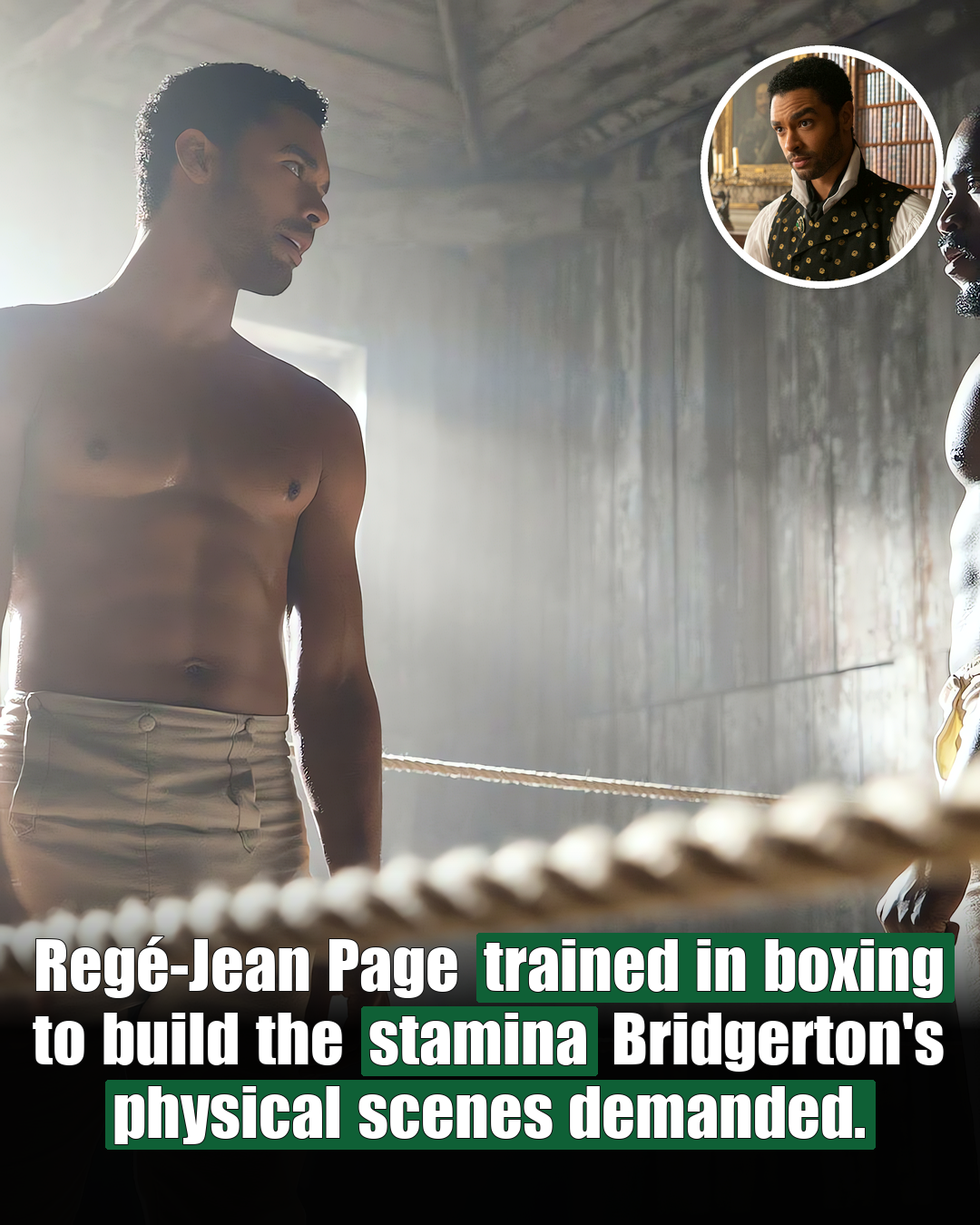
Page has been reported to have leaned on boxing to get his body ready for it.
Boxing shows up again and again in actor training stories, and not by accident.
It builds cardio and strength in the same session. It also teaches footwork and body control, which matters when a camera is following every step across a crowded dance floor.
Who Is Regé-Jean Page
Page is a British-Zimbabwean actor. He trained at the Drama Centre London after several years of auditioning around the city.
He worked steadily in British television and theater before Bridgerton made him internationally recognized. The role changed the trajectory of his career almost overnight.
The role earned him a Primetime Emmy nomination and an NAACP Image Award. It also landed him a spot on Time magazine’s 100 Next list.
He left the show after one season. That decision surprised many fans, but it let him move into film work like The Gray Man and Dungeons & Dragons: Honor Among Thieves.
Why Hollywood Keeps Turning to Boxing
Period dramas do not look like action movies. Bridgerton still asked a lot from its cast physically.
The ballroom sequences required hours of choreography, repeated across many takes.
Costume weight adds another layer. Corsets, layered fabric, and formal wear all restrict movement and add real physical load across a long shooting day.
Boxing has become a go to answer for actors facing that kind of demand. It is equipment light, scalable to any fitness level, and it trains the whole body at once rather than isolating one muscle group.
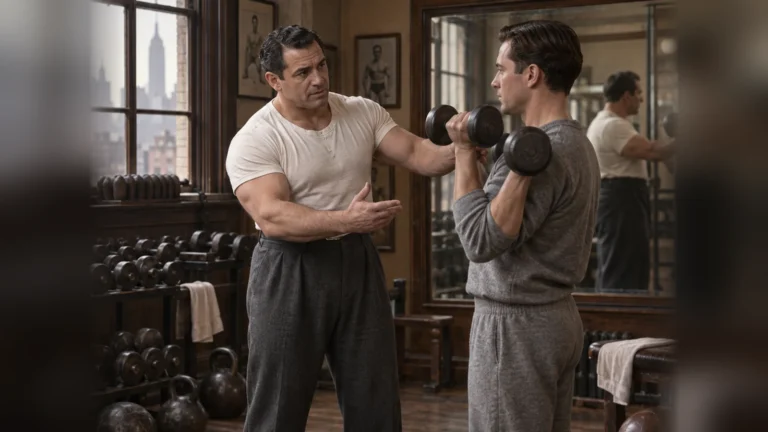
George Foreman’s comeback training tells a very different story. Foreman was decades older and returning to real competition, not a film set.
Even so, it shows the same core idea. Boxing conditions the whole body efficiently, at almost any age or starting point.
What the Training Reportedly Looked Like
Bridgerton was not a typical period piece. The show leaned hard into physical staging, from sweeping dance numbers to scenes that called for real stamina.
Reporting on Page’s preparation for the role has described regular boxing sessions. The focus was reportedly endurance, coordination, and full body conditioning rather than pure size.
That detail lines up with how boxing training is usually structured for actors. The workouts borrow boxing’s tools, including heavy bags, footwork drills, and combination punching, without the sparring.
The goal in this context is fitness and movement quality, not competition readiness. Page has not gone into detailed public breakdowns of his workout splits or training days.
Coverage of his preparation stays general. It centers on boxing as the main tool rather than a published week by week program.
That is worth being upfront about. The training details here describe a reported approach, not a routine confirmed by Page himself in a detailed interview.
The Dance and Movement Connection
Bridgerton leans heavily on period ballroom dance. Regency era choreography calls for precise footwork, upright posture, and smooth transitions between partners.
That is closer to boxing than most people assume. Both disciplines train a dancer or fighter to move their weight cleanly from one foot to the other without losing balance.
Boxing coaches often describe footwork as the foundation the sport is built on.
The same is true in dance, where footwork mistakes are usually more visible than upper body mistakes.
Training boxing footwork can carry over into any activity that demands controlled movement, even without ever stepping into a ring.
That includes stage combat, dance numbers, and everyday balance and coordination.
This may explain part of why boxing became a reported fit for Page’s preparation. A show built around ballroom sequences rewards an actor who can move with confidence and control.
The Science Behind Boxing Style Training
Boxing earns its reputation as an efficient workout. It demands a lot from the body at once.
A 2023 study in The Journal of Sports Medicine and Physical Fitness measured the physiological demands of three minute rounds in trained amateur boxers.
The researchers found that boxing rounds pushed heart rates and blood lactate high enough to count as vigorous intensity exercise.
That held true even across short bursts of activity.
Earlier research backs this up. A study in the International Journal of Applied Sports Sciences measured heart rate and blood lactate responses during boxing training sessions.
It found sustained elevated heart rates throughout the sessions, consistent with strong cardiovascular demand. Combined, these findings explain why boxing style training shows up so often in time efficient fitness routines.
A single boxing session can hit both cardio and muscular endurance goals. That would otherwise take two separate workouts to accomplish with more traditional training splits.
There is also a coordination benefit that gets less attention than the cardio numbers. Throwing combinations while moving your feet trains balance, timing, and body awareness together.
An actor’s job depends on looking natural on camera. That carryover into movement quality is not a small thing.
It shows up in how a scene reads, not just in how fit someone looks.
How This Compares to General Fitness Guidance
The Physical Activity Guidelines for Americans, published by the U.S. Department of Health and Human Services, recommends at least 150 to 300 minutes of moderate aerobic activity per week. It also recommends muscle strengthening work on two or more days.
Boxing style training can check both of those boxes in the same session. It combines sustained movement with resistance from punching, footwork, and often added strength drills.
That efficiency is part of why boxing has become such a popular crossover workout. It is common now well outside of competitive boxing gyms.
It is not a full replacement for structured strength training if building maximum muscle is the primary goal.
As a way to build general conditioning, though, it holds up well against standard cardio and strength recommendations.
Common Mistakes People Make With Boxing Workouts
The biggest mistake beginners make is skipping technique work. Going straight to hard, fast punching without learning form first is a common shortcut that backfires.
Poor form on the bag can strain the wrists and shoulders quickly. This is especially true without wraps or gloves that fit correctly.
Learning basic stance and punch mechanics first makes the rest of the training safer. Even two or three sessions focused only on technique pays off later.
Another common error is treating every session like an all out effort. Boxing training benefits from a mix of intensities, the same way any cardio program does.
Not every round needs to be a sprint. Some sessions should focus on light footwork and shadowboxing to build skill without maxing out the nervous system.
People also tend to ignore recovery for the hands and forearms. Repeated punching, even on a heavy bag, creates real impact stress on small joints.
Hand wraps, fitted gloves, and rest days between hard bag sessions all reduce that risk.
Skipping these steps is one of the most common ways beginners get hurt.
Finally, many beginners skip a proper warm up. They assume the first few rounds count as the warm up itself, which is a mistake.
Boxing asks a lot from the shoulders, hips, and core right away. A short warm up of light cardio and dynamic stretching before the first round lowers injury risk significantly.
How to Try a Boxing Style Workout Safely
Start with technique before intensity. A single session with a coach, or even a well made instructional video, can teach proper stance, guard position, and basic punches like the jab and cross.
If you are not sure whether you need hands on coaching at all, this guide to deciding on a personal trainer walks through when a few paid sessions are worth it and when they are not.
This foundation matters more than how hard you can hit early on. Speed and power come naturally once the movement pattern is correct.
Use equipment that protects your hands. Hand wraps come first, followed by gloves sized correctly for your hand and the bag or pads you plan to use.
Skipping wraps to save time is a fast way to end up with a wrist or knuckle injury.
It is not worth the shortcut.
Build up your rounds gradually. Three minute rounds with a minute of rest between them is the standard boxing format, but beginners do not need to start there.
Try shorter rounds first, like ninety seconds of work and ninety seconds of rest. Extend the work periods as conditioning improves over several weeks.
Mix in footwork and shadowboxing days. Not every session needs a bag or pads.
On days you want a break from punching but still want the cardio, a jump rope is a simple substitute.
Jump rope burns a comparable amount of energy per hour. It also trains similar footwork and rhythm.
Practicing movement and combinations without contact still builds coordination and cardio. It also gives your hands and wrists a lower impact day between harder sessions.
Pay attention to recovery between sessions. Two to three boxing style workouts a week is a reasonable starting point for most beginners.
Fill the other days with strength training or full rest. This mirrors the mixed intensity approach that shows up in the research on boxing’s physiological demands.
Combine boxing with traditional strength work if muscle building is also a goal. Boxing conditions the cardiovascular system and builds muscular endurance well on its own.
Weight training with progressive resistance still plays the bigger role in building maximum strength.
The two approaches pair well together rather than competing for the same training slot.
A Simple First Month Structure
Week one can focus almost entirely on technique. Two short sessions covering stance, guard, and the jab and cross are enough to start.
Week two can add light bag work. Keep the rounds short, around ninety seconds, with full rest between them.
Week three can introduce combinations. Simple two and three punch combinations, thrown slowly at first, build the coordination that makes boxing feel natural.
Week four can extend round length toward the standard three minutes. By this point, most beginners have the technique base to handle longer, harder rounds safely.
This kind of gradual buildup mirrors how many boxing gyms bring in new members. It respects the body’s need to adapt before intensity increases, which lowers the odds of an early injury derailing progress.
References
- Bruzas, V., Venckunas, T., Kamandulis, S., Snieckus, A., Mockus, P., & Stasiulis, A. (2023). Metabolic and physiological demands of 3×3-min-round boxing fights in highly trained amateur boxers. The Journal of Sports Medicine and Physical Fitness, 63(5).
- Ghosh, A. K. (2010). Heart rate, oxygen consumption, and blood lactate responses during specific training in amateur boxers. International Journal of Applied Sports Sciences, 22(1), 1-12.
- U.S. Department of Health and Human Services. Physical Activity Guidelines for Americans, 2nd edition.
This article is for general educational purposes only. It does not replace individualized advice from a doctor, physical therapist, or certified trainer. Anyone starting a new boxing or exercise program, especially with a prior injury or health condition, should talk to a qualified professional first.