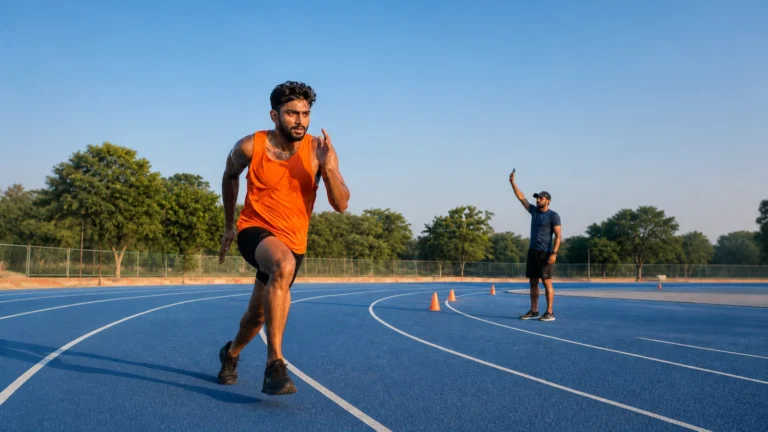

A video called “Walk 30 Minutes Every Day” promises big benefits from a daily walk.
It also promises to reveal common mistakes and share the best walking tips.
The channel behind it is called Ask Your Nurse.
The name suggests the video comes from someone with nursing credentials.
We tried to confirm those credentials and could not independently verify them.
So we treated the video as a starting point, not as a source to cite.
This article checks the video’s core idea against real published research.
It also takes a different angle than most walking articles on this site.
Most walking content asks how many steps or miles you need each day.
WorkoutHealthy already covered that ground in Daily Steps and Mortality and How Many Miles Should I Walk a Day.
This article asks a different question instead.
Does how you walk matter as much as how far you walk?
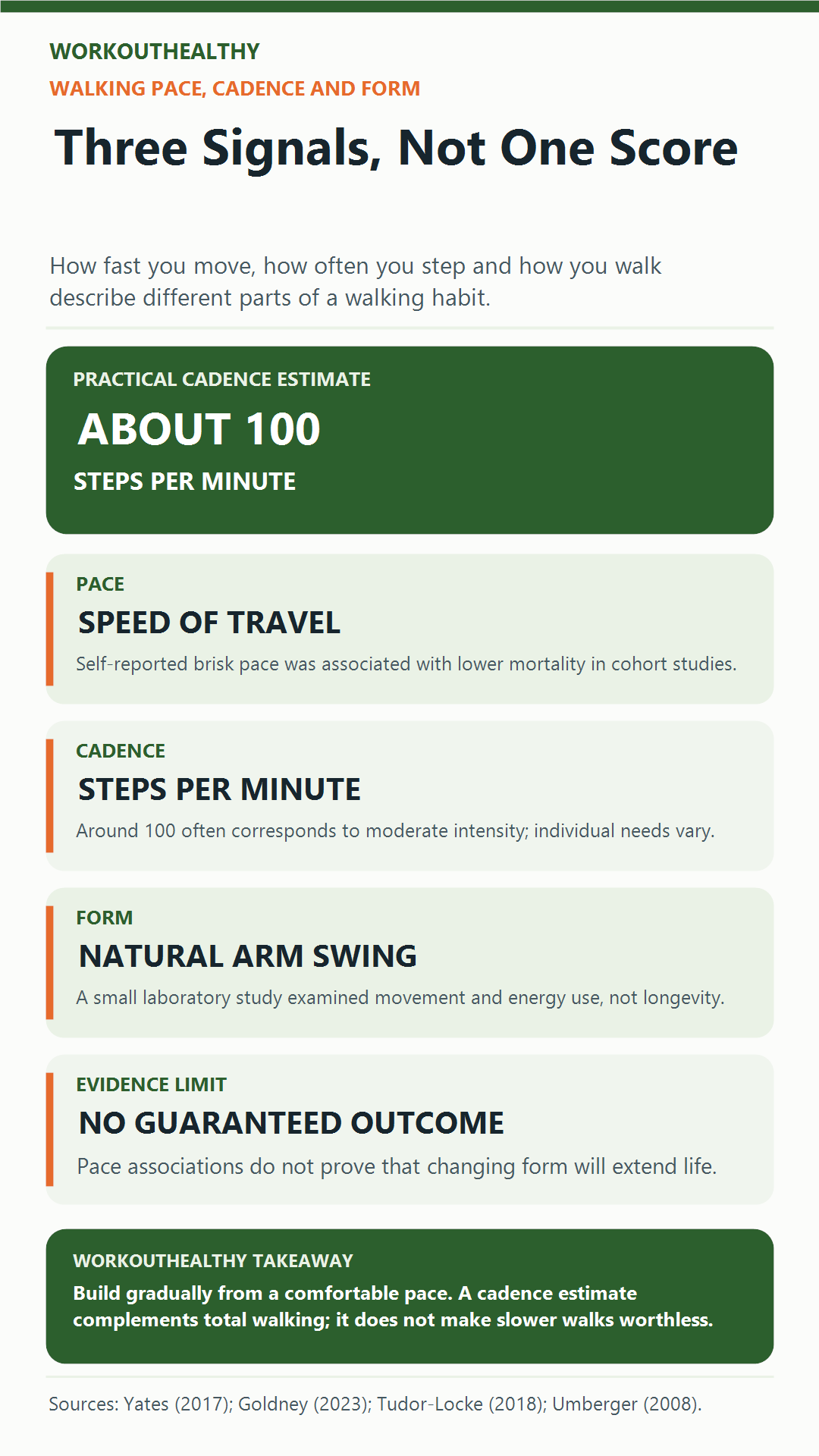
Pace and cadence can help describe walking intensity. Evidence that a particular posture or arm-swing cue improves long-term health is much thinner.
What the Video Claims
The video frames a daily 30 minute walk as a simple, low cost habit.
It claims walking regularly brings real health benefits over time.
It also claims many people make mistakes that limit those benefits.
The video promises tips for better walking form and better results.
Common talking points in this kind of video include posture, stride, and pace.
Videos in this genre often mention specific step counts or calorie numbers.
We could not verify every specific claim made in this particular video.
So this article does not repeat unverified numbers as established fact.
Instead, it looks at what real, published studies say about pace and technique.
What Real Research Shows About Walking Pace
Pace means how fast you walk, not how far or how long you walk.
A large study out of the United Kingdom looked at this question directly.
Researchers followed more than 400,000 adults enrolled in the UK Biobank project.
Each person reported their own usual walking pace as slow, average, or brisk.
The study then tracked who died over the following years.
People who reported a brisk walking pace had a lower risk of death.
This held true even after adjusting for total physical activity levels (Yates et al., 2017).
Brisk walkers also showed a lower risk of dying from heart disease specifically.
The pattern held across nearly every age group in the study.
People who reported a brisk walking pace had a notably lower risk of death than people who reported a slow pace, even after accounting for total activity.
A later analysis of the same UK Biobank data checked this pattern again.
That analysis tracked specific causes of death over a ten year period.
Self reported brisk walkers again showed better survival odds overall (Goldney et al., 2023).
This association matters, but self-reported pace is not the same as an experiment assigning two people identical step totals at different speeds. A brisk pace may indicate higher walking intensity or better underlying health; these cohort studies cannot isolate the effect of changing pace alone.
What Real Research Shows About Walking Cadence
Cadence means how many steps you take per minute while walking.
It is a simple way to measure pace without a treadmill or a lab.
Researchers wanted a number that anyone could count in real life.
A major review pulled together cadence data from many adult studies.
It found that about 100 steps per minute lines up with moderate intensity walking (Tudor-Locke et al., 2018).
About 100 steps per minute is a practical population-level marker of absolute moderate intensity, not a personal requirement or a threshold for all walking benefits.
You can count your own cadence with just a phone or a simple timer.
Count your steps for 20 seconds, then multiply that number by three.
A result near 100 suggests you are walking at a moderate intensity.
A much lower number suggests a slower, more leisurely stroll.
This cadence marker gives people a practical, countable target.
It turns a vague instruction like “walk briskly” into something you can measure.
What Real Research Shows About Walking Form
Form covers posture, arm swing, and how your feet strike the ground.
Much of the popular advice about walking form has not been formally tested.
Arm swing, however, has been studied directly in a biomechanics lab.
Researchers had adults walk normally, and then walk with their arms held still.
Suppressing natural arm swing changed how the body moved and used energy (Umberger, 2008).
In eight healthy adults, suppressing arm swing changed some walking mechanics and raised average energy cost by less than 10% at matched speed and stride frequency. Most measured variables changed little (Umberger, 2008).
That small lab study does not establish that a particular arm-swing style prevents injury or improves long-term health. Comfortable posture and a natural arm swing are reasonable cues, but the outcome evidence is limited.
The Mechanism
Faster walking asks more of the heart and lungs than a slow stroll.
It raises heart rate more than an easy pace does.
Over time, that repeated demand can improve cardiovascular fitness.
Cadence and pace are closely related but not exactly the same thing.
Taking quicker steps usually raises your overall walking speed.
Stride length also plays a role in how fast you cover ground.
Good arm swing helps counter the rotation your legs create with each stride.
Suppressing natural arm movement can modestly change measured mechanics and energy cost in a lab. That finding does not show that a specific arm-swing or posture cue protects joints, prevents back pain, or changes disease risk.
What This Evidence Does Not Prove
The UK Biobank pace studies were observational, not controlled experiments.
People chose their own walking pace instead of being randomly assigned one.
That means other habits and traits could explain part of the pattern.
A person able to walk briskly may already be healthier for other reasons.
Researchers tried to adjust for this statistically, but no adjustment is perfect.
The cadence research is also based on group averages, not individuals.
Your own moderate intensity cadence could sit a bit above or below 100.
Fitness level, leg length, and age can all shift that number somewhat.
The arm swing study was conducted in a small, controlled lab setting.
It shows how the body moves, not how many diseases arm swing prevents.
None of this research proves that changing your form guarantees a longer life.
It shows a consistent pattern worth taking seriously, not a guarantee of outcomes.
Common Mistakes
If the goal is to improve cardiorespiratory fitness, walking only at a comfortable pace may eventually stop feeling challenging. But an easy walk can still contribute useful activity; increasing pace is an option, not a requirement for every person.
Overstriding, stiff arm movement, and looking down at a phone may feel awkward for some walkers, but the studies cited here do not show that correcting these habits reduces injury or improves long-term health. A comfortable stride, attention to surroundings, and shoes that fit are practical priorities.
Sore feet after a walk are worth paying attention to, not ignoring.
A foot massage can ease soreness, but it will not fix a shoe or gait problem by itself.
Skipping any warm up before a brisk walk is another frequent mistake.
A few minutes at an easy pace lets muscles and joints prepare gradually.
Who Should Be Extra Careful
Anyone with a diagnosed heart condition should talk to a doctor before picking up the pace.
A sudden jump from slow strolling to brisk walking raises cardiac demand quickly.
People recovering from a joint replacement need individualized, professional guidance.
Our piece on Misty Copeland’s hip replacement recovery shows how gradual that process usually is.
People with balance problems should be cautious about walking faster on uneven ground.
A physical therapist can assess gait safely before any pace changes.
Anyone with diabetes and reduced foot sensation should watch closely for blisters.
New or worsening joint pain during faster walking is a signal to slow down.
Pregnant walkers should check with their own doctor about pace and duration.
People new to exercise altogether should build a base before chasing a cadence number.
A Practical Takeaway
Start by walking at your current comfortable pace for a few minutes.
Then pick up the pace until conversation gets a little bit harder.
That shift is a simple, low tech way to sense moderate intensity.
If counting steps helps, roughly 100 steps per minute is one research-based marker for absolute moderate intensity in adults; use perceived effort and personal guidance when age, disability, illness, or fitness level changes what feels moderate.
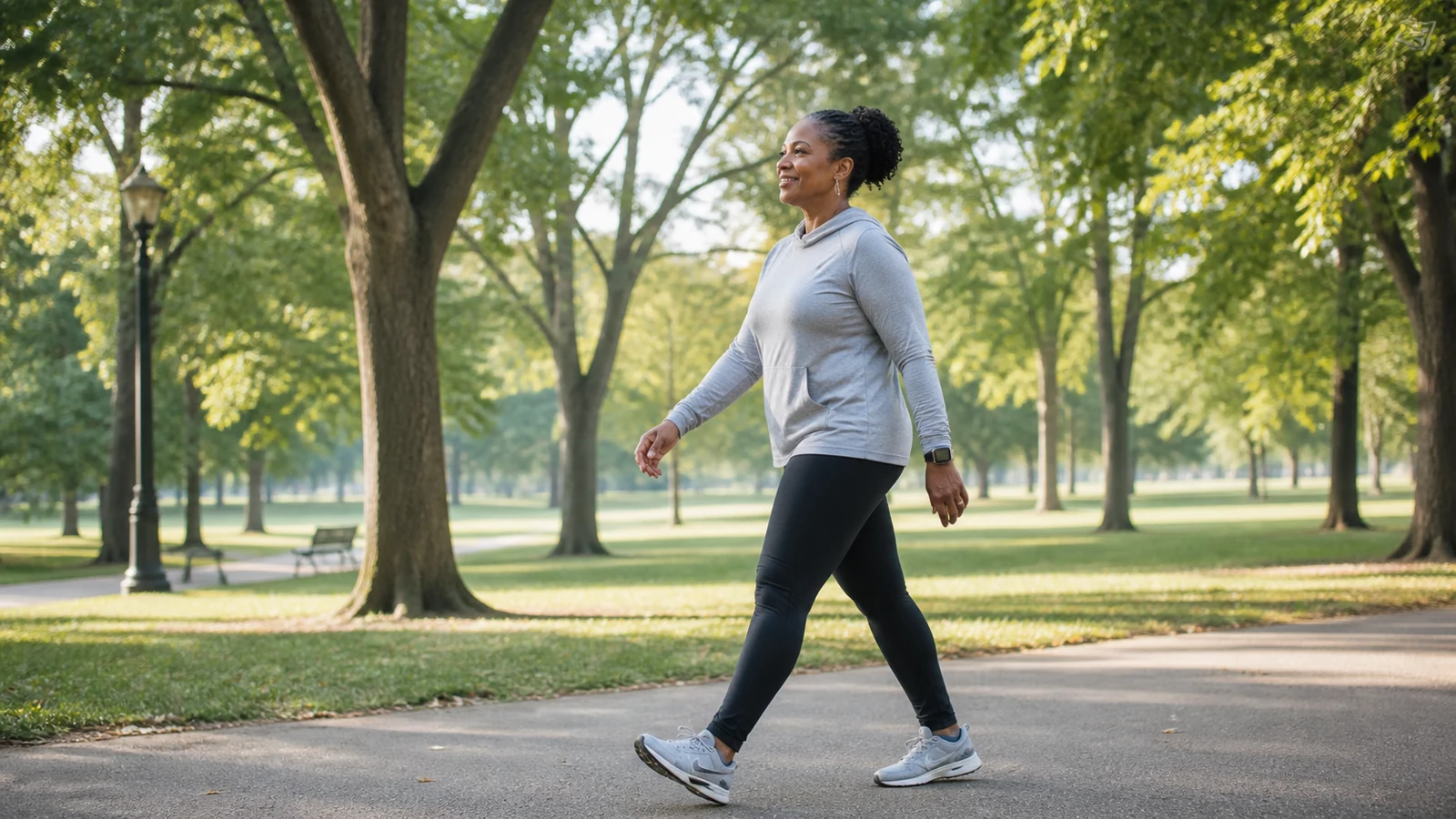
Let your arms swing naturally from the shoulder, not just the elbow.
Keep your chest up and your gaze forward, not down at a phone.
Try to land more under your body than out in front of it.
Build up pace and duration gradually over several weeks, not all at once.
Pace is one more tool alongside total steps, not a replacement for them.
A simple check like the four flights of stairs test can offer another quick read on your current fitness.
Small, consistent changes in how you walk can add up over time.
Watch the video
Want more like this? Subscribe to WorkoutHealthy Insider for practical explanations behind popular fitness claims.
References
Goldney, J., Dempsey, P. C., Henson, J., Rowlands, A., Bhattacharjee, A., Chudasama, Y. V., Razieh, C., Laukkanen, J. A., Davies, M. J., Khunti, K., Yates, T., & Zaccardi, F. (2023). Self-reported walking pace and 10-year cause-specific mortality: A UK Biobank investigation. Progress in Cardiovascular Diseases, 81, 17 to 23. https://doi.org/10.1016/j.pcad.2023.09.003
Tudor-Locke, C., Han, H., Aguiar, E. J., Barreira, T. V., Schuna, J. M., Jr., Kang, M., & Rowe, D. A. (2018). How fast is fast enough? Walking cadence (steps/min) as a practical estimate of intensity in adults: A narrative review. British Journal of Sports Medicine, 52(12), 776 to 788. https://doi.org/10.1136/bjsports-2017-097628
Umberger, B. R. (2008). Effects of suppressing arm swing on kinematics, kinetics, and energetics of human walking. Journal of Biomechanics, 41(11), 2575 to 2580. https://doi.org/10.1016/j.jbiomech.2008.05.024
Yates, T., Zaccardi, F., Dhalwani, N. N., Davies, M. J., Bakrania, K., Celis-Morales, C. A., Gill, J. M. R., Franks, P. W., & Khunti, K. (2017). Association of walking pace and handgrip strength with all-cause, cardiovascular, and cancer mortality: A UK Biobank observational study. European Heart Journal, 38(43), 3232 to 3240. https://doi.org/10.1093/eurheartj/ehx449
This article is for general information only and is not medical advice. If you have an injury, ongoing pain, or a medical condition, talk to a doctor or physical therapist before you change how you train or eat.