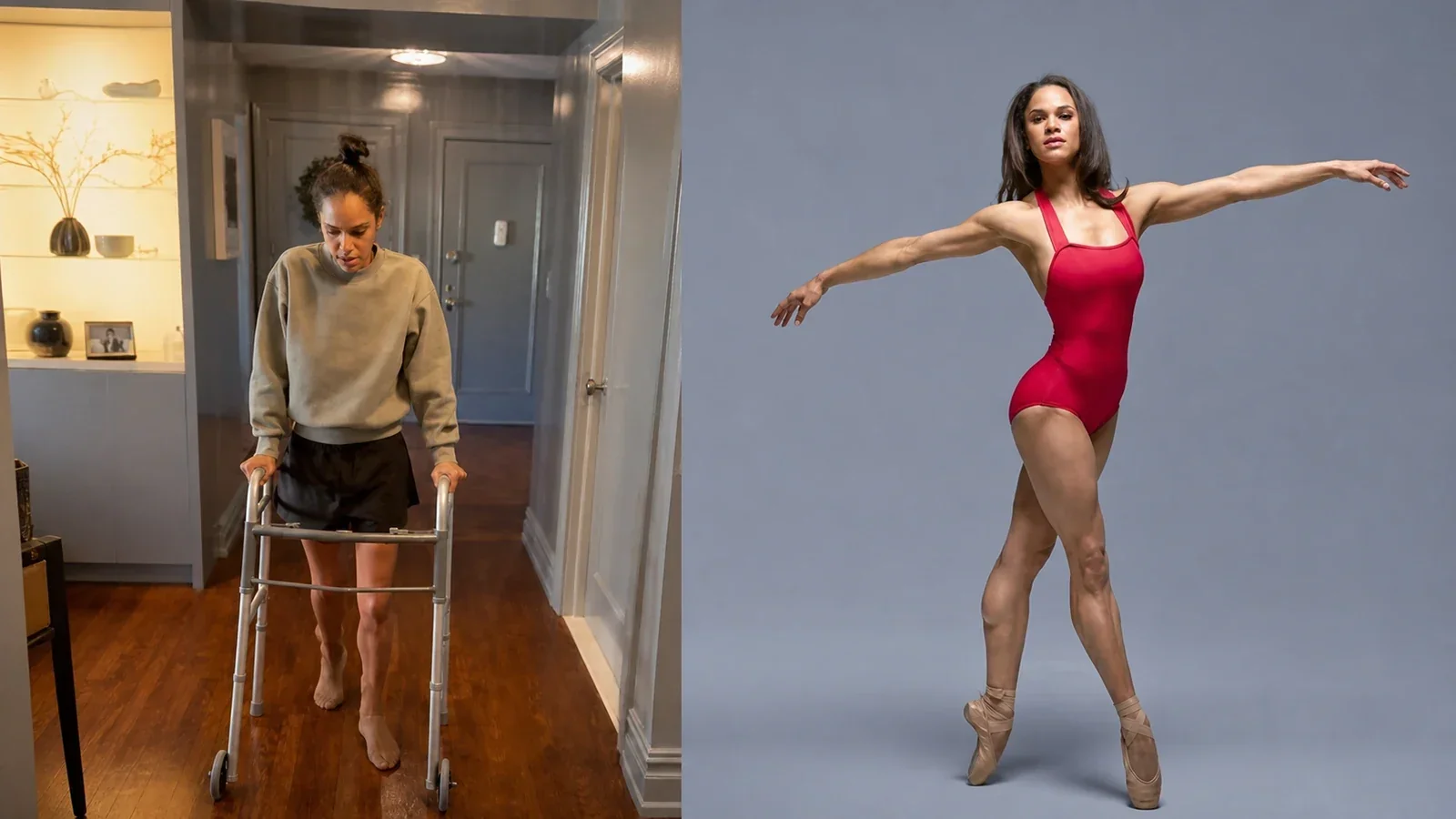

Misty Copeland spent two decades as one of the most recognized dancers in the world. In 2026 she became known for something else: a walker.
What actually happened
Copeland underwent a total hip replacement earlier this year. She shared her own recovery on social media, including video of herself using a walker in a hallway of her home.
The coverage that followed, from outlets including Yahoo Entertainment, TheGrio, and Hello Magazine, confirmed the surgery and described her recovery as slow and deliberate, not a quick bounce back.
Copeland has been open that the process has been difficult. She described it as a journey of patience rather than a straight line back to the stage.
Why a dancer’s hip wears out
A professional ballet career puts decades of repetitive, high range of motion stress on the hip joint. Turnout, deep pliés, and thousands of landings compress the joint in positions most people never ask their hips to hold.
That wear is cumulative. It often shows up years after the highest volume training has already happened, which is consistent with a dancer needing a joint replacement in her forties rather than her sixties.
None of that is unique to ballet. The same pattern shows up in any long career built on repeated joint loading, from gymnastics to certain manual trades.
A career spent training a joint to its limit and a recovery spent retraining that same joint from zero are the same discipline aimed in opposite directions.
What early hip replacement recovery actually looks like
Copeland’s walker footage is not a setback. It is a normal stage of recovery that most patients pass through, athlete or not.
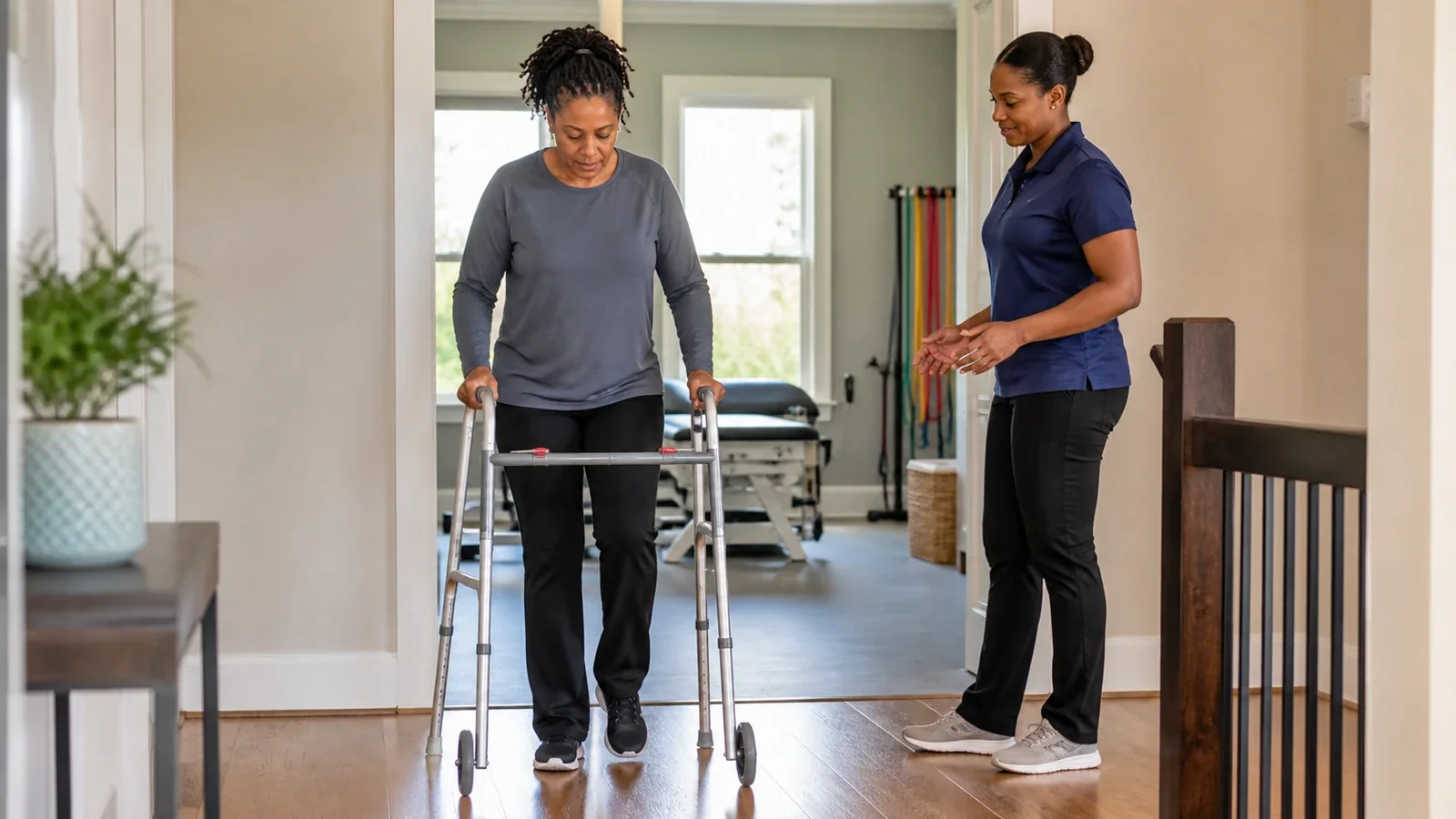
Physical therapists generally move a hip replacement patient through three broad phases: protected weight bearing with an assistive device, then unassisted walking and balance work, then a slow return to full strength and range of motion.
The early phase can last several weeks. It is the least visually impressive part of the process, and also the part where the joint sets up how the rest of recovery will go.
A trained athlete does not skip this phase. Copeland’s public timeline matches what any hip replacement patient is told to expect, not a special or accelerated track.
The Part of Recovery Nobody Films
Most public recovery stories skip straight from surgery to a highlight reel of the comeback. Copeland’s decision to post the walker video instead is the more useful thing to show.
The unglamorous middle of a joint recovery, slow steps, a walker, one hallway at a time, is where the actual rebuilding happens. Range of motion and basic gait control have to come back before any strength work means anything.
For a general reader facing their own joint replacement, the honest takeaway is not to push through it like an elite athlete. It is closer to the opposite.
Even elite athletes move through recovery one small, unglamorous stage at a time. There is no version of this process that skips ahead.
Nobody’s comeback story starts at the comeback. It starts at the walker, the hallway, and the first careful step nobody wants to post.
What this is not
This is not a claim that Copeland has endorsed, used, or recommended anything WorkoutHealthy sells. She has not, and we have no connection to her.
It is also not medical advice. A dancer’s rehab plan is built by her own surgeon and physical therapist around her specific joint and specific goals.
Anyone recovering from their own hip surgery should follow their own care team’s plan, not a celebrity’s social media timeline.
For more on how we handle stories like this one, see how we source Celebrity Fitness coverage. For general guidance on training around an injury rather than through one, see our guide to gym injury prevention and recovery.
This article reports what public figures have said about their training. It is not medical advice and nobody covered here endorses WorkoutHealthy or any product. How we cover celebrity fitness.