

Blood sugar after exercise can fall, rise or remain steady. A monitor reading and insulin sensitivity answer different questions.
Activity, food, treatment and individual responses make a single best hour misleading.
This guide separates what a glucose reading can show from what laboratory insulin sensitivity studies measure. It also offers a practical way to organize observations and questions for your diabetes care team, without assigning glucose targets or changing treatment.
The featured cycling illustration does not depict verified study participants, a documented clinical test or a measured glucose response.
Why blood sugar may go down, up or stay steady
According to the ADA, working muscles can take up glucose without insulin. Exercise can also make available insulin more effective during recovery.
These mechanisms do not guarantee a lower reading after every session.
The ADA’s 2026 standards note that intense activity can raise glucose, particularly when the starting glucose level is already elevated. They also emphasize that responses differ and that monitoring and activity plans need to be individualized.
| Observation | Useful context | Avoid this conclusion |
|---|---|---|
| A lower reading | Activity can increase glucose uptake; medication and food also affect the response. | A bigger drop is always better or safe. |
| A higher reading | Intense exercise can raise glucose, but an unexpected high still needs the response set out in your care plan. | Exercise never helps, or every exercise related high is harmless. |
| A similar reading | The reading describes that moment, rather than measuring your entire recovery period. | No useful physiological effect occurred. |
For someone with diabetes, whether a result is concerning depends on their personal targets, symptoms and treatment plan. This article cannot use the direction of a change to determine whether exercise should continue.
A glucose reading is not an insulin sensitivity test
A glucose monitor gives information about glucose levels. Insulin sensitivity describes how strongly the body responds to insulin, which researchers can investigate with controlled laboratory methods.
One such method is an insulin clamp, in which investigators administer insulin and control glucose conditions to study the response. It answers a different question from checking glucose after an ordinary workout and meal.
In a small 1988 study, Mikines and colleagues studied seven untrained men using clamps after rest, immediately after exercise and 48 hours after a 60 minute cycling session. Insulin mediated glucose uptake was higher at the two postexercise assessments.
That finding demonstrates a response under the study conditions. It does not identify everyone’s best hour, establish a personal glucose forecast or show that a similar effect follows every exercise session in people with diabetes.
What does the 24 to 48 hour research mean?
A review by Cartee describes enhanced insulin sensitivity that can persist for up to 24 to 48 hours after one session. It also distinguishes glucose uptake during contraction from the later response to insulin.
These are observations across particular studies and experimental conditions. They are not a clock that starts at the end of every walk and guarantees lower readings until a fixed closing time.
A second small study helps show why the measurement matters. Gordon and colleagues studied ten people with type 2 diabetes after one resistance exercise session and did not find significant changes in their fasting insulin sensitivity estimate at 24, 48 or 72 hours.
| Study | Measurement and finding | Important limit |
|---|---|---|
| Mikines et al., 1988 | Seven untrained men; clamp measured insulin mediated glucose uptake was higher immediately and 48 hours after cycling. | Small male sample; not a home glucose prediction for diabetes. |
| Gordon et al., 2013 | Ten people with type 2 diabetes; no significant change in the fasting HOMA2 estimate at 24, 48 or 72 hours after resistance exercise. | Small study and an indirect fasting estimate; not proof that resistance training has no benefits. |
These studies used different populations, exercise and measurements; they do not establish a universally better workout.
Why the reading immediately afterward is only part of the story
The ADA’s patient guidance says physical activity can lower glucose for 24 hours or more afterward. It also warns that low glucose can occur during activity or long after it, particularly for people using insulin or medicines that stimulate insulin release.
A rise at the finish does not rule out a later low.
The risk is not the same for everyone. The ADA notes that exercise related hypoglycemia is uncommon in people who do not use insulin or insulin releasing medicines, and routine preventive measures are not usually advised for that group.
Ask your team how long your own monitoring plan should extend after the types of activity you do. The answer may involve your medicines, usual patterns, meal schedule and the activity’s demands.
Do not use the research’s possible duration to invent a medication reduction, a snack rule or a schedule for deliberately pushing glucose lower. Those decisions belong in your individualized diabetes plan.
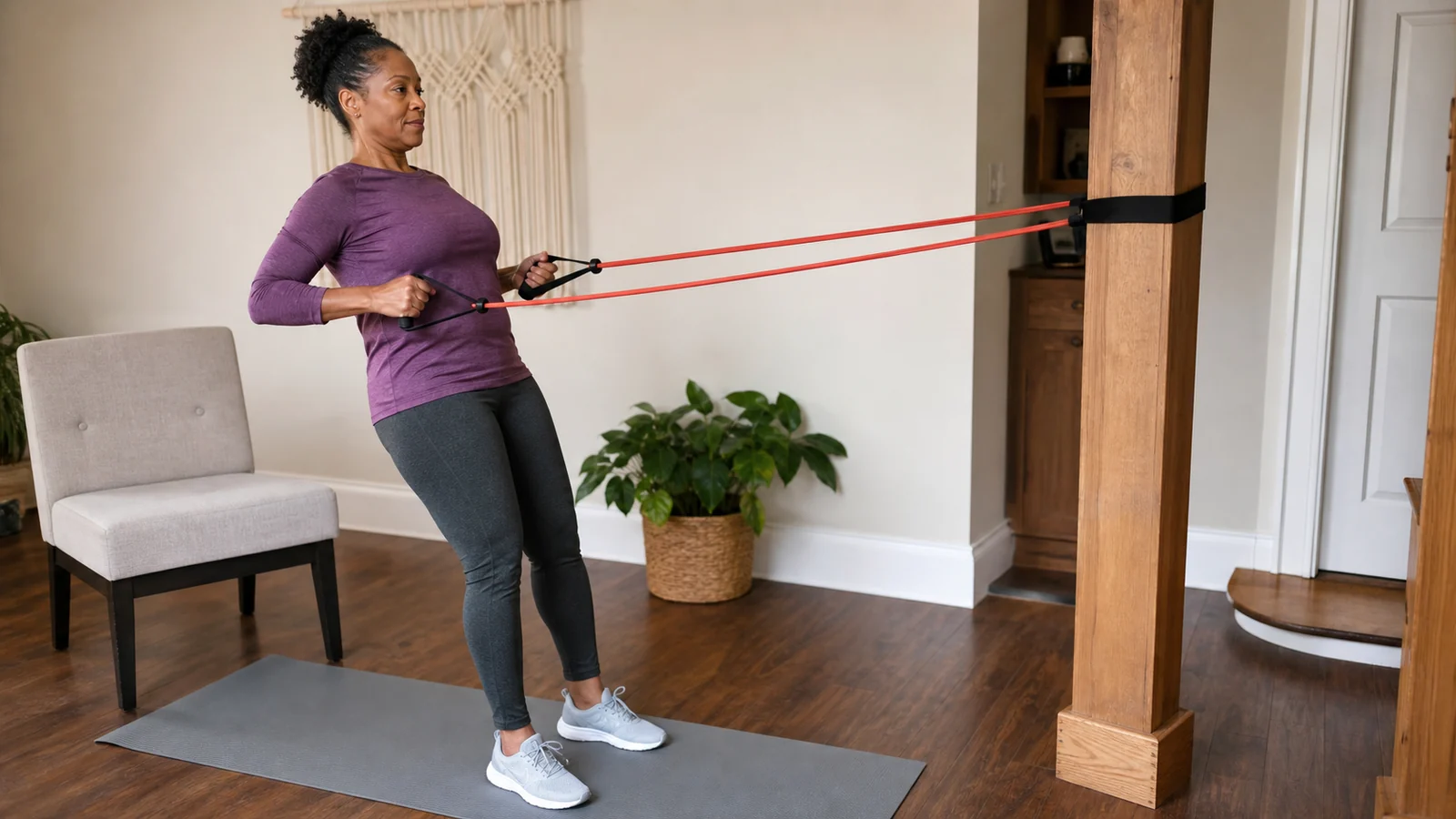
A useful exercise response note
When your care team asks you to collect glucose observations, include the context needed to interpret them. A number separated from the activity, meal and treatment details can leave important questions unanswered.
The following note is a conversation aid. Use the checking schedule and response instructions you have been given, rather than adding tests or changing your routine to fill every field.
- Activity: What did you do, when did it start and finish, and was it familiar or different from usual?
- Effort: How did the session compare with your usual effort, including any unusually demanding parts?
- Food context: When did you last eat or drink, and what information does your team want recorded?
- Treatment context: Which parts of your existing medication or device plan were relevant?
- Readings: What were the values and times, what device was used, and what units does it display?
- Symptoms and response: What did you notice, and what action did you take under your established plan?
- Question for review: What was unexpected, and what would you like the team to explain?
For example, imagine that Alex has a different reading after two exercise sessions. One followed a meal, while the other occurred at a different time with a different activity.
Those observations give the team something to discuss, but they do not isolate which difference caused the result. Alex does not need to repeat a worrying response or alter insulin to make the comparison more controlled.
A useful question is, “What information would help you interpret this pattern?” That is more productive than treating one session as a pass or fail test of whether exercise works.
Questions that turn general information into a care plan
NIDDK recommends reviewing activity changes with your healthcare professional, including abilities, medicines and meals. Bring specific questions rather than infer instructions from a research timeline.
- Which of my medicines can cause low glucose with activity?
- When should I check during and after my usual activities, including later in the day?
- What should I do if a reading or symptom is outside the limits in my plan?
- When should I contact the team, and what requires urgent help?
- Does my plan need to address ketones, device use or any diabetes complications?
NIDDK explains that insufficient insulin can cause high glucose and ketones that may lead to diabetic ketoacidosis. Do not dismiss unexpected highs or try correcting them with more exercise.
Follow your prescribed response plan and seek prompt medical advice when it calls for help or when you are unwell and unsure what to do. Severe low glucose that leaves someone unable to treat themselves is an emergency; the NIDDK guidance includes preparing helpers and calling emergency services.
One session and longer term glucose management are different questions
An immediate glucose reading cannot tell you how a program will change A1C over time. A study of insulin sensitivity after one session also cannot supply a guaranteed weekly dose for lowering that longer term measure.
Meal related activity timing is another separate question, discussed in our comparison of exercise after eating and blood sugar studies. That evidence does not override an individual’s medication or monitoring plan.
The practical goal here is understanding the response to a session well enough to discuss it accurately. Exercise can be useful without behaving like a predictable glucose lowering timer.
Medical disclaimer: This article provides general fitness and health education, not a diagnosis or a personalized diabetes treatment plan. Work with your healthcare team on exercise, glucose monitoring, medicines and responses to high or low readings.
References
American Diabetes Association. (n.d.). Blood glucose and exercise. Read the patient guidance.
American Diabetes Association Professional Practice Committee for Diabetes. (2026). Physical activity guidance in the 2026 standards. Diabetes Care, 49(Supplement 1), S89 to S131. Read the standards.
Cartee, G. D. (2015). Review of postexercise insulin sensitivity. American Journal of Physiology: Endocrinology and Metabolism, 309(12), E949 to E959. Read the review.
Gordon, B. A., Fraser, S. F., Bird, S. R., & Benson, A. C. (2013). Acute resistance exercise study in type 2 diabetes. Diabetes, Obesity and Metabolism, 15(5), 478 to 480. Read the study abstract.
Mikines, K. J., Sonne, B., Farrell, P. A., Tronier, B., & Galbo, H. (1988). Cycling and insulin-clamp study. American Journal of Physiology, 254(3), E248 to E259. Read the study abstract.
National Institute of Diabetes and Digestive and Kidney Diseases. (2023). Healthy living with diabetes. Read the guidance.
National Institute of Diabetes and Digestive and Kidney Diseases. (2021). Low blood glucose (hypoglycemia). Read the safety information.