
The eight recovery options here address different questions. Feeling less sore does not establish restored strength or faster repair.
Use this guide to separate optional comfort measures from food and sleep habits, then check what the research actually measured.
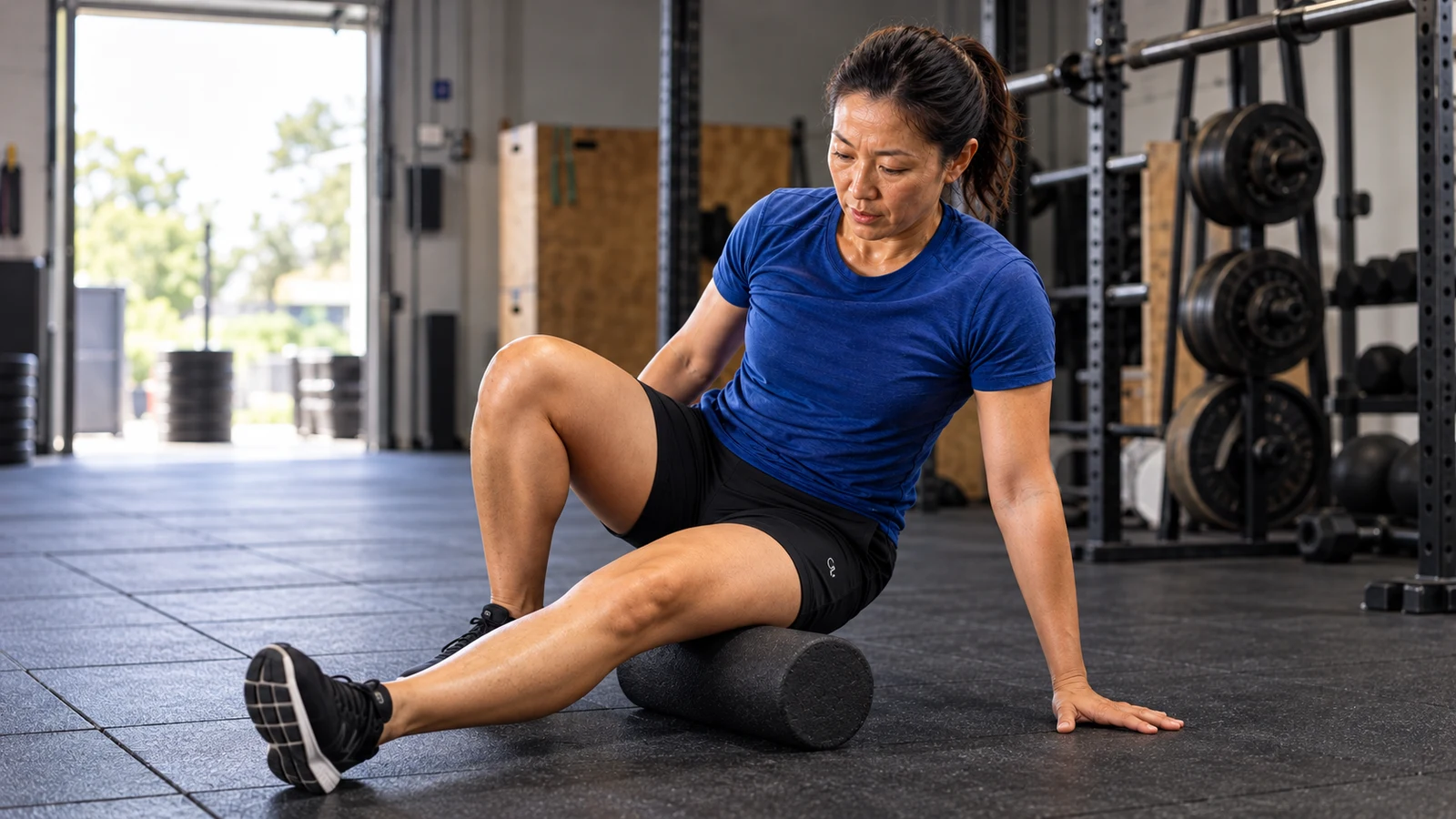
Image context: The featured image is an editorial illustration of foam rolling, not a validated medical demonstration.
What soreness can and cannot tell you
Delayed-onset muscle soreness, or DOMS, can follow unfamiliar exercise. Soreness alone is not a measure of workout quality.
Studies may measure soreness ratings, swelling, biological markers or performance. An improvement in one does not establish an improvement in all the others.
For the separate question of soreness and muscle growth, see our soreness and training-progress guide.
1. Cold-water immersion and 2. heat
A Cochrane review of 17 small trials involving 366 participants found lower soreness ratings after cold-water immersion than passive recovery. Study quality and safety reporting limited the conclusions.
That is a possible short-term symptom benefit, not a personal temperature or duration recommendation.
For the different question of repeated cold exposure after lifting and muscle growth, our cold-plunge research guide compares the study conditions.
Heat findings in a 2025 umbrella review concerned pain at selected follow-ups, amid limited-quality evidence. Heat should not be described as repairing exercised muscle.
3. Massage and 4. foam rolling
The Dupuy review found favorable soreness and perceived-fatigue results for massage across varied protocols. That does not establish faster tissue repair or a better long-term training result.
Rolling evidence is mixed: a 2024 review included 16 studies and 515 participants and reported favorable soreness findings. Its outcomes included soreness ratings and pressure-pain thresholds.
A 2023 review of five studies, with 151 participants, found no statistically clear soreness advantage over non-intervention control. Most participants were men, and study bias was moderate or high.
The reviews used different comparisons and eligibility rules. Neither provides a universal rolling schedule.
Massage and rolling remain optional, rather than a required recovery ritual.
5. Caffeine and 6. gentle movement
An older review of human trials discussed lower pain perception in some studies of caffeine. That is a symptom finding, not evidence that caffeine repairs exercised muscle.
This guide does not recommend adding caffeine or a high-dose supplement to treat soreness.
The 2025 umbrella review rated evidence for exercise as a DOMS treatment weak. Gentle movement is optional, not a required workout.
Feeling easier after warming up is not a reason to ignore concerning symptoms. It should not be used as a home clearance test.
7. Protein and 8. sleep
Protein’s role in muscle building is a different question from whether a supplement eases soreness. A 2014 review found insufficient evidence after a single exercise bout, while findings after repeated daily training were more favorable.
Keep meals in the broader recovery picture without treating a shake as a cure. Our protein research guide examines a different set of nutrition questions.
Sleep-loss research measures outcomes such as strength, muscular endurance and fatigue. It does not establish that an extra hour of sleep treats DOMS.
Food and sleep habits deserve attention alongside training decisions. This article supplies neither a personal nutrition target nor a sleep-treatment plan.
Stretching: comfort is a different question
A Cochrane review found little or no clinically important DOMS reduction from stretching before or after exercise in healthy adults. This does not mean that flexibility or an enjoyable stretch has no value.
For a separate comfort-focused finish to a workout, see our cool-down stretching guide. Its routine is not a promise of faster repair.
When soreness needs medical attention
CDC lists muscle pain worse than expected, tea- or cola-colored urine, and unusual weakness or tiredness as possible rhabdomyolysis symptoms. Seek medical attention immediately for these symptoms.
Symptoms may begin hours or days after an injury, and symptoms alone cannot diagnose the condition. Do not use delayed onset or the absence of one warning sign to clear yourself for exercise.
The takeaway
There is no requirement to use all eight options. Keep a comfort choice separate from decisions about injury, training load or nutrition.
Less soreness is one observation, not a certificate of complete recovery.
References
Dupuy et al. Post-exercise recovery techniques: systematic review and meta-analysis. 2018. Source.
Cochrane. Cold-water immersion for preventing and treating muscle soreness. Source.
Wiecha et al. Physical therapies for delayed-onset muscle soreness: umbrella review. 2025. Source.
Zhou et al. Preventive effect of foam rolling on muscle soreness after exercise. 2024. Source.
Medeiros et al. Foam roller or stick massage after exercise-induced muscle damage: systematic review. 2023. Source.
Caffeine ingestion and exercise-induced muscle damage markers: review of human trials. Source.
Post-exercise protein supplementation, muscle function and soreness: systematic review. Source.
Sleep loss and exercise outcomes: systematic review. Source.
Cochrane. Stretching to prevent or reduce muscle soreness. Source.
CDC. Signs and symptoms of rhabdomyolysis. Source.
Source scope: Review findings concern different methods, comparisons and follow-up times; the options were not tested as one eight-way contest.
Medical disclaimer: This article provides general fitness and recovery information, not medical advice. If you have an injury, ongoing pain or a medical condition, discuss suitable activity and recovery choices with a qualified healthcare professional.