
Charlize Theron spent up to four hours a day preparing for the fight choreography in Atomic Blonde. She also cracked two teeth from clenching her jaw under stress, and the injury required significant dental treatment.
Those facts support the image of a committed action performer, but they do not support the viral lesson that real change comes from embracing injury or showing up no matter what. A damaged tooth, bruised rib, or twisted knee is a cost to manage, not proof that training worked.
The Four-Hour Training Days Were Job Specific
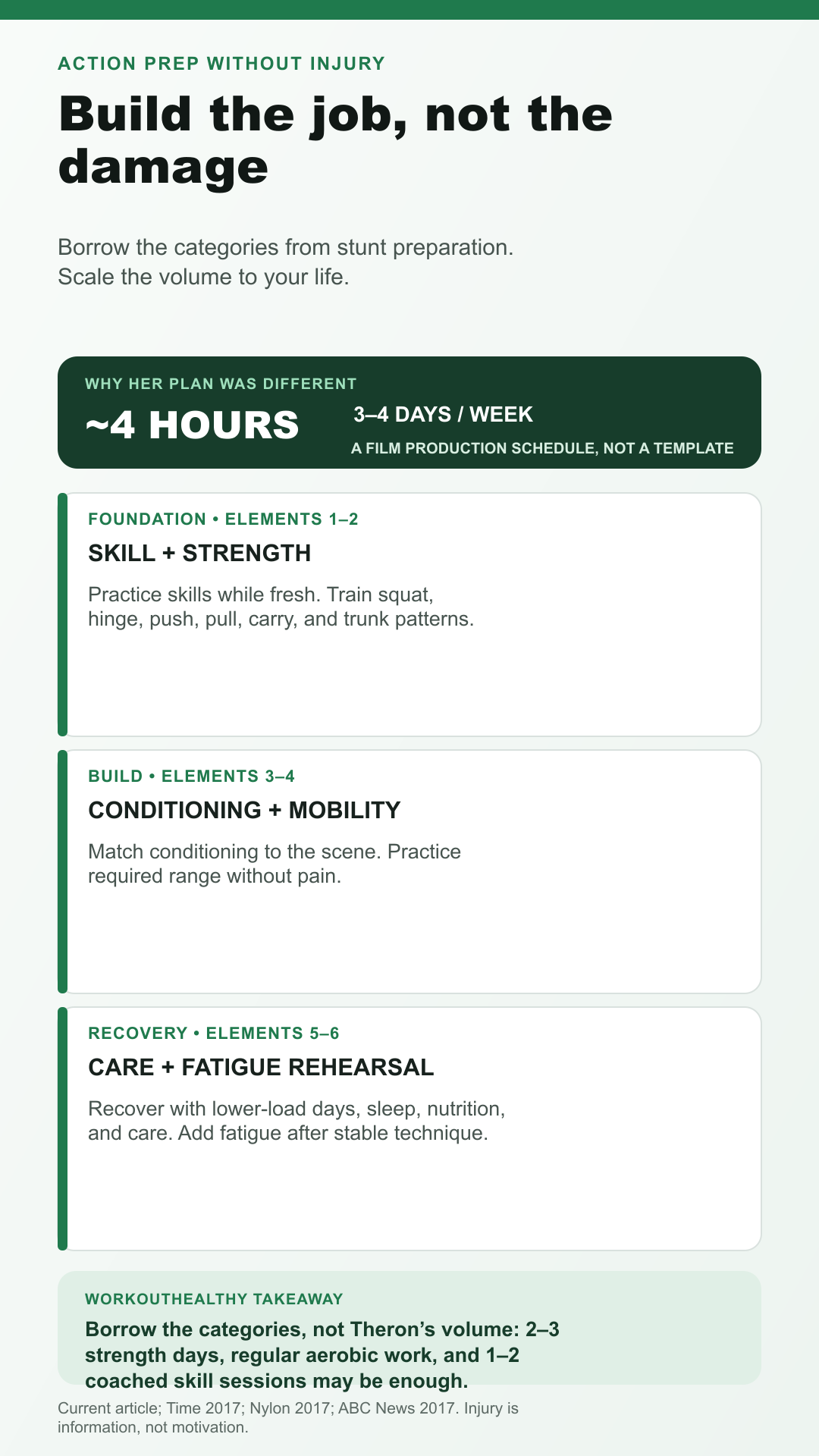
Director David Leitch said Theron trained three or four days per week for about four hours at a time. The block included roughly two hours of choreography drills followed by an hour or more of physical training and conditioning.
Time magazine likewise reported that she spent four hours a day at the gym created by Leitch and Chad Stahelski before filming. The purpose was not simply to look lean or strong; it was to make a long sequence of punches, throws, falls, weapon actions, and reactions look believable on camera.
A fight scene can last through repeated takes across a twelve-hour production day. Theron needed to remember choreography, hit marks, protect scene partners, maintain character, and reproduce movements after fatigue.
That makes the schedule closer to rehearsal for a demanding performance than to a standard gym plan. Most people do not need two hours of stunt choreography before strength work because they are not preparing to film a continuous stairwell fight.
Production also changes the meaning of readiness. A performer must sometimes deliver the same sequence from several camera angles, while a recreational athlete can stop once the planned training dose is complete.
Theron worked with a stunt team that could adjust spacing, pads, timing, and partner reactions. Copying a throw or fall without that environment removes the safety system while keeping the risk.
Even trained martial artists separate technical drilling, live practice, strength work, and recovery across the week. Combining everything into a single four-hour block is a deadline strategy, not proof that longer sessions are inherently better. The schedule only makes sense when the unusually specific job and professional support are included.
She Learned Skills Before Performing the Scene
The viral caption says Theron mastered martial arts, judo throws, and boxing combinations. Reports do support extensive fight and grappling practice, but movie choreography is designed for a camera, a partner, and a planned sequence rather than for unscripted competition.
That distinction does not reduce the athletic demand. Screen fighting requires timing, balance, spatial awareness, controlled force, safe falling, and the ability to sell an impact without actually injuring another performer.
Leitch’s team broke the work into choreography drills and conditioning because skill deteriorates when fatigue outruns preparation. Fundamentals were repeated until Theron could perform them reliably enough to add speed and complexity.
The transferable lesson is to practice the exact task under gradually harder conditions. It is not to copy four-hour days or assume pain creates useful skill.
The Cracked Teeth Were Real
Theron told ABC News that she cracked two teeth in the back of her jaw. Other interviews explained that prolonged clenching during preparation contributed to the damage and that treatment involved surgery, donor bone, and later dental hardware.
A cracked tooth is not ordinary muscle soreness. It is an injury that needs dental evaluation, and continuing to clench harder would not build useful tolerance.
Bruxism, stress, mouthguards, bite mechanics, and dental health are individual clinical issues. A stunt actor’s experience cannot be turned into a general recommendation to use a mouthguard or ignore jaw pain without professional advice.
Reports also described bruised ribs and a twisted knee during the production. The record does not establish that Theron never missed a session, and responsible coaching would modify training when an injury changes movement or safety.
Monster Was a Different Transformation
For the 2003 film Monster, Theron gained roughly 25 to 30 pounds, used prosthetic dental work, changed her hair and eyebrows, and wore makeup that altered her skin. She said the purpose was to serve the character of Aileen Wuornos rather than to complete a fitness challenge.
Interviews mentioned potato chips, Krispy Kreme doughnuts, and other calorie-dense foods, but Theron also pushed back against making the entire performance about the weight gain. She explained that the character’s life and limited access to nutrition mattered more than a stunt diet.
The gain was not a model for healthy bulking, just as the later action preparation was not a model for ordinary weight loss. Film transformations are temporary occupational projects supported by money, scheduling, wardrobe, makeup, and professional teams.
Body weight also does not move symmetrically across decades. Theron has said that later role-related weight changes were harder to reverse, which is another reason not to treat rapid gain and loss as harmless discipline.
Discomfort and Injury Are Not the Same
Training can include effort, breathlessness, muscle fatigue, and temporary soreness. Those sensations differ from sharp pain, joint instability, a traumatic impact, dental damage, or a sudden loss of function.
The caption says change happens when a person pushes past the point of wanting to quit. Sometimes that point is ordinary fatigue, but sometimes it is the body signaling that the current dose or movement is unsafe.
A useful program creates enough stress to improve while preserving the ability to practice again. Missing all future sessions because one day was heroic is not consistency.
Our article on Daniel Craig’s final Bond workout shows another film plan adjusted around age and accumulated wear. The account of Chris Evans’ Captain America preparation likewise separates the finished image from the demanding process.
What a Realistic Action-Preparation Week Includes
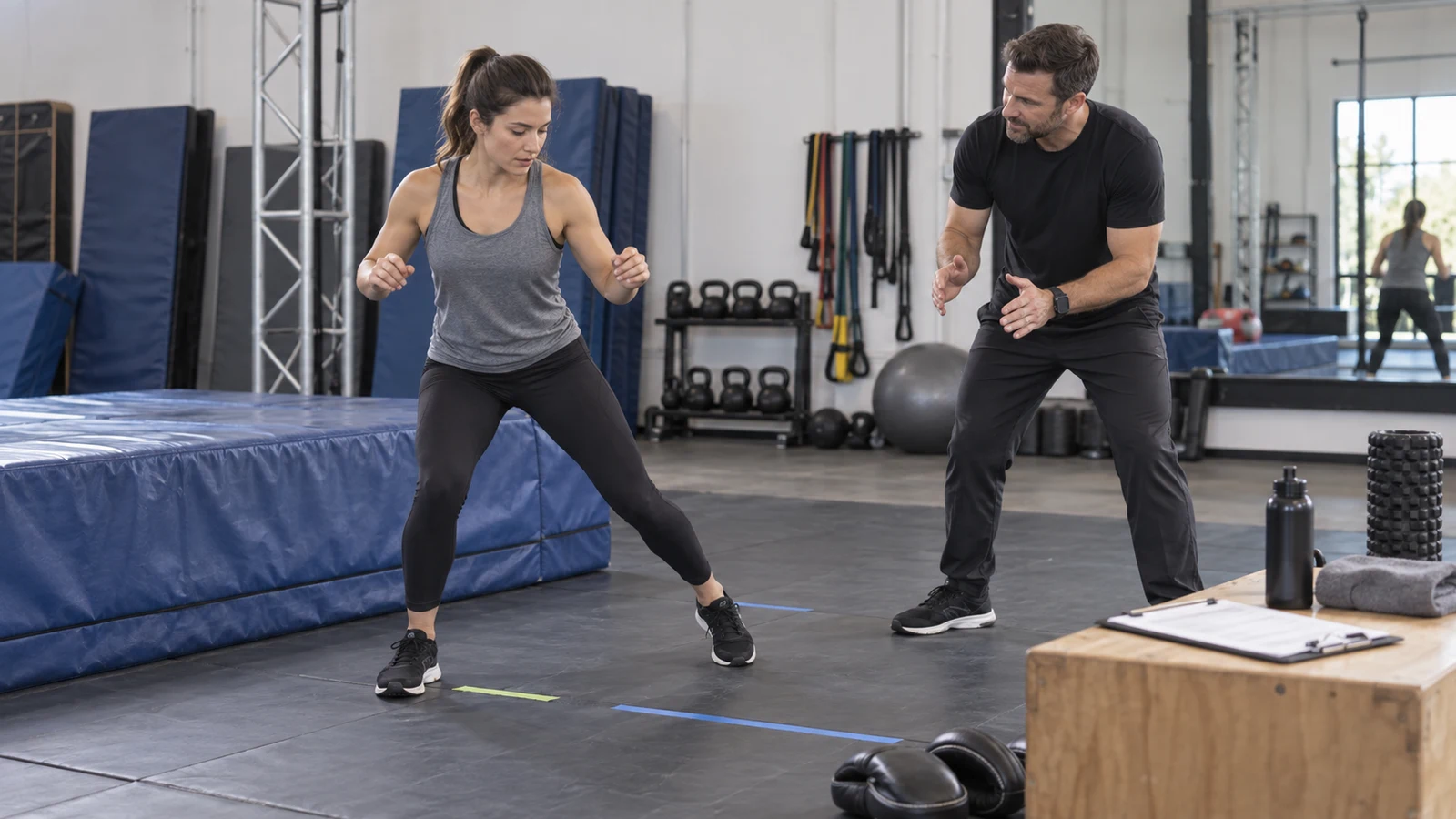
- Skill practice. Rehearse footwork, falls, strikes, or choreography while attention is fresh.
- Strength training. Use squats, hinges, pushes, pulls, carries, and trunk work that support the role’s demands.
- Conditioning. Build enough aerobic and repeated-effort capacity to reproduce scenes across long days.
- Mobility and range. Practice positions required by choreography without forcing painful range.
- Recovery. Schedule lower-load days, sleep, nutrition, and clinical care when symptoms appear.
- Rehearsal under fatigue. Add longer combinations only after safe technique is stable.
A recreational trainee can borrow that structure with much less volume. Two or three strength sessions, regular aerobic work, and one or two coached skill sessions may cover the same categories without becoming a second full-time job.
How to Borrow the Method Without Copying the Deadline
Start by naming the skill you actually want. A person who enjoys boxing might seek a coached beginner class for stance, footwork, and controlled combinations. Someone who wants to move more confidently may get more from basic strength work, walking, and practice getting up from the floor. Neither goal requires a stunt schedule.
Keep technical practice separate from the hardest conditioning at first. Learn a movement while you can pay attention to balance, distance, and control; add speed or longer combinations only when the fundamentals stay consistent. This is especially important for falls, throws, and partner drills, where an improvised setup can turn a rehearsed screen action into an avoidable injury.
Make room for recovery in the plan before it becomes necessary. A demanding session can be followed by easier movement or a different task rather than another all-out rehearsal. If a joint becomes unstable, a tooth hurts, or pain changes how you move, reduce or stop the activity and seek appropriate professional care. That is a change to the training dose, not a failure of discipline.
Finally, judge progress by repeatable skill and capacity rather than how dramatic a workout looks. The screen result came from preparation across many sessions and a coordinated production team. A useful personal version should leave you able to return and practice again.
Functional Is Not a Synonym for Extreme
Theron’s preparation was functional because it prepared her for specific screen actions. A deadlift can be functional for lifting strength, a walk can be functional for endurance, and a balance drill can be functional when it addresses a real need.
The word does not require unstable equipment, maximum fatigue, or martial-arts choreography. It requires a clear relationship between the training and the desired outcome.
For most adults, function includes climbing stairs, carrying groceries, getting off the floor, and participating in chosen activities. A plan can improve those tasks through simple progressive exercises performed well.
Role training also has a deadline and a visual target, while lifelong fitness needs room for work, family, illness, and changing goals. Sustainability is a feature, not a lack of grit.
Three Better Lessons From Theron’s Preparation
- Master the fundamentals gradually. Repeat basic patterns before increasing speed, complexity, or fatigue.
- Match conditioning to the task. Prepare for the duration and work-rest pattern the performance requires.
- Treat injury as information. Modify the plan and seek care instead of turning damage into motivation.
Consistency matters, but it means returning to appropriate training over time. It does not mean refusing every rest day or ignoring a clinician’s restrictions.
Discipline can include stopping a session, reducing a load, or performing rehabilitation work that looks unimpressive. Those choices protect the capacity to keep practicing.
The Transformation Was a Production, Not a Shortcut
Charlize Theron’s Atomic Blonde performance reflects extensive coaching, repeated choreography, conditioning, and professional stunt collaboration. Her earlier Monster transformation used different tools for a different story.
The two projects do not prove that the body will obey any command when the mind is locked in. They show that bodies adapt to specific demands and also carry real costs when deadlines become extreme.
The useful inspiration is the patient rehearsal behind the finished scene. Train for the task, respect injury, and let consistency include recovery rather than treating damage as the price of commitment.
Get the next evidence check.
Five practical fitness stories worth your time, every Friday.
One email a week. No product pitches. Unsubscribe in one click.
References
- Corliss, R. (2017). Charlize Theron’s four-hour Atomic Blonde training days. Time.
- Harris, H. (2017). Director David Leitch on Theron’s choreography and conditioning schedule. Nylon.
- ABC News. (2017). Theron on cracking two teeth during Atomic Blonde preparation.
- Splicedwire. (2003). Charlize Theron interview about the purpose of her Monster transformation.
- IndieLondon. (2004). Charlize Theron Q&A on gaining weight for Monster.
Medical disclaimer: This article is for general information only and is not medical advice. If you have an injury, ongoing pain, or a medical condition, talk to a doctor or physical therapist before you change how you train or eat.