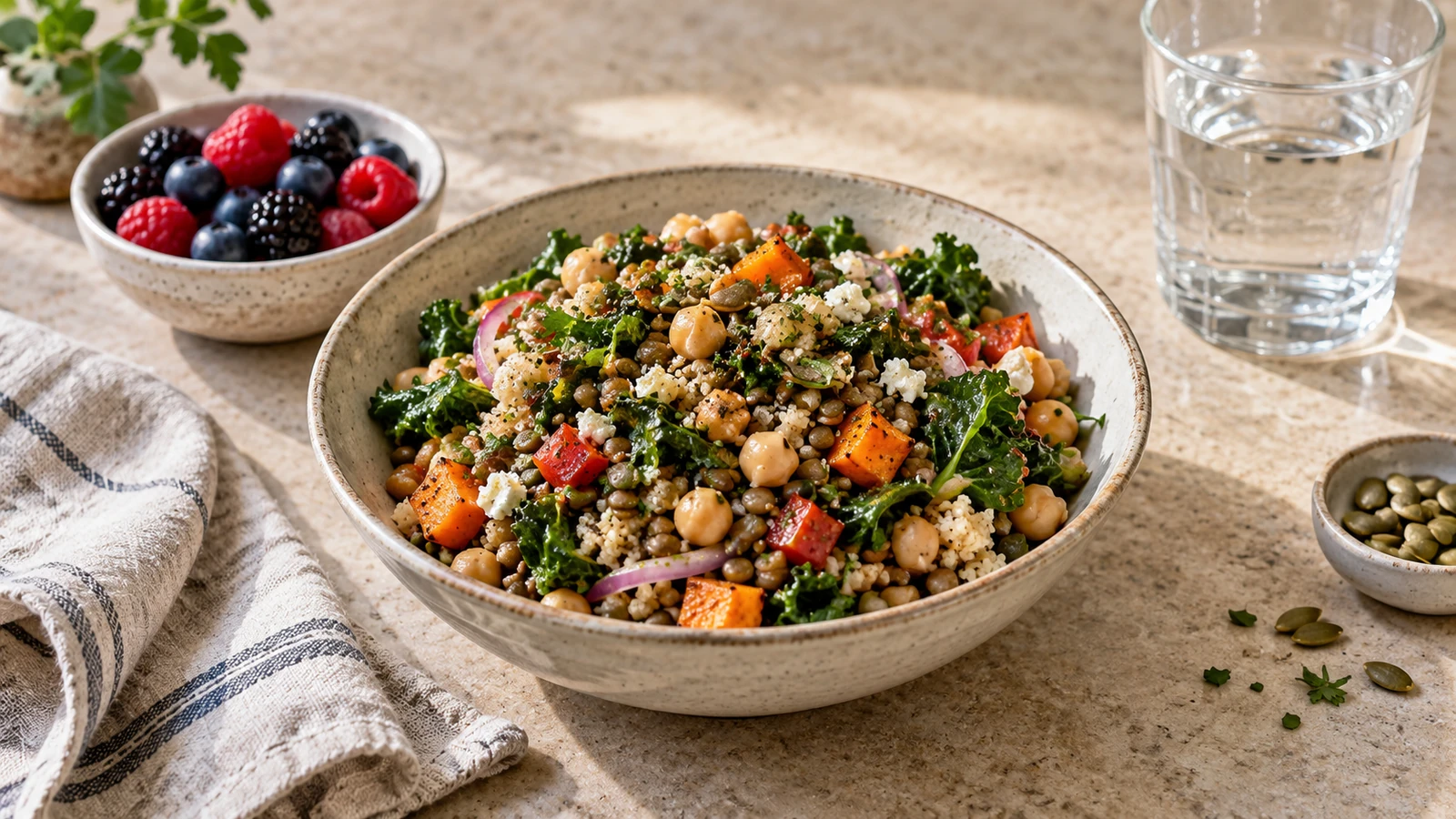

A bowl of oatmeal, a can of beans, frozen vegetables, fruit, plain yogurt, and a bag of nuts can make everyday meals easier. These familiar foods offer useful nutrients without requiring specialty ingredients or complicated recipes.
Think of the six choices below as flexible starting points, not foods you must eat every day. A varied eating pattern matters more than checking off a particular list, and your budget, culture, preferences, and health needs should shape what goes on your plate.
What makes a food useful for everyday meals?
A practical staple contributes nutrients, works in meals you enjoy, and fits the time and money you have. It also needs an alternative when it does not suit you.
The World Health Organization emphasizes dietary variety, including vegetables, fruit, whole grains, legumes, nuts, and other nutritious foods. These six suggestions put that broad idea into a shopping-and-cooking routine; they are not an official six-food formula or a complete diet by themselves.
1. Oats or another whole grain
Oats are a convenient starting point because they work as hot cereal, in baking, or in savory dishes. Whole grains contribute fiber, vitamins, and minerals, and generally provide more fiber than refined grains, according to Health Canada’s whole-grain guidance.
Make it a meal: Cook plain oatmeal and add sliced banana, plain yogurt, and cinnamon. For a savory option, serve cooked oats with beans, cooked spinach, and a little olive oil.
Affordable swaps: Compare plain oats with brown rice, whole-grain pasta, or whole-grain bread. Check the ingredient list rather than relying on a brown color or the word “multigrain.”
Choose the grain you will actually prepare and eat. A quick-cooking option can be more useful than a specialty grain that stays unopened.
2. Beans, lentils, or chickpeas
Beans and lentils bring plant protein and fiber to a meal. They can form its main ingredient or stretch a soup, stew, or rice dish without requiring a separate meat portion.
Make it a meal: Warm canned chickpeas with canned tomatoes, frozen vegetables, garlic, and your preferred spices. Serve with rice or bread, adjusting the seasoning to taste.
Affordable swaps: Choose whichever beans, lentils, or split peas fit your budget. Dried versions need preparation, while canned options save time; follow package directions when cooking dried beans.
Health Canada recommends lower-sodium canned legumes or draining and rinsing them to reduce sodium. Keep a can available for days when cooking from scratch is unrealistic.
3. Vegetables you enjoy, including frozen options
Vegetables add fiber and a range of vitamins and minerals. Rotate the types you buy rather than treating one expensive green vegetable as essential.
Make it a meal: Add frozen broccoli and carrots to a bean-and-rice bowl, or stir cooked spinach into a pasta sauce. Season with herbs, spices, lemon, or a little oil so the vegetables taste like part of the meal.
Affordable swaps: Compare seasonal produce with plain frozen vegetables and lower-sodium canned options. WHO recognizes fresh, frozen, and canned produce as useful choices, with attention to added sugars and excess sodium.
Buy amounts you can use, and follow the package’s preparation instructions, including cooking when required. Frozen vegetables let you take out what you need and leave the rest frozen.
4. Whole fruit
Apples, bananas, oranges, pears, and berries can all fit. You do not need an imported berry, juice cleanse, or powdered fruit blend to add fruit to your meals.
Whole fruit generally provides more fiber than juice. Health Canada’s fruit and vegetable guidance favors eating the produce itself for more fiber.
Make it a meal: Add chopped apple to oatmeal, serve an orange alongside lunch, or pair a banana with plain yogurt.
Affordable swaps: Buy the fruit that is reasonably priced where you shop. Unsweetened frozen fruit and canned fruit packed in water can be useful when fresh options are costly or spoil before you use them.
5. Plain yogurt or a suitable fortified alternative
Plain dairy yogurt contributes protein and calcium. The NIH Office of Dietary Supplements identifies yogurt as a calcium source, but the amounts in individual products vary.
Make it a meal: Add fruit and oats to yogurt, or mix plain yogurt with lemon and herbs for a sauce over vegetables and beans.
Affordable swaps: Compare unit prices on tubs and individual cups, buying a larger container only if you will finish it. Lactose-free dairy yogurt may suit some people with lactose intolerance.
If you choose a plant-based yogurt, compare its protein, calcium, vitamin D, and added sugars instead of assuming it matches dairy yogurt. For a drink or cereal topping, unsweetened fortified soy beverage is another option; the FDA explains why plant-based beverages differ nutritionally.
6. Nuts, seeds, or their butters
Nuts and seeds contribute protein and unsaturated fats. The National Heart, Lung, and Blood Institute includes them among nutritious protein and fat sources.
Make it a meal: Stir peanut butter into oatmeal, sprinkle sunflower seeds over a grain bowl, or add chopped nuts to yogurt. Choose products that suit your allergies and preferences.
Affordable swaps: Compare peanuts, sunflower seeds, and store-brand nut or seed butters with more expensive mixed nuts. Unsalted options make it easier to choose how much salt goes into the rest of the meal.
Turn the list into meals, not a daily checklist
Pick ingredients that can do more than one job. For example, a bag of oats, beans, frozen vegetables, bananas, plain yogurt, and peanut butter could support these combinations:
- Breakfast: Oatmeal with banana and yogurt, or peanut butter stirred into the cooked oats.
- Lunch: Beans and vegetables over a grain you already have, with a lemon-and-yogurt sauce.
- Another meal: Bean-and-vegetable soup with whole-grain bread and fruit alongside it.
These are meal ideas, not prescribed portions or a nutritionally complete daily menu. Other foods, including eggs, fish, tofu, and foods from your own traditions, can fit into a varied pattern.
Buy what you will use, and store it safely
Check your pantry before shopping, compare unit prices, and plan where leftovers will go. Buying a large package only saves money if you use it.
For cooked leftovers, USDA recommends prompt refrigeration within 2 hours, or within 1 hour when temperatures exceed 90°F. Divide large batches into shallow containers rather than leaving a pot on the counter to cool.
Keep the refrigerator at 40°F or below, and use refrigerated leftovers within 3 to 4 days or freeze them. Follow storage instructions on yogurt, opened packages, and other perishable foods.
Adapt the choices to your needs
Food allergies take priority over any healthy-food list. A seed butter is only an alternative to nuts if it is safe for your particular allergy and cross-contact requirements.
If you have celiac disease, ask your clinician or dietitian whether oats suit your diet and choose oats labeled gluten-free if you use them. NIDDK notes that cross-contact with gluten-containing grains is common.
Lactose intolerance and milk allergy are different conditions, so lactose-free dairy is not a substitute for avoiding milk when you have a milk allergy. NIDDK explains the distinction and options for managing lactose intake.
If you follow an individual medical diet, use that guidance rather than this general list. A registered dietitian can help find substitutions that meet your needs.
The everyday goal
Start with one useful addition to meals you already eat, such as beans in a soup or fruit alongside breakfast. Build variety over time instead of chasing six perfect foods.
For a closer look at one part of this eating pattern, read what research says about fiber and heart health.
Nutrition disclaimer: This article provides general nutrition information, not medical advice or an individualized meal plan. If you have a medical condition or need a special diet, consult a qualified healthcare professional or registered dietitian.