
Quick answer: Cheap healthy foods to buy include whole grains, beans or lentils, vegetables, whole fruit, plain yogurt or a suitable alternative, and nuts or seeds. Compare the actual packages where you shop, then choose foods you can prepare, store safely and use.
Use these categories as flexible starting points, then compare your own options with the package-use worksheet below. They are not a required daily menu or a claim that the same six products are cheapest everywhere.
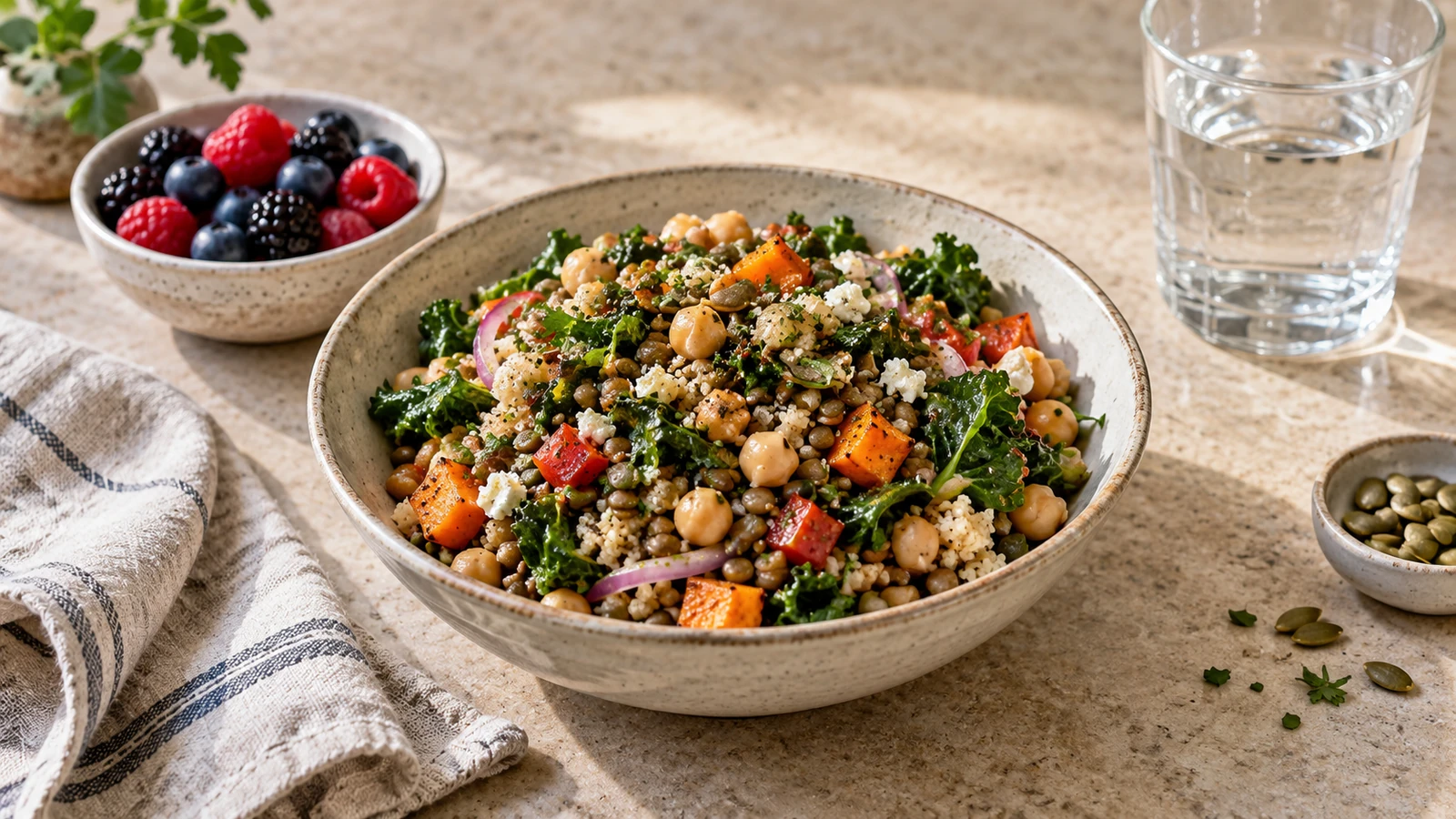
Image context: The pictured grain-and-legume bowl illustrates food variety. It is not a measured recipe, the shopping basket below or evidence of a particular meal cost.
How to Compare a Cheap Food at Your Store
Check the shelf tag for the unit price and compare like units. The USDA MyPlate budget guide recommends comparing unit prices, planning meals before shopping, and buying larger packages only when you can use them.
Make two calculations: the full-package cost you pay at checkout and the cost of the amount you expect to eat. If a larger tub costs less per ounce but you will discard part of it, a smaller tub may be the better buy.
- At the shelf: Write down the package price, size, and unit price for two comparable choices.
- At home: Estimate how much of each package your planned meals will use before its storage limit.
- Before choosing: Add the full prices of all packages to check whether the basket fits your actual budget. Treat unused food as a carryover only when you have a realistic plan to store and eat it.
Prices and package sizes vary by store, place, and season, so this method is more reliable than an old national list of foods under a fixed dollar amount. It also leaves room for a cheaper substitute when a specific item is unavailable.
A worked example: the bigger tub can cost more per amount eaten
This is a hypothetical price comparison, not a store survey. Suppose a 32-ounce yogurt tub costs 50% to 75% more than a 16-ounce tub, while containing twice as much yogurt.
| Question | 16-ounce tub | 32-ounce tub |
|---|---|---|
| Checkout cost | The reference price. | 1.5 to 1.75 times the smaller tub’s price. |
| Shelf cost per ounce | The reference cost per ounce. | 75% to 87.5% of the smaller tub’s cost per ounce. |
| If only 16 ounces will be eaten and the rest discarded | The reference cost per ounce eaten. | 150% to 175% of the smaller tub’s cost per ounce eaten. |
The large tub has the lower shelf unit price, but costs more at checkout and more per ounce eaten in that waste scenario. If you can safely use all 32 ounces in later meals, its lower unit price becomes relevant again.
Mississippi State University Extension explains unit pricing and recommends larger packages only when you can use, store or share them. Compare the same units, and distinguish edible food from packaging or liquid that you plan to discard.
Six Useful Food Groups and Their Practical Swaps
1. Oats or another whole grain
Plain oats work as hot cereal and in baking, while whole-grain bread or brown rice may fit your usual meals better. Whole grains can add fiber, and Health Canada’s guidance explains why choosing whole grains is useful.
Compare bread by loaf size and how many slices you will use before it dries out. Freeze extra bread if its package permits rather than choosing a larger loaf solely for its lower unit price.
2. Beans, lentils, or chickpeas
Beans and lentils bring plant protein and fiber to soups, bowls, and sandwiches. Compare canned and dried choices by the preparation time you have, not just by the shelf tag.
Canned beans are convenient for the example below; Health Canada suggests lower-sodium choices or draining and rinsing to reduce sodium. Follow package directions when preparing dried beans, since cooking needs differ by type.
3. Vegetables you enjoy
Plain frozen vegetables let you use part of a bag while keeping the rest frozen. Fresh seasonal or lower-sodium canned vegetables can be good swaps when their local price and your use plan work better.
Rotate colors and types rather than treating one expensive green vegetable as essential. Follow the package directions, including any instruction to cook a frozen product before eating it.
4. Whole fruit
Choose fruit you enjoy and can finish, whether that means bananas, apples, oranges, or another local option. Unsweetened frozen fruit can help when fresh fruit spoils too quickly in your home.
You can serve fruit alongside another meal or add it to yogurt and cereal. Buy the amount you expect to eat, even if a larger bag has a better unit price.
5. Plain yogurt or a suitable alternative
Plain dairy yogurt can contribute protein and calcium, with amounts varying by product; NIH lists yogurt among food sources of calcium. Compare a larger tub with smaller cups based on both the unit price and whether you can finish the opened product as its label directs.
Compare protein, calcium, vitamin D and added sugars on the actual yogurt or alternative’s Nutrition Facts label. If using a beverage instead, the FDA explains that milk and plant-based drinks differ nutritionally; that beverage guidance does not establish that every plant-based yogurt matches dairy yogurt.
6. Nuts, seeds, or their butters
A spread or small handful can add flavor and unsaturated fat to meals, as reflected in NHLBI’s food guidance. Compare peanuts, sunflower seeds, and store-brand nut or seed butters with costly mixed nuts.
Food allergies come first. A seed butter is a substitute only when it is safe for your specific allergy and cross-contact needs.
A Two-Person Shopping-to-Meals Worksheet
These are untested assembly ideas for three meals shared by two adults, not a complete day of eating or a prescribed portion plan. The listed package sizes are examples to make the arithmetic visible; choose the sizes and foods that fit your household.
Before shopping, check whether you already have the pantry basics: water, cooking oil, cinnamon or another breakfast seasoning, and herbs or spices for the savory meals. Those basics are outside the six-food basket, and any that you must buy belong in your checkout total.
| Food group and example package | Use across three meals | Plan for the rest |
|---|---|---|
| One whole-grain bread loaf with about 20 slices | Four slices for breakfast, four for lunch, four with dinner | Freeze the remaining slices if you will not use them soon, following the package directions |
| Two cans of beans, about 15 ounces each | One can at lunch and one at dinner | No opened can remains in this example |
| One 12-ounce bag of plain frozen vegetables | About half with lunch and half with dinner | No opened bag remains in this example |
| Four pieces of whole fruit | Two at breakfast and two alongside dinner | No fruit remains in this example |
| One 16-ounce tub of plain yogurt | About 4 ounces at breakfast and 4 ounces as a lunch sauce | Use the rest in later meals within the label’s storage guidance |
| One jar of nut or seed butter | Spread an amount you enjoy on breakfast toast; record the amount actually used | Store the remaining jar as its label directs and plan another use |
These quantities show where packages go; they do not prove that the basket meets anyone’s full nutrition needs. The nut or seed butter and yogurt remain for other meals, while the bread carryover needs a freezer or a near-term plan.
Three meals from the same basket
- Breakfast for two: Toast four slices of bread, spread with nut or seed butter, and serve with two pieces of fruit. Divide the planned yogurt between the two plates, or save it for another meal if breakfast already works for you.
- Lunch for two: Warm one drained can of beans with half the frozen vegetables according to the package directions. Spoon them over four slices of toasted bread and add a yogurt sauce made with the herbs or spices you already have.
- Dinner for two: Heat the second can of beans with the remaining vegetables and water as a simple soup or thick stew, seasoning it to taste. Serve with four slices of bread and the remaining two pieces of fruit.
Change the combinations to fit your culture and appetite. Eggs, fish, tofu, additional vegetables, and other foods can belong in a varied eating pattern; this worksheet simply shows how one small basket can cross over several meals.
Fill In the Local Cost Before Deciding
For each row above, record the shelf price in your own list: bread $____, beans $____ plus $____, vegetables $____, fruit $____, yogurt $____, and butter $____. Add those full-package prices, plus any missing pantry basics, to get the checkout total.
Then mark the amount left after the three meals and its next use. In this example, 12 of 20 bread slices are allocated, so the three-meal ledger uses 60% of the loaf’s purchase cost while the remaining 40% belongs to later meals if eaten.
Half the 16-ounce yogurt tub is allocated, so its planned consumed cost is half its price. That accounting does not lower what you pay at checkout, and food that spoils is a cost rather than a saving.
For canned beans, the 15-ounce label includes the product as sold and may include liquid you drain. Do not call it 15 ounces of drained beans or apply a dried-bean unit price to cooked beans without a consistent yield basis.
Store the Basket Safely
Keep the vegetables frozen until needed and follow the bread, yogurt, and nut or seed butter labels for storage after opening. Refrigerate yogurt promptly after serving; do not assume all alternative yogurts have the same storage life.
If you cook extra soup or another dish, USDA says to refrigerate leftovers within two hours, or within one hour when temperatures exceed 90°F. Divide large batches into shallow containers, keep the refrigerator at 40°F or below, and use refrigerated leftovers within three to four days or freeze them.
Reheat leftovers to 165°F as measured with a food thermometer, and bring reheated soup to a rolling boil.
Make Substitutions That Work for You
If you have celiac disease, ask your clinician or dietitian which whole grains suit you and check labels for gluten cross-contact. NIDDK explains the special caution needed with oats.
Lactose intolerance and milk allergy are different. Lactose-free dairy may suit some people with lactose intolerance, but it is not a milk-allergy substitute; NIDDK explains the distinction.
If you follow an individual medical diet, use that guidance instead of this general list. A registered dietitian can help you choose substitutions that meet your needs.
What to Take to the Store
Start with meals you already like, choose six flexible categories, and compare actual local packages. Use the worksheet to see both what you will pay today and what will remain for later meals.
- Meal: Name where the food will go, rather than buying it only because it is on sale.
- Local comparison: Record store/date, package size, price and comparable unit price.
- Next use: Name the meal, storage space and package instructions for anything left.
- Reality check: Include missing pantry ingredients and foods needed beyond this small basket.
If refrigeration, a stove or freezer space is unavailable, change the basket before buying it. Choose options you can handle safely with the equipment you have, rather than following a worksheet that assumes a different kitchen.
References
- US Department of Agriculture. (2022). Eat healthy on a budget. MyPlate, FNS-905-23.
- Mississippi State University Extension. (2024). Food shopping for one or two. Publication 3987.
- Health Canada. Eat whole grain foods; and Eat protein foods.
- US Food and Drug Administration. How to understand and use the Nutrition Facts label; and Milk and plant-based milk alternatives: Know the nutrient difference.
- US Department of Agriculture, Food Safety and Inspection Service. Leftovers and food safety.
- National Institute of Diabetes and Digestive and Kidney Diseases. Eating, diet, and nutrition for celiac disease; and Definition and facts for lactose intolerance.
- National Institutes of Health. Calcium: Fact sheet for consumers. Office of Dietary Supplements; and Heart-healthy living: Choose heart-healthy foods. National Heart, Lung, and Blood Institute.
Nutrition disclaimer: This article provides general nutrition information, not medical advice or an individualized meal plan. If you have a medical condition or need a special diet, consult a qualified healthcare professional or registered dietitian.