
Nonmedical anabolic-androgenic steroid use can increase muscle and strength, but women may experience virilization, menstrual disruption, fertility effects, lipid changes, heart risks, and psychological symptoms.
Some effects improve after exposure ends. Others, especially voice deepening and clitoral enlargement, may persist. Recovery depends on the drug, dose, duration, combinations, individual susceptibility, and whether other health conditions are present.
The most important correction is that no online cycle can guarantee reversible side effects.
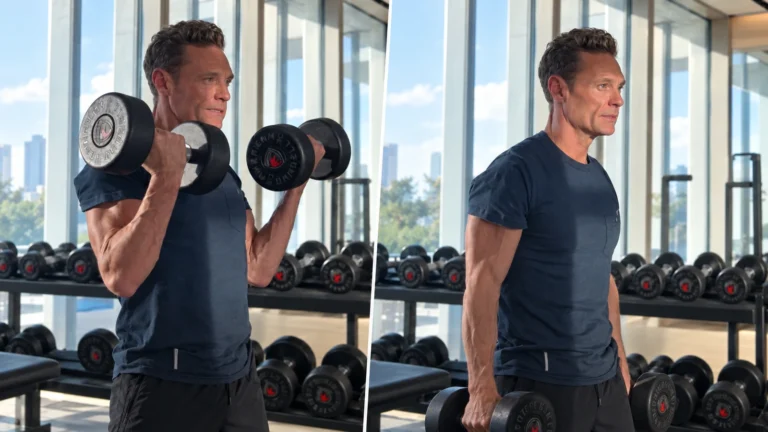
Visual note: The featured image illustrates strength. A muscular appearance alone does not show that the person uses anabolic steroids.
Risk Snapshot
| System | Possible effects |
|---|---|
| Voice | Lower pitch, hoarseness, instability, vocal fatigue |
| Skin and hair | Acne, oily skin, facial hair, scalp hair loss |
| Reproductive | Irregular or absent periods, impaired ovulation, fertility effects |
| Anatomical | Clitoral enlargement, breast tissue changes |
| Cardiovascular | Adverse lipids, blood pressure changes, heart remodeling, clot risk |
| Liver | Enzyme elevation and injury risk, especially with some oral agents |
| Mental health | Mood changes, irritability, anxiety, depression, dependence |
What Anabolic-Androgenic Means
Anabolic effects promote tissue building, including muscle protein synthesis. Androgenic effects influence traits associated with male sex hormones, including hair patterns, voice, skin, and reproductive signaling.
Drug marketing sometimes describes a compound as mild or mostly anabolic. In real people, the two effect families cannot be separated perfectly.
A substance capable of increasing muscle can still activate androgen receptors in the voice, skin, hair follicles, and reproductive system.
Virilization Is a Cluster, Not One Symptom
Virilization can include voice deepening, facial or body hair growth, scalp hair loss, acne, menstrual changes, increased libido, clitoral enlargement, and changes in breast tissue.
A review of sport, doping, and female fertility describes these effects and the disruption of reproductive hormone signaling.
Not every person develops every symptom, and the sequence is not predictable.
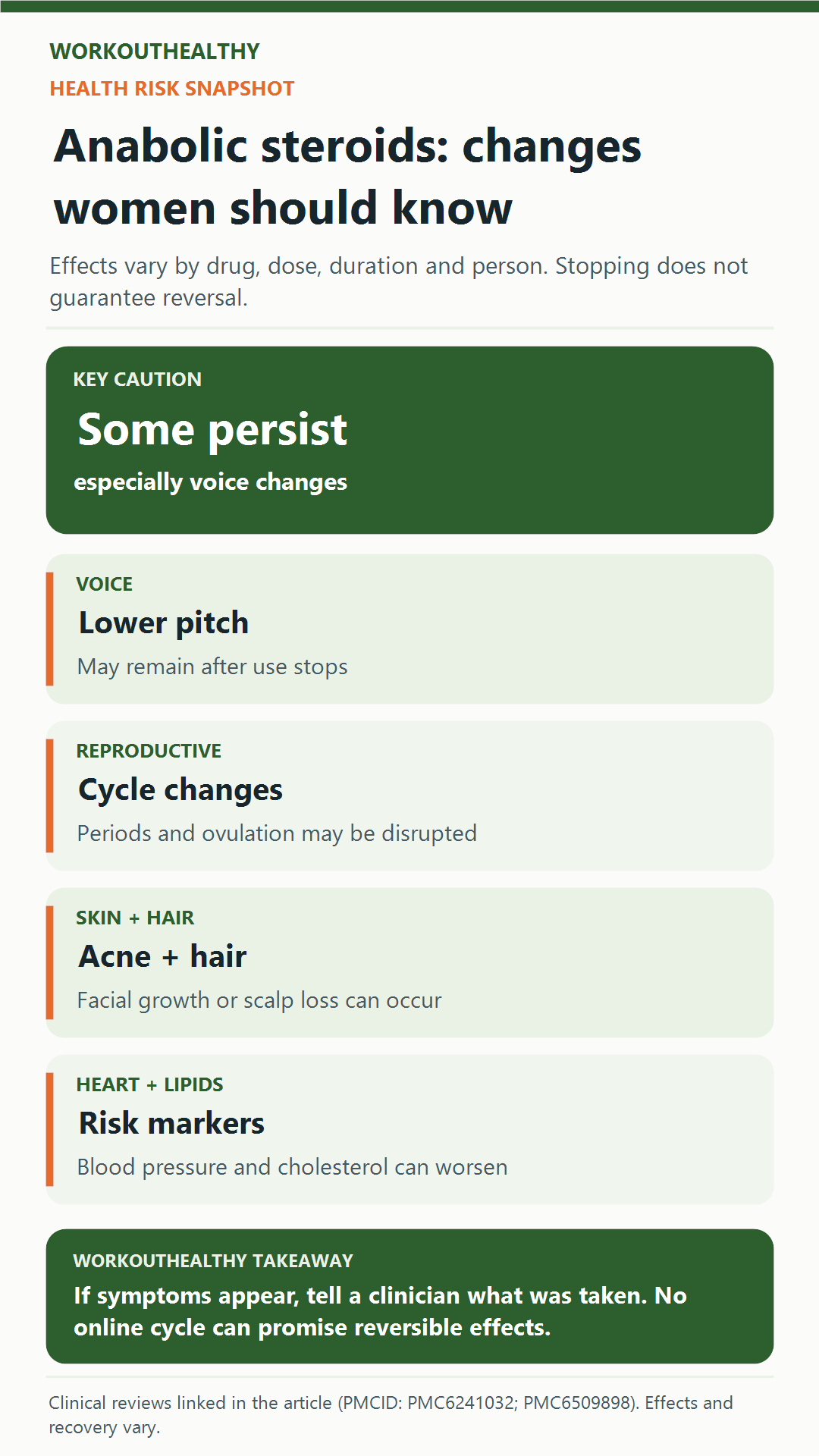
Voice Change Can Persist
Androgens can thicken vocal folds and alter laryngeal tissues, lowering pitch and changing stability. A 2025 scoping review found that intramuscular testosterone or anabolic steroid exposure was associated with pitch lowering and voice instability.
A 20-year case report followed a female bodybuilder whose androgenized voice persisted after a short exposure and required several procedures.
That case does not predict every outcome, but it shows why early hoarseness deserves attention.
Stopping Does Not Guarantee the Original Voice Returns
Some vocal symptoms may improve, but structural thickening can remain. Surgery and voice therapy may help selected patients without restoring the exact original range.
People who sing or depend on their voice professionally may notice loss of upper range, fatigue, or instability before ordinary conversation sounds dramatically different.
Persistent hoarseness or pitch change should be assessed by a clinician, often with an ear, nose, and throat specialist or voice team.
Clitoral Enlargement May Be Long Lasting
Clitoral growth is another virilizing effect that may not fully reverse. Sensation, sexual function, and psychological impact vary from person to person.
It is inaccurate to promise that cycling off will return anatomy to baseline. It is also inappropriate to use shame when discussing a medical effect.
A confidential clinician can evaluate symptoms and discuss options without relying on gym folklore.
Periods Can Become Irregular or Stop
External androgens can suppress the hypothalamic-pituitary-ovarian axis, altering luteinizing hormone, follicle-stimulating hormone, estrogen, ovulation, and menstrual cycling.
Some people develop oligomenorrhea, meaning infrequent periods, or amenorrhea, meaning absent periods. Training stress, low energy availability, pregnancy, thyroid disease, and other conditions can produce similar changes.
A missed period should not automatically be blamed on training or steroids without medical assessment.
Fertility Effects Are Real but Uncertain
Ovulation and cycle regularity may recover after AAS use stops, but the timing is variable and female long-term data are limited. Fertility also depends on age, ovarian reserve, other health conditions, and partner factors.
The claim that steroid use always causes permanent infertility is too absolute. The claim that fertility always returns is also unsupported.
Anyone who may want a pregnancy should discuss exposure with an obstetrician-gynecologist or reproductive endocrinologist.
Pregnancy Adds Fetal Risk
Androgen exposure during pregnancy can affect fetal development. People who are pregnant, could be pregnant, or are trying to conceive need prompt medical advice about any hormone or performance-enhancing drug.
Stopping abruptly without guidance may create other problems when multiple substances are involved. A clinician needs the honest compound list and timeline.
Confidential care is safer than hiding use until symptoms become severe.
Skin and Hair Changes Can Become Visible Early
Acne, oilier skin, facial hair growth, and scalp hair thinning are commonly reported. Hair changes reflect both androgen exposure and genetic susceptibility.
Acne may improve after exposure ends, but scarring can remain. Scalp hair loss may also persist if follicles miniaturize.
Dermatology care can address the consequences, but it cannot make continued androgen exposure risk free.
Facial Bone Restructuring Is Not a Supported Claim
Social posts sometimes say AAS permanently changes an adult woman’s facial bones. The evidence reviewed for this article does not support presenting that as a typical established effect.
Changes in muscle, fluid balance, skin, body fat, hair, and acne can alter facial appearance without adult bone remodeling.
Removing unsupported claims makes the well-documented risks easier to trust.
Cholesterol and Blood Pressure Can Worsen
AAS can lower HDL cholesterol, raise LDL cholesterol, and affect blood pressure. Those changes may increase cardiovascular risk, especially when combined with smoking, stimulant use, sleep apnea, or a family history of early heart disease.
Our review of cardio, strength, and heart health explains why looking strong does not replace cardiovascular risk assessment.
Routine lab work should be interpreted by a clinician, not just compared with bodybuilding reference posts.
The Heart Itself Can Change
Research on AAS use, much of it in men, links long-term exposure with changes in heart structure and function, arrhythmias, and cardiovascular events. Female-specific dose and outcome data remain thinner.
Limited evidence is not evidence of safety. It means clinicians and users have less certainty when estimating an individual’s risk.
Chest pain, fainting, severe shortness of breath, or a sustained irregular heartbeat requires urgent evaluation.
Some Oral Steroids Increase Liver Risk
Certain orally active AAS are particularly associated with liver enzyme elevation, cholestatic injury, and other hepatic problems. Supplements may also be mislabeled or contaminated.
Normal liver enzymes at one test do not prove there is no risk. Symptoms such as yellowing skin, dark urine, pale stools, severe itching, or right upper abdominal pain need prompt care.
Alcohol and other drugs can add further strain.
Mood and Dependence Matter
AAS use can be associated with irritability, anxiety, aggression, mood swings, depression, and dependence. Symptoms may intensify during use or after stopping as hormone levels change.
People can also feel trapped by fear of losing muscle or by a body image standard that keeps escalating.
Suicidal thoughts, severe agitation, paranoia, or inability to function are reasons to seek urgent mental health support.
Product Labels May Not Be Reliable
Nonmedical products can contain a different compound or dose than the label claims. That makes risk predictions based on a named mild drug even less dependable.
Combining several agents, sometimes called stacking, makes it harder to identify what caused a symptom and can compound cardiovascular, liver, and psychological effects.
This article does not provide sourcing, dose, or cycle instructions because no such plan can remove those risks.
Women Are Underrepresented in the Evidence
Much of the detailed cardiovascular research on nonmedical AAS involves men. Women who use these drugs are also less likely to disclose use or may encounter clinicians unfamiliar with performance-enhancing drugs.
That gap makes qualitative reports and case studies important while limiting precise estimates of frequency and recovery.
Good counseling should acknowledge uncertainty without minimizing danger.
What to Tell a Clinician
Bring the actual product names, photos of labels, estimated doses, dates, injection or oral route, other supplements, contraception, menstrual history, pregnancy possibility, and current symptoms.
Ask about blood pressure, complete blood count, liver tests, lipids, reproductive hormones when appropriate, and heart evaluation based on symptoms and history.
Accurate information helps the clinician protect you. It is not a confession.
Do Not Wait for Severe Virilization
Early hoarseness, new facial hair, scalp shedding, acne, cycle disruption, or genital change deserves attention. Continuing exposure while waiting to see whether it gets worse can reduce the chance of full recovery.
Our guide to practical strength advice shows that long-term progress can be built through training fundamentals without turning every goal into a pharmacology problem.
Health is part of performance, not an obstacle to it.
The Best Version of the Warning
Women can experience androgen-specific AAS effects, and some changes may persist after stopping. Voice deepening has documented long-term cases, while fertility recovery and the reversibility of other symptoms vary.
The viral post is right to reject the idea that cycling off guarantees a reset. It goes too far if it presents every effect as permanent or includes unsupported facial-bone claims.
Accurate risk communication replaces fear with decisions based on evidence.
Bottom Line
Nonmedical AAS use can change appearance, reproductive function, cardiovascular risk, liver health, and mood. There is no reliable low-risk shortcut that guarantees the desired muscle gain without virilization.
If you are using or recently stopped, seek confidential medical care and disclose what you took. Early assessment is especially important for voice changes, menstrual loss, pregnancy concerns, chest symptoms, or severe mood changes.
Get the next evidence check.
Five practical fitness stories worth your time, every Friday.
One email a week. No product pitches. Unsubscribe in one click.
Medical disclaimer: This article is for general information only and is not medical advice. If you have an injury, ongoing pain, or a medical condition, talk to a doctor or physical therapist before you change how you train or eat.