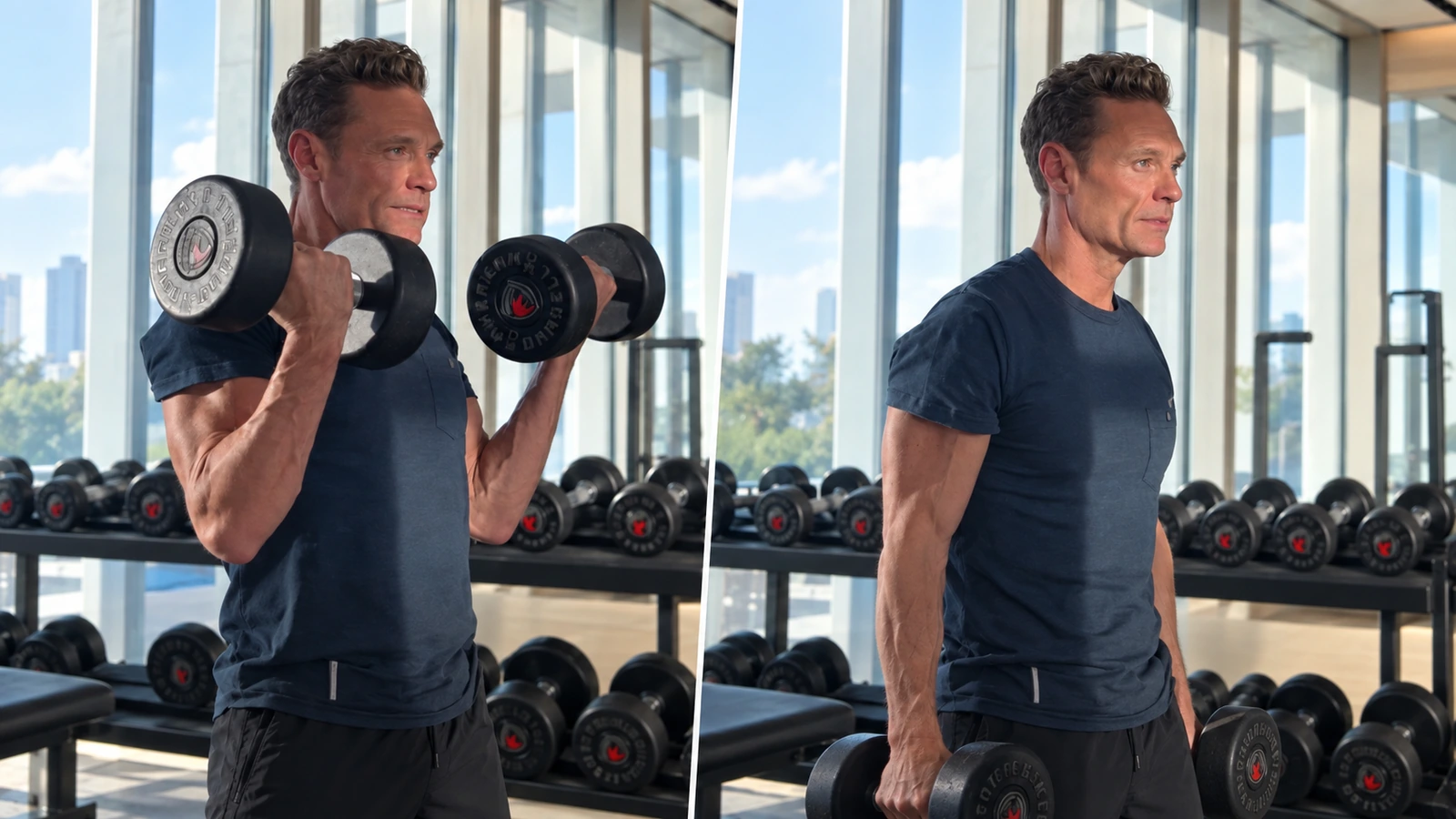

Ryan Seacrest has shared resistance-training videos, including curls with coach Dodd Romero and an unusual session using weights in shallow ocean water. He has also said that he starts the morning with a shot of extra-virgin olive oil and often eats vegetables, fish, and salads.
None of those facts allows strangers to diagnose his health from a television frame. A thin-looking face does not prove illness, and visible arm muscle does not prove that every system in the body is healthy.
Visual note: the featured gym scene is an editorial illustration of Seacrest, not a verified photograph of his workout.
The Appearance Debate Is Built on Speculation
Online comments in 2025 and 2026 described Seacrest as gaunt, tired, or frail after photos and Wheel of Fortune appearances. Other commenters defended him or proposed personal explanations, but Seacrest did not provide a public medical diagnosis that validates those theories.
A camera lens, lighting, makeup, facial expression, weight change, dehydration, grief, sleep, illness, medication, and normal aging can all influence appearance. Viewers cannot separate those factors from one clip.
The opposite conclusion is also unreliable. A tight shirt and defined biceps show that the arm was flexed under favorable conditions, not that a clinician measured body composition, nutrition status, cardiovascular health, or recovery.
Responsible coverage can describe what Seacrest posted without turning concern into diagnosis or fitness into a defense. If he chooses to discuss his health, his own account and qualified medical evaluation should carry more weight than comments about his cheeks.
His Resistance Training Is Real
In November 2025, Seacrest posted a gym video of dumbbell curls while Romero counted repetitions. Reports also documented his use of bench presses, SkiErg intervals, and other full-body gym work across earlier years.
Those sessions support the simple conclusion that he trains consistently. They do not establish the exact weekly program, loads, recovery, or whether every social clip represents a normal workout.
Seacrest has long described exercise as an important appointment and a way to maintain energy for a crowded work schedule. That personal reason is more credible than a caption claiming he secretly outworks everyone half his age.
Adults in their fifties can gain strength and muscle through progressive resistance training. The program should be judged by movement quality, increasing capacity, recovery, and health context rather than by comparison with an entertainer.
Our review of a smarter strength plan after 40 explains how to select repeatable movements. The article on cardio, strength, and heart health shows why visible muscle is only one part of fitness.
The Ocean Workout Was Creative and Risky
Seacrest’s 2025 ocean post showed him carrying or lifting weights in nearshore water, with Romero reportedly coaching remotely. Seacrest joked that the sea was resisting him and winning.
Water changes movement through buoyancy and drag. A weight may feel lighter while submerged, yet waves, sand, current, depth, visibility, and footing make the environment less predictable than a pool or gym.
Calling the session joint-protective is not justified from a video because lower impact does not remove every load. Gripping a weight in moving water can challenge the shoulders and back, and a dropped object can strike a foot or become difficult to retrieve.
Open-water training also adds drowning risk, especially when a person holds external weight, practices breath control, or trains alone. The creative clip should not be copied without competent supervision, a controlled location, and equipment made for aquatic use.
A safer alternative is shallow-water walking without weights, pool exercise under supervision, or conventional resistance work on land. Novelty is optional; consistent loading is not.
The Olive Oil Habit Is Documented
Seacrest said on his own radio program and in lifestyle interviews that he takes extra-virgin olive oil in the morning before coffee. He has associated the ritual with benefits for inflammation, skin, the brain, digestion, weight, and other outcomes.
Olive oil is a useful unsaturated fat and a central food in Mediterranean dietary patterns. Research from the PREDIMED cohort linked higher olive-oil consumption, especially extra-virgin olive oil, with lower cardiovascular risk among older adults already at high cardiovascular risk.
That evidence studied intake within an overall diet, not a magic effect from swallowing oil on an empty stomach. A tablespoon contains roughly 120 calories, and drinking it separately is not required to obtain its fats and plant compounds.
Using olive oil on vegetables, beans, whole grains, or fish can replace saturated fats and make nutrient-dense meals more satisfying. A shot adds energy without the fiber, protein, or volume found in the rest of the meal.
A Shot Does Not Keep the Body Lean
No controlled trial shows that a morning olive-oil shot makes a person lean independently of total food intake and activity. Adding oil without replacing another food can increase daily calories, even when the oil itself has favorable fatty acids.
Claims that the shot coats the stomach, cleans the gut, sharpens the brain, fights cancer, or works as a special anti-inflammatory hack go beyond the evidence cited for Mediterranean diets. Some people may also experience nausea, reflux, or diarrhea from drinking oil directly.
The distinction is not that olive oil is unhealthy. It is that a beneficial food does not become more powerful when consumed as a ritual or detached from the dietary pattern in which it was studied.
A person taking medication for blood pressure, blood sugar, or another condition should not replace treatment with olive oil. Personal digestive symptoms or unplanned weight change also deserve medical evaluation rather than a celebrity workaround.
The Mediterranean Pattern Is Larger Than One Food
Olive oil can be used with vegetables, beans, whole grains, fish, and nuts; taking it as a shot is optional.
A Mediterranean-style diet emphasizes vegetables, fruit, beans, whole grains, nuts, seeds, olive oil, and often fish, while limiting many highly processed foods. It is a flexible pattern rather than a branded list that requires a morning shot.
Health outcomes likely reflect the combined pattern, food substitutions, social context, and long-term adherence. Replacing butter with olive oil is a different intervention from adding olive oil to an already energy-dense diet.
Seacrest’s reported meals of vegetables, fish, and salad fit parts of the pattern, but media summaries cannot measure his complete intake. They also cannot prove that his diet caused a particular facial appearance or arm definition.
Use the pattern as a menu framework and adjust portions to appetite, goals, and medical needs. A registered dietitian can help when weight is changing unexpectedly or when dietary rules begin to crowd out adequate eating.
Intermittent Fasting Is Not a Required Part of the Story
Viral accounts add intermittent fasting to Seacrest’s routine, but public descriptions of his eating have varied across years. Even if he sometimes uses a fasting window, that does not establish a permanent protocol or explain his appearance.
Systematic reviews generally find that intermittent fasting can produce weight loss when it reduces energy intake, with average results often similar to continuous calorie restriction. A review by Wu and colleagues, published in 2026 and covering 167 trials, concluded that weight-loss effectiveness mainly depended on the extent of energy restriction rather than the meal-timing pattern.
Fasting can be convenient for some people and uncomfortable or inappropriate for others. It can interfere with medication timing, training fuel, pregnancy, growth, or recovery from disordered eating.
Our article on fasting, cravings, and hunger explains why the practice is a tool rather than a test of discipline.
What Can Be Learned Without Diagnosing Him
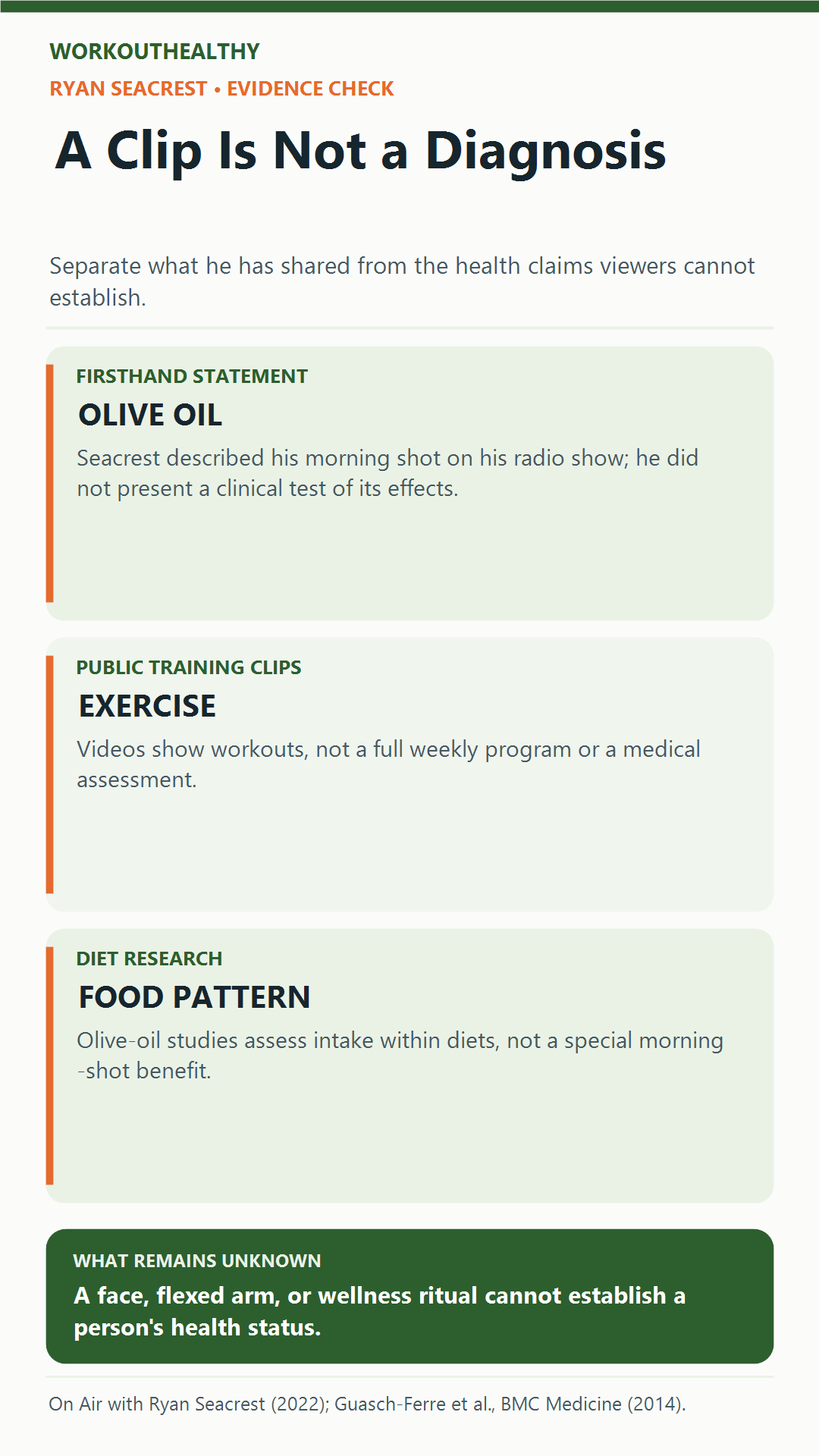
- Resistance training is useful. Curls can be part of a balanced plan, but legs, pushing, pulling, and aerobic work still matter.
- Creative environments add risk. Open-water weights are entertainment, not a necessary progression.
- Olive oil belongs in food. Use it as a cooking fat or dressing if it fits the diet; a shot is optional.
- Meal patterns are personal. Mediterranean foods do not require intermittent fasting.
- Appearance is not a lab test. Avoid both alarming diagnoses and confident assurances based on photographs.
The Most Accurate Answer Is That We Do Not Know
Ryan Seacrest’s public posts show a busy 51-year-old man who continues to exercise and experiment with wellness habits. They do not provide a medical chart, a full diet record, or evidence that strangers can explain a change in his face.
The olive-oil ritual has a reasonable food behind it but exaggerated claims around the delivery method. The ocean workout demonstrates effort but adds risks that make it a poor general recommendation.
Health reporting should resist the urge to choose between frail and shredded. The honest conclusion is that exercise clips are real, olive oil can be part of a healthy diet, and a person’s medical condition cannot be diagnosed from either one.
Get the next evidence check.
Five practical fitness stories worth your time, every Friday.
One email a week. No product pitches. Unsubscribe in one click.
References
- Williams, B. (2019). Ryan Seacrest’s gym training and schedule. Men’s Health.
- On Air with Ryan Seacrest. (2022). Seacrest discusses his morning olive-oil routine.
- Entertainment Tonight. (2025). Ryan Seacrest’s underwater weight-training post.
- Guasch-Ferré, M., Hu, F. B., Martínez-González, M. A., and colleagues. (2014). Olive oil intake and cardiovascular outcomes in PREDIMED. BMC Medicine.
- Welton, S., Minty, R., O’Driscoll, T., and colleagues. (2020). Intermittent fasting and weight loss. Canadian Family Physician.
- Wu, X., and colleagues. (2026). Comparison of different intermittent fasting patterns or different extents of calorie restriction for weight loss and metabolic improvement in adults. Nutrition Reviews, 84(3), 487–499.
Medical disclaimer: This article is for general information only and is not medical advice. If you have an injury, ongoing pain, or a medical condition, talk to a doctor or physical therapist before you change how you train or eat.