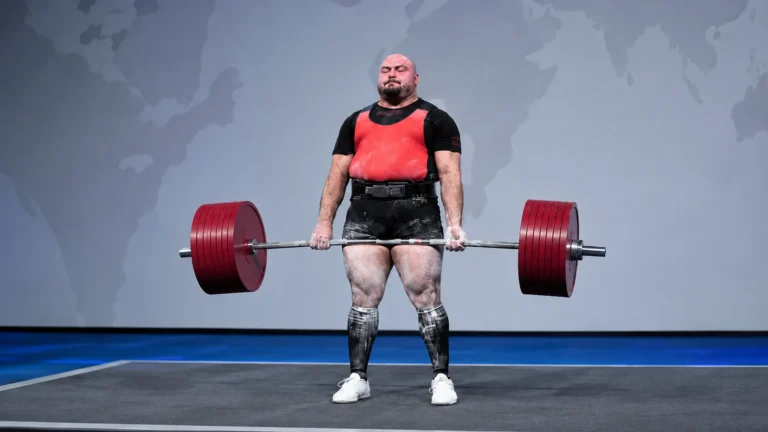

Walking is good for your heart, but a cardiologist’s viral video asks whether walking alone is a complete exercise plan.
Dr. Mona Shah argues for a mix of moderate aerobic activity, harder intervals, and resistance training.
The point is not that easy cardio is useless. It is that different forms of exercise develop different abilities.
Her video cites striking heart-risk figures, so we checked the underlying research before turning its suggested week into advice.
What the Video Actually Recommends
In the original video, Shah starts by saying that regular walking reduces cardiovascular risk compared with doing nothing.
She calls moderate aerobic exercise a protective base, not a mistake to abandon.
She then recommends adding resistance work and some high-intensity intervals as fitness and circumstances allow.
Her sample week includes two strength days, two interval days, two to three moderate aerobic days, and easier recovery.
That is her proposed plan. It is not a universal prescription or a schedule that a beginner must start tomorrow.
The crucial correction is that the video does not claim conversational, steady cardio alone is the single best heart workout.
It argues that combining modes may cover more ground than relying on only one.
A good walking habit is a foundation. Strength and harder aerobic work can add different benefits when they fit your health and recovery.
What the Combined Training Numbers Mean
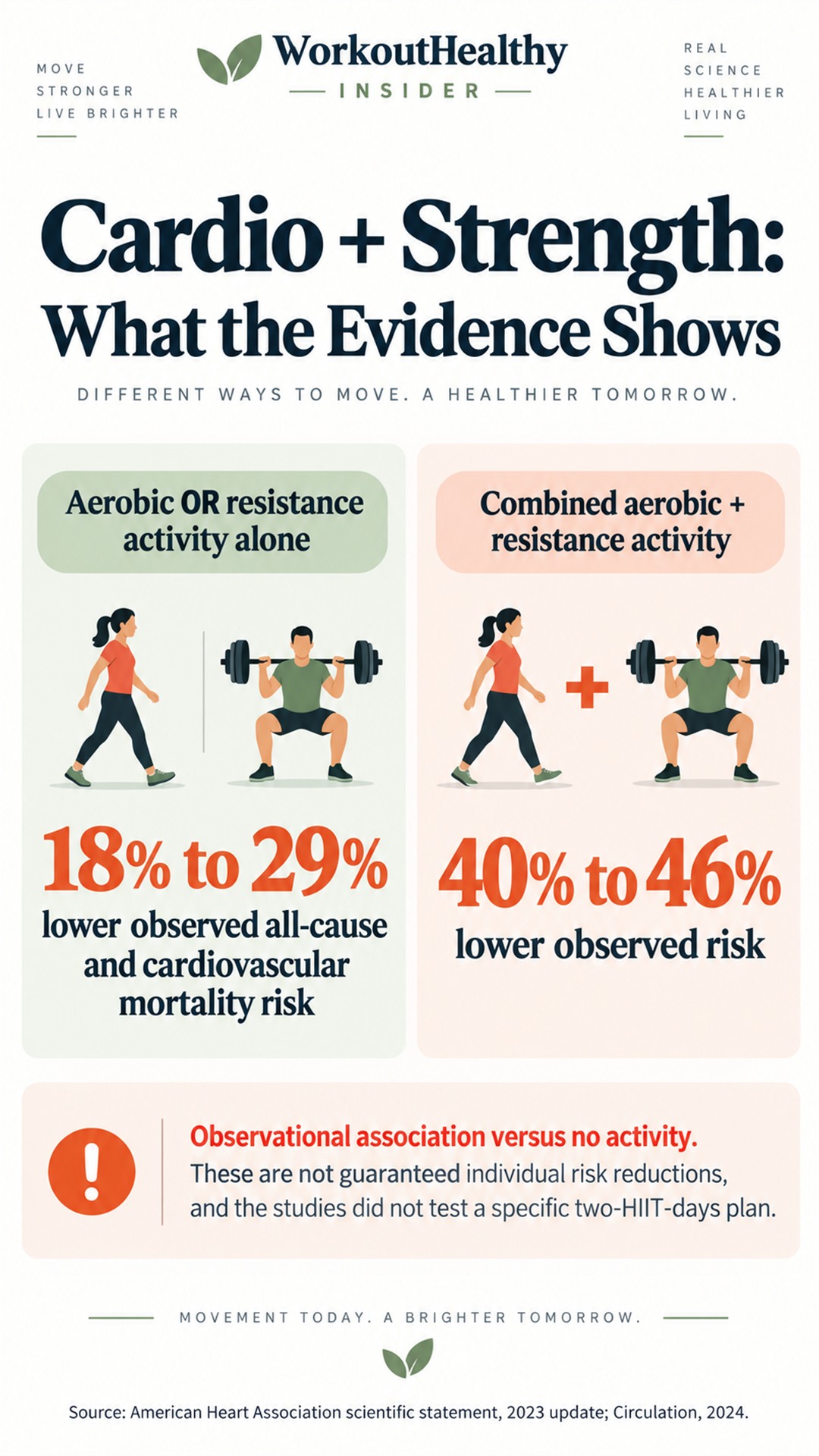
Shah contrasts an 18% to 29% lower risk with a 40% to 46% lower risk in people doing both aerobic and resistance exercise.
Those ranges match figures summarized in a 2024 American Heart Association scientific statement on resistance training.
The statement says combined training was associated with 40% to 46% lower all-cause and cardiovascular mortality than no activity.
Aerobic or resistance training alone was associated with 18% to 29% lower risk in the studies the statement reviewed.
These are comparisons among groups of people, not before-and-after measurements of a person who added two lifting sessions.
They do not show that the same person can keep the same time commitment, add resistance work, and almost double their protection.
The size and direction of the associations are useful, but the precise percentages are not a forecast for your own heart.
The comparison also cannot isolate whether training type, total activity, or other differences among participants drove the gap.
What it does support is taking the strength component of public health guidance seriously rather than treating it as optional decoration.
Why Strength Work Belongs in a Heart Plan
The federal Physical Activity Guidelines for Americans recommend muscle-strengthening activity on at least two days each week.
The same guidelines recommend 150 to 300 minutes of moderate aerobic activity, or 75 to 150 minutes of vigorous activity, weekly.
A mix of moderate and vigorous aerobic minutes can also meet the aerobic recommendation.
Strength exercise means working major muscle groups against resistance, which may come from weights, bands, machines, or body weight.
It can help preserve muscle and function while contributing to a broader cardiovascular health plan.
The American Heart Association statement also reviews evidence for improvements in blood pressure and other cardiovascular risk factors.
That does not mean lifting is interchangeable with all aerobic exercise. The two modes place different demands on the body.
If you already walk regularly, two manageable strength sessions may address an important gap without replacing your walks.
A simple first session could include a squat or sit-to-stand, a push, a pull, and a hip-hinge pattern.
Start with movements you can control. Add difficulty gradually, and leave room for recovery between challenging sessions.
Our guide to daily walking distance explains why walking targets should still fit your starting point.

Where Fitness and Intervals Fit
Shah also emphasizes cardiorespiratory fitness, often estimated through the amount of oxygen the body can use during hard exercise.
Researchers call its upper limit VO2 max. A laboratory test can measure it, while fitness devices only estimate it.
A 2009 meta-analysis led by Satoru Kodama linked higher measured fitness with lower all-cause mortality and cardiovascular events.
That is a strong association, but it does not prove one interval format caused the lower risk.
Harder aerobic work can challenge fitness in a way an easy stroll may not, especially after someone has adapted to walking.
The official guidelines allow vigorous activity as an alternative to some moderate minutes; they do not require high-intensity intervals.
Shah suggests two interval sessions and gives examples with hard bouts followed by recovery.
Her examples are useful illustrations, but the evidence quoted in the video does not establish two sessions as the unique optimum.
Nor does the combined-training mortality statistic test a specific interval routine on top of strength work.
For many people, the first priority is building regular aerobic time and strength work before adding very hard efforts.
Our article on raising VO2 max for runners goes deeper into training that measure.
Build a Week Without Rushing
Think of Shah’s week as a long-term framework, not an entry test.
Someone who is mostly inactive might first schedule short walks on several days and repeat that pattern until it feels sustainable.
They could then add two brief strength sessions with simple exercises for the major muscle groups.
If the aerobic and strength work remain comfortable to recover from, a harder aerobic session could be considered later.
A more active person might already have the moderate aerobic base and need to protect time for strength work.
Another person may lift regularly but need more movement that keeps their breathing elevated for a sustained period.
Choose the missing piece by looking at the whole week, not by copying one workout from a video.
Keep at least some days easier, especially as the amount or intensity of exercise rises.
When time is limited, shorter sessions still count toward the weekly total under the federal guidelines.
Write down what you actually did for a few weeks. That record is more useful than judging a plan by one difficult day.
Gradual progression also makes it easier to notice whether a new session leaves you energized or persistently exhausted.
This is a planning example for generally healthy adults, not a treatment plan for cardiovascular disease.
The best next workout may be the type your week is missing, provided you can recover and keep showing up.
What the Research Does Not Prove
The strongest sounding percentage in the video comes from observational evidence, not a trial assigning people to years of exercise plans.
People who combine aerobic and strength exercise may also differ in health, income, diet, smoking, or total activity.
Researchers adjust for known factors, but they cannot remove every possible difference.
A 40% to 46% lower observed risk therefore cannot be presented as a guaranteed benefit from a particular schedule.
It also should not be added to a separate percentage for interval training, as if benefits were independent discounts.
Neither the AHA statement nor the federal guidelines say every adult should do two hard interval sessions per week.
The evidence does not make walking inadequate. For someone moving from inactivity, regular walks can be a meaningful start.
The question is whether a person’s overall plan includes enough aerobic activity and some strength work for their goals and health.
Exercise lowers risk at the population level; it does not cancel genetics, existing disease, smoking, or other important risks.
Mistakes That Make a Balanced Plan Harder
One mistake is dropping a reliable walking routine because a new headline makes it sound second-rate.
Another is adding hard intervals and lifting all at once after months of inactivity.
A sudden jump in workload can make normal recovery harder and may increase the chance of overuse problems.
Doing every session hard can also crowd out the easier aerobic work that helps build a repeatable weekly habit.
On the other hand, a plan made only of comfortable cardio may leave strength unaddressed.
Do not mistake a high smartwatch heart-rate reading during a lift for the same aerobic stimulus as sustained cardiovascular exercise.
Do not treat a fitness estimate as a diagnosis or a reason to ignore symptoms.
And do not turn an association from a group study into a personal promise about how long you will live.
A useful plan balances activity types, time, recovery, enjoyment, and the health constraints of the person doing it.
For perspective on another heart-health trend, see our review of sauna use and cardiovascular evidence.
When to Get Medical Guidance
If you have a known heart condition, current cardiovascular symptoms, or an exercise restriction, discuss a change in intensity with your clinician.
Chest pain, fainting, marked dizziness, or unusual shortness of breath during activity calls for prompt medical evaluation.
People recovering from a cardiac event may need a supervised plan rather than a general video schedule.
Medication that affects heart rate can make a device’s target zones less useful than they appear.
Joint pain or limited mobility may call for different movements, but it does not mean every form of activity is off limits.
A clinician or qualified exercise professional can help match a starting point to your history.
The goal is to build safely toward activity you can sustain, not to prove that you can survive the hardest suggested interval.
Watch the Original Video
Want more like this? Subscribe to WorkoutHealthy Insider for practical explanations behind popular fitness claims.
References
Paluch, A. E., et al. (2024). Resistance exercise training in individuals with and without cardiovascular disease: 2023 update. Circulation, 149, e217 to e231. https://doi.org/10.1161/CIR.0000000000001189
U.S. Department of Health and Human Services. (2018). Physical Activity Guidelines for Americans (2nd ed.). Official guidelines.
Kodama, S., et al. (2009). Cardiorespiratory fitness as a quantitative predictor of all-cause mortality and cardiovascular events in healthy men and women. JAMA, 301(19), 2024 to 2035. https://doi.org/10.1001/jama.2009.681
Shah, M. (n.d.). Cardiologist Reveals: The Cardio That Actually Protects Your Heart [Video]. YouTube. Watch the original.
This article is for general information only and is not medical advice. If you have an injury, ongoing pain, or a medical condition, talk to a doctor or physical therapist before you change how you train or eat.