
Tom Holland really did describe a 1,500-repetition bodyweight workout from his preparation for Spider-Man: No Way Home.
He also said gaining and maintaining size requires deliberate eating because his normal appetite does not naturally support three full meals every day.
The viral version turns those true pieces into one clean transformation formula involving a calorie surplus, constant protein meals, deadlifts, incline presses, and a pure bodybuilding plan.
Holland’s interviews show a less tidy story shaped by different trainers, movies, schedules, and goals.
The 1,500-Rep Workout Is Not an Internet Invention
Holland told Men’s Health about an hour-long ladder he performed with a friend before filming the 2021 Spider-Man movie.
The first round used one pull-up, two dips, three push-ups, four sit-ups, and five squats, then every number climbed until the pull-up count reached ten before the ladder came back down.
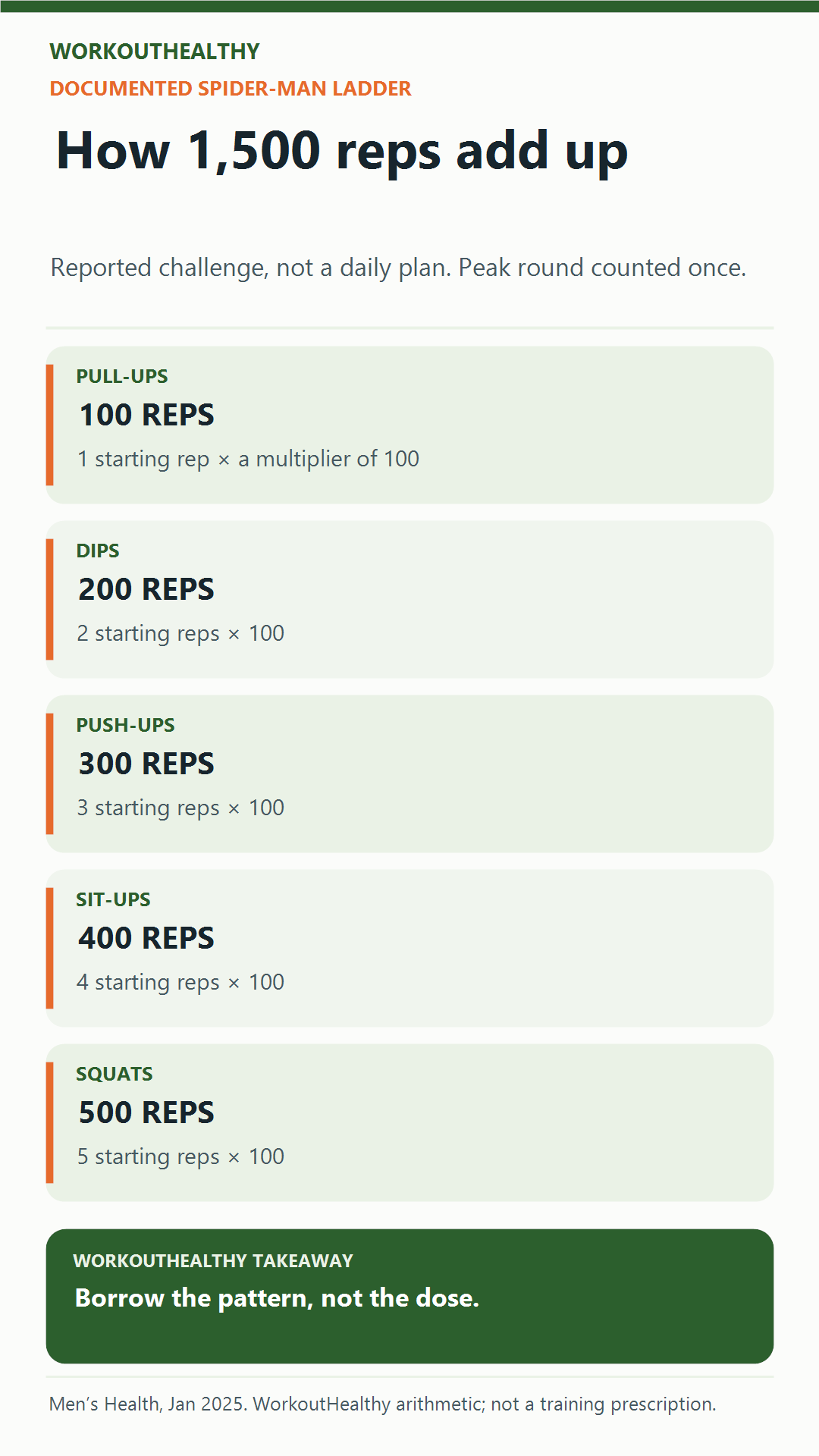
Added together, the session contained 100 pull-ups, 200 dips, 300 push-ups, 400 sit-ups, and 500 squats.
That is where the 1,500-repetition total comes from, and Holland called it a monstrous workout rather than an easy daily routine for fans.
How the Ladder Reaches 1,500
Our calculation treats the peak round as appearing once.
The ascending multipliers sum to 55: 1 + 2 + 3 + 4 + 5 + 6 + 7 + 8 + 9 + 10.
The descending side, from nine back to one, adds 45.
Together, that gives a multiplier of 100 for each exercise’s starting repetitions.
Multiply the starting counts of one, two, three, four, and five by 100.
The result is 100 pull-ups, 200 dips, 300 push-ups, 400 sit-ups, and 500 squats, or 1,500 repetitions in total.
This is arithmetic applied to the published ladder, not an independently observed training log.
The assumption about the peak matters.
If someone repeats the top round before descending, that adds another 150 repetitions and changes the total to 1,650.
A shortened ladder that rises only to three and returns through two and one gives a multiplier of nine, or 135 total repetitions.
Even that shorter example may be too demanding if its pulling or dipping movements exceed your ability.
The calculation explains volume; it does not establish an appropriate starting dose or predict muscle growth.
The arithmetic is real, but the workout is mostly a high-volume endurance circuit.
It does not prove that 1,500 repetitions are necessary for a superhero physique, nor does it show that more repetitions always create more muscle.
Holland had years of gymnastics, dance, stunt, and strength experience before describing the session.
A beginner who copies the full ladder could lose technique, irritate the elbows or shoulders, and create soreness that disrupts the rest of the week.
His Spider-Man Training Changed With the Job
In a Men’s Journal account of preparation for Spider-Man: Far From Home, trainer George Ashwell described fundamental lifts alongside mobility work.
The published circuit included deadlifts, an incline press, straight-leg raises on dip bars, and weighted dips.
Those exercises belong to that specific preparation account, not a universal current routine.
That four-exercise circuit is the relevant example for Far From Home; combining it with exercises from other films would misrepresent the account.
Holland later worked with trainer Duffy Gaver before No Way Home, and he said the coaching style sometimes began with a daunting early-morning assignment and permission to see how far he could get.
That account does not amount to one permanent workout template.
Role preparation can also include stunt practice, choreography, mobility, recovery, and long shooting days.
Calling the whole process pure bodybuilding leaves out the performance demands that make Spider-Man move differently from a stage bodybuilder.
The distinction matters because deadlifts and incline presses can build strength and muscle, while a 1,500-repetition circuit emphasizes fatigue tolerance and repeated movement.
Both can appear in one preparation, but they solve different problems.
The One-Meal Claim Needs Context
A January 2025 Men’s Health cover interview described Holland’s normal pattern as one meal a day.
He also said eating three daily meals requires conscious effort when he is trying to put on weight for roles.
He said he has to think consciously about eating three times a day, and he described diet as more important than gym work for maintaining his on-screen size.
His sample day was not a strict bodybuilding menu.
Breakfast could be porridge with fruit, nuts, and a shake, lunch might be skipped when he was not bulking, and dinner often came from meals prepared with his chef brother.
That is different from proving that he spent years eating exactly once every day or that every meal during a bulk followed a rigid high-protein plan.
Appetite, production demands, travel, and the goal of the current role can all change the pattern.
Holland has also spoken against repeating extreme cuts he used for Cherry and The Crowded Room.
He described severe restriction for those roles and said the health cost was not worth doing again, which is important context when a transformation is presented as simple discipline.
A Calorie Surplus Helps, but Bigger Is Not Better
Muscle tissue requires training stimulus, amino acids, recovery, and enough energy to support adaptation.
Someone who struggles to maintain body weight may need more food, but the useful surplus is not the same as eating without a limit.
A very large surplus can increase body weight faster while adding more fat and digestive burden than necessary.
Progress is better judged through training performance, a gradual weight trend, measurements, recovery, and how the person feels rather than through one celebrity’s plate.
Protein supports muscle remodeling, yet a shake is only one convenient tool.
A major meta-analysis found that protein supplementation can modestly improve resistance-training gains, with benefits leveling off around a total daily intake near 1.6 grams per kilogram for many healthy adults.
That figure is a population estimate, not a command for every person.
Body size, total calories, food preferences, training age, and medical needs can move the practical target, and whole meals can provide protein without turning every eating occasion into a supplement ritual.
Our guide to gaining muscle when you are naturally skinny explains how to build a manageable surplus.
The review of rest days and muscle growth covers the recovery side that transformation stories often skip.
Enough food supports training. A celebrity menu cannot tell you how much your body needs.
Bodyweight Work Can Build Muscle When It Is Progressed
Bodyweight training is not automatically inferior to weights.
In a small randomized study, adjusted push-ups and low-load bench presses produced similar improvements in chest and triceps muscle thickness when the loads were matched over eight weeks.
The key word is adjusted because an exercise must remain challenging enough for the person doing it.
Push-ups can progress through added load, harder leverage, greater range, slower control, or more repetitions, while pull-ups and dips can use assistance before extra weight.
A giant circuit changes the challenge by accumulating fatigue across many movements.
That can develop work capacity, but repeated technique breakdown is not a productive form of overload.
The sequence also changes which muscle group limits the session.
A lifter may still have energy for squats but be unable to complete safe dips or pull-ups, so a single total-repetition number can hide a sharp difference between local muscular fatigue and whole-body conditioning.
Rest periods matter even when a published account does not specify them.
Short rests make the ladder more cardiovascular and reduce the repetitions that can be performed with fresh strength, while longer rests turn the same list into a much longer training session.
People should also distinguish a one-time benchmark from a progressive program.
A program needs a repeatable dose, a way to increase difficulty, and enough recovery to measure improvement, whereas a challenge mainly answers whether the athlete can complete it on that day.
The camera captures the successful effort, not necessarily the weeks of easier practice, coaching adjustments, rest periods, or the soreness and schedule changes that follow afterward.
Research comparing resistance programs shows that many combinations of load, sets, and frequency can increase muscle size.
Higher loads tend to rank better for maximal strength, while multiple challenging sets are a more consistent feature of hypertrophy plans.
A Safer Way to Borrow the Idea
- Scale the ladder. Start with one to five ascending rounds instead of climbing to ten and back down.
- Use assistance. Use appropriately scaled pulling and elevated push-ups, with instruction on any unfamiliar exercise.
- Stop before form collapses. Leave one to three clean repetitions available on most rounds rather than forcing every set to failure.
- Protect the shoulders. Reduce dip depth or replace dips when the front of the shoulder feels pinched or painful.
- Separate goals. Use the circuit for conditioning and keep progressive strength work in the week if strength or muscle is the priority.
- Recover before repeating it. A demanding challenge does not need to become a daily test.
The Real Lesson Is Adaptation, Not Imitation
Tom Holland’s training history shows that a superhero role can require strength, movement skill, conditioning, and enough food to maintain the desired size.
The memorable 1,500-repetition ladder was one tool inside that larger process.
It is accurate to say he had to pay attention to eating and that compound lifts appeared in published training accounts.
It is not accurate to compress every phase into one pure bodybuilding method or imply that his results prove everyone needs the same surplus and marathon circuit.
The useful approach is to match the dose to the person.
Build meals that support the goal, progress exercises that can be performed well, and treat celebrity challenges as demonstrations rather than prescriptions.
Get the next evidence check.
Five practical fitness stories worth your time, every Friday.
One email a week. No product pitches. Unsubscribe in one click.
A memorable challenge is not the same thing as a repeatable training plan.
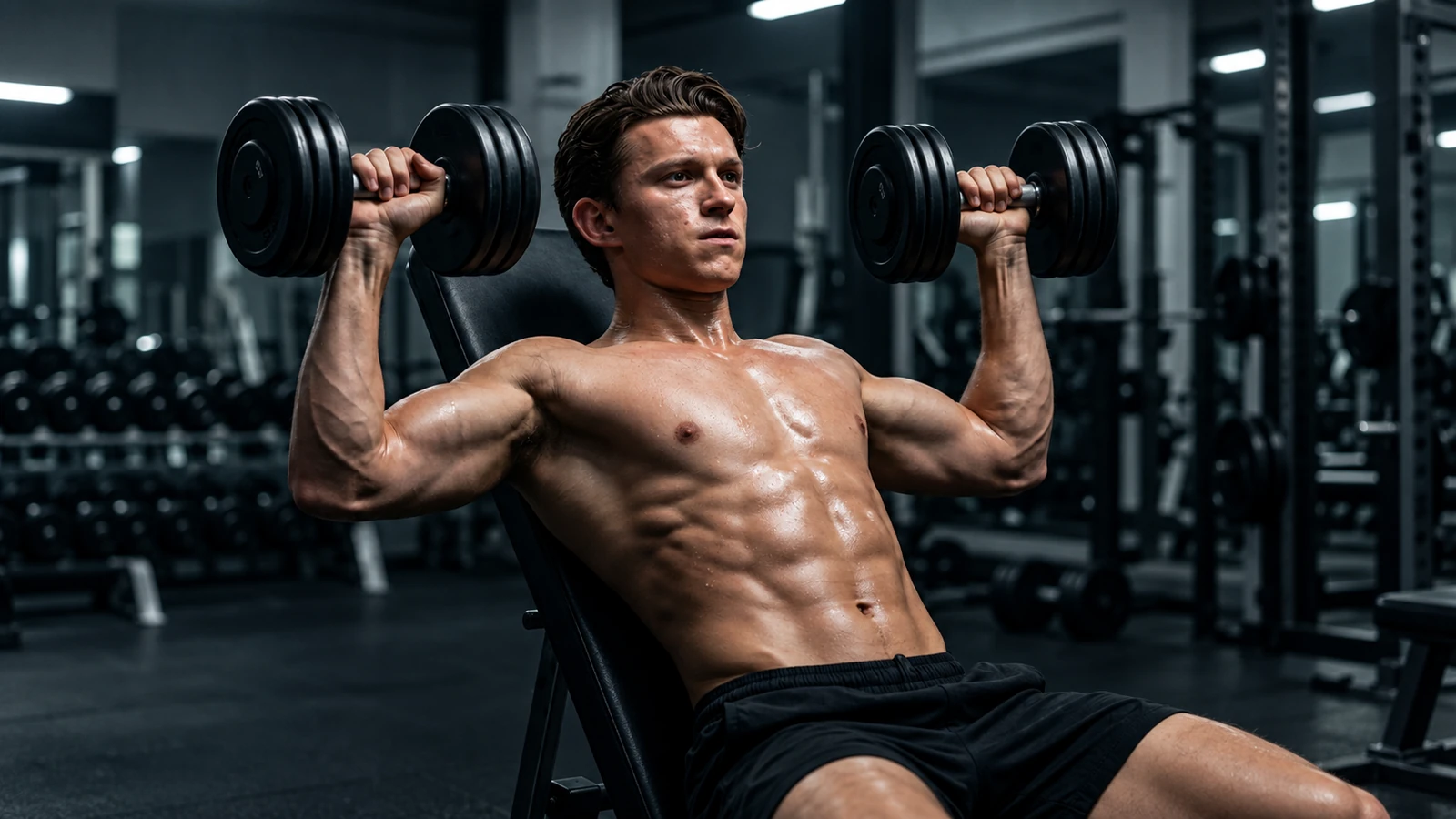
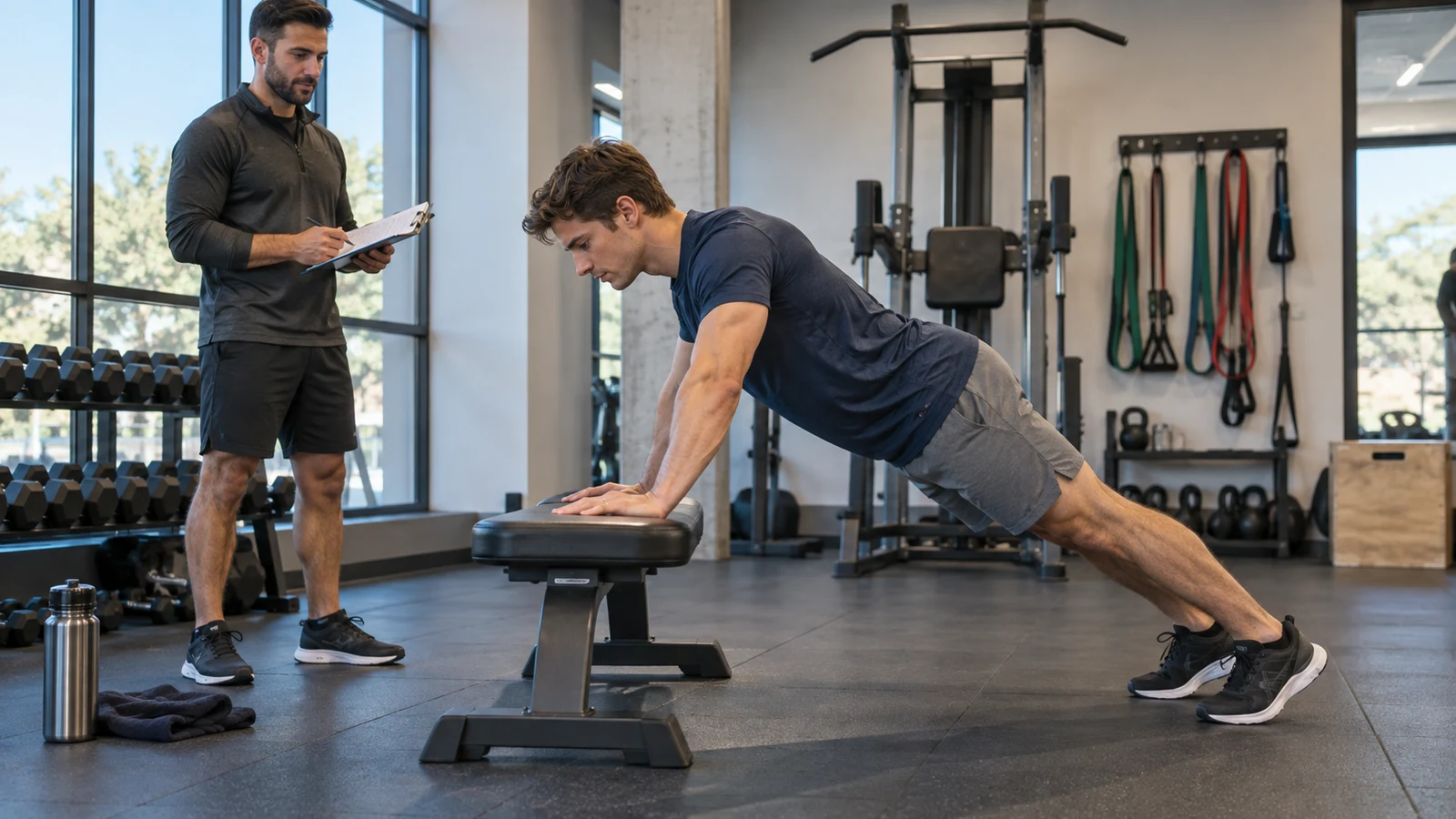
Image note: The gym imagery is illustrative and based on the WorkoutHealthy social creative. It is not documentary evidence of a training session or an endorsement.
References
- Williams, B. (2025). Tom Holland on his diet, appetite, and role-related weight changes. Men’s Health.
- Kryger, K. (2025). Tom Holland’s 1,500-repetition Spider-Man workout. Men’s Fitness.
- Kikuchi, N., and Nakazato, K. (2017). Low-load bench press and push-up induce similar muscle hypertrophy and strength gain. Journal of Exercise Science and Fitness.
- Morton, R. W., Murphy, K. T., McKellar, S. R., and colleagues. (2018). Protein supplementation and resistance-training adaptations. British Journal of Sports Medicine.
- Currier, B. S., McLeod, J. C., Banfield, L., and colleagues. (2023). Resistance training prescription for strength and hypertrophy. British Journal of Sports Medicine.
Medical disclaimer: This article is general product information, not medical advice. The equipment described here is not a treatment for any condition. If you have an injury, ongoing pain, or a medical condition, talk to a doctor or physical therapist before using any of it.