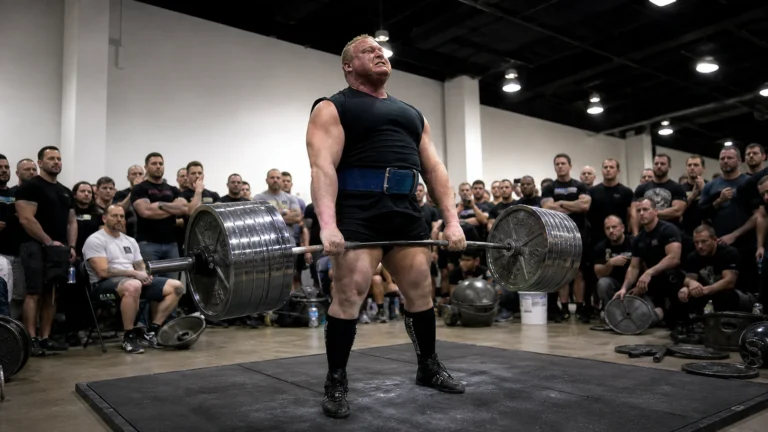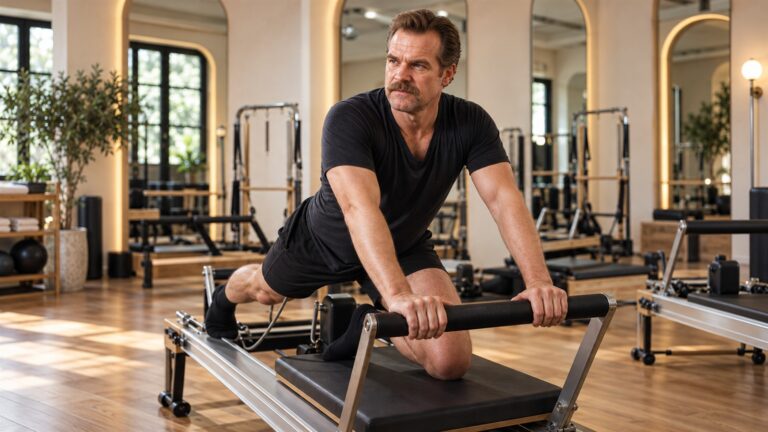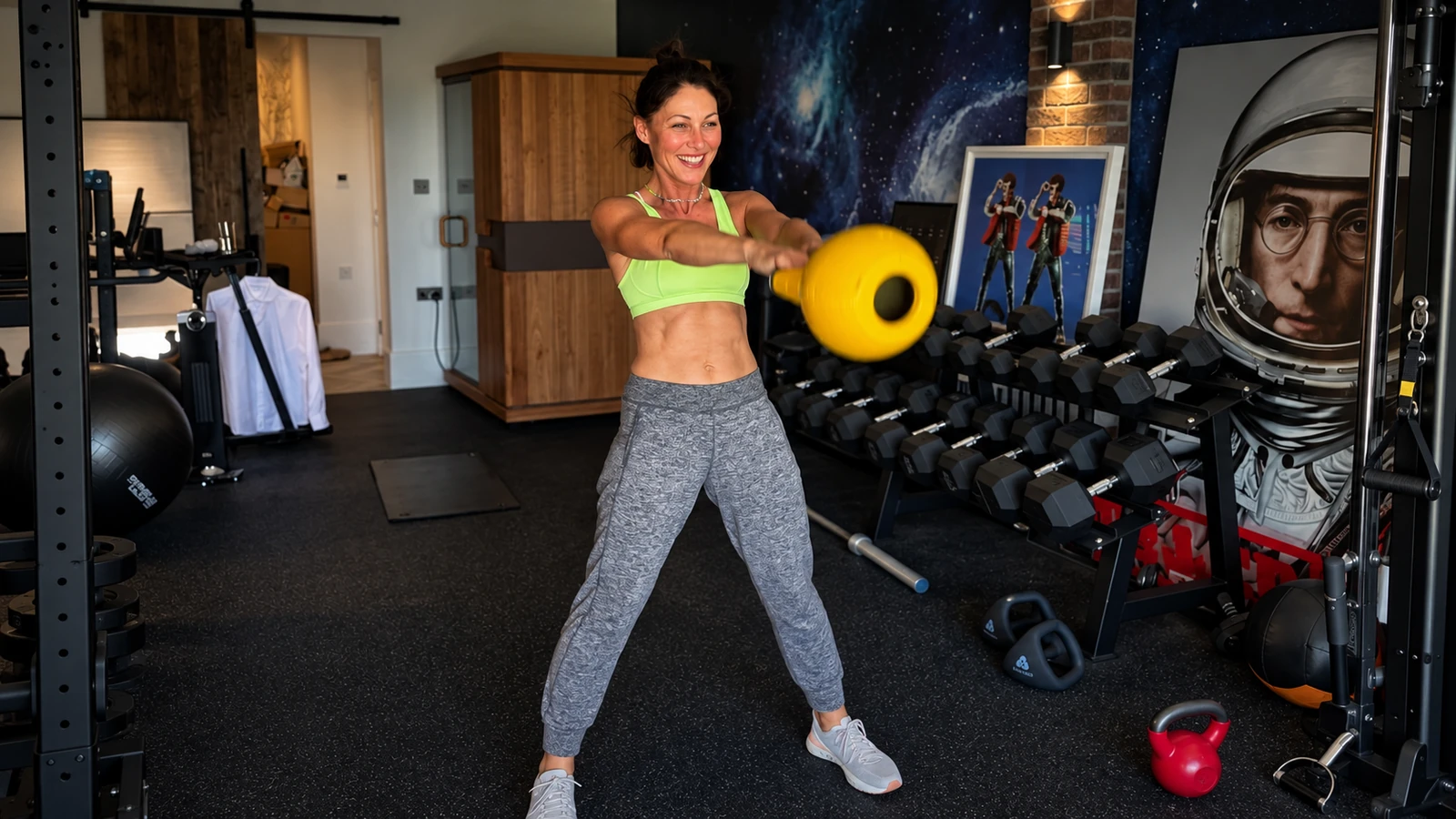

Emma Willis has trained with personal trainer Rob Solly for years, and public accounts of her routine include squats, deadlifts, boxing, Pilates, leg work, back work, and short periods of harder conditioning. That makes her a reasonable example of a television presenter who values strength as well as appearance.
The social caption goes further. It presents a dramatic switch from cardio to heavy lifting at age 50, plus strict protein-first eating and zero compromise on sugar, but those details combine several periods of her life and turn them into a cleaner transformation than the public record supports.
What Is Documented About Her Training
Recent coverage describes Willis’s sessions with Solly as mainly strength based, with plyometrics and brief periods of higher heart rate. Reports also show lower-body movements such as squats, Romanian deadlifts, lunges, and step-based work within a larger full-body routine.
Older interviews and profiles show that this is not a sudden age-50 discovery. Willis was already discussing deadlifts, squats, boxing, high-intensity classes, and focused leg and back work after her third pregnancy in 2017.
She said one goal was to strengthen a weak back and have enough fitness to keep up with her children. She also described training several times per week with Solly, who continues to list her among his clients.
In a 2023 interview, Willis spoke about feeling strong in a wider sense and using movement while managing the anxiety and pressure that can grow with age and a busy family life. Her public routine has included Pilates and boxing as well as resistance work.
That evidence supports a mixed program centered on strength. It does not establish that she abandoned all steady cardio, that every lift is heavy by a competitive standard, or that one specific group of movements is the secret to looking ageless.
The Diet Story Is Less Strict Than the Caption
Willis discussed sugar in a 2018 episode of Dr. Rangan Chatterjee’s podcast. The program notes say she talked about periods of giving up sugar, how she managed that while working, and changes she thought she noticed in her children when the family reduced it.
That is not the same as a permanent zero-sugar protocol. It also does not prove that cutting sugar eliminated inflammation or created cognitive clarity through a measurable biological effect.
Her later food interviews sound ordinary rather than aggressive. In 2022, she told The Guardian that long television days could involve biscuits, sweet treats, delivery meals, and feeling poorly after eating that way repeatedly, and she also spoke openly about enjoying cake and Indian food.
These comments do not make her eating pattern good or bad. They show why a celebrity’s diet should not be reconstructed from one wellness conversation and presented as a permanent medical strategy.
The protein-first claim has the same problem. Protein supports muscle repair and can help people meet nutrition needs, but the available interviews do not establish that Willis follows a strict requirement to start every meal with it.
Total intake matters more than a ritualized order for most healthy adults. Protein needs also vary with body size, training, age, appetite, kidney health, total energy intake, and whether someone eats animal foods, plant foods, or a mixture.
Older adults sometimes benefit from paying more attention to protein distribution because a very low-protein breakfast followed by one large evening meal may make daily targets harder to reach. That is a planning consideration, not proof that every plate must begin with protein or that carbohydrates should be feared.
Strength Training After 50 Is Useful Without Being Magic
Resistance training can improve strength, muscle function, and the ability to perform daily tasks across adulthood. A meta-analysis of adults older than 50 found that both women and men gained strength and muscle size, with women showing strong relative lower-body improvements.
Research in much older adults also shows meaningful strength gains, which argues against the idea that aging makes adaptation impossible. Programs still need to match health status, experience, and recovery, but age alone is not a reason to avoid resistance work.
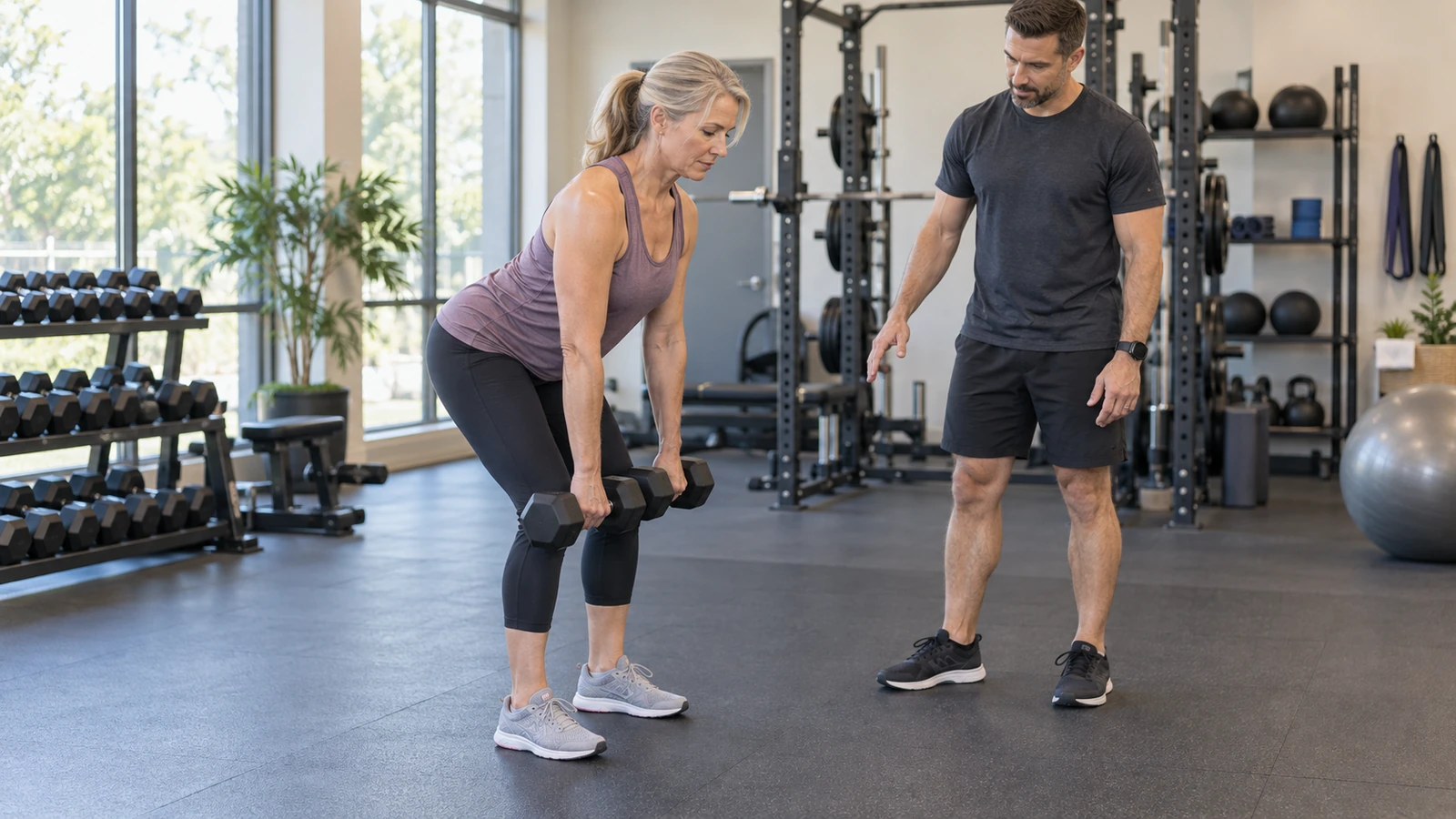
Bone health is more complicated than saying squats automatically protect bone density. A 2025 review of 17 randomized trials in postmenopausal women found improvements at the lumbar spine, femoral neck, and total hip, while also reporting high variation between studies and limits on how broadly the results can be applied.
Exercise can support bone health, but an individual’s bone density also reflects hormones, nutrition, medication, smoking, alcohol, genetics, and medical conditions. Anyone with osteoporosis or a fracture history needs guidance that accounts for those risks.
Willis’s routine can therefore illustrate a useful direction, but it should not be presented as proof that one celebrity program prevents metabolic decline, protects every joint, or reverses hormonal change.
Cardio and Strength Do Different Jobs
The caption treats cardio as an old rule that had to be replaced. That creates a false choice because aerobic and resistance exercise support overlapping but different aspects of health.
Strength training is especially effective for improving force production and preserving the ability to lift, carry, rise, and climb. Cardio improves aerobic capacity and helps the heart, lungs, blood vessels, and muscles sustain work over time.
A balanced week can include both. Boxing and short high-heart-rate intervals may contribute aerobic work, while walking, cycling, or easier steady sessions can build endurance without competing with every lifting day.
The correct dose depends on the goal. Someone training for a long race needs more endurance work, while a person who has done only cardio for years may benefit from adding progressive resistance training without giving up movement they enjoy.
Our review of Pilates research in older adults explains where Pilates may help and where evidence remains limited. Our guide to low and high repetitions also shows why “heavy” is relative to the person and the target adaptation.
Sugar Is Not a Single Inflammation Switch
Reducing foods that contribute many calories and little nutrition can be useful, especially when sugary drinks, sweets, and frequent snacks crowd out balanced meals. It does not follow that every gram of sugar causes inflammation or that a person must eliminate fruit, dairy, or occasional dessert.
The word “sugar” covers naturally occurring sugars in foods as well as added sugars used during processing. Health guidance generally focuses on limiting added or free sugars within an overall diet rather than treating all carbohydrate as a toxin.
Inflammation is also a broad biological process measured with specific markers, not a feeling that can be assigned to one ingredient after a few days. Sleep, infection, smoking, body composition, activity, stress, medication, and chronic disease can influence those markers.
Willis can accurately describe how she feels when she changes her eating pattern, but a personal experience does not prove the mechanism or guarantee the same response for another person.
A Realistic Version of the Routine
- Use two or three strength sessions as a base. Full-body training can cover squatting, hinging, pushing, pulling, carrying, and core work without requiring daily lifting.
- Start below the limit. Learn the movement with a load that allows control before making it heavier.
- Keep some aerobic work. Walking, cycling, swimming, boxing, or another preferred activity can support conditioning and enjoyment.
- Progress one variable at a time. Add a few repetitions, a small amount of weight, or one set when the current work is stable.
- Eat enough total protein. Spread protein-containing foods across meals if that helps meet needs, but no celebrity rule replaces individual nutrition advice.
- Limit added sugar without demanding perfection. A sustainable pattern can include occasional sweet foods without becoming a failure.
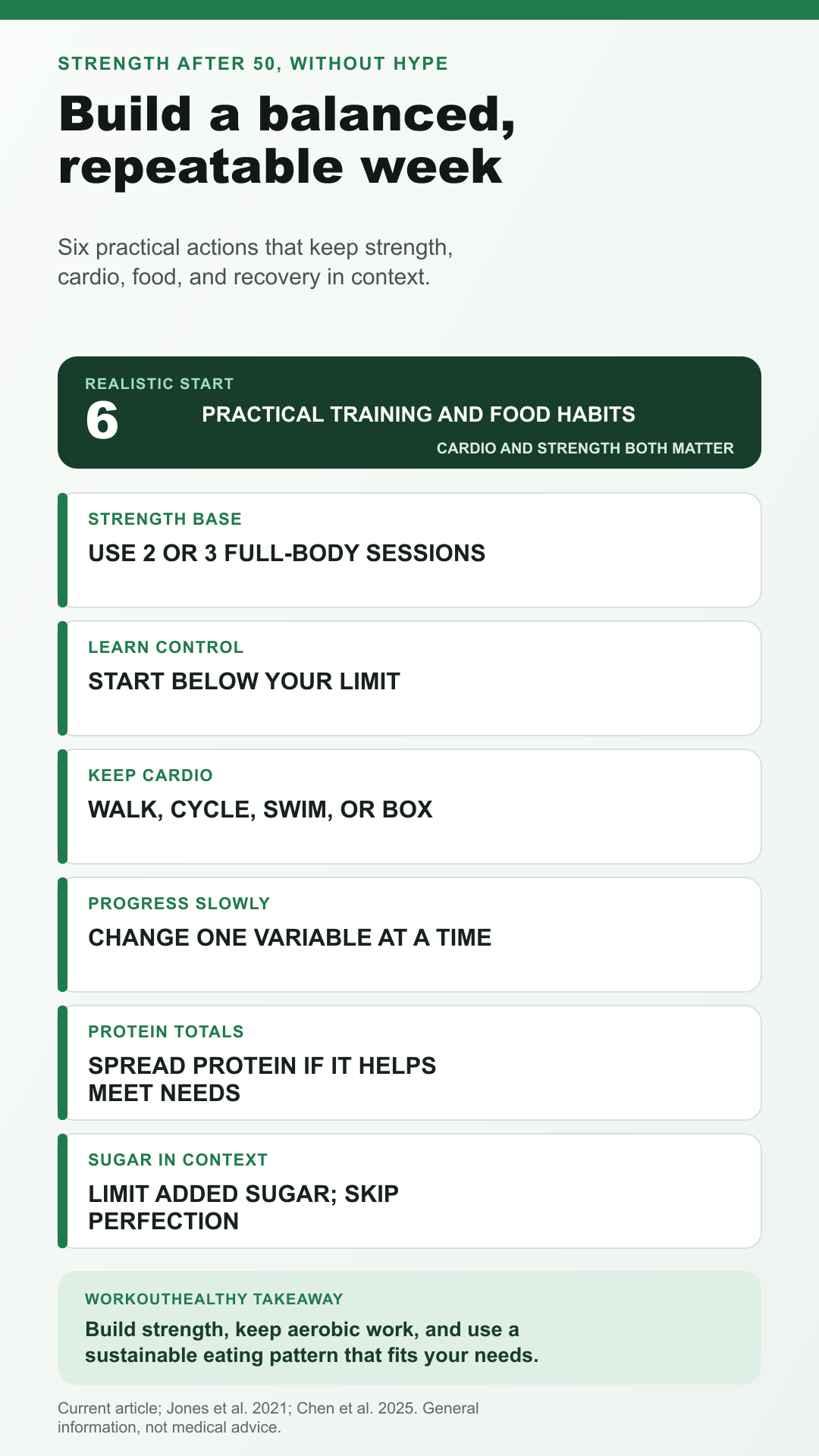
This version keeps the credible parts of Willis’s example while removing the promise that strictness creates agelessness. It also leaves room for health conditions, food access, culture, and personal preference.
What Emma Willis’s Story Can Honestly Show
Emma Willis has not waited until 50 to train for strength. She has worked with a trainer for years, used a mix of resistance exercise, boxing, and Pilates, and spoken about wanting a capable body that supports work and family life.
Her public comments also show a normal relationship with food that does not match a polished zero-compromise caption. She has experimented with reducing sugar and noticed personal effects, while also openly describing cake, takeout, and the reality of long production days.
The useful message is not that cardio causes decline or that refined sugar explains every symptom. It is that adults can keep learning new ways to train, build strength progressively, and choose an eating pattern that supports the work without turning one celebrity’s habits into a medical prescription.
It also helps to judge progress with more than appearance. Repetitions, walking pace, balance, energy, sleep, confidence with daily tasks, and enjoyment can reveal meaningful changes that a mirror cannot measure.
Get the next evidence check.
Five practical fitness stories worth your time, every Friday.
One email a week. No product pitches. Unsubscribe in one click.
References
- iFitness Magazine. (2026). Emma Willis’s documented lower-body strength work.
- Dr. Rangan Chatterjee. (2018). Emma Willis on body image, motherhood, food, and sugar.
- The Guardian. (2022). Emma Willis on food during long television days.
- The Independent. (2023). Emma Willis on strength, anxiety, and self-care.
- Jones, M. D., Wewege, M. A., Hackett, D. A., and colleagues. (2021). Sex differences in strength and muscle-size adaptations following resistance training in older adults. Sports Medicine.
- Chen, and colleagues. (2025). Resistance training parameters and bone mineral density in postmenopausal women.
Medical disclaimer: This article is for general information only and is not medical advice. If you have an injury, ongoing pain, or a medical condition, talk to a doctor or physical therapist before you change how you train or eat.