

Alex Rodriguez spent 22 seasons in Major League Baseball, hitting 696 home runs and building a reputation as one of the most physically dominant players of his generation.
He is 51 years old now and no longer playing professionally.
Rodriguez stays visible today as a broadcaster, a Shark Tank investor, and the controlling owner of the Minnesota Timberwolves.
He has also talked publicly about how differently his own training looks now compared to his playing days.
Rodriguez debuted in the majors at 18 years old and went on to win three American League MVP awards over his career.
He played primarily for the Seattle Mariners, Texas Rangers, and New York Yankees, and he was known throughout his playing days for an intense, structured approach to strength and conditioning.
That history is part of what makes his current, gentler approach to training worth paying attention to.
It is a real world example of how even an elite athlete’s own definition of effective training changes with age.
What His Training Actually Looks Like Now
During his career, Rodriguez was known for heavy strength work, including squatting hundreds of pounds as part of building the power behind his swing.
According to Men’s Health’s ongoing coverage of celebrity workouts, his current routine looks noticeably different from that era.
That reporting describes daily morning sessions that mix cardio, strength work, and stretching, rather than the max effort lifting sessions of his playing career.
Instead of chasing heavy single lift numbers, the routine reportedly leans on lighter weights paired with steady cardio, like thirty minutes on a bike or a stair machine.
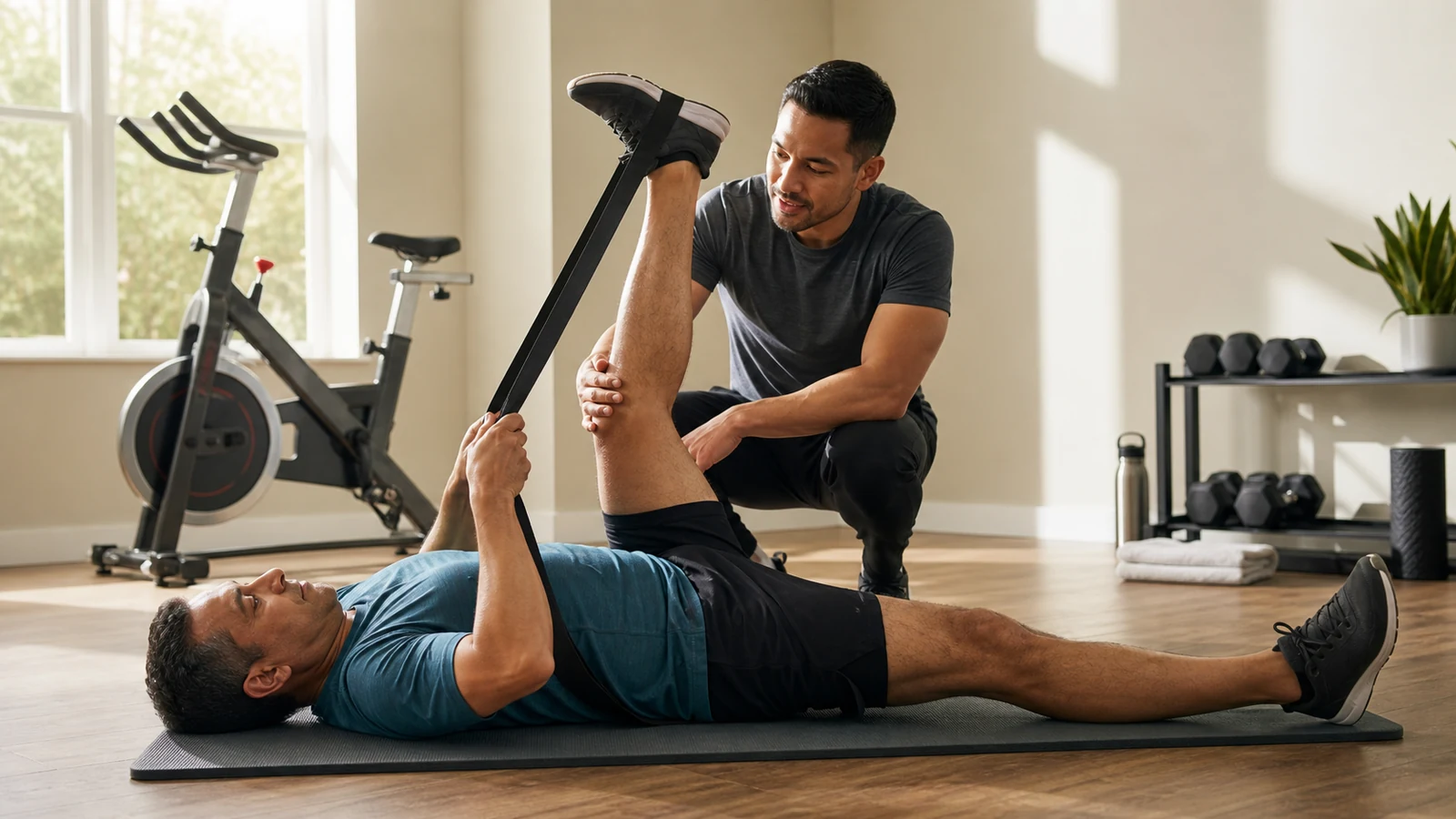
Assisted stretching sessions with a trainer are also described as a regular part of his week, aimed at protecting joint mobility rather than building raw power.
On the nutrition side, that same coverage describes Rodriguez cutting back on red meat in favor of fish and chicken, and pushing his first meal of the day closer to midday.
These specific details come from Men’s Health’s celebrity workout reporting rather than an independently confirmed training log, so they should be read as a reported routine rather than a verified daily schedule.
Even without an independently verified log, the general shape of the routine, more cardio and mobility, lighter loads, and attention to eating patterns, is a common and well documented approach among people managing training past midlife.
His Own Approach, In His Words
Rodriguez has spoken generally in interviews about prioritizing longevity and consistency over the intensity that defined his playing career.
He has described the shift as less about chasing a specific number on a barbell and more about staying capable of doing the things he wants to do day to day.
That framing matches a pattern seen across a lot of former elite athletes once a punishing competitive schedule ends.
The training does not stop. It just points at a different goal.
That shift from performance to function is common among former professional athletes once the competitive career ends and the goal becomes long term health rather than a scoreboard.
The Science Behind Training Differently With Age
Rodriguez’s shift away from maximum intensity lifting and toward daily movement lines up with mainstream exercise science for people past midlife.
A joint position statement from the American College of Sports Medicine and the American Heart Association, published in 2007 in Medicine and Science in Sports and Exercise, laid out physical activity recommendations specifically for older adults.
The statement recommends a mix of moderate intensity cardio, muscle strengthening activity at least two days a week, and activities that maintain flexibility and balance.
Notably, the recommended strength training in that guidance does not require maximal lifts. Moderate loads performed consistently, close to what Rodriguez reportedly does now, are enough to maintain muscle and function over time.
The shift toward a later first meal also has research behind it.
A 2019 review in the New England Journal of Medicine by researchers Rafael de Cabo and Mark Mattson examined intermittent fasting approaches, including time restricted eating windows.
Their review found evidence that eating within a shorter daily window can improve several metabolic markers, including blood sugar control and blood pressure, in some populations.
The review was also careful to note that intermittent fasting is not automatically better for everyone, and that individual response varies based on health status, activity level, and existing eating patterns.
What This Evidence Does Not Prove
The ACSM and AHA guidance describes what works well for older adults in general, based on large bodies of population research.
It is not a study of Rodriguez specifically, and there is no independently verified training log confirming exactly what his week looks like today.
Similarly, the intermittent fasting research describes average effects across study groups, not a guarantee for any one individual.
A later first meal works well for some people and poorly for others, depending on their schedule, activity level, and metabolic health.
The honest takeaway is that Rodriguez’s reported approach fits the general shape of good evidence based guidance for his age group, not that his specific routine has been scientifically tested and proven superior to alternatives.
How This Compares to General Guidance for Midlife Adults
Most fitness guidance for people in their fifties centers on the same basic shift Rodriguez reportedly made.
Cardiovascular exercise, moderate strength training, and mobility work together tend to matter more than chasing a single impressive lift once someone is past their competitive athletic years.
Other public figures have talked about a similar shift as they age, including Gabrielle Union’s approach to training in her fifties and Christie Brinkley’s long running fitness routine.
The common thread across these stories is consistency over intensity, and function over a single number on a scale or a barbell.
Someone in their fifties who trains consistently with moderate effort will generally see better long term results than someone who trains sporadically at maximum intensity and then burns out or gets hurt.
Common Mistakes People Make Training Past 50
One common mistake is dropping strength training entirely once heavy lifting starts to feel uncomfortable, rather than adjusting the load and keeping the muscle stimulus.
Muscle mass naturally declines with age if it is not actively maintained, and lighter resistance training still provides a meaningful stimulus when done consistently.
A second mistake is skipping the mobility and stretching work entirely because it feels less productive than cardio or lifting.
Joint stiffness and reduced flexibility contribute to injury risk during everyday movement, not just during exercise.
A third mistake is copying a specific eating pattern, like a later first meal, without considering individual health needs.
Time restricted eating is not automatically appropriate for everyone, particularly people managing blood sugar conditions or those with a history of disordered eating.
A fourth mistake is assuming that because a former professional athlete trains a certain way, an average adult needs professional level intensity to see benefits.
Rodriguez’s own reported routine argues against that idea. It is built around moderate, sustainable effort, not maximum output.
A fifth mistake is comparing your own progress to what you could do decades earlier, rather than to where you are starting from today.
That kind of comparison tends to discourage people from sticking with a program long enough to see real results.
A Practical Way to Train Like This
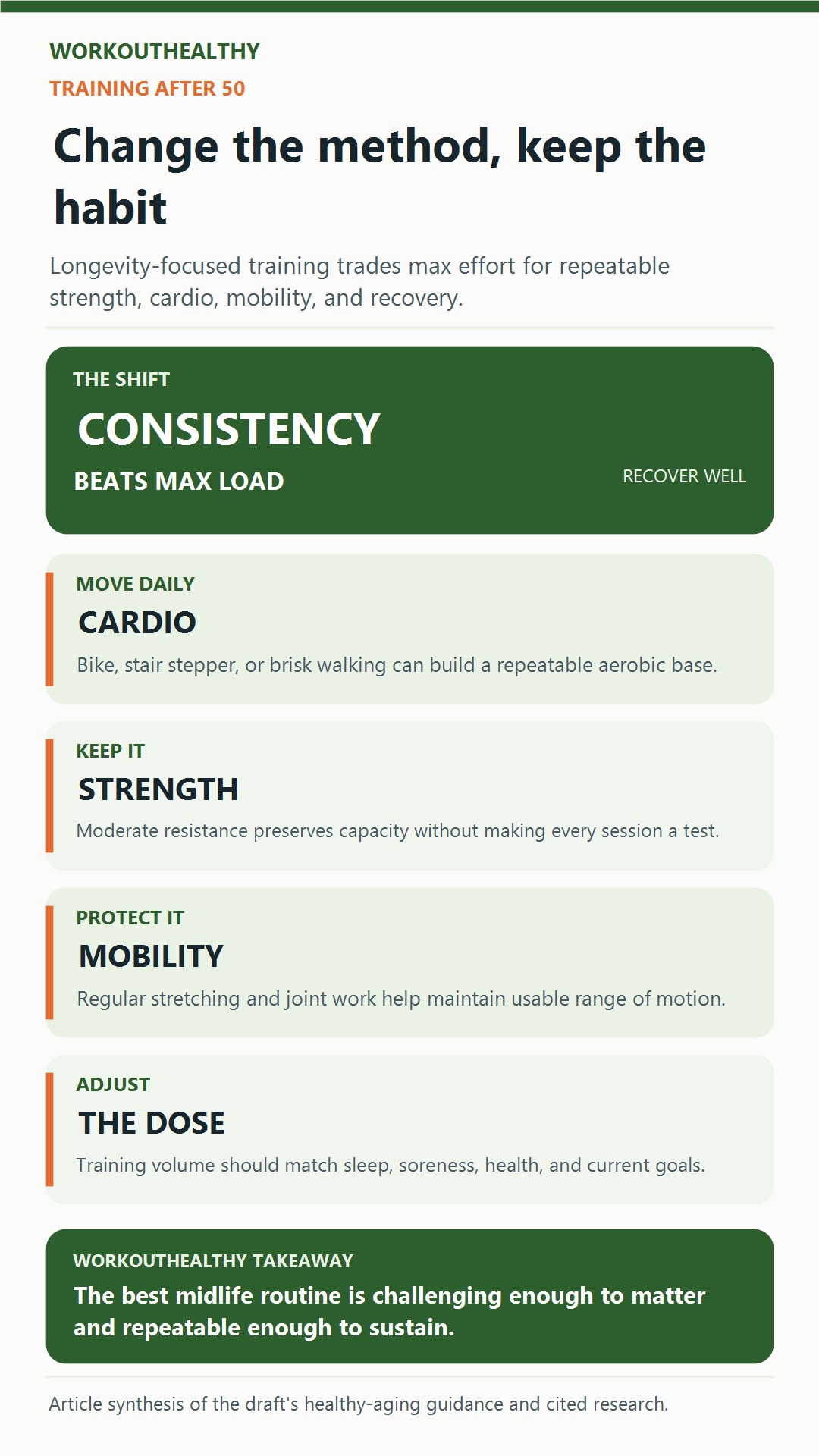
Start with three strength sessions a week using moderate weights, aiming for eight to twelve repetitions per exercise rather than a single maximum effort lift.
Add twenty to thirty minutes of steady cardio most days, using whatever equipment feels comfortable on your joints, like a stationary bike, an elliptical, or a stair machine.
Include ten to fifteen minutes of dedicated stretching or mobility work at least three times a week, focusing on the hips, shoulders, and lower back.
Consider working with a trainer periodically to check your form and adjust your program, especially if you are returning to exercise after a long break.
A trainer can also help you figure out whether a program like hiring a personal trainer makes sense for your specific goals and budget.
If you want to try adjusting your eating window, start gradually, perhaps by pushing breakfast back thirty minutes at a time, rather than jumping straight to skipping a full meal.
Track how you feel and perform over several weeks rather than judging any single day, since the body needs time to adapt to a new training or eating pattern.
Get a checkup before making major changes to either your exercise routine or your eating pattern, especially if you have an existing health condition or have not exercised regularly in a while.
Prioritize sleep and recovery alongside your training, since recovery quality tends to matter more with age, not less.
Reassess your program every few months rather than sticking with the exact same routine indefinitely, since your goals and capacity can shift as you get more consistent.
Pay attention to how your joints feel the day after a workout, not just during it, since delayed soreness or stiffness is useful feedback about whether your current loads are appropriate.
References
- Men’s Health, Celebrity Workout Collection: menshealth.com
- Nelson, M. E., Rejeski, W. J., Blair, S. N., Duncan, P. W., Judge, J. O., King, A. C., Macera, C. A., & Castaneda-Sceppa, C. (2007). Physical activity and public health in older adults: Recommendation from the American College of Sports Medicine and the American Heart Association. Medicine and Science in Sports and Exercise, 39(8), 1435 to 1445.
- de Cabo, R., & Mattson, M. P. (2019). Effects of intermittent fasting on health, aging, and disease. New England Journal of Medicine, 381(26), 2541 to 2551.
This article is for general information and is not medical advice. Talk with a doctor before starting a new exercise or eating pattern, especially if you have an existing health condition.