
Max Thieriot plays a firefighter on screen, and the physical demands of that role do not stop when the cameras cut.
Since 2022, Thieriot has starred as Bode Leone on the CBS drama Fire Country, a show he also co-created and helps write.
Before that, he spent five seasons playing a Navy SEAL character on SEAL Team, another role built around physically demanding scenes.
Fire Country puts its cast through real physical work, including gear handling, hose drags, and stunt sequences tied to wildland firefighting.
That kind of role does not reward a body built purely for looks. It rewards a body that can actually perform under load.
Thieriot’s path to Hollywood started young. He began acting in 2004 after taking an improvisation class as a teenager, and his early credits include Catch That Kid and The Pacifier.
He went on to appear in Jumper and Point Break, along with a longer run on the drama series Bates Motel, where he played Norman Bates’s half brother.
None of those earlier roles demanded the sustained, season after season physicality that Fire Country and SEAL Team have required.
Training for the Job, Not Just the Camera
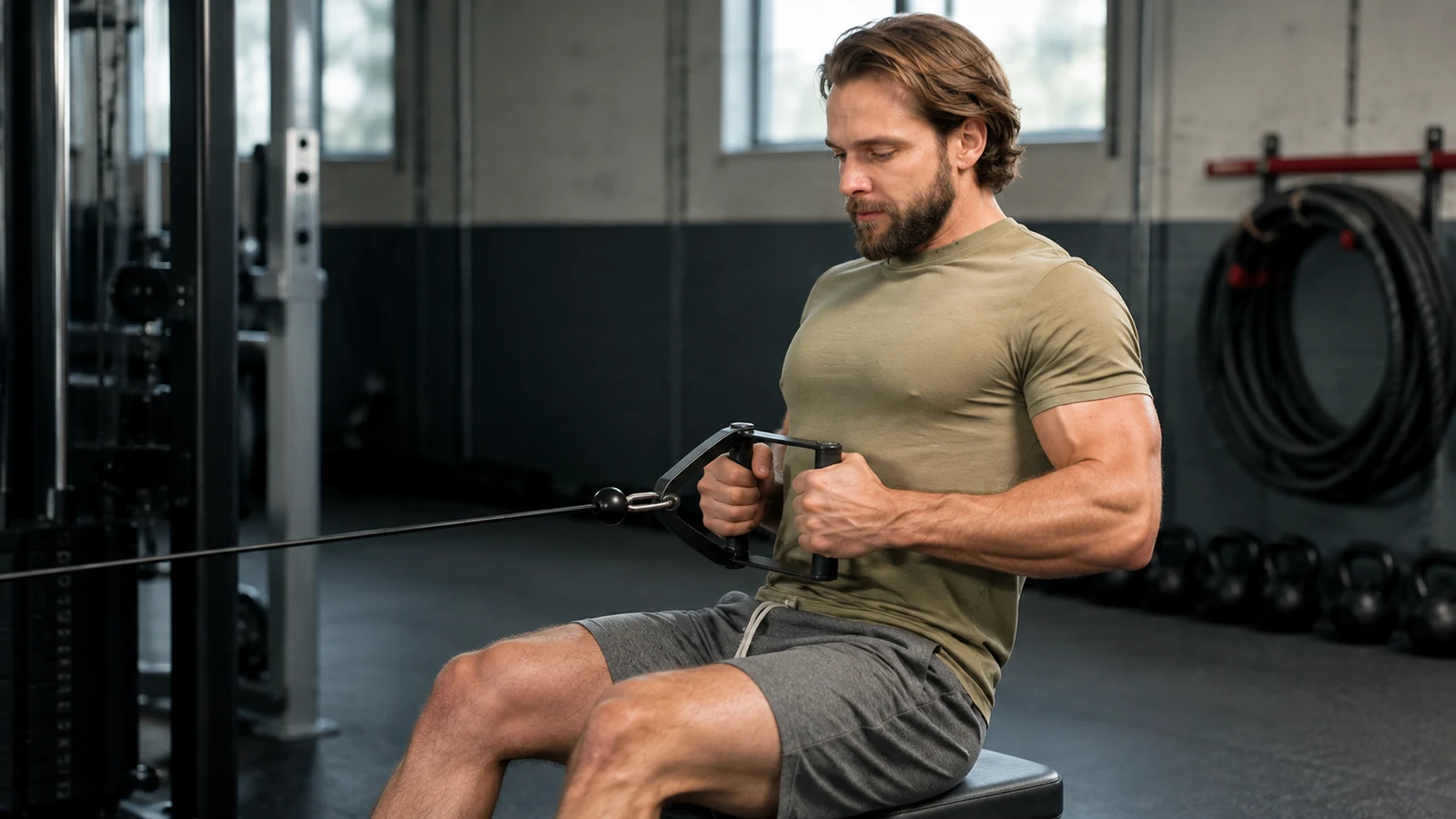
Thieriot’s current training reportedly leans heavily on back and grip work, the same kind of pulling strength real firefighters rely on.
Firefighters routinely carry heavy hose lines, drag equipment, and grip tools for extended periods while wearing dozens of pounds of protective gear.
That work depends far more on pulling and gripping strength than on the pushing movements many gym routines emphasize by default.
Public reporting on his workouts describes rows, pull variations, and grip focused exercises rather than long stretches of isolation training.
The idea behind that emphasis is simple. A body that performs under real physical demand matters more on a working film set than one that only looks strong in a photo.
What Thieriot Has Said About His Approach
Thieriot has talked in interviews about wanting Fire Country to feel physically honest, not stylized.
He has described training with the actual demands of the character’s job in mind, rather than training purely for size or a specific look.
As both a star and co-creator of the show, he has said the physical realism matters to him personally, since the character is meant to reflect real wildland firefighters.
That framing lines up with how he has approached training publicly. Function first, aesthetics second.
Why Grip Strength Is More Than a Party Trick
Grip strength might sound like a minor detail, but exercise researchers treat it as a meaningful marker of overall physical capability.
A review of grip strength research described it as an indispensable biomarker in health and aging research, since it correlates with broader measures of strength and function (Bohannon, 2019).
Grip strength is not just about hand size or forearm training. It reflects how well the nervous system and muscles work together under real load.
A stronger grip is not just about the hands. It reflects how well the whole posterior chain works together under real load.
That matters directly for jobs like firefighting, where a slipping grip on a hose or a tool can be a real safety issue, not just an inconvenience.
Grip strength is also unusually easy to measure, which is part of why researchers use it so often as a stand in for broader physical capability.
A simple handheld dynamometer test takes seconds to administer, which makes it practical for research on large groups of people, from firefighters to older adults.
What Firefighter Fitness Research Actually Shows
Researchers have directly studied which fitness qualities matter most for real firefighting tasks, not just general gym performance.
One study assessed firefighter recruits across several fitness measures and compared those results to their performance on job specific tasks, like dragging a hose and carrying equipment (Michaelides et al., 2011).
The researchers found that measures of muscular strength and endurance, including grip and pulling strength, were meaningfully linked to better performance on those simulated job tasks.
That is a useful reminder that fitness for a physically demanding job is not one dimensional.
Cardio matters, but so does the ability to pull, drag, and grip under fatigue.
Separate research looking at on the job firefighter injuries found that overexertion and strains were among the most common causes of injury in the field (Poplin et al., 2012).
That points toward strength and conditioning as a real injury prevention tool for physically demanding work, not just a performance booster.
What This Evidence Does Not Prove
None of this research was conducted on Thieriot himself, so it cannot confirm exactly how his personal training translates to his job.
Acting on a television show is not the same as working an actual fire scene, even when a production takes stunt safety and physical realism seriously.
The firefighter fitness research used real firefighters and real job tasks, not actors performing choreographed scenes for a camera.
Still, the underlying physical demands, gripping tools, pulling equipment, and working while fatigued, overlap enough that the general training principle holds up.
A body trained for functional pulling strength is better prepared for that kind of physical work than one trained purely with machines and isolation exercises.
How This Compares to General Strength Guidance
Strength coaches generally recommend a balanced ratio of pushing and pulling exercises in any well designed program.
Many everyday lifters unintentionally lean toward pushing movements, like bench press and shoulder press, since those are often the most visible, mirror friendly exercises in a gym.
That imbalance can lead to rounded shoulders and a weaker posterior chain over time.
A training approach that emphasizes rows, pull-ups, and grip work, the way Thieriot’s reportedly does, helps correct that common imbalance rather than making it worse.
A well balanced program typically includes roughly equal amounts of pushing and pulling volume across a training week.
Some coaches even recommend slightly more pulling volume than pushing volume for people who spend long hours sitting or hunched forward during the day.
This is not a niche approach reserved for actors preparing for a role. It reflects long standing strength and conditioning guidance for anyone doing physically demanding work.
The same logic applies well beyond stunt work or emergency services.
Parents lifting kids, movers carrying boxes, and gardeners hauling bags of soil all rely on the same pulling and gripping strength that a firefighter or a firefighter’s stunt double needs.
Building that strength has a payoff that extends well past any single job or role.
Common Mistakes People Make With Back and Grip Training
A common mistake is training grip strength only through incidental exposure, like whatever a deadlift or pull-up happens to demand.
Direct grip work, like farmer’s carries or dead hangs, builds capacity that incidental exposure alone often does not reach.
Another mistake is neglecting back training entirely in favor of chest and arm work, which is a common pattern in casual gym routines.
That imbalance shows up over time as poor posture and a weaker pulling capacity relative to pushing strength.
People also frequently use poor form on rowing movements, using momentum from the lower back instead of controlled pulling through the shoulder blades.
That habit reduces the actual training benefit and raises the risk of lower back strain.
Finally, many lifters undertrain their forearms and grip specifically, assuming grip strength will simply show up as a side effect of other lifts.
For most people, it needs its own dedicated attention to improve meaningfully over time.
How to Build Functional Back and Grip Strength
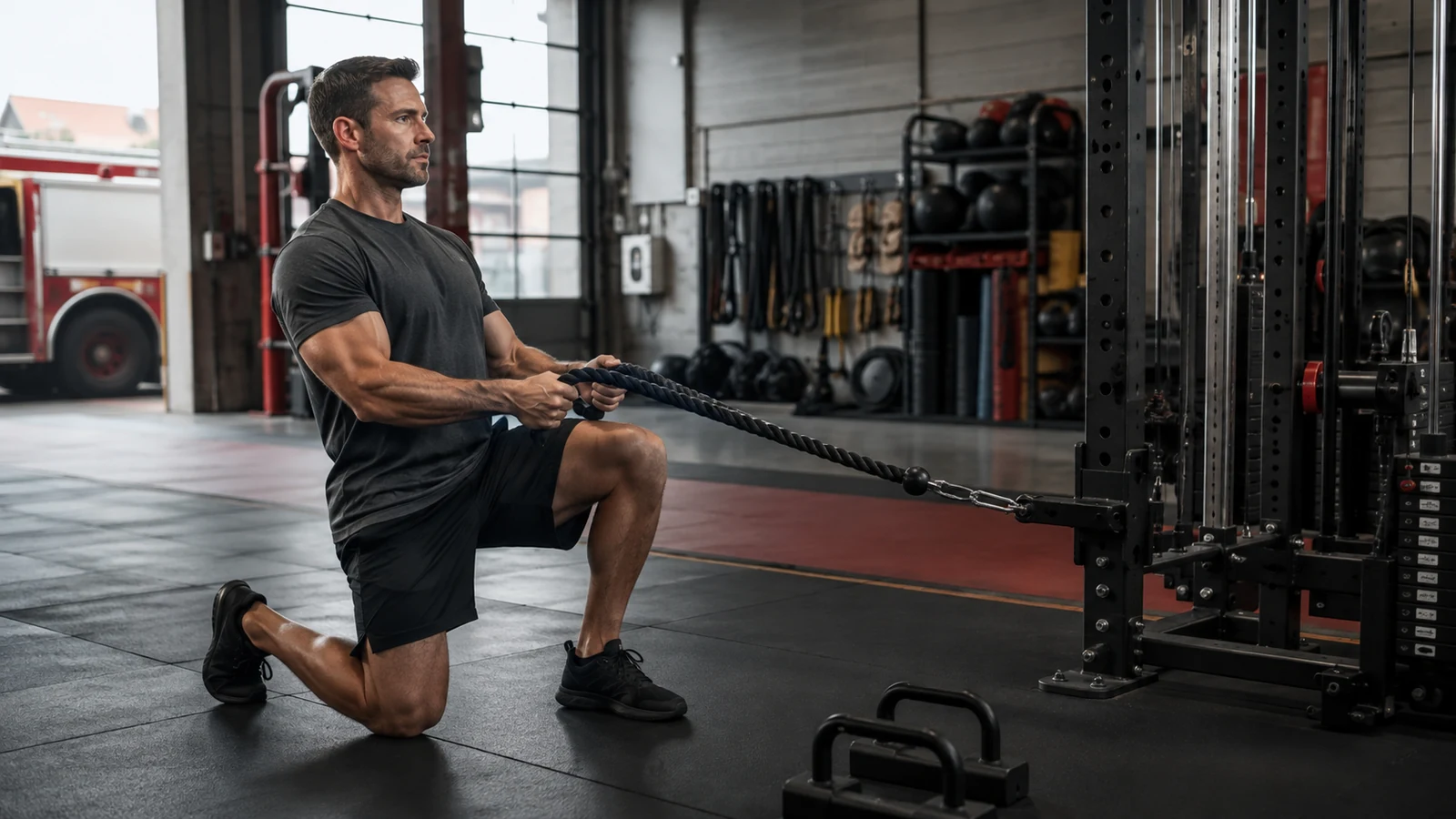
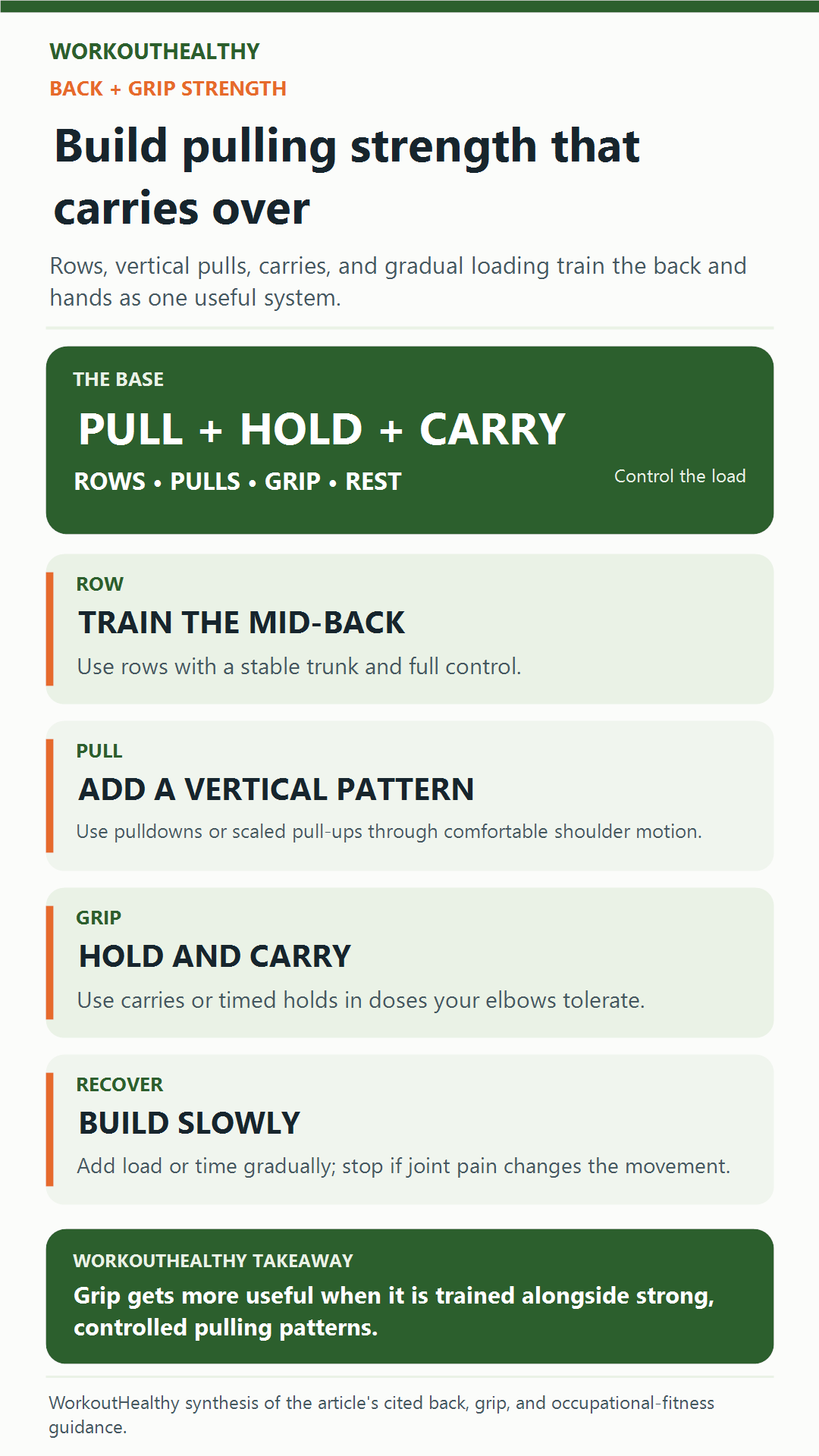
Start with basic rowing movements, like a dumbbell row or a cable row, focusing on pulling through the shoulder blades rather than just bending the arm.
Our guide on the floor press versus bench press is a useful companion piece if you are already working on pressing strength and want to balance it with pulling.
Add pull-ups or assisted pull-ups if your current strength allows, since they train grip and back strength together in one movement.
Farmer’s carries are one of the simplest ways to build real world grip endurance. Hold a heavy dumbbell or kettlebell in each hand and walk for a set distance or time.
Dead hangs from a pull-up bar are another simple option. Even fifteen to thirty seconds of hanging challenges grip endurance meaningfully for most people.
Progress grip training gradually, the same way you would progress any other lift, rather than jumping straight to maximum effort holds.
Two focused sessions a week that include rowing, pulling, and direct grip work is a reasonable starting structure for most healthy adults.
If you are new to structuring a program like this, our article on deciding whether you need a personal trainer can help you figure out how much guidance is worth the investment.
Pair back and grip work with general cardiovascular conditioning, since real physical jobs, and physically demanding acting roles alike, rarely rely on strength alone.
Track your grip and pulling progress over time, the same way you would track any other lift.
A simple log of dead hang time, farmer’s carry distance, or row weight makes slow, real improvement easy to see even when it does not feel dramatic week to week.
References
Bohannon, R. W. (2019). Grip strength: An indispensable biomarker for older adults. Clinical Interventions in Aging, 14, 1681-1691.
Michaelides, M. A., Parpa, K. M., Henry, L. J., Thompson, G. B., & Brown, B. S. (2011). Assessment of physical fitness aspects and their relationship to firefighters’ job abilities. Journal of Strength and Conditioning Research, 25(4), 956-965.
Poplin, G. S., Harris, R. B., Pollack, K. M., Peate, W. F., & Burgess, J. L. (2012). Beyond the fireground: injuries in the fire service. Injury Prevention, 18(4), 228-233.
This article is for general educational purposes and is not a substitute for personalized advice from a qualified fitness or medical professional.
Always consult a doctor before starting a new strength training program, especially if you have an existing shoulder, back, or joint condition.