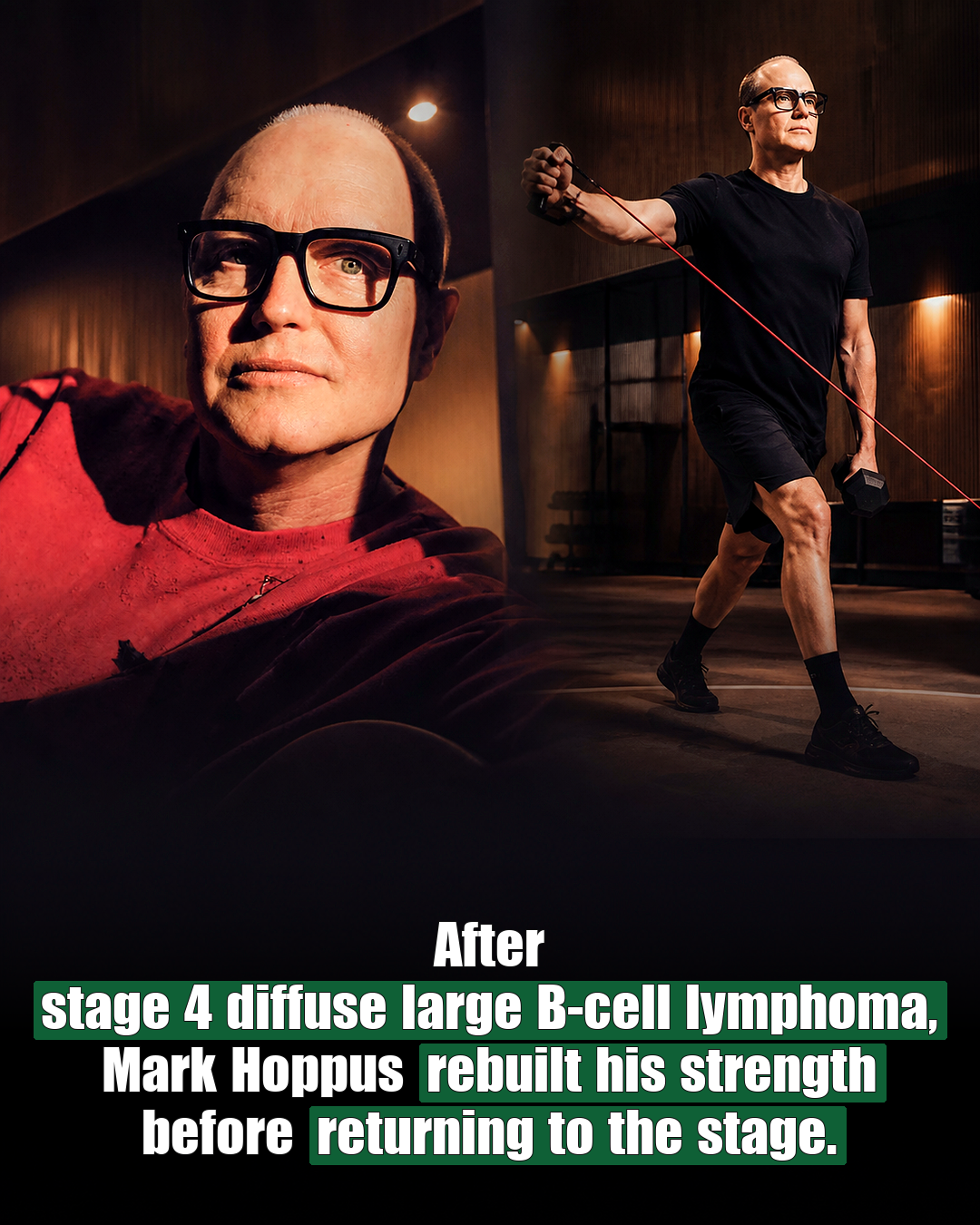

Mark Hoppus has spent decades as the voice of Blink-182, one of the most recognized pop punk bands in the world.
In 2021, that voice was put in real danger, not by a bad show or a strained tour schedule, but by cancer treatment.
Hoppus is cancer free today. He is back on stage with Blink-182, and the band released a new album in 2023.
Getting back there took more than good news from a doctor. It took months of physical work to rebuild a voice that chemotherapy had worn down.
Blink-182 formed in the early 1990s and became one of the defining bands of pop punk, known for songs like “All the Small Things” and “What’s My Age Again.”
Hoppus co-founded the band and has played bass and sung lead vocals for most of its history.
His cancer diagnosis in 2021 put the future of the band in real doubt for a while, not just his own health.
What Actually Happened
In June 2021, Hoppus revealed that he had been diagnosed with stage four diffuse large B cell lymphoma, an aggressive form of blood cancer.
He had kept the diagnosis private for months while undergoing chemotherapy.
By September 2021, Hoppus announced he was cancer free, though he committed to regular scans every six months to watch for any return of the disease.
Getting to cancer free did not mean getting back to normal right away.
Chemotherapy is hard on the whole body, not just the tumor it is designed to kill.
It commonly leaves patients fatigued, weak, and physically deconditioned, and PEOPLE’s health coverage reported that Hoppus described his body and voice as feeling hollowed out once treatment ended.
Singing is a full body activity. It depends on breath support from the diaphragm, stamina in the core and back, and control in the throat and vocal folds.
Months of chemotherapy and reduced activity can weaken all of that at once.
According to that same PEOPLE reporting, Hoppus worked with a vocal coach to rebuild his singing voice in a structured way, treating it less like a quick warm up and more like physical therapy.
That framing matters. A voice is not a switch that turns back on once a scan comes back clear.
It is closer to a muscle group that has gone through months of inactivity and needs to be reconditioned in stages.
The Long Road Back to the Stage
Blink-182 had been on hiatus, with founding member Tom DeLonge out of the lineup for several years before Hoppus’s diagnosis.
Hoppus has said the health scare brought the three original members back into the same room to talk, and that conversation became the seed of the band’s reunion.
In October 2022, Blink-182 officially announced that DeLonge was returning, alongside Hoppus and drummer Travis Barker.
The band released the album One More Time in October 2023, its first with all three original members in years.
PEOPLE’s coverage highlighted the band’s high profile Coachella appearance as one of the visible signs of how far Hoppus had come since his diagnosis.
None of that happened automatically once the cancer was gone. It happened because Hoppus put in the work to get his instrument, his own voice, back into performing shape.
His story shares a common thread with other athletes and performers who have made comebacks after years away or after a serious health setback.
The Science of Getting Strength Back After Cancer Treatment
Hoppus’s experience lines up closely with what exercise oncology research has found in cancer survivors more broadly.
A 2019 consensus statement from an international group of exercise and oncology researchers, published in Medicine and Science in Sports and Exercise, reviewed the evidence on exercise for people who have been treated for cancer.
The panel found that structured exercise programs can meaningfully improve fatigue, physical function, muscle strength, and quality of life in cancer survivors.
They also found these benefits held across many cancer types, not just one, which is why cancer centers increasingly refer patients to supervised exercise programs during and after treatment.
Fatigue is one of the most common and disruptive effects of cancer treatment, and it does not always fade the moment treatment ends.
A large 2017 meta-analysis published in JAMA Oncology compared exercise, psychological treatment, and medication for cancer related fatigue across dozens of clinical trials.
Exercise came out ahead of both drug treatments and psychological therapy for reducing fatigue in that analysis.
That finding helps explain why a structured, gradual rebuilding process, the kind Hoppus described going through with a vocal coach, tends to work better than simply waiting for energy and strength to return on their own.
Voice and breath control are not separate from general physical conditioning. They depend on the same respiratory muscles, core stability, and general stamina that any structured exercise or rehabilitation program targets.
Unexplained fatigue and muscle loss during and after serious illness are common enough that they are worth understanding on their own, and unintentional weight and muscle loss can have several overlapping causes beyond cancer treatment itself.
What This Evidence Does Not Prove
The research on structured exercise after cancer treatment is strong, but it is not built specifically around professional singers rebuilding a touring voice.
Most of the exercise oncology studies measure general fitness, walking distance, strength, and fatigue scores, not vocal endurance or pitch control.
There is no controlled clinical trial testing exactly what Hoppus did with a vocal coach after chemotherapy.
What the research does support is the underlying principle. Structured, gradual, supervised rebuilding works better than either full rest or jumping back to full intensity too soon.
That principle reasonably extends to voice work, even without a study built around musicians specifically.
How This Compares to General Recovery Guidance
Doctors do not typically wait until a patient feels fully recovered before recommending some form of movement.
Most current cancer care guidelines encourage light activity even during treatment, when a patient’s care team says it is safe, rather than complete rest.
The general principle is to start small, track how the body responds, and build up gradually rather than jumping back into a full pre diagnosis routine all at once.
Hoppus’s path fits that general pattern, even though his specific goal, rebuilding a touring musician’s singing voice, is unusual.
The core idea, that a weakened system needs progressive, guided rebuilding rather than an all at once return, applies whether the goal is walking around the block or headlining a sold out tour.
Who Should Talk to a Doctor First
Anyone currently in cancer treatment should talk with their oncology team before starting any new exercise or vocal training program.
Cancer treatment can affect the heart, lungs, blood counts, and bones in ways that are not always obvious from the outside.
A doctor or physical therapist can help identify safe starting intensities based on blood counts, treatment type, and any lingering side effects.
People who have finished treatment but still feel unusually fatigued months later should also mention it to their doctor, since ongoing fatigue sometimes has a treatable cause.
Anyone with a history of heart or lung complications from chemotherapy should be especially careful with activities that demand strong breath control, since singing and breath heavy exercise both increase demand on those systems.
A referral to a speech language pathologist or a certified vocal coach experienced with medical rehabilitation is a reasonable step for anyone rebuilding their voice after a serious illness, not just professional singers.
Anyone who notices persistent hoarseness, voice changes, or difficulty swallowing after cancer treatment should mention it to a doctor rather than assuming it will resolve on its own, since these symptoms sometimes point to something that benefits from early evaluation.
A Practical Way to Rebuild Strength and Stamina After Illness
Start with short sessions, even five to ten minutes, rather than trying to match your old routine right away.
Focus on consistency over intensity in the first few weeks back.
Track simple markers like how many minutes you can stay active before needing a break, and let that number guide your progress instead of a calendar.
Add a small amount of extra time or effort only once the current level feels comfortable for several sessions in a row.
Build in breathing focused work, like slow diaphragmatic breathing exercises, since breath support underlies both singing and general physical stamina.
Work with a professional, whether that is a physical therapist, an oncology rehabilitation specialist, or a vocal coach, especially in the first few months.
Expect setbacks. Fatigue can come in waves for months after treatment ends, and a harder day does not mean the progress made so far has been lost.
Celebrate small functional wins, like finishing a full walk or getting through a full song, rather than only measuring progress against where you were before you got sick.
Keep a simple log of what you did each session and how you felt afterward, since patterns over several weeks are more useful than judging any single day.
If a specific activity consistently leaves you far more exhausted than expected, that is worth raising with your care team rather than pushing through it repeatedly.
References
- PEOPLE, Health coverage hub, reporting on Mark Hoppus’s cancer diagnosis, treatment, and return to performing: people.com/health
- Campbell, K. L., Winters-Stone, K. M., Wiskemann, J., May, A. M., Schwartz, A. L., Courneya, K. S., Zucker, D. S., Matthews, C. E., Ligibel, J. A., Gerber, L. H., Morris, G. S., Patel, A. V., Hue, T. F., Perna, F. M., & Schmitz, K. H. (2019). Exercise guidelines for cancer survivors: Consensus statement from international multidisciplinary roundtable. Medicine and Science in Sports and Exercise, 51(11), 2375 to 2390.
- Mustian, K. M., Alfano, C. M., Heckler, C., Kleckner, A. S., Kleckner, I. R., Leach, C. R., Mohr, D., Palesh, O. G., Peppone, L. J., Piper, B. F., Scarpato, J., Smith, T., Sprod, L. K., & Miller, S. M. (2017). Comparison of pharmaceutical, psychological, and exercise treatments for cancer related fatigue: A meta analysis. JAMA Oncology, 3(7), 961 to 968.
This article is for general information and is not medical advice. Anyone in or recovering from cancer treatment should talk with their oncology team before starting a new exercise, breathing, or vocal training program.