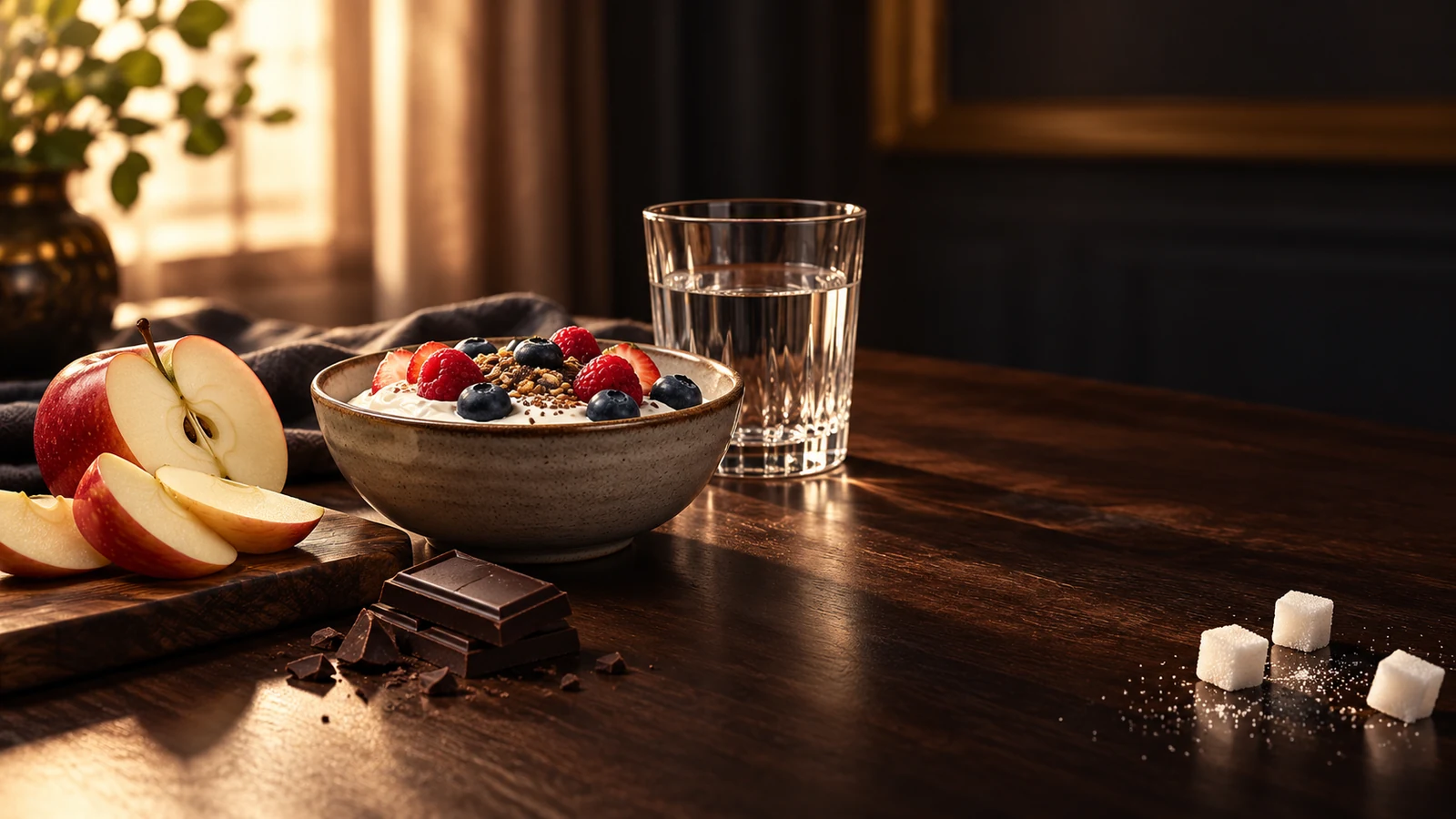

Sugar cravings are a strong desire for something sweet, and they can overlap with hunger, habit, stress or enjoyment. A satisfying meal, a drink when thirsty, an appealing snack, sleep support and flexibility around treats can each have a place, but none reliably switches cravings off.
The evidence becomes more useful when we separate wanting a particular food from feeling full, preferring a sweeter taste and actually eating more. Those outcomes sometimes change together and sometimes do not.
Medical care comes first: If you have diabetes and suspect low blood glucose, follow your treatment plan promptly rather than delaying with water, a walk or a craving worksheet. This guide addresses everyday food choices, not treatment of hypoglycemia.
What a Sugar Craving Can Tell You
A wish for chocolate can be specific even when several foods would satisfy hunger. You may also be hungry and want chocolate at the same time, so there is no need to pass a “real hunger” test before eating.
The context can offer clues about what would help: an interrupted lunch, an appealing food nearby, a familiar evening routine or a difficult day. A clue is something to explore, not proof that you have a nutrient deficiency, a hormone problem or an addiction.
Research papers sometimes use the term “sugar addiction,” including a 2025 narrative review drawing on animal and human research. A review of reward mechanisms is not a diagnostic test for a reader who wants dessert.
Take distress and loss of control seriously without labeling an ordinary preference as a disorder. Professional assessment can address a troublesome eating pattern more usefully than a self-diagnosis based on a craving.
1. Make Meals Satisfying and Available
If a recurring afternoon craving follows a missed or very small lunch, making enough food available is a practical place to start. This is a response to a food need, not a requirement to eat on a rigid clock.
Breakfast protein has some relevant research, but “30 grams steadies blood sugar all day” goes beyond it. One 27-woman crossover study found different morning food-craving scores after higher-protein and higher-carbohydrate breakfasts, yet neither breakfast nor sleep condition changed lunch or daily energy intake.
A separate 30-woman breakfast trial found greater fullness after a dairy-based, higher-protein meal, while daily energy intake did not differ significantly. The studies tested particular meal combinations in particular groups, not a universal protein threshold or a treatment for every sweet craving.
If breakfast suits your routine, examples include yogurt with oats and berries, eggs with toast and fruit, or tofu with vegetables and a tortilla. Preferences, allergies, budget, access and medical nutrition advice can shape the choice.
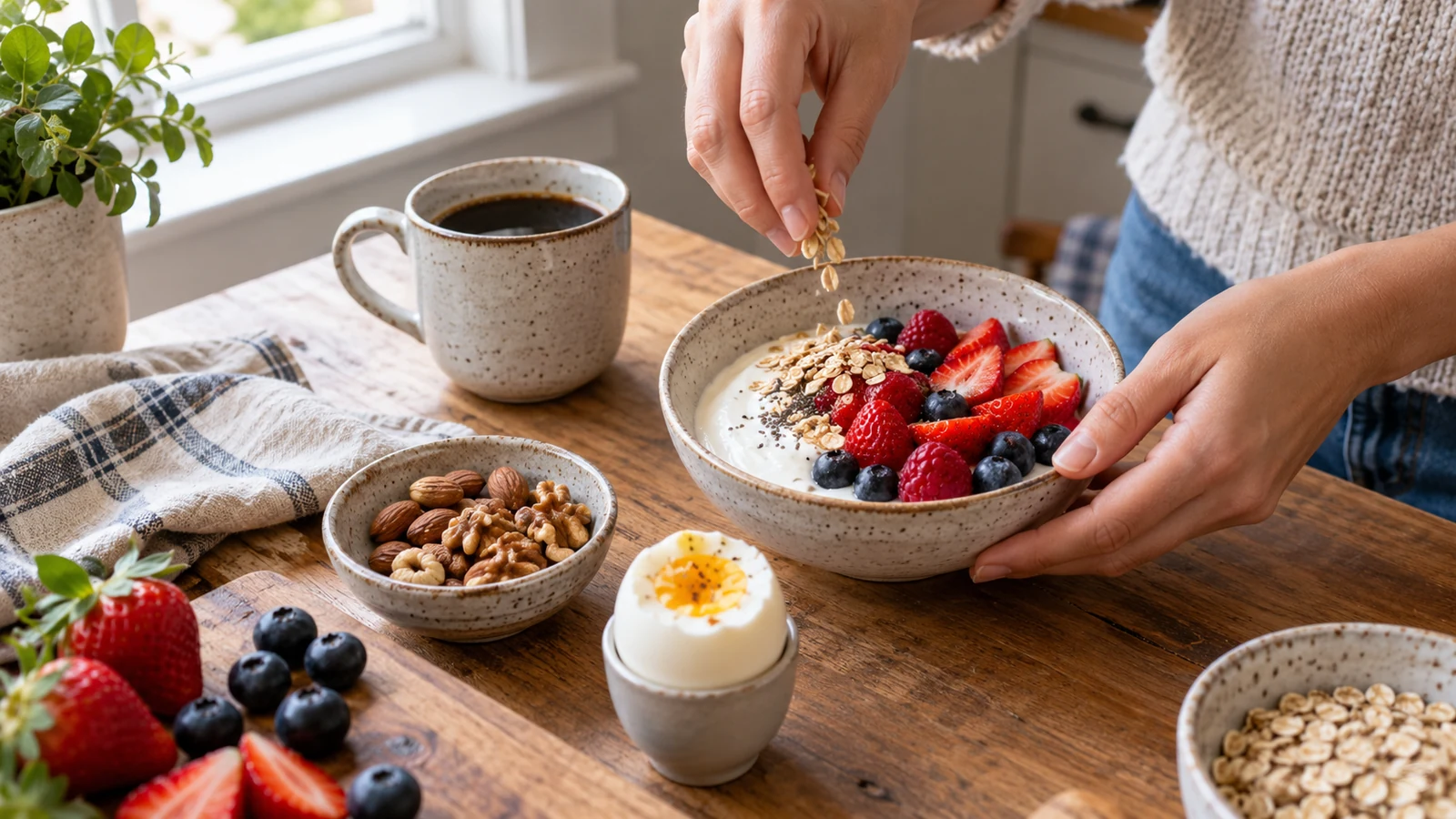
You do not have to add breakfast solely because an online tip says it prevents cravings. Our morning-habits evidence check addresses breakfast within a broader daily routine; the question here is what the craving research actually measured.
2. Drink for Thirst, Not as a Food-Delay Rule
Water can meet a fluid need, and choosing it instead of a sweetened drink changes what you drink. Neither observation proves that water removes a craving for food in ten minutes.
The often-cited food-and-water experiment compared meal structure, eating versus drinking, and additional water in 20 participants. It measured hunger, fullness and thirst, not the percentage of sweet cravings that disappeared after a glass.
Drink when you need fluid, and eat when you need food. If you still want the chocolate afterward, hydration has not failed.
NIH hydration guidance explains that needs vary with circumstances such as activity, heat and health. A prescribed fluid restriction takes priority over a generic “drink more” tip.
3. Choose a Sweet Food You Actually Want
Fruit is one option: an apple, orange or bowl of berries provides sweetness along with other nutrients. It is not a required course to finish before you are allowed a dessert.
You might want fruit, chocolate, yogurt or a combination. If you also need a substantial snack, choose enough food to address that need rather than expecting one substitute to solve everything.
A food’s sweetness also does not tell you how much added sugar it contains. The FDA distinguishes total sugars from added sugars: total sugars include naturally occurring sugars and any added sugars.
For example, a label with 15 grams of total sugars, including 7 grams of added sugars, does not mean 22 grams altogether. The added amount is already included, and the serving size tells you what quantity of food the figures describe.
That is label-reading information, not a craving score or a personal daily allowance. If numerical tracking makes eating more stressful, an appropriate professional can help you use a less numerical approach.
4. Support Sleep and Keep the Outcomes Separate
Poor sleep can affect appetite and food choices, but the story is more complicated than ghrelin rising and leptin falling in everyone. A 24-person randomized crossover trial is a useful example of why the exact measurement matters.
After three nights assigned to shorter sleep, participants preferred a stronger sucrose solution and ate more at a laboratory breakfast. Their reported desire for sweet foods, however, did not differ significantly between conditions.
| Measurement | Reported result | Interpretation limit |
|---|---|---|
| Preferred sweetness in a tasting test | Higher after shorter sleep | Liking a stronger sugar solution is not the same measurement as craving a snack. |
| Subjective desire for sweets | No significant difference | The taste result should not be rewritten as a demonstrated increase in every craving measure. |
| Food consumed | Higher energy intake at the tested breakfast | The study did not establish whole-day intake or long-term weight change from this result. |
| Appetite hormones | Leptin did not differ; the active-ghrelin difference was no longer significant after adjustment for last-meal timing. | A single hormone story does not explain all of the eating response. |
The changes in preferred sweetness and breakfast energy intake were not significantly correlated, either. That does not prove the measures can never be related; it means this experiment did not establish that one explained the other.
The participants were healthy young adults, and the study compared three-night conditions rather than treating chronic insomnia or shift-work difficulties. A 2026 review of controlled human trials also found that appetite responses and observed intake often did not line up.
Protect a workable sleep opportunity because sleep supports health and daily function. The CDC’s age-based guidance is a starting point, while persistent sleep problems deserve appropriate care rather than blame for what you eat.
5. Keep Enjoyable Foods in the Conversation
It can be reasonable to enjoy the food you want and continue with your day. You do not need to describe it as a cheat, earn it through exercise or compensate by skipping the next meal.
Flexibility is not the same as promising that a small measured treat prevents every craving. Nor does a craving mean you need a complete sugar ban or a supplement marketed as a craving blocker.
If “just have a little” feels distressing or eating repeatedly feels out of control, seek support rather than making the rule stricter. Advice should account for your situation instead of assuming everyone benefits from the same portion strategy.
What the Breakfast Evidence Does and Does Not Measure
Fullness, craving ratings and intake are related questions, but they are not interchangeable results. Keeping the population and comparison beside the outcome makes these studies easier to apply carefully.
| Population and comparison | Appetite finding | Intake finding | What remains unproved |
|---|---|---|---|
| 27 non-obese premenopausal women who routinely ate breakfast; higher-protein versus higher-carbohydrate meals under habitual and curtailed sleep conditions | Morning food-craving scores improved relative to the carbohydrate-rich breakfast; the fullness benefit depended on sleep condition. | No significant condition effect on lunch or daily energy intake | A sugar-specific craving cure, universal breakfast amount or all-day glucose guarantee |
| 30 women aged 18 to 30 with overweight or obesity; dairy-based higher-protein breakfast versus an equal-energy higher-carbohydrate breakfast or no breakfast | Greater fullness, satisfaction and satiety during the three hours after the protein-rich meal | No significant difference in lunch or total daily energy intake | That feeling fuller necessarily makes someone eat less that day or that protein alone explains every meal effect |
These crossover designs tested the same people under different conditions, not 27 or 30 new people in every condition. They support a limited finding about those meals and participants, not a personalized nutrition prescription.
Notice the difference between “food-craving scores improved” and “people ate less sugar.” The first study’s abstract reports the former and unchanged daily energy intake, so it should not be presented as proof of the latter.
A Practical Check That Does Not Gatekeep Food
Ask what would be useful now: food, fluid, a particular taste, rest, support or a change in the situation. You can answer more than one question at once, and you do not have to make the craving disappear to have made a reasonable choice.
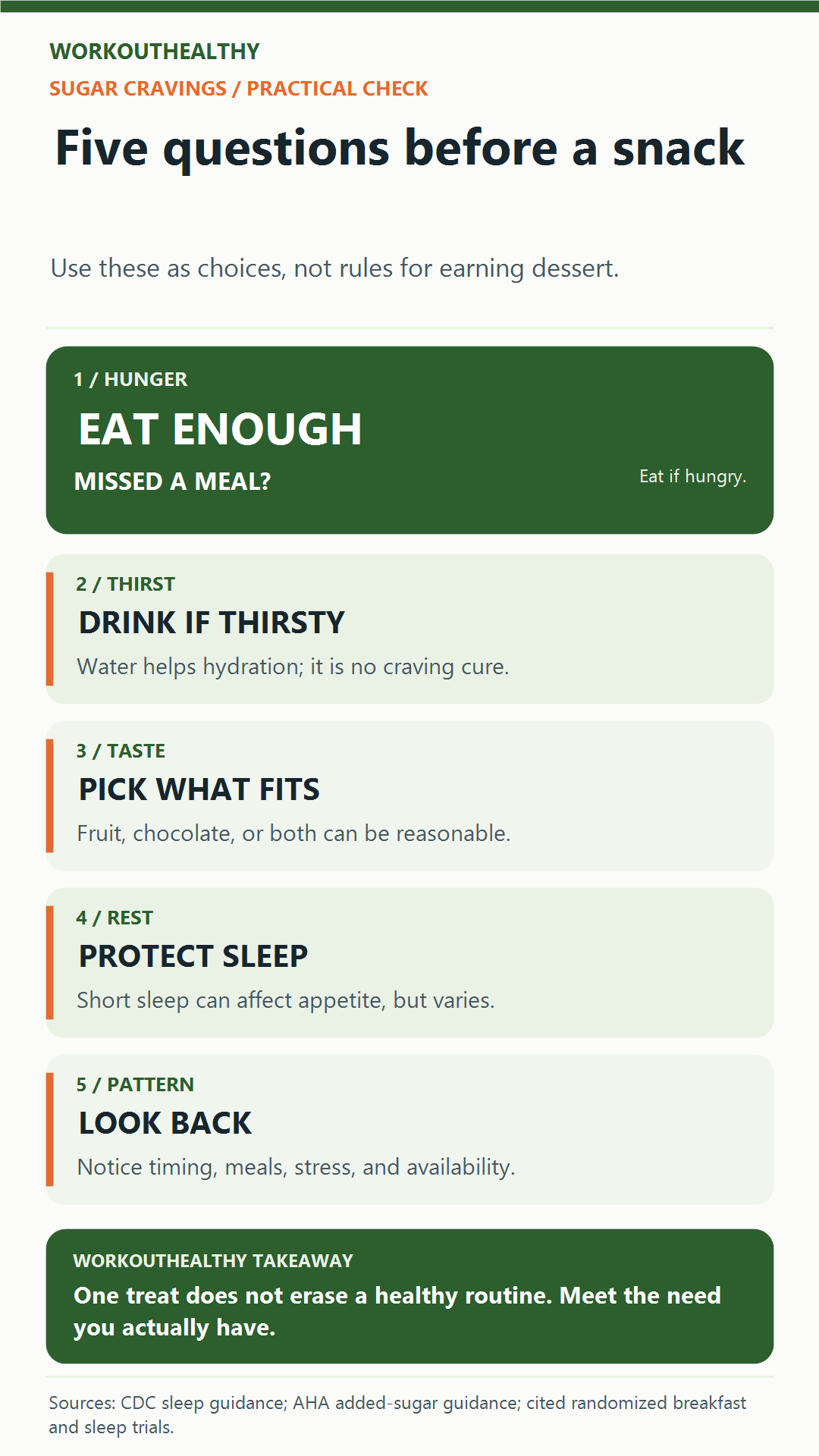
If noticing patterns feels helpful, keep a brief note about one recurring situation rather than recording every bite. Skip this exercise if it increases anxiety, and use guidance from your care team when relevant.
| Context to notice | A possible practical choice | What to notice afterward |
|---|---|---|
| Work interrupted lunch, and food is hard to obtain later. | Make a meal or a convenient, satisfying snack available. | Did the food address hunger, and was the arrangement workable? |
| You enjoyed dinner and would like a favorite dessert. | Choose the dessert if you want it. | Was it enjoyable and satisfying, rather than a test of discipline? |
| A stressful task and a familiar snack routine occur together. | Consider food and whatever support or break would help with the task. | What part of the situation could be made easier next time? |
These are hypothetical examples, not interviews, treatment rules or promises of craving relief. The goal is a more useful response to your circumstances, not perfect control over appetite.
When to Ask for Help
If you have diabetes, a suspected low needs your established treatment response, not a strategy for resisting sweets. NIDDK explains that low blood glucose can need prompt treatment; recurrent episodes or uncertainty about your plan warrant discussion with your diabetes care team.
Recurring loss of control, marked distress, compensatory behaviors or an increasingly restricted eating pattern deserve attention as well. The National Institute of Mental Health emphasizes that eating disorders are serious illnesses and treatment is available.
A qualified healthcare professional, registered dietitian experienced in your needs or mental-health professional can help. You do not have to prove that a craving meets an internet label before asking for support.
For everyday choices, keep the five ideas flexible: meet food needs, hydrate appropriately, choose enjoyable foods, support sleep and reduce guilt. A craving that remains after those choices is not evidence that you have failed.
Sources and Further Reading
- 2021 randomized breakfast-and-sleep crossover study in 27 women.
- 2024 randomized breakfast crossover study in 30 young women.
- 2012 food structure, consumption mode, hunger and thirst experiment.
- Tajiri and colleagues: the 2020 sleep, sweet-preference and breakfast-intake trial.
- 2026 review of sleep restriction, appetite and dietary intake.
- NIH: Hydrating for Health; CDC: About Sleep.
- FDA: total and added sugars on the Nutrition Facts label.
- NIDDK: low blood glucose; NIMH: eating disorders.
Get the next verified fitness story.
Five practical fitness stories worth your time, every Friday.
One email a week. No product pitches. Unsubscribe in one click.
Health disclaimer: This article provides general information, not medical or individualized nutrition advice. Follow your care plan and seek appropriate professional guidance for diabetes, fluid restrictions, eating disorders or persistent distress around food.