
Ryan Gosling is 45 years old and still one of the most in demand leading men in film.
His 2026 sci-fi film Project Hail Mary has become one of the year’s most talked about releases.
Before that, his 2024 film The Fall Guy asked something unusual of him as an actor.
It asked him to train like the stuntman he was playing, not like a typical movie star.
A WorkoutHealthy Facebook post summarized it this way. Gosling built stunt ready strength for The Fall Guy with functional lifts, not just bodybuilding routines.
That framing holds up. The real story behind his preparation is more interesting than a simple before and after transformation.
Training to Perform, Not Just to Look the Part
The Fall Guy cast Gosling as Colt Seavers, a professional stuntman.
Director David Leitch, himself a former stuntman, built the film around real stunt culture rather than digital effects.
That choice changed what Gosling’s body actually needed to do.
A role built around punches, falls, fights, and long, physically demanding shoot days does not reward the same kind of training that a purely visual transformation role does.
The goals are simply different, and so is the training that gets you there.
Ben Jenkin, one of Gosling’s stunt doubles on the film, worked closely with him throughout production.
Jenkin described a training philosophy built around function first, appearance second. According to Jenkin, the production team had Gosling practice fundamental stunt techniques from the ground up.
That included wire work and aerial awareness. The team built toward more complex sequences slowly, over time, rather than rushing him into the hardest stunts first.
“Ryan went through every stunt that we did, so that he could understand it,” Jenkin said.
Gosling attended stunt rehearsals even on days he was not scheduled to film. That level of involvement is unusual for a lead actor.
It reflects real commitment to understanding the physical work, not just performing it on camera once the cameras were rolling.
What the Preparation Actually Looked Like
One detail stands out from Gosling’s own preparation. He completed a stunt involving a 150 foot descender in the film’s opening sequence.
That stunt carried real personal significance. Gosling has a legitimate fear of heights, which made that particular sequence more than just a physical challenge.
Jenkin’s own approach to staying camera ready during filming emphasized recovery just as much as training.
“I wasn’t going out at night,” Jenkin said. “I wasn’t doing anything but this movie.”
“Every free second was spent recuperating so that I was ready for the next day,” he added.
That same philosophy shaped the production’s broader approach to physical preparation. Jenkin used physiotherapists and chiropractors on a weekly basis throughout filming.
The goal was keeping the stunt team functional and injury free through months of demanding physical work.
The emphasis, in Jenkin’s own words, was on functional readiness over aesthetic muscle development.
That is a meaningfully different goal than the size focused training many action films are built around.
The stunt team also arrived on set roughly three months before Gosling did. That gave them time to choreograph sequences and rehearse them in advance, a process known in the industry as previz.
That timeline suggests the physical demands of the production extended well beyond a typical celebrity fitness transformation window.
Reported Details on His Broader Preparation
Several fitness outlets have reported that Gosling worked with a personal trainer during the film’s preparation window.
That reported program built general strength and conditioning alongside the stunt specific training described above.
It reportedly combined traditional strength training, explosive movement work, and cardio conditioning. That combination ran over several months leading into filming.
Specific rep schemes and daily workout splits attributed to that program circulate widely online.
Those specific numbers trace back to fitness blogs rather than a direct, on the record interview with Gosling or his trainer.
This article treats those specific figures as unverified. They are not repeated here as confirmed fact.
What is well documented, through Jenkin’s own on the record interview, is the underlying approach.
Gosling trained to be functional under real physical stress, not to look a certain way on camera.
He reportedly performed a significant share of his own stunts in the finished film. That share went well beyond what is typical for a lead actor in a major studio production.
What the Research Says About Functional Training
The distinction Jenkin drew, function first, aesthetics second, is a real and well studied one in exercise science.
Training built around strength that transfers to real world tasks tends to carry a specific benefit over training built purely to change appearance.
It reduces injury risk during unpredictable, high demand physical work.
A 2025 systematic review looked directly at this question. It was published in the Orthopaedic Journal of Sports Medicine.
Researchers examined strength training’s effect on injury rates in contact sport athletes. The pooled results showed a real, measurable benefit.
Athletes who followed structured strength programs saw a 30 percent reduction in total injury incidence.
The benefit was not uniform across every body part.
Programs that combined multiple strength components reduced knee injuries by 29 percent. They reduced ankle injuries by 32 percent over the same training period.
Single component strength programs cut hamstring injury risk by as much as 63 percent in the studies reviewed.
Stunt work shares real similarities with contact sport in this respect. Both involve unplanned forces, awkward landings, and a need for the body to absorb impact safely.
Looking strong under controlled conditions is simply not the same skill. That helps explain why a production built around real stunts would prioritize functional conditioning, recovery, and injury prevention over a purely visual training goal.
What This Means for Everyday Training
Most people training at home or in a regular gym are not preparing for stunt work.
But the underlying lesson still applies. Training with a real, specific goal in mind tends to build more useful, more durable fitness than training purely for how a body looks.
That is true whether the goal is playing with grandchildren, staying active on a physically demanding job, or simply reducing everyday injury risk.
Recovery is the other underrated lesson here. Jenkin’s approach treated rest and physiotherapy as part of the training plan, not an afterthought squeezed in when time allowed.
That is exactly what sports scientists recommend for anyone training hard on a consistent schedule.
Skipping recovery does not make training more effective. It usually just increases the risk of injury or burnout before real progress has a chance to show up.
There is also a lesson in how Gosling approached the unfamiliar parts of the job.
He reportedly spent time learning stunts he was afraid of, like the descender rig, well before he had to perform them for the camera.
That kind of gradual exposure, practicing a hard skill slowly and repeatedly before the pressure is on, is a well established way to build both competence and confidence.
It applies just as well to an ordinary person trying a new sport or activity for the first time.
Common Mistakes People Make Chasing a “Stunt Ready” Look
One common mistake is copying an unverified online workout plan attributed to a celebrity.
Several of the specific routines circulating about this film are not independently sourced, and following them exactly assumes an accuracy that has not been confirmed.
A second mistake is training purely for appearance while ignoring functional movement quality. A muscular physique does not automatically translate into the coordination and body control that stunt style training builds.
A third mistake is skipping recovery entirely in pursuit of faster results.
The production’s own approach, weekly physiotherapy and real rest days, reflects standard sports science practice.
It is not a shortcut unique to Hollywood film sets.
A fourth mistake is attempting advanced movements without professional supervision. Wire work and high falls took Gosling months of guided practice with professional stunt coordinators to build safely.
How to Train for Function, Not Just Appearance
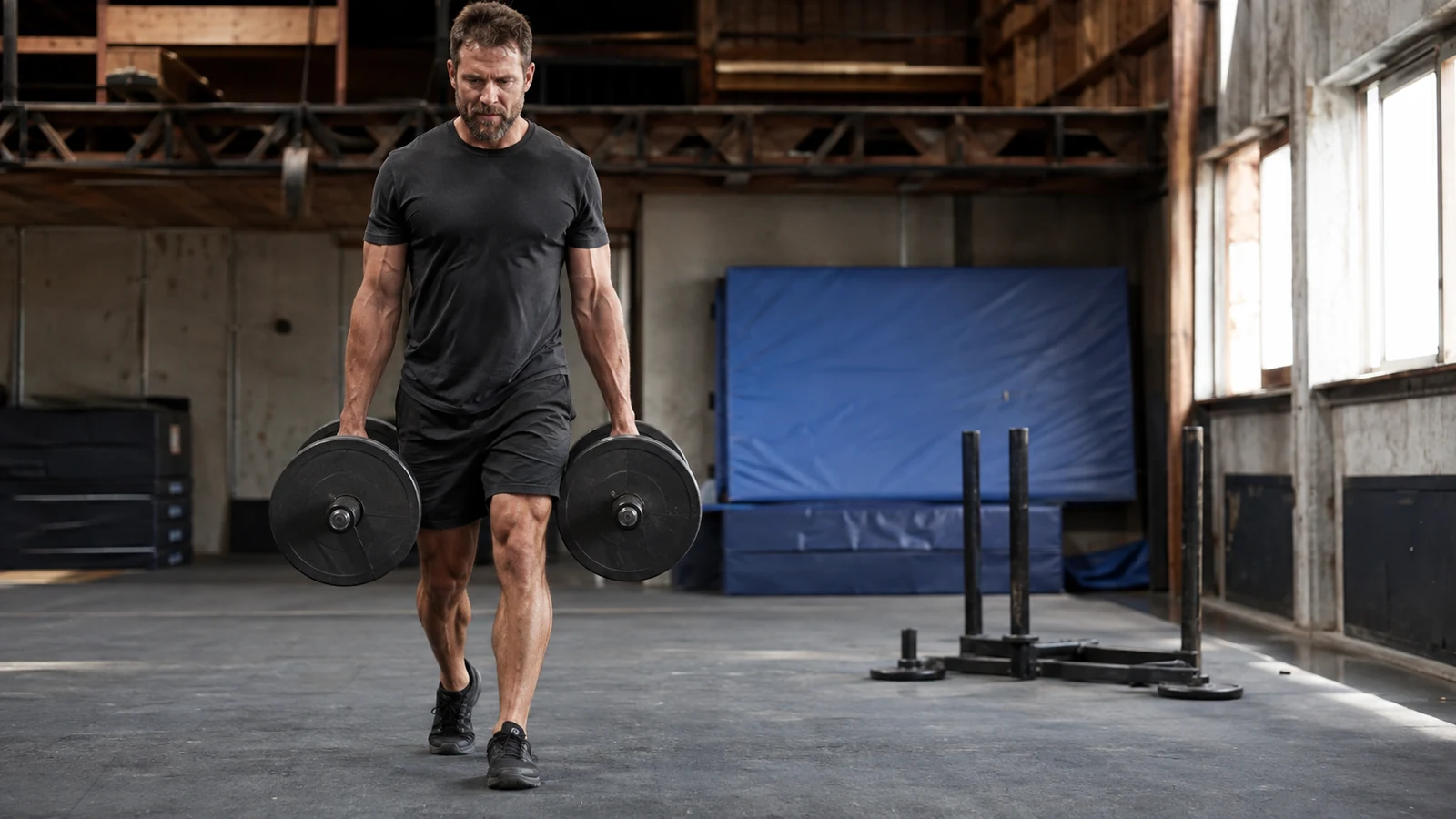
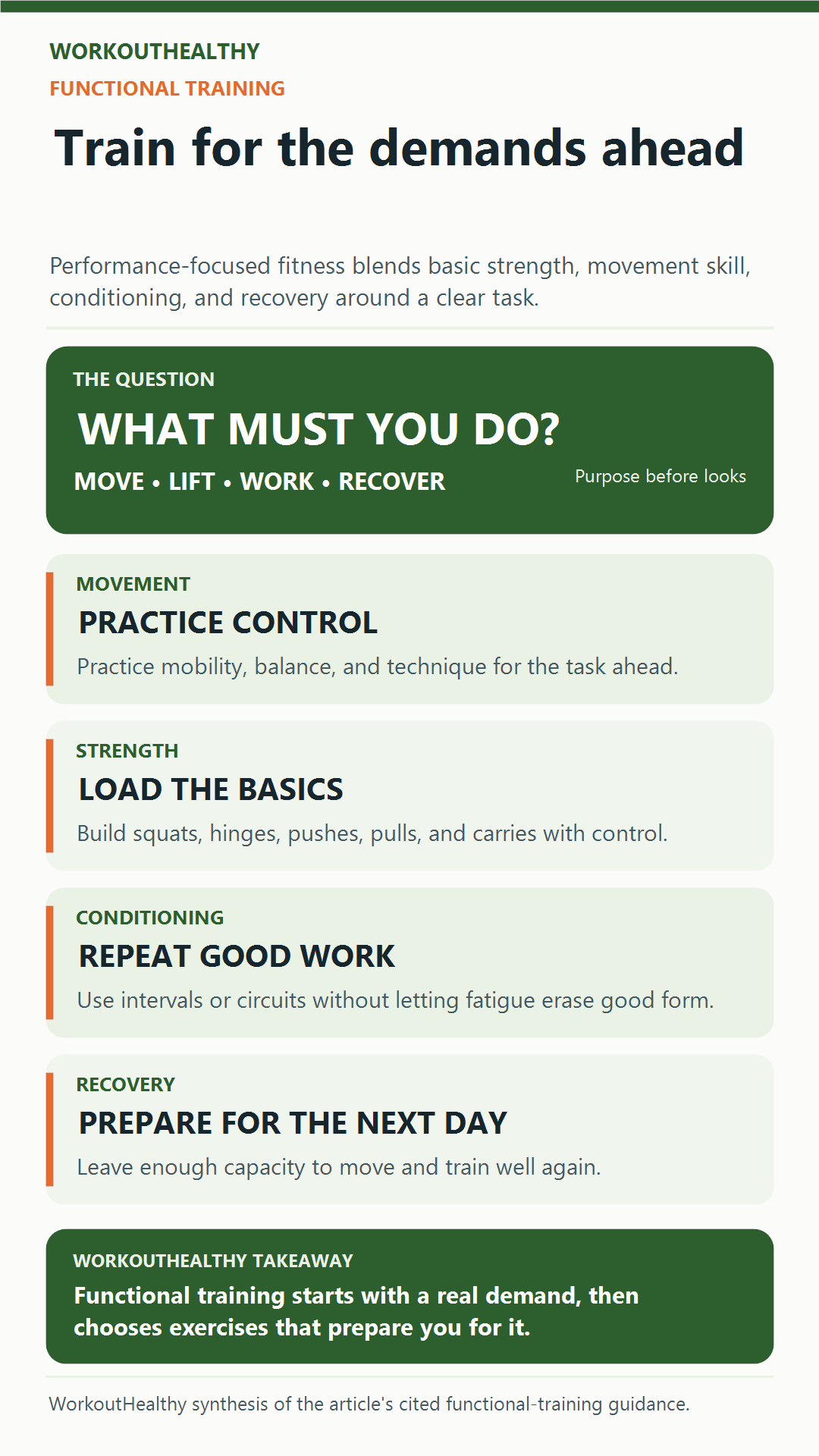
Choose a real goal beyond appearance. That might be a hike, a physically demanding job, a sport, or simply moving through daily life with less pain and more confidence.
Build a program around compound, multi joint movements. Squats, presses, rows, and carries build strength that transfers to real tasks better than isolated, single muscle exercises alone. If bench press has stalled for you, this breakdown of the floor press versus the bench press is worth a look.
Add controlled explosive work once a base of strength is in place. Movements like jump squats or medicine ball throws build the kind of power that helps the body react well to sudden, unplanned demands.
Schedule recovery the same way you schedule training.
That means real rest days, enough sleep, and attention to any nagging pain before it becomes a bigger injury.
Get proper instruction before trying anything genuinely high risk. Advanced skills, from martial arts to gymnastics style movement, are safest learned directly from a qualified coach; here is how to find one worth hiring.
Track how your body performs, not just how it looks. A simple stair climbing test is one accessible way to check your own baseline conditioning.
Can you carry something heavy up a flight of stairs without strain? Can you catch yourself if you trip?
Those questions matter more day to day than a mirror ever will.
References
- InsideHook, “Ben Jenkin on Being Ryan Gosling’s Stunt Double in ‘The Fall Guy,'” insidehook.com
- Variety, “‘The Fall Guy:’ How the Stunt Team Pulled off Ryan Gosling’s Scenes,” variety.com
- Deadline, “‘Project Hail Mary’ Trailer: Can Ryan Gosling and Rocky Save The World?,” deadline.com
- Chen, Z., Wang, J., Zhao, K., He, G. (2025). Strength training and injury reduction in contact sport athletes: a systematic review and meta-analysis. Orthopaedic Journal of Sports Medicine, 13(5). DOI: 10.1177/23259671251331134
This article is for general information only and is not personal medical or fitness advice. The stunt and fitness preparation described for Ryan Gosling and The Fall Guy is based on publicly available interviews and reporting, and specific unverified workout details found elsewhere online are not repeated here as confirmed fact. Anyone starting a new strength or conditioning program, especially one involving explosive or high impact movement, should talk with a doctor first.