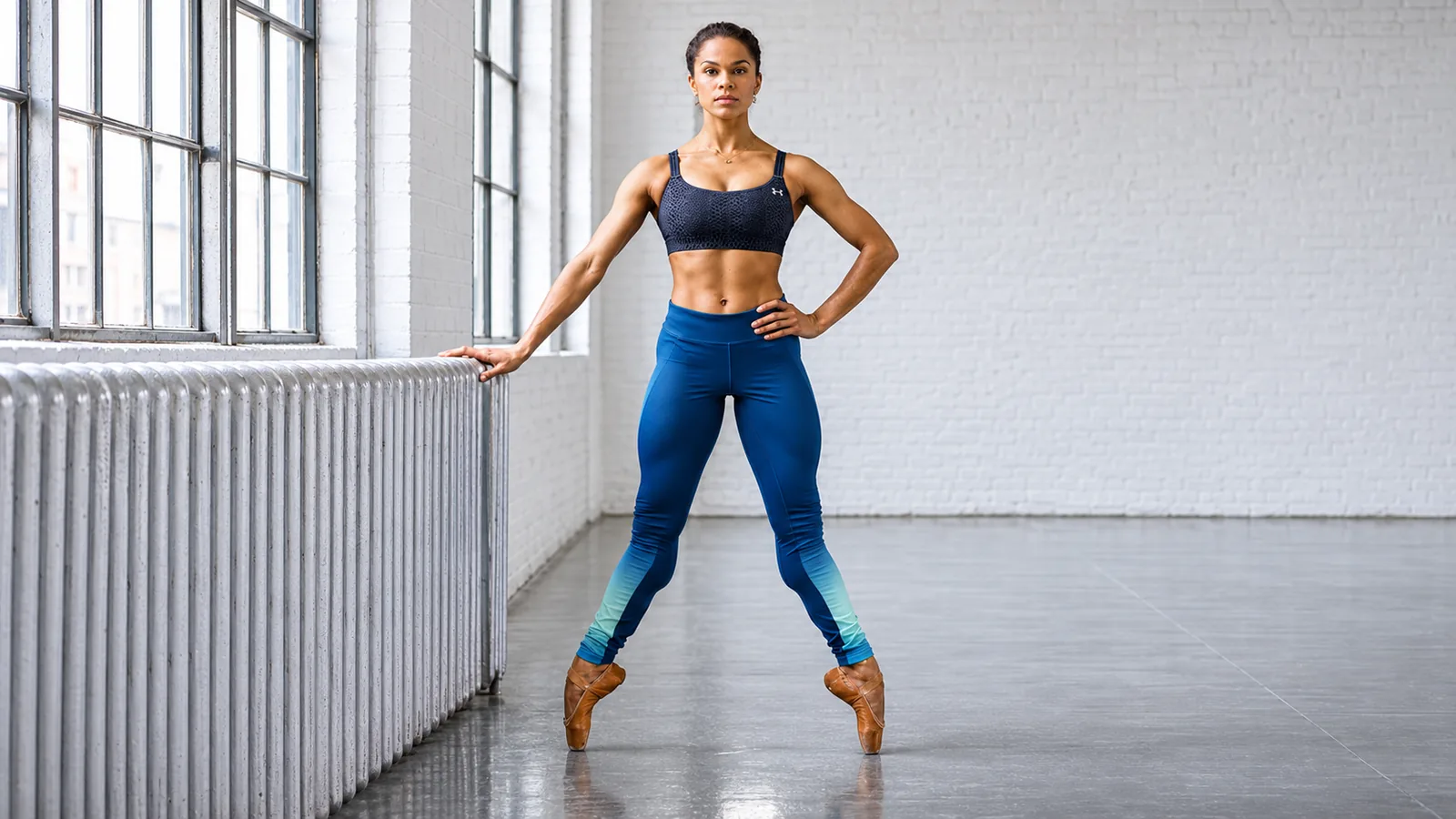

Misty Copeland was told that her body was too muscular for classical ballet, yet the strength critics treated as a flaw became part of the control, power, and presence that carried her to the top of American Ballet Theatre.
In 2015, Copeland became the company’s first Black woman principal dancer. Her achievement did not settle every argument about race, body type, and belonging in ballet, but it made one point impossible to ignore: a narrow visual mold is not the same thing as artistic ability.
In this article
The criticism Copeland described in her own words
During a 2017 conversation at Harvard, Copeland recalled messages that Black dancers often hear: their feet are too flat, their curves are wrong, or their bodies are too muscular. She said those comments could operate as coded language about whose skin and shape were considered acceptable in classical ballet.
That context matters because the story is not simply about one person receiving an unkind remark. It is about a tradition that sometimes confused one inherited silhouette with the full range of bodies capable of learning and performing elite technique.
Copeland’s question was direct: why was her muscularity treated as disqualifying when white professional dancers could have varied bodies too?
The promotion that made ballet history
American Ballet Theatre promoted Copeland to principal dancer in June 2015, making her the first Black woman to hold that rank in the company’s history. The milestone followed years as a soloist and major roles that placed her technique under intense public attention.
Her promotion did not mean every barrier disappeared. It did give younger dancers a visible counterexample to the idea that race, muscle shape, or a late start automatically placed the highest rank out of reach.
What strength looks like in ballet
Ballet asks for force and precision at the same time. A dancer must create enough power to jump, land quietly, hold alignment, turn repeatedly, and support demanding positions while making the effort look controlled.
Muscle is not separate from that artistry. It is one of the systems that makes the movement possible, even when costuming, lighting, and choreography encourage an audience to focus on line rather than effort.
That distinction also protects the art from a false choice between elegance and strength, because skilled dancers require both.
Our guide to the 90/90 hip mobility drill for dancers and athletes explains why control matters as much as reaching a position.
The work behind the image
This is the article’s original-value section: Copeland described a typical workday that began with morning ballet class and continued through about seven hours of rehearsal. That schedule means the public performance was the visible end of a long training day, not the entire physical demand.
If a dancer spent seven hours rehearsing on five days in one week, that would already represent 35 hours before class, conditioning, recovery, travel, or the performance itself. The calculation is illustrative rather than a claim about every week, but it shows why judging the body without considering the workload misses the central fact.
The body onstage is not a static costume. It is the instrument carrying years of repetition, force, balance, and recovery.
Why appearance is incomplete evidence
A photograph can show shape, clothing, pose, and lighting, but it cannot measure technique, health, endurance, or the history behind a changing body. That is true for dancers and for people whose appearance changes during illness, pregnancy, recovery, or ordinary aging.
The same limit appears in the discussion around Gigi Hadid’s Hashimoto’s disease, where outsiders debated appearance without seeing the health information underneath it. Looking is not the same thing as knowing.
What representation changed
Copeland’s rise expanded the set of images young dancers could associate with a principal role. Representation cannot replace training or solve institutional bias by itself, but it can challenge the false idea that only one kind of body or background belongs in the room.
That effect is especially important when criticism begins before a dancer has the chance to demonstrate skill. A visible example does not lower a standard; it can expose which parts of the old standard measured performance and which parts merely protected familiarity.
The useful lesson is to judge the work
People can discuss choreography, technique, musicality, and performance quality without treating a person’s body as public property. The more useful question is what the dancer can do, how the movement is controlled, and whether the art communicates what the role demands.
Copeland’s later hip replacement recovery adds another chapter to that idea, and our report on what her rehabilitation actually involved shows the patience behind rebuilding fundamental movement.
For readers dealing with appearance-based judgment closer to home, Chrissy Teigen’s discussion of postpartum bodies offers another reminder that a public image rarely reveals the support, strain, or recovery outside the frame.
This article is for general educational purposes and does not diagnose health, fitness, or dance readiness from appearance.