
Lenny Kravitz has turned an unusual gym choice into a practical rule: he sometimes trains in the leather or denim he wears onstage. In a 2026 Men’s Health interview, he said the clothes let him fit training into the day without waiting for a wardrobe change. He also described the fit of his 28-inch pants as a personal signal, not a universal health standard.
The headline-ready detail is the leather. The more useful story is how a familiar cue can make a habit easier to repeat—and why one cue should never be mistaken for a complete fitness assessment.
The best fitness metric is not the most dramatic one. It is the one you can interpret honestly and pair with evidence from your actual training.
What Kravitz actually said
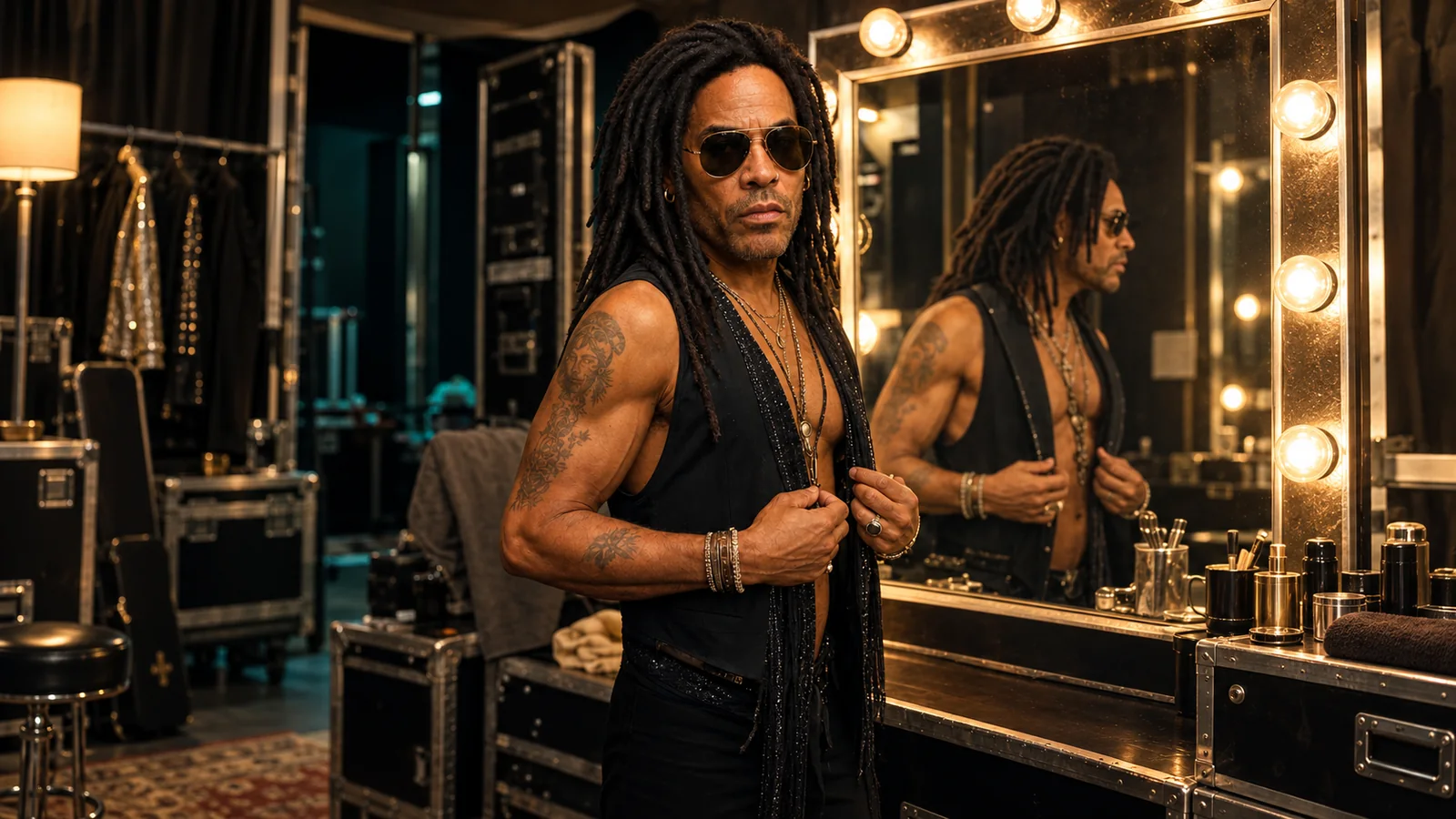
Kravitz told Men’s Health that he performs in leather and denim, so those are sometimes the pants he wears to train. The choice means he can work out whenever an opening appears. He also said he does not rely on a wearable fitness tracker. Instead, he notices how his longtime 28-inch pants fit.
That is a description of one person’s routine. It does not prove that leather improves exercise, that a 28-inch waist is desirable for anyone else, or that clothing fit can diagnose health. Kravitz has trained with coach Dodd Romero for decades and follows a much broader routine than the pants story alone suggests.
Why the rule may work for him
A habit becomes easier when it has fewer steps. If changing clothes creates a delay, removing that step can make an opportunistic workout more likely. Kravitz’s clothes also connect his training to a real performance demand: moving onstage in the same wardrobe.
The pants are a consistent personal reference. A familiar garment can reveal a change that is easy to miss day to day. That feedback may prompt a look at food, activity, recovery, or training. The value is not precision. It is a simple cue that starts a more useful review.
This is the same broader idea behind building a routine around repeatable basics. Our guide to the exercise fundamentals that drive progress explains why consistency and progressive work matter more than novelty.
What clothing fit cannot measure
Pants can feel tighter because of body-mass change, water retention, a meal, fabric shrinkage, or where the waistband sits. They cannot tell you whether the change came from muscle, fat, digestion, or temporary fluid. They also say nothing about cardiovascular fitness, balance, mobility, blood pressure, or how well you recover.
A single body-size cue can become unhelpful if it turns every normal fluctuation into a verdict. Clothing also varies by brand and cut. If you use fit as one signal, compare the same garment under similar conditions and keep it in proportion to the rest of your evidence.
A better progress scoreboard
Pair any appearance or fit cue with performance. Record the exercise, load, repetitions, and effort you could repeat with steady form. Note whether ordinary tasks feel easier and whether your energy and recovery support the next session. Those measures answer different questions, which is exactly why they work better together.
Photos and clothing can show visible change, but they cannot explain it on their own. The same limitation applies to celebrity progress pictures. Our analysis of Michael Beach’s fitness photos at 62 shows how to separate what an image demonstrates from what it merely suggests.
A waistband can start the conversation. Your training log, recovery, and everyday capacity should finish it.
Are leather pants good workout clothes?
For most people, breathable clothes that allow comfortable movement are the easier choice. Leather and tight denim may restrict range of motion, hold heat, or rub during repeated exercise. They can also snag around equipment. What Kravitz tolerates in a coached session is not automatically practical in a crowded gym.
Whatever you wear, test the movement before loading it. You should be able to set your feet, bend, reach, and brace without the garment changing your position. Stop if clothing blocks the movement, distracts you, or makes safe equipment use harder.
The WorkoutHealthy one-cue test
Here is the original-value question: Does your cue lead to a useful action, or only to a feeling? “My usual pants fit differently” is useful only if it prompts a calm review of recent training, meals, sleep, and performance. If it triggers panic, punishment, or a crash diet, the cue is running the plan instead of informing it.
Choose one action you can verify: repeat a familiar workout, review two weeks of logs, or measure the same performance task. One measured follow-up is more informative than reacting to a single morning.
No infographic was created for this article because the original value is one decision question, not a multi-step calculation or comparison. Turning it into a chart would repeat the paragraph rather than clarify it.
The lesson after 60
Kravitz’s public routine is also a reminder that training does not expire at a particular birthday. He has worked with the same coach for almost three decades and described continuing to pursue better condition in his sixties. That long horizon matters more than the viral outfit.
Progress after 60 may involve different recovery needs, exercise choices, or medical considerations. It still benefits from resistance training, aerobic work, and a plan that fits the person. For a research-focused view, see our guide to strength training and longevity.
Bottom line
Lenny Kravitz’s leather-pants rule works as a personal consistency cue because it connects training to his life and gives him a familiar reference. It is not a health formula. Borrow the principle, not the waist size: reduce friction, use a cue you understand, and confirm change with performance and recovery data.
This article is for general information only and is not medical advice. If you have an injury, ongoing pain, or a medical condition, talk to a doctor or physical therapist before you change how you train or eat.