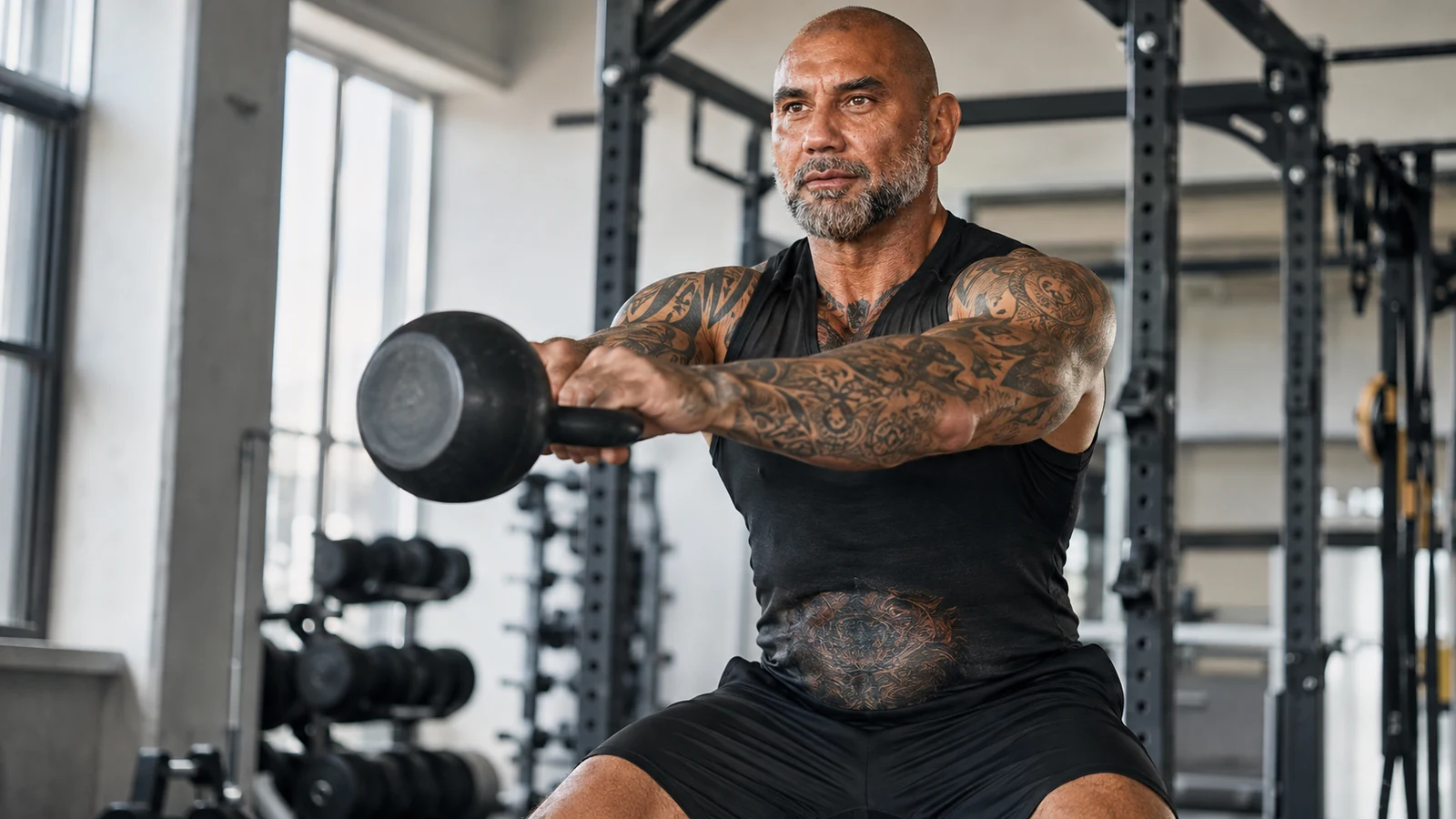

Dave Bautista is 57 years old and still working steadily.
He recently wrapped Wake Up Dead Man, the next film in the Knives Out series.
He continues to take on physical roles that once seemed built for a much younger, much bulkier man.
The body doing that work today looks nothing like the one WWE fans remember. Bautista has spent the last several years on a deliberate, public transformation.
He has moved away from wrestling era mass and toward something leaner and more mobile.
A WorkoutHealthy Facebook post summarized the shift this way.
Bautista traded wrestling era bulk for leaner, more mobile, role specific fitness. That framing holds up well against his own public statements.
Why He Started Trimming Down
Bautista has been candid about the trigger for this change. He gained significant weight for his role in the 2023 film Knock at the Cabin, reaching around 315 pounds.
Once filming wrapped, he found the size uncomfortable. He has said plainly that he had overdone it.
“I’m 6’4″, 240 pounds next to your typical actor, I look like a gorilla, and it’s distracting,” Bautista said, describing how his size read on screen next to other performers.
That comment captures the core of his reasoning. Wrestling built Bautista’s career on being physically larger than nearly everyone around him.
Acting rewards something different, especially in ensemble films with a range of body types. A performer who visually overwhelms every scene partner can become a distraction rather than an asset.
Bautista has said audiences still remember his much larger wrestling physique. Because of that, he believes even his current, leaner size still reads as imposing on screen.
The Numbers Behind the Change
Bautista has discussed losing roughly 75 pounds from his heaviest post wrestling weight. He has been open about the fact that it has taken real, ongoing effort to maintain a leaner frame.
“I’ll probably lose a few more pounds,” he said. “I’m basically killing myself to be this trim.”
That is a notable admission.
Bautista has spent most of his public life associated with sheer physical size. Staying lean at 57, after decades of training for maximum mass, does not happen automatically.
It requires ongoing attention to diet and training, even for someone with Bautista’s training background and experience.
His Own Words on Training
“My favorite type of training, which I prefer over weight training, is actually martial arts.”
Bautista has said boxing is central to how he stays conditioned now. He has called it the best cardio in the world.
His current routine blends weight training with boxing, Brazilian jiu jitsu, and cycling.
That is a notable shift from his wrestling years, when bodybuilding style training for size dominated his schedule almost entirely.
He has also spoken about eating in a smaller window through intermittent fasting.
He avoids meals close to bedtime, generally stopping several hours before he sleeps. He restricts calories to roughly 2,500 a day, a meaningful drop from what building his wrestling physique once required.
Squats remain a personal favorite exercise. Bautista has said he does not want to be the guy with skinny legs.
Because of that, leg training stayed part of the plan even as his overall training goal changed from bulk to leanness.
What the Science Says About Changing Training Goals
Bautista’s shift from a bulk focused routine to a leaner, more athletic one reflects a real training principle.
It is often called the specific adaptation to imposed demands principle, or SAID for short.
The body adapts to whatever specific demand a person places on it repeatedly, session after session.
Training for maximum mass and training for mobility, endurance, and leanness are different demands. They produce different results over time, even when the same person is doing the training.
This is not a controversial idea in exercise science.
It is one of the most basic organizing principles behind how strength coaches design programs.
A bodybuilder chasing size trains differently than a martial artist chasing cardiovascular endurance and joint mobility.
That is true even if both people lift weights on a regular schedule.
The martial arts component of Bautista’s routine also has real research behind it. Combat sports like boxing and jiu jitsu combine strength, cardiovascular conditioning, and coordination in a single activity.
That combination makes them efficient for someone managing a demanding filming schedule with limited hours to train.
A 2024 randomized clinical trial looked at this kind of training directly. It was published in the journal BMC Cardiovascular Disorders.
Researchers compared Muay Thai training against standard functional training in adults averaging 66 years old.
The Muay Thai group showed a significantly larger drop in diastolic blood pressure over twelve weeks of training.
Diastolic blood pressure is a real marker of cardiovascular strain, not a cosmetic number. That finding supports the idea that combat sport style training delivers genuine cardiovascular benefits, not just a physique change.
It is one reason boxing has become a common choice among actors and athletes managing their fitness later in life.
A simple stair climbing test is one easy way to get a rough sense of your own cardiovascular fitness before starting a new cardio routine.
There is also solid research on resistance training and metabolic health as people age. Regular strength work helps preserve muscle mass, supports insulin sensitivity, and protects bone density, all of which tend to decline with age if strength training drops out of a routine entirely.
That is part of why Bautista’s approach still includes weights, even while cardio and martial arts have taken on a bigger role.
What This Means for the Average Person
Most people are not managing their physique for film roles. But the underlying lesson in Bautista’s story applies broadly.
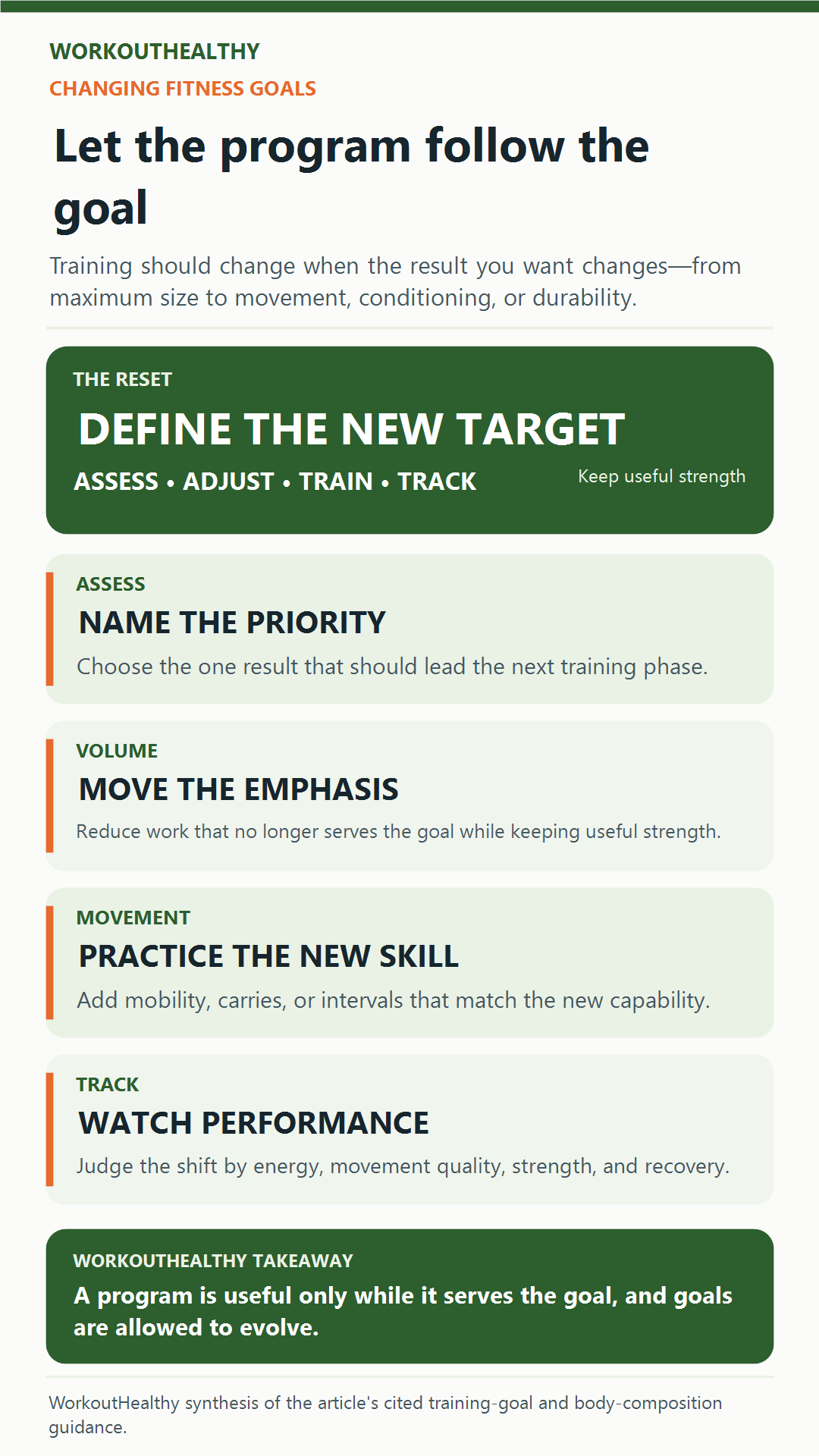
Fitness goals are allowed to change, and training needs to change along with them.
Someone who spent years training purely for size or strength may find, later in life, that other qualities start to matter more.
Mobility, cardiovascular health, and joint friendly movement often become bigger priorities for daily quality of life than raw size ever was.
That does not mean abandoning strength work entirely.
Bautista still lifts weights and still values squats. It means layering in different priorities as goals shift, rather than assuming the training approach that worked at 30 is still the right one at 57.
Intermittent fasting, which Bautista has mentioned using, is a legitimate tool for some people managing calorie intake.
It is not required for weight management, and it does not work equally well for everyone.
It is worth treating as one option among several, rather than a universal answer that fits every schedule and body.
Age also changes what “trim” and “fit” should mean for the average reader.
A 57 year old chasing leanness still needs enough protein and enough resistance training to protect muscle mass.
Losing muscle along with fat is a common risk of cutting calories without a plan, and it is worth understanding why unwanted muscle loss happens before starting an aggressive cut.
That loss becomes harder to reverse the older a person gets.
Common Mistakes People Make When Changing Their Training Goals
One common mistake is trying to keep every old habit while adding a new goal on top.
Bautista’s shift worked because he actually reduced his bulk focused training. He did not simply add cardio to an unchanged bodybuilding routine.
A second mistake is cutting calories too aggressively while still training hard. Bautista’s roughly 2,500 calorie target reflects a large man with a demanding training schedule, not a number that applies to most people.
Extreme calorie cuts paired with intense training often lead to muscle loss, fatigue, and eventually burnout.
A third mistake is starting martial arts training with no instruction. Boxing and jiu jitsu both involve real technique and real injury risk without proper coaching.
That risk goes up for someone over 50 with joints that have accumulated years of wear from earlier sports or training.
A fourth mistake is expecting fast results. Bautista’s transformation happened over years of consistent effort, not weeks.
He has described it as ongoing work, not a finished project he can now ignore.
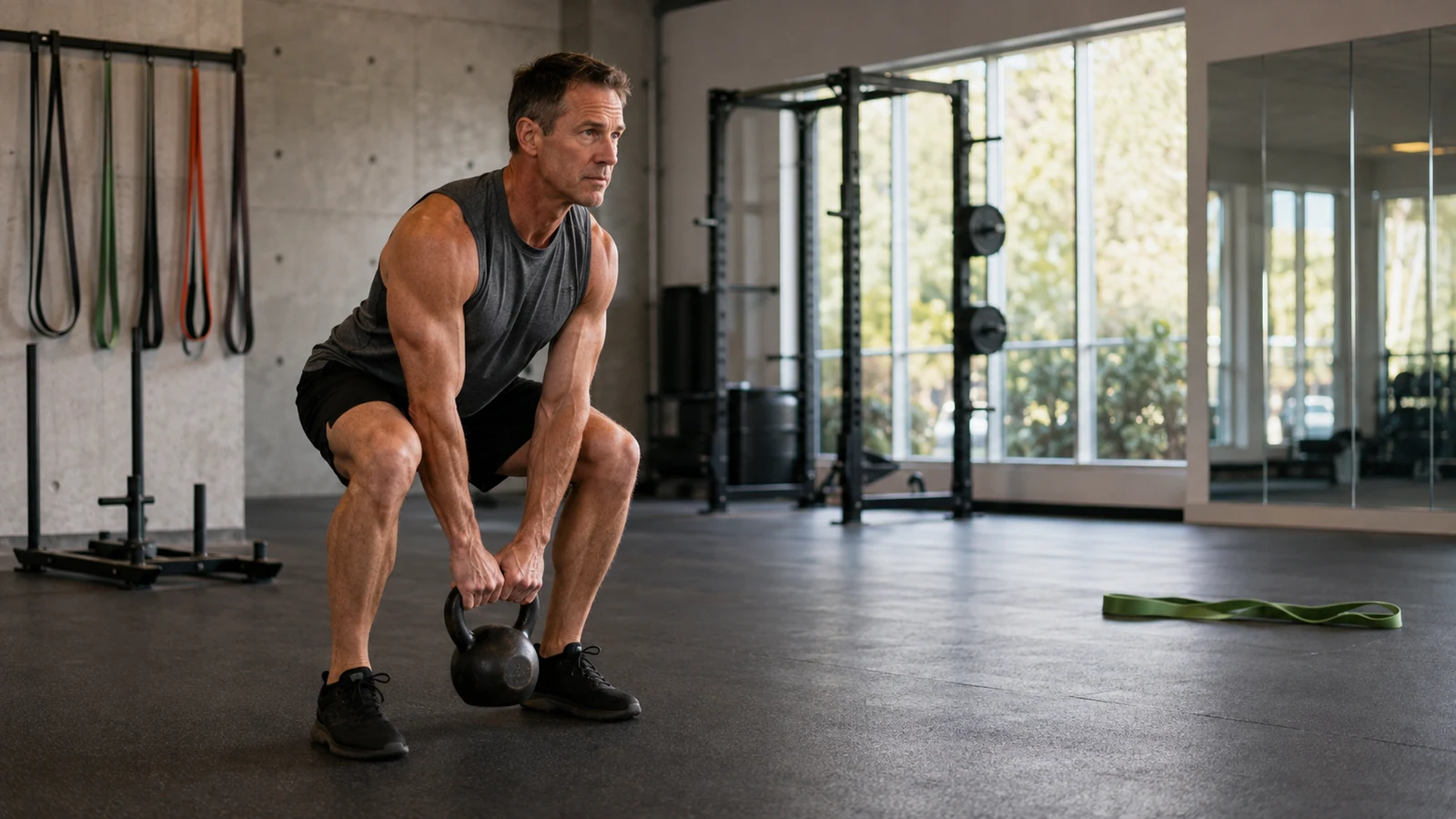
How to Shift Your Own Training as Your Goals Change
Start by naming the actual goal.
Bautista’s goal was clear. He wanted to look leaner and move more athletically on camera, not simply lose weight for its own sake.
A vague goal makes it hard to know what to actually change in your training.
Reduce, rather than simply add. If a new goal calls for more cardio and mobility, that usually means cutting back on pure hypertrophy training, not just piling cardio on top of an already full program.
Pick one combat or martial art to try, with a qualified instructor. Knowing what to ask a trainer before you hire one makes that first search easier.
Boxing, kickboxing, or jiu jitsu can build cardiovascular fitness, coordination, and functional strength together. That is the same combination Bautista relies on now.
Set a calorie target based on your own size, activity level, and goals.
Ideally, get guidance from a registered dietitian rather than copying a public figure’s specific number, since Bautista’s 2,500 calorie target fits his own size and training load, not everyone’s.
Keep some strength training in the mix even while prioritizing leanness.
Bautista’s continued attention to squats and leg strength reflects good practice. Leanness without underlying strength tends to look and feel worse, not better.
Give the process real time. Expect a meaningful body composition shift to take months, not weeks, especially past age 50 when metabolism and recovery both change.
References
- Today.com, “Dave Bautista reveals he lost 75 pounds. These are his go-to workouts and diet tips,” today.com
- Yahoo/AOL, “Dave Bautista Is ‘Training Hard’ to Stay Trim Because ‘I Look Like a Gorilla’ Next to Other Actors,” ca.news.yahoo.com
- Variety, “Dave Bautista Is Losing Weight After Being an ‘Uncomfortable’ 315 Pounds for a Movie Role,” variety.com
- Saraiva, B.T.C., Franchini, E., et al. (2024). Effects of 12 weeks of functional training vs. Muay Thai on cardiac autonomic modulation and hemodynamic parameters in older adults: a randomized clinical trial. BMC Cardiovascular Disorders, 24, Article 433. DOI: 10.1186/s12872-024-04096-3
This article is for general information only and is not personal medical or fitness advice. Dave Bautista’s training and nutrition choices are described here based on his own public statements and are not a program designed for any individual reader. Anyone considering a major change in training approach, calorie intake, or a new physical activity like combat sports should talk with a doctor first, especially if they have an existing health condition or have been inactive for a long time.