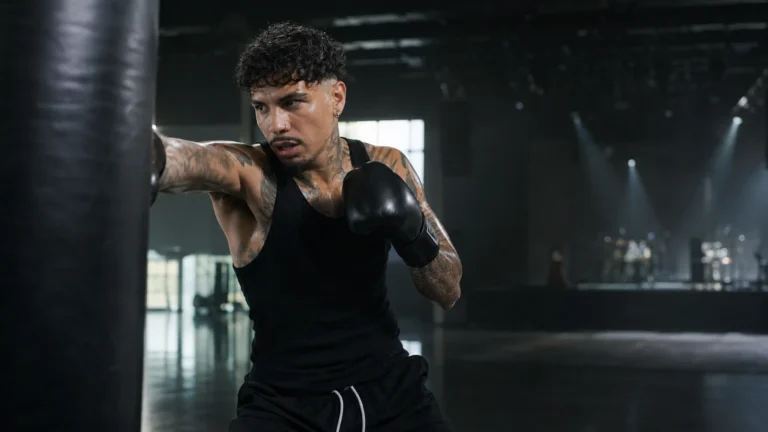

Illustration note: The opening image is editorial illustration, not a documented Ronaldo training session or an endorsement.
Extra practice can mean different things. Before adding work, identify the task and what you want it to accomplish.
A useful account also separates what someone observed from the schedule, training load or results a reader might infer.
What His Teammates Actually Said
In Fitzpatrick’s 2020 interview, Jonathan Spector recalled early arrivals, late departures and 30 to 40 minutes of solo ball skills. He also described crossing, free kicks and gym work.
This retrospective account is not a daily timetable or weekly workload. Its duration is not a recommendation.
What the Extra Work Looked Like
Separate four details when reading a training story: the task, the duration, how often it happened and the effort involved.
If a report names a task but leaves frequency unstated, write “frequency unknown.” Do not fill the gap with a weekly routine.
Likewise, a football-skill label does not establish that every repetition was easy. A description of the task alone cannot tell you how much work to add.
Why More Is Not Always Better
Tim Gabbett’s 2016 review presents a training-injury model, drawing on workload and injury research. It discusses both fitness developed through training and potential problems with excessive, rapid increases.
This was not an experiment assigning Ronaldo extra practice. It does not establish his cumulative load, an injury-free session length or an individual safe workload ratio.
Sleep Is the Other Half of the Deal
In a 2014 study, 112 of 160 consented school athletes completed a survey; their mean age was 15. Researchers compared responses with past school injury records.
Those reporting under eight hours of sleep had 1.7 times the injury likelihood of those reporting at least eight hours, with a 95% confidence interval of 1.0 to 3.0. This was a retrospective association, not randomized sleep assignment.
It does not establish Ronaldo’s sleep or prove that changing an adult’s sleep or practice schedule prevents injury.
What This Does Not Prove
An account, a training-load model and a retrospective survey answer different questions. Together, they do not establish a tested extra-practice programme or guarantee its results.
Keep the statement “someone observed extra practice” separate from “this amount produced success” or “this amount is safe for me.”
How to Add Extra Practice the Smart Way
Use these editorial planning questions to prepare a conversation with a coach. They are not a tested programme, a clearance checklist or a prescription.
- Task: What specific skill do I want to work on?
- Purpose: What would better execution look like?
- Existing commitments: What practice, matches, work and recovery time are already scheduled?
- Question: Where would this task fit, and what feedback would help me judge its quality?
Fictional example: A player wants more accurate short passes. Their question is, “Can we identify the part of my passing that needs work and decide where to practise it alongside the team schedule?”
The example supplies a purpose and a question, not a number of minutes or a promise that more repetitions will help. It can also lead to changing an existing drill rather than adding another session.
Common Mistakes
- Counting minutes without naming the task. Write down what the extra work is meant to improve.
- Treating a recollection as a timetable. Keep unknown frequency and effort visibly unknown.
- Assuming skill work is automatically light. Ask how the proposed task fits the rest of the session.
- Staying late for appearances. Explain the purpose before treating extra time as an achievement.
Who Should Be Careful
If you are returning from injury or managing a medical condition, discuss changes with your treating professional rather than using an elite-athlete story as clearance.
For a young athlete, parents and coaches should be part of the discussion about extra work and existing commitments. A motivational account cannot decide an individual’s training needs.
The Bottom Line
The useful starting point is a clear skill question. Time spent at a training ground is a poor substitute for knowing the task, its purpose and how it fits the existing plan.
Keep observation, interpretation and a proposed action separate. That preserves the appeal of extra practice without turning a story into a universal routine.
Want more stories like this? Subscribe to WorkoutHealthy Insider for practical explanations behind popular fitness claims.
References
Fitzpatrick, R. (2020, April 21). Playing with Cristiano Ronaldo: Former team-mates recall their experiences. Bleacher Report.
Gabbett, T. J. (2016). The training-injury prevention paradox. British Journal of Sports Medicine, 50(5), 273 to 280.
Milewski, M. D., et al. (2014). Chronic lack of sleep is associated with increased sports injuries in adolescent athletes. Journal of Pediatric Orthopaedics, 34(2), 129 to 133.
Medical disclaimer: This article provides general fitness information and is not personal medical advice. If you have an injury, ongoing pain or a medical condition, consult an appropriately qualified healthcare professional before changing your training.