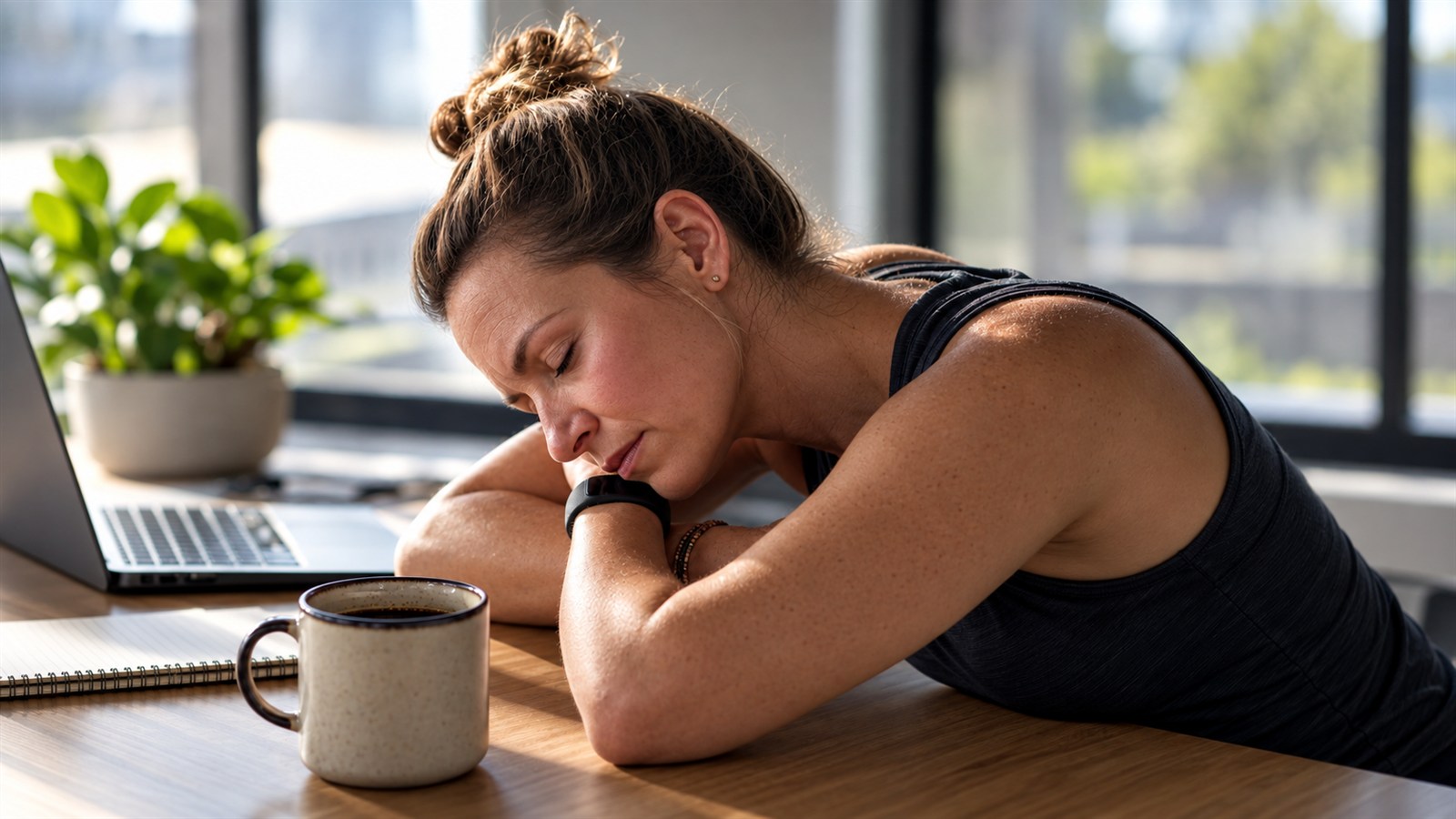

A caffeine nap pairs a caffeinated drink with a short nap taken immediately afterward. The idea is practical: the rest can improve alertness, while caffeine usually needs time to take effect. For an occasional afternoon slump, the two may work together better than sitting awake and hoping the coffee starts working.
The scheduled WorkoutHealthy post describes a 20-minute “receptor reset” and says a driving study proved the combination beats caffeine alone. That explanation is too precise. Research supports a possible short-term alertness benefit, but naps do not literally wipe adenosine from the brain on a fixed clock, and study results differ by population and outcome.
Here is how to try the method thoughtfully, what the studies measured, and why it cannot replace adequate sleep or make a sleepy driver instantly safe.
The Short Answer
If caffeine agrees with you and it is early enough in the day, drink a modest amount just before lying down for a brief nap. Set an alarm for roughly 15 to 30 minutes. Give yourself a few minutes to wake fully before a task that demands attention.
CDC/NIOSH fatigue guidance describes this as one option for temporary alertness. It notes that caffeine often takes around 30 minutes to reach full effect, with meaningful person-to-person variation. The nap may restore alertness on its own; the caffeine may then contribute as you wake.
This is a tactic for occasional sleepiness, not a cure for chronic sleep loss, a sleep disorder, or medication-related drowsiness. If you are too sleepy to drive safely, stop driving. Coffee plus a timer is not permission to continue without reassessing how alert you actually are.
What Caffeine and a Nap Do
Adenosine is one part of the body’s sleep-wake regulation. Caffeine reduces sleepiness largely by blocking adenosine receptors. A 2022 scientific review describes that interaction as well established, while emphasizing that the complete biology of sleep pressure is more complex than a single molecule filling up a row of empty slots.
Sleep itself can relieve some sleep pressure and improve alertness, even when the nap is short. That does not mean a 20-minute nap has cleared a measured amount of adenosine from every receptor. The scheduled post’s “freshly cleared receptors” story is a metaphor, not a directly demonstrated human mechanism for the coffee-nap protocol.
Caffeine’s timing is also a range. NIOSH says its effect can begin about 15 to 45 minutes after intake, often around 30 minutes. A coffee taken right before a short nap may therefore become noticeable near wake-up, but it may act earlier or later for you. Dose, habitual use, metabolism, and the beverage all matter.
What the Experiments Found
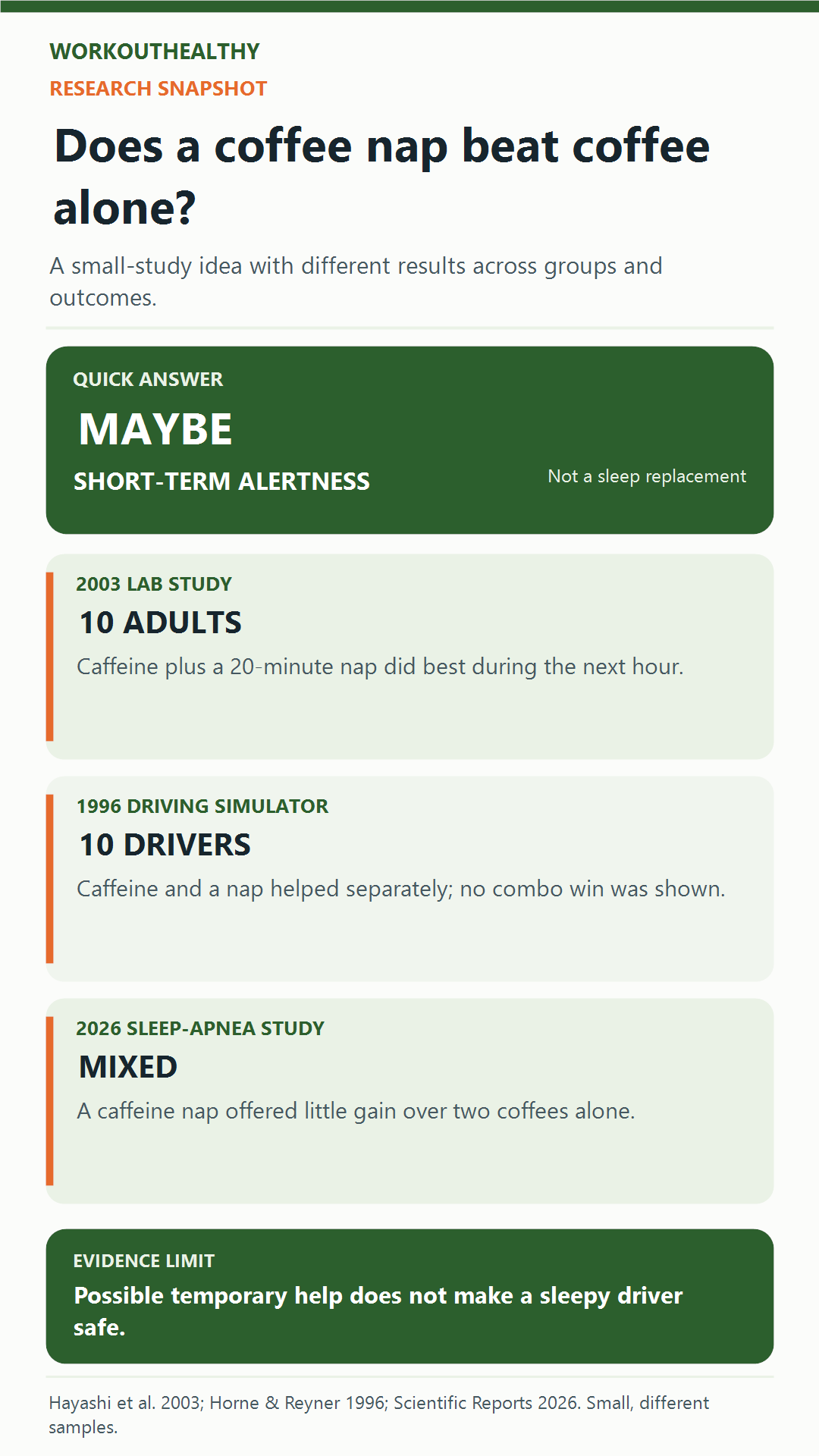
In a 2003 laboratory study, ten healthy young adults tried several mid-afternoon conditions, including a 20-minute nap, 200 mg of caffeine followed by a nap, and rest without sleep. The caffeine-plus-nap condition performed best on that study’s subjective sleepiness and task measures during the hour after waking.
That is encouraging, but ten people in a controlled lab are not a universal guarantee. The caffeine dose was also more than some people want from an afternoon coffee. The benefit measured after one hour does not tell us that the same protocol prevents accidents or remains helpful for the rest of the day.
An often-cited 1996 driving-simulator experiment examined a short nap and caffeine as countermeasures in ten sleepy participants. Both reduced impairment compared with a control break. It did not, by itself, establish that a combined coffee nap was superior to caffeine alone. Conflating those study arms is how a useful idea turns into a stronger claim than the data support.
A 2026 study in people with treated obstructive sleep apnea found temporary benefit from an optimized caffeine-nap protocol, but little practical improvement over two coffees alone in that specific group. Results from people with a sleep disorder should not be generalized to everyone, yet they show why the combination is not automatically additive.
A Sensible Way to Try It
Choose a time that will not interfere with your bedtime. Drink a small or moderate caffeinated beverage, lie down promptly, and set an alarm for a brief nap opportunity. A quiet, dark place may make it easier to sleep, but even the chance to rest can be useful when circumstances allow.
Do not chase an exact “20-minute sweet spot” at the expense of sleep. NIOSH advises short daytime naps of about 15 to 30 minutes, partly to limit the grogginess that can follow waking from deeper sleep. Your actual sleep time may be shorter than the alarm interval because falling asleep takes time.
After waking, sit up, move into light, and check whether you are genuinely alert. A short period of sleep inertia can make attention and reaction time worse immediately after a nap. If you still feel groggy, wait rather than beginning a safety-critical task.
Try the approach on an ordinary afternoon before using it when you must perform well. Notice how long it takes you to fall asleep, whether caffeine disturbs the nap, and how you feel later that night. The best personal version is the one that improves the day without stealing from the next night.
You also do not have to fall asleep instantly for the attempt to be worthwhile. A short quiet rest can be useful, but the sleep-specific benefit in nap research comes from actually sleeping. If you repeatedly lie awake after coffee, the stimulant or setting may be working against the plan. Try a brief nap without caffeine on another day, or use a different fatigue countermeasure. The method is a choice, not an obligation.
The Sleep-Inertia Tradeoff
Sleep inertia is the temporary fog or slower performance some people experience on waking. A longer nap can be restorative, but waking abruptly from deeper sleep may create a transition period. The length and intensity of that period vary with sleep debt, nap timing, and individual response.
That is why the alarm is a planning tool rather than a biological switch. Short naps generally reduce the chance of prolonged grogginess, but no timer guarantees you will wake clearheaded. NIOSH explicitly advises allowing drowsiness to pass before critical tasks.
If the main goal is learning or memory rather than immediate alertness, a longer nap may answer a different question. An NIMH-supported study found that a daytime nap helped some memory tasks more than caffeine. The caffeine nap is chiefly an alertness tactic; it should not be sold as the best nap for every cognitive or recovery outcome.
Timing and Caffeine Dose Matter
Caffeine can linger for hours. A 2013 home sleep study found that 400 mg disrupted sleep even when taken six hours before bedtime. A newer randomized crossover study found stronger sleep effects from 400 mg than from 100 mg, under its conditions. That does not supply one universal cutoff; it shows why dose and timing matter.
The FDA says up to 400 mg a day is an amount not generally linked to negative effects for most adults, but individual sensitivity, medicines, health conditions, and pregnancy can change the advice. A caffeine nap does not need a high dose. More caffeine may worsen anxiety, palpitations, or nighttime sleep while adding little to the nap.
Our guide to caffeine timing and sleep looks at that tradeoff in more detail. If caffeine is already part of a workout routine, our pre-workout timing guide can help you count all sources instead of treating the coffee nap as an extra free dose.
When Not to Lean on a Coffee Nap
Skip or modify it if caffeine causes unpleasant symptoms, interferes with sleep, or conflicts with advice from your clinician. People with certain heart-rhythm problems, anxiety disorders, pregnancy-related limits, medication interactions, or another reason to restrict caffeine need personalized guidance rather than a social-media protocol.
Persistent daytime sleepiness despite enough time in bed deserves attention. Sleep apnea, disrupted sleep, shift work, medication effects, and other conditions may be involved. A short stimulant-plus-nap workaround can mask the problem for an hour without addressing its cause.
A sleepy driver needs a safe place to stop, not a promise that caffeine will overcome impairment. CDC guidance recommends pulling over, taking a short nap, and using caffeine as an additional countermeasure when needed. Before resuming, confirm that the sleepiness has passed. Repeated episodes call for a broader sleep and health review.
How This Fits With Real Recovery
The greatest limitation of a caffeine nap is that it can make an under-slept day feel briefly manageable. That relief can be useful, but it can also tempt someone to ignore an ongoing sleep deficit. Nighttime sleep still supports physical recovery, learning, mood, and safe attention across the whole day.
Our article on sleep and muscle recovery explains why training gains depend on the broader sleep pattern, not a clever afternoon fix. For athletes, shift workers, and parents alike, a nap is a supplement to that pattern rather than its replacement.
If the afternoon dip is occasional, use the simplest tool that works: a brief nap, a modest coffee, a walk in daylight, or the combination. If it happens every day, look first at sleep duration, schedule, and whether a health problem needs assessment.
The Takeaway
A coffee immediately before a short nap can be a reasonable temporary alertness tactic. Small studies and CDC/NIOSH guidance support trying it, but the evidence does not prove a precise receptor-clearing mechanism or an automatic advantage over caffeine alone in every person.
Keep the dose modest, protect nighttime sleep, leave time for any waking grogginess to pass, and never treat the method as a substitute for sufficient sleep or safe driving decisions.
Get the next evidence check.
Five practical fitness stories worth your time, every Friday.
One email a week. No product pitches. Unsubscribe in one click.
References
- Hayashi M, et al. The alerting effects of caffeine, bright light and face washing after a short daytime nap. Clin Neurophysiol. 2003. DOI.
- Horne JA, Reyner LA. Counteracting driver sleepiness: effects of napping, caffeine, and placebo. Psychophysiology. 1996. PubMed record.
- Optimising the caffeine nap for counteracting driver sleepiness in CPAP treated obstructive sleep apnoea patients. Scientific Reports. 2026. PubMed record.
- Reichert CF, et al. Adenosine, caffeine, and sleep-wake regulation: state of the science and perspectives. J Sleep Res. 2022. PubMed record.
- CDC/NIOSH. Napping, an Important Fatigue Countermeasure.
- Drake C, et al. Caffeine effects on sleep taken 0, 3, or 6 hours before going to bed. J Clin Sleep Med. 2013. PubMed record.
- U.S. Food and Drug Administration. Spilling the Beans: How Much Caffeine is Too Much?
Medical disclaimer: This article is for general information and is not personal medical advice. Ask a qualified professional about persistent sleepiness, caffeine-sensitive conditions, pregnancy, medications, or symptoms that affect driving safety.