
Bradley Cooper’s preparation for American Sniper involved a major increase in body weight and a training plan built around portraying Chris Kyle.
That story is often compressed into a claim that he gained 40 pounds of muscle.
The more careful description is reported weight gain during role preparation. The reporting reviewed here does not provide body-composition measurements that establish every added pound as muscle.
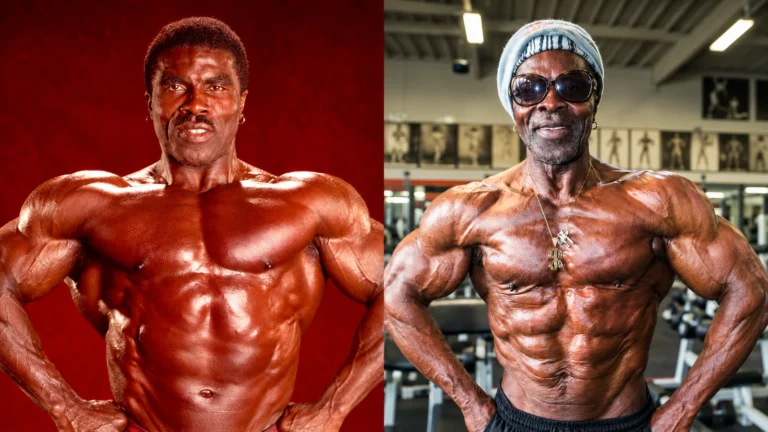
Hero image: an illustration adapted from the source Facebook creative, not documentary footage of Cooper’s preparation.
A transformation headline is a story about one person, not a timetable for everyone else.
What the original training account says
Men’s Health’s 2015 account described Cooper working with trainer Jason Walsh over about 10 weeks, increasing from 185 to 225 pounds.
It reported twice-daily training, including squats, deadlifts, and unilateral work, alongside a large food intake.
Those details describe a particular production deadline and a professionally organized preparation.
They should remain attributed to that account rather than being treated as a complete program available for anyone to reproduce.
The story does not provide enough information to prescribe Cooper’s exact routine from a photograph.
Why weight gain and muscle gain need different wording
A before-and-after scale reading tells us how total body weight changed.
It does not, by itself, tell us how each component changed or establish that the whole difference was new muscle.
That is an evidence distinction, rather than a claim about Cooper’s private health or methods.
Without the necessary measurements, the precise muscle-only claim goes beyond what the reported start and finish weights demonstrate.
You can acknowledge a striking transformation while being careful about what the headline’s number actually measures.
The role required more than a gym appearance
In an interview about the film, Cooper described combining extensive gym preparation with listening to Kyle’s voice and working on his speech.
The physical preparation was one part of building a portrayal of a real person.
That context helps explain the unusually concentrated schedule without turning it into ordinary fitness advice.
A movie role has a deadline, a visual objective, and demands that may bear little resemblance to your own reason for training.
Your plan deserves an objective that fits your life rather than a deadline borrowed from a film production.
What to take from structured preparation
The useful principle is to make the goal and the work relate clearly to each other.
If your aim is to become more consistent, a plan you can attend is more relevant than the most dramatic split you can find.
If your aim involves a particular movement, qualified coaching can help identify what needs practice and how to track it.
Our strength training for longevity guide gives another perspective on choosing outcomes beyond appearance.
There is no need to invent a military label for every exercise to give structured resistance training a purpose.
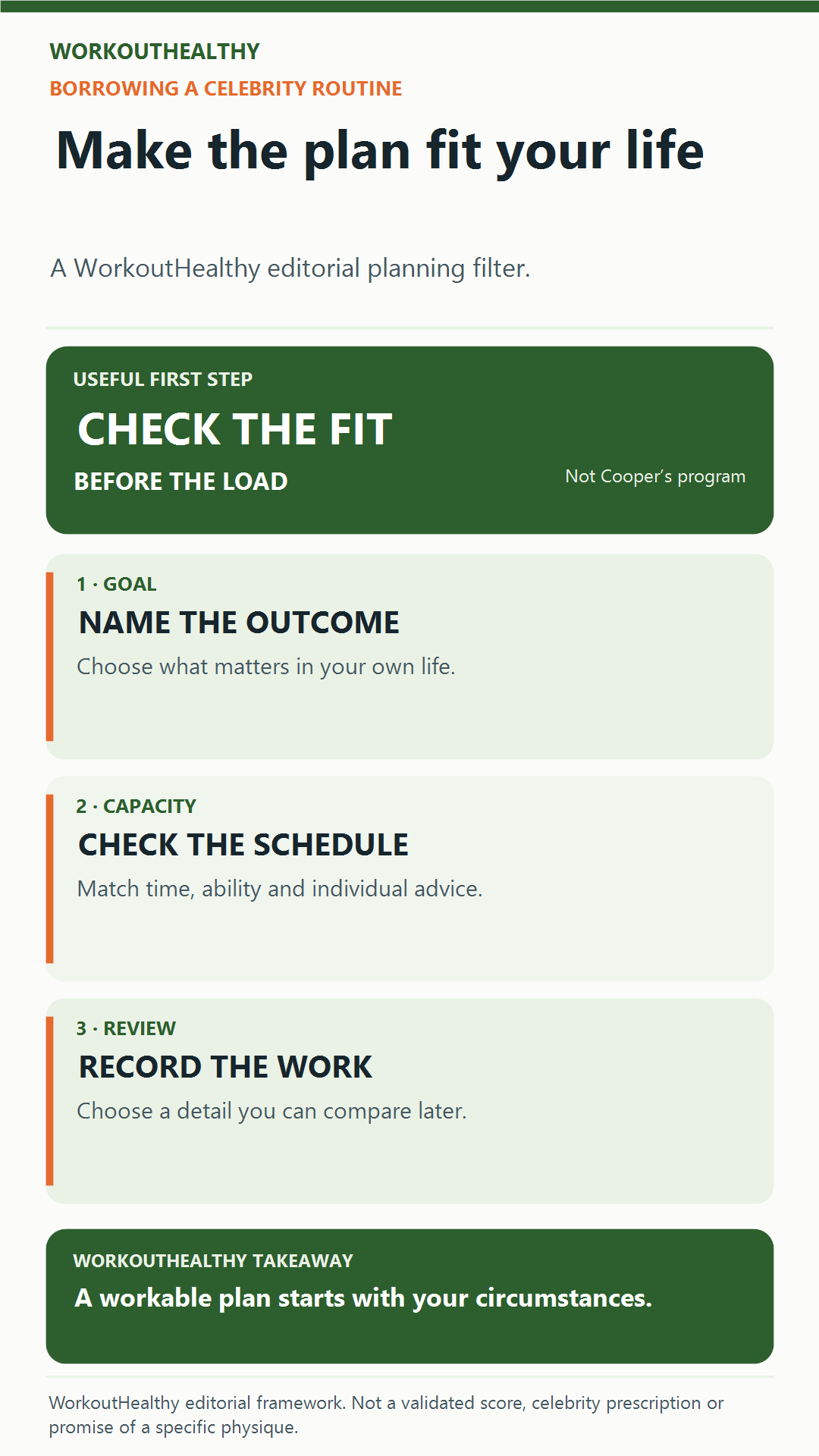
The goal, capacity, review filter
WorkoutHealthy’s editorial filter asks three questions before borrowing a celebrity routine: What is my goal, what can I currently sustain, and what will I review?
First, name an outcome that matters to you, such as attending the sessions already in your plan.
Next, check whether the schedule fits your time, current ability, and any individual professional advice.
Finally, choose a record you can review, such as completed work and how you felt afterward.
This is a planning framework, not Cooper’s program, a validated score, or a promise of a particular physique.
If the goal and the workload do not fit together, revise the plan before treating missed sessions as a character flaw.
Food headlines do not supply your own target
The reported eating demands were part of Cooper’s individual preparation, not a calorie recommendation for readers.
A large number in a celebrity story does not tell you your energy needs, what change is appropriate, or whether deliberate weight gain makes sense.
Avoid copying a menu or adding supplements just because the transformation is memorable.
For individualized nutrition or weight-change advice, work with an appropriately qualified professional who can assess your circumstances.
A useful question is what your present plan requires, rather than how to recreate the largest number attached to a celebrity headline.
Borrow the planning principle before borrowing the workload.
Keep a broader activity picture
CDC guidance describes at least 150 minutes of moderate aerobic activity each week and muscle strengthening on at least two days for adults.
Activity can be spread out, and some activity is better than none.
Those general health guidelines answer a different question from preparing an actor to look convincing in a role.
A concentrated transformation schedule does not replace a sustainable week of activity.
Our look at Michael Phelps’s no-days-off training streak offers another example of why an exceptional athlete’s schedule needs context before readers adopt its message.
Choose a useful next step
Start with the goal, capacity, review filter rather than trying to reproduce a reported weight change.
Write down the next session in your existing plan and the one detail that would make its completion clear.
Keep pain, symptoms, or uncertainty about exercise choices in the conversation with a qualified professional.
Cooper’s preparation can be interesting without becoming a standard by which your own progress is judged.
Read the linked strength guide, then choose one realistic question to bring to your next program review.
A better training decision is a worthwhile result even when it produces no movie-style before-and-after photograph.
Bradley Cooper discusses preparing for American Sniper
In this ABC News interview, Cooper discusses taking on the Chris Kyle role. It is a companion account of preparing for the film, rather than a workout to follow.
Medical disclaimer: This article is general product information, not medical advice. The equipment described here is not a treatment for any condition. If you have an injury, ongoing pain, or a medical condition, talk to a doctor or physical therapist before using any of it.