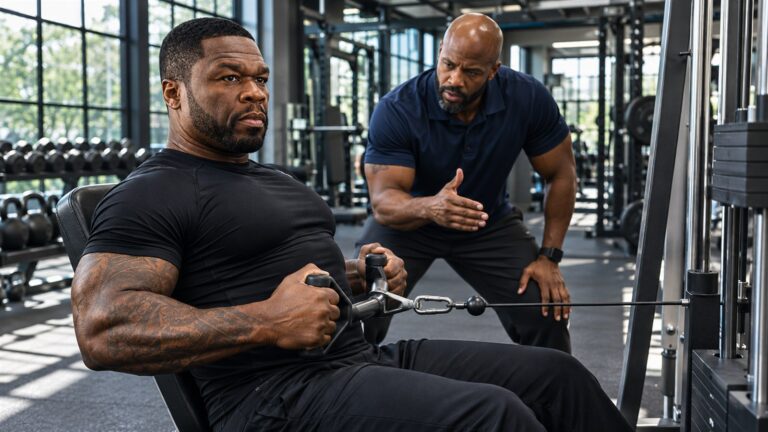

Chrissy Teigen once pushed back on the idea that celebrity post-baby bodies show what is normal or realistic for everyone. In a 2016 Today interview, she named the support people in public life can have: nutrition professionals, trainers, flexible schedules, and nannies.
Her point was not that every celebrity has the same recovery or that help guarantees a certain body. It was that the photograph leaves the support system out. Postpartum recovery includes healing, sleep, mood, feeding, caregiving, medical complications, time, and access to help. Appearance cannot summarize all of that.
A body comparison becomes less honest when the support comparison is missing.
Recovery is not a race back to a photograph taken before pregnancy.
What Teigen actually said
Teigen said people in the public eye may have extensive help that makes it possible to return to work and fitness sooner. She specifically mentioned nutritionists, dietitians, trainers, personal schedules, and nannies. Her conclusion was that this level of help should not be mistaken for a universal or realistic baseline.
That statement came after the birth of her daughter Luna. It should not be converted into a claim about every pregnancy, every later birth, or every detail of Teigen’s own health. The value is the transparency about resources.
How support changes capacity
Childcare can create an uninterrupted hour for an appointment or workout. Meal preparation can reduce planning and cleanup. A flexible job can make room for sleep after a difficult night. A trainer can adapt a session. A physical therapist can evaluate pain, pressure, continence, or movement concerns.
None of those services erases recovery. They change the number of tasks one person must carry alone. Two parents can have equal motivation and very different practical capacity because their work hours, finances, family help, health, feeding demands, and infant sleep are different.
The recovery system behind the photo
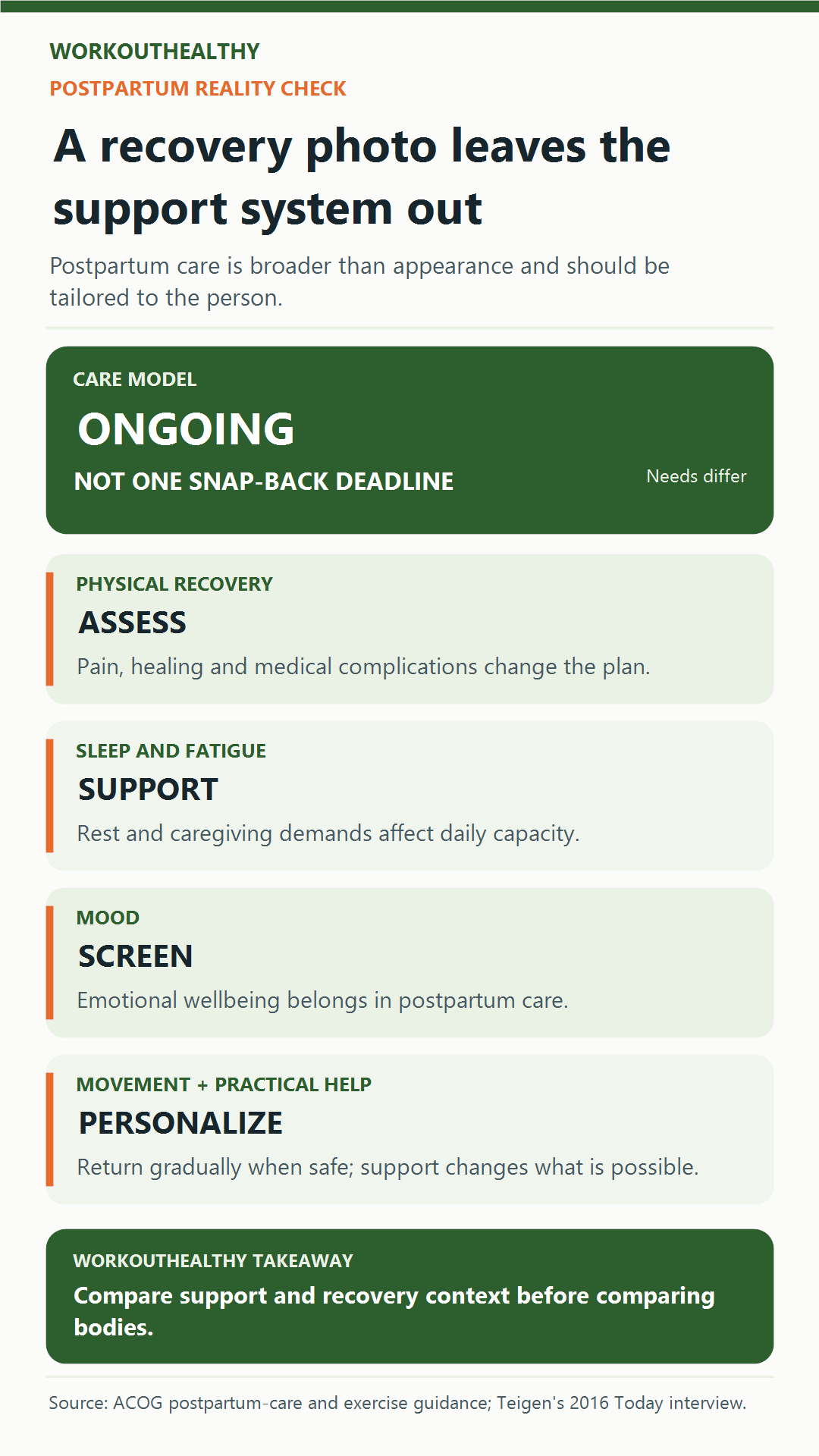
ACOG describes postpartum care as an ongoing process tailored to the individual, not a single visit. The recommended assessment includes physical recovery, sleep and fatigue, mood, infant care and feeding, chronic conditions, and health maintenance. That framework is much wider than body size.
Returning to exercise
ACOG says exercise can resume gradually when medically safe, depending on the mode of delivery and any medical or surgical complications. Some people can begin gentle activity within days. Others need more time, treatment, or specific restrictions. A calendar date alone cannot settle that decision.
A return can start with breathing, comfortable walking, pelvic-floor coordination, and daily tasks, then build toward resistance or higher-impact work as symptoms and healing allow. Pain, increasing bleeding, dizziness, chest pain, shortness of breath before exertion, calf swelling, or a feeling that something is wrong calls for medical review.
Body weight is not the whole outcome
Weight can change after birth, but it does not reveal tissue healing, pelvic-floor function, strength, cardiovascular fitness, sleep, mood, feeding status, or whether someone is eating enough. A smaller body is not proof of a smoother recovery.
Teigen later spoke publicly about postpartum depression after Luna’s birth. That history makes the broader point especially important: a photo that looks “recovered” can coexist with serious symptoms that deserve care. Mental health support is health care, not an optional extra.
A social-media comparison check
Before comparing your body with a post, ask what is invisible. How long has it been since the birth? Was the image posed, edited, professionally lit, or selected from many attempts? What childcare, schedule flexibility, treatment, and paid support were available? What symptoms or tradeoffs are not shown?
This is not a reason to attack the person in the photo. It is a reason to stop using the photo as a deadline. Our article on appearance pressure and toxic fitness culture explains how to move a conversation back toward choice, function, and privacy.
What supportive language sounds like
Helpful encouragement makes room for the person’s priorities. Ask what kind of help would be useful. Offer a meal, a walk, childcare, a ride, or quiet company. Praise care-seeking and honest limits. Avoid comments that grade how quickly someone’s body changed.
When movement is wanted, make it easier to access rather than prescribing it. A short walk together may be more supportive than advice about “getting the body back.” For a general evidence-based starting point, see our guide to low-impact walking and effort.
The bottom line
Teigen’s comments are valuable because they restore missing context. Trainers, nutrition professionals, childcare, and schedule control can change what is possible, while recovery still varies from person to person.
The most honest comparison is not body against body. It is needs against available support. Postpartum care should protect healing, mood, sleep, function, and the person’s own goals, not chase a public deadline.