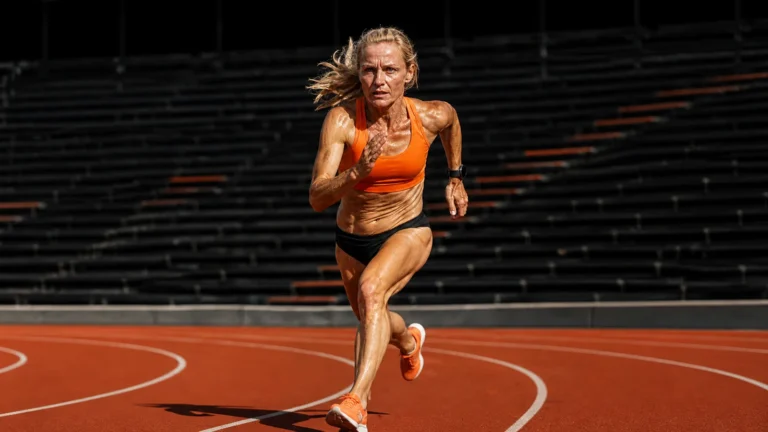

Amy Robach finished the 2024 United Airlines NYC Half in 1:57:02 and described the morning as “13.1 miles of pure joy.” The phrase makes the race sound effortless. The performance was not.
Runner’s World later highlighted the shared run with T.J. Holmes, and contemporary reporting documented a course from Brooklyn to Central Park and a sub-two-hour finish.
The useful story is the combination: preparation serious enough to cover the distance, pacing controlled enough to stay engaged, and companionship that made the work feel meaningful.
What Happened at the 2024 NYC Half
Robach and Holmes ran the race together on St. Patrick’s Day. Her posted data showed a finish just under two hours, an average pace of roughly nine minutes per mile.
That is a substantial recreational performance. It requires months of consistent running for most people, even when race-day images look relaxed.
Joy and Performance Are Not Opposites
Runners sometimes treat enjoyment as evidence that a session was not serious. In reality, positive emotion can improve consistency and reduce the mental cost of training.
Enjoyment does not remove fatigue. It changes how effort is interpreted. A shared goal, lively course, or controlled pace can make hard work feel chosen rather than imposed.
The Base Comes Before the Race
A half marathon is 13.1 miles. Most successful plans first establish a repeatable weekly routine, then gradually lengthen one run while keeping easier days truly easy.
The body adapts to the total pattern, not one heroic workout. Tendons, bones, and connective tissue often need more time than the cardiovascular system.
A beginner may start with run-walk intervals and three short sessions per week. Someone with medical concerns or an injury history should get individualized guidance before increasing volume.
Why Conversational Running Matters
Many endurance miles should feel controlled enough for conversation. That intensity builds aerobic capacity while allowing the runner to recover for the next session.
Running with another person naturally supports that pace. Conversation provides a practical effort check and adds accountability without turning every outing into a race.
Short cardio sessions can support the habit too. Our guide to a 10-minute daily cardio routine shows how modest bouts can make consistency easier.
Race-Day Pacing Protects the Experience
The excitement of a crowded start makes it easy to run too fast. A better plan is to begin slightly slower than goal pace, settle into rhythm, and save harder effort for the final miles.
Fuel and hydration should be practiced before race day. New gels, drinks, shoes, or clothing can create avoidable problems.
A joyful race is often built from boring decisions made early: patience at the start, steady fueling, and permission to adjust when conditions change.
The Social Side of Endurance
Shared training adds structure. Meeting someone reduces the chance of skipping a run, while conversation makes easy mileage pass more quickly.
The partner does not need the exact same pace for every session. Some runners meet for warmups, recovery runs, or selected long runs and train separately the rest of the week.
Where Faster Work Fits
Easy mileage should make up most of the plan, but a small dose of controlled faster running can improve efficiency and confidence.
Tempo intervals, short hills, or race-pace segments are more specific than randomly sprinting. High-intensity work also demands recovery.
Our explanation of the Norwegian 4×4 interval workout shows why demanding sessions are used sparingly.
A Beginner-Friendly Way to Chase the Same Feeling
Choose a goal far enough away to allow gradual training. Begin with a distance you can complete comfortably, then add time in small steps.
Keep a simple log of minutes, effort, and how the body responded the next day. Progress can be fewer walk breaks, calmer breathing, or finishing with energy left.
The Bottom Line
Amy Robach’s “pure joy” line was not an argument against training hard. It was evidence that preparation can create room for enjoyment.
The distance remained 13.1 miles and the clock still mattered. But the lasting memory came from sharing the effort. Build the base, pace the day, and choose people and places that make you want to return.