
About 2,000 years ago, a Roman writer put together one of the most complete medical books of the ancient world.
His name was Aulus Cornelius Celsus. The book is called De Medicina.
A widely shared version says Celsus taught that regular exercise preserves health, while massage and warm baths help the body recover.
That is mostly right. The exact wording, though, is more interesting than the summary.
Who Celsus Was
Celsus lived roughly from 25 BCE to 50 CE, though his exact dates are uncertain.
De Medicina has eight books. They cover medical history, diseases, drugs, surgery, and bone problems.
Historians still use it as a key source on Roman diet, pharmacy, and surgery, and on daily health habits.
His advice on healthy living comes early in Book I, before the long sections on disease.
That placement says a lot. Staying well came before treating illness.
What He Actually Wrote About Exercise
The first chapter of Book I opens with advice for a healthy person.
“Whilst inaction weakens the body, work strengthens it; the former brings on premature old age, the latter prolongs youth.”
In the same passage, he says a healthy person should vary their life.
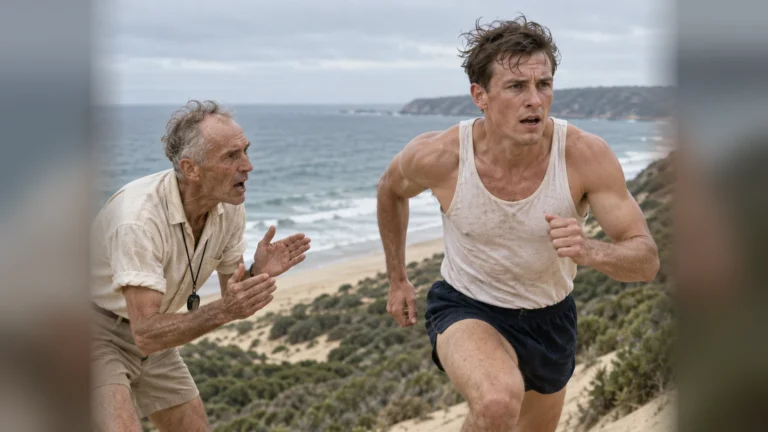
That means time in the country and in town, sailing, hunting, and resting sometimes. But more often, taking exercise.
Later in Book I, he lists useful exercises: reading aloud, drill, handball, running, and walking.
He also says exercise should always come before a meal.
When to Stop, According to Celsus
Celsus gave a simple rule for how hard to go.
He wrote that exercise should end with sweating, or at least a feeling of tiredness.
But that tiredness should stay “well this side of fatigue.”
In plain terms, work hard enough to feel it, then stop before you are wiped out.
That is a surprisingly modern idea about managing effort.
Where Massage and Baths Fit In
This is where the popular summary needs a small correction.
Celsus did name what should follow exercise.
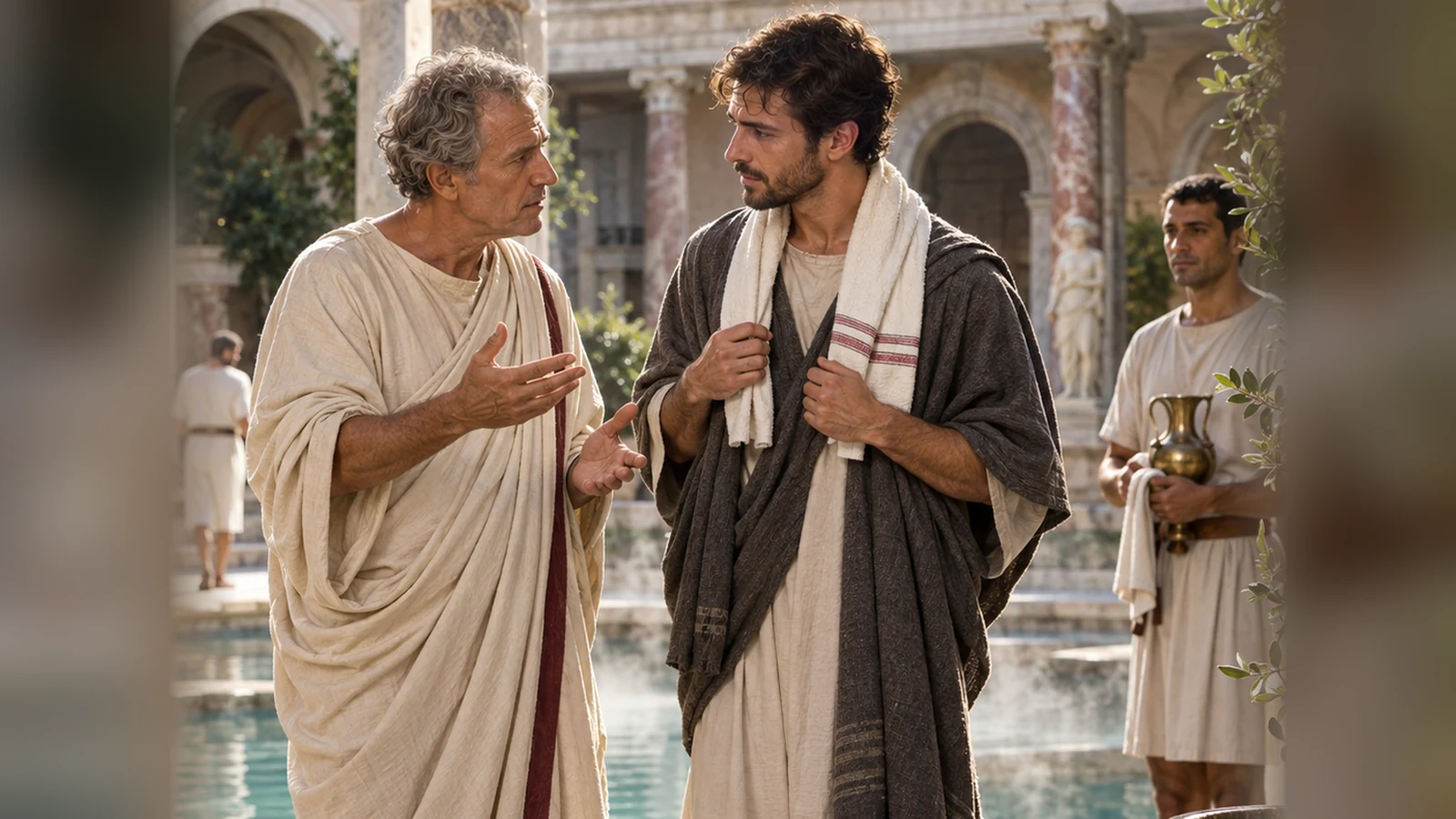
He wrote that the proper sequel was “at times an anointing” and “at times a bath.”
Anointing meant rubbing oil into the skin, often in the sun or near a fire.
He even described the ideal bath room as lofty, well lit, and spacious.
Yet in the opening lines, he also says a healthy, independent person has no need for “a rubber and anointer.”
So Celsus did not treat massage as a must.
Oiling and bathing were normal parts of the routine. Exercise and a varied, active life came first.
What Modern Research Says About Massage
Massage is one of the best studied recovery tools, and the results are mixed but useful.
A 2020 review by Davis and colleagues pooled studies on sports massage.
Massage had no overall effect on strength, jumping, sprinting, or endurance.
It was linked to a 13 percent improvement in delayed onset muscle soreness.
Flexibility improved by about 7 percent. There was no significant effect on perceived fatigue.
A 2018 review by Dupuy and colleagues compared many recovery methods.
In that analysis, massage came out as the most effective option for reducing soreness and perceived fatigue.
Cold water immersion and compression garments also showed benefits in that review.
So the two reviews agree on soreness. They disagree on fatigue.
The two reviews pooled different sets of studies, which may help explain the gap.
What This Does Not Prove
Neither review tested warm baths the way Romans used them.
Most studies looked at athletes after hard, short bouts of exercise, not everyday movers.
Feeling less sore is not the same as performing better, and the 2020 review found no clear performance boost.
Also, Celsus was not running experiments. His advice came from observation and the medical traditions of his time.
His core claim, that activity keeps the body younger than inactivity, is the part modern science backs most strongly.
How to Use His Advice Today
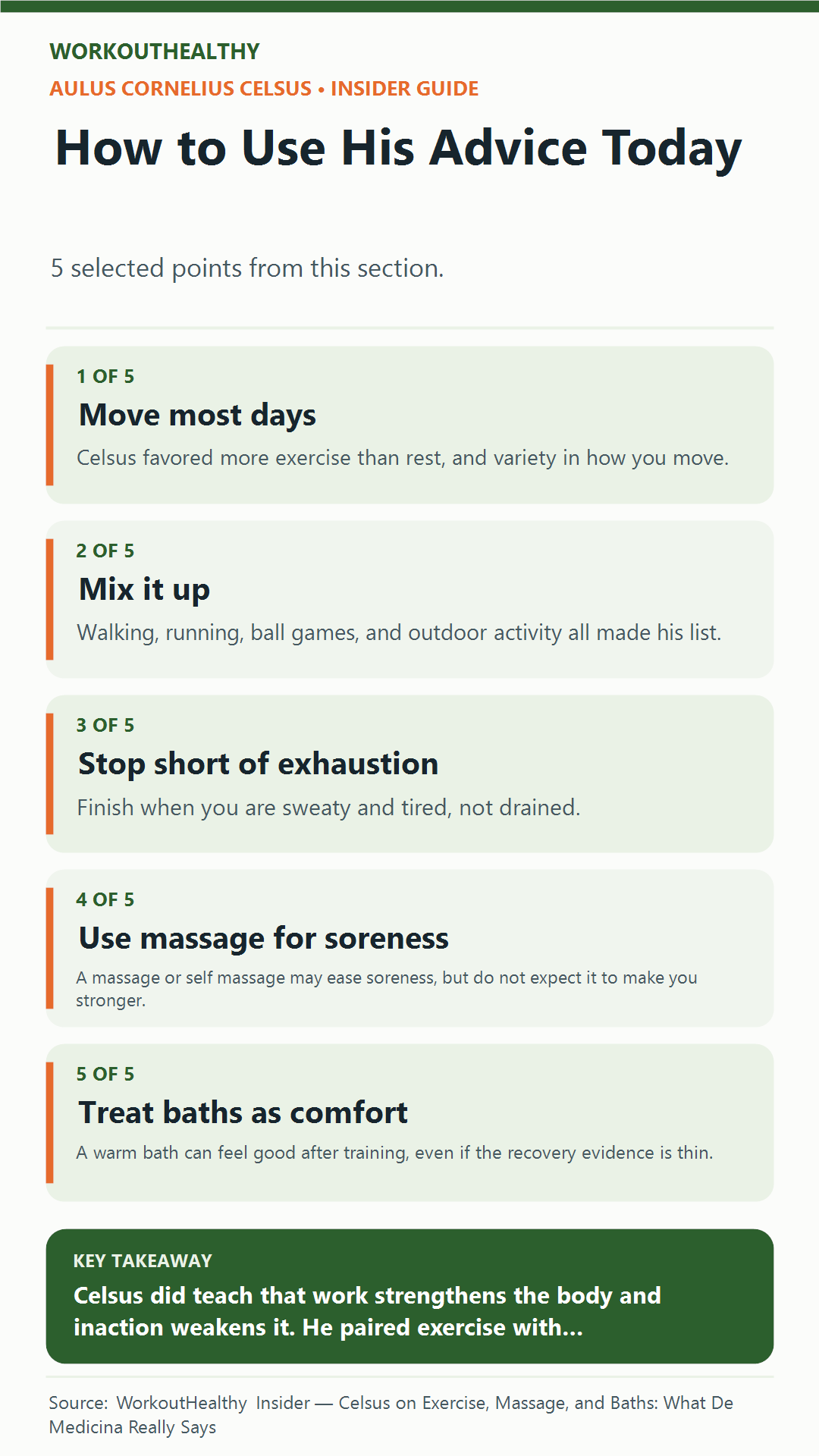
- Move most days. Celsus favored more exercise than rest, and variety in how you move.
- Mix it up. Walking, running, ball games, and outdoor activity all made his list.
- Stop short of exhaustion. Finish when you are sweaty and tired, not drained.
- Use massage for soreness. A massage or self massage may ease soreness, but do not expect it to make you stronger.
- Treat baths as comfort. A warm bath can feel good after training, even if the recovery evidence is thin.
- Keep the basics first. Sleep, food, and steady training matter more than any single recovery tool.
For an easy daily habit, see how walking may affect your gut microbiome.
And for a modern take on long life, read what a 104 year old woman says keeps her healthy.
Common Mistakes
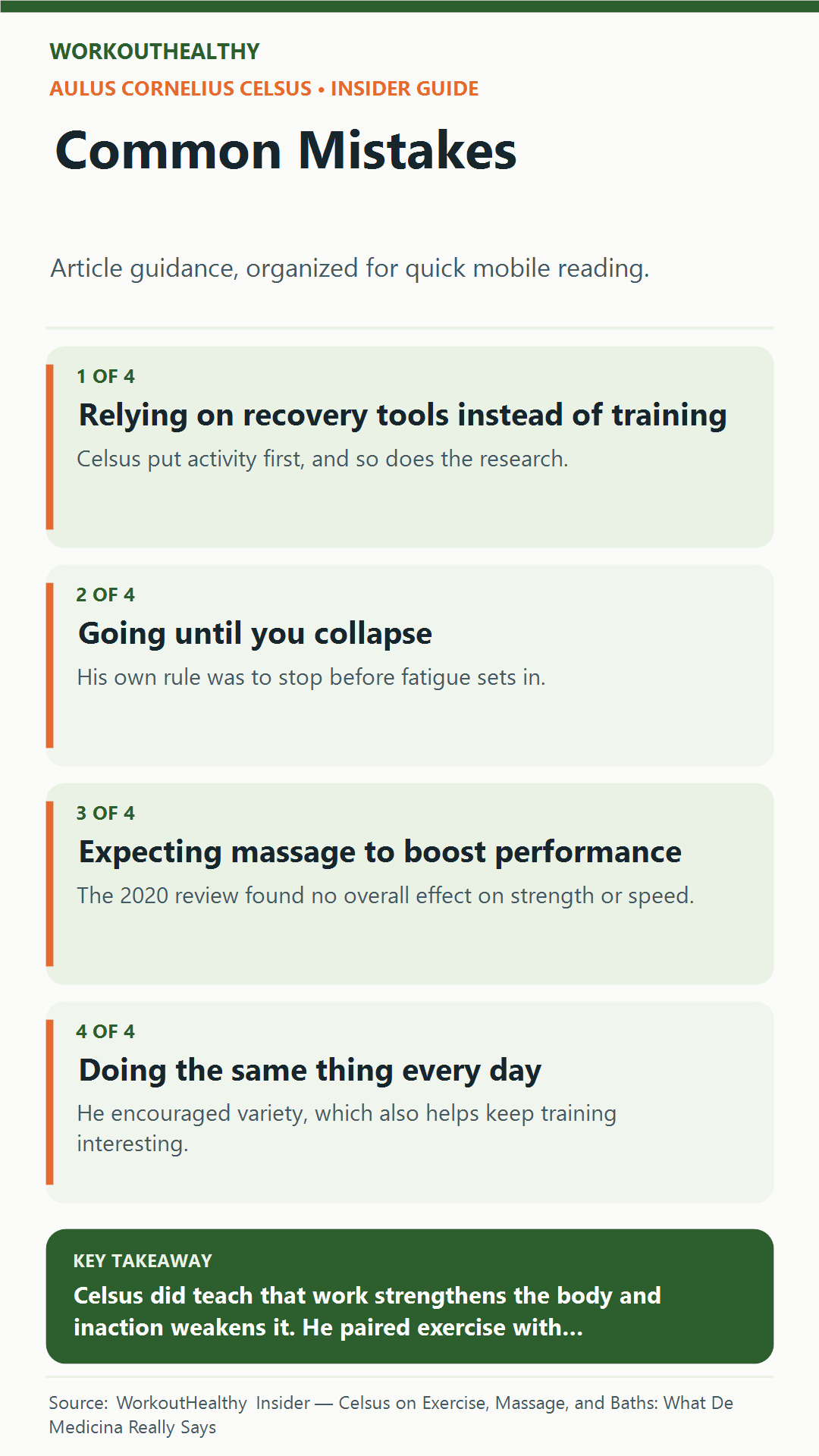
- Relying on recovery tools instead of training. Celsus put activity first, and so does the research.
- Going until you collapse. His own rule was to stop before fatigue sets in.
- Expecting massage to boost performance. The 2020 review found no overall effect on strength or speed.
- Doing the same thing every day. He encouraged variety, which also helps keep training interesting.
Who Should Be Careful
Very hot baths can leave some people dizzy or lightheaded, especially right after hard exercise.
Get out slowly, and drink water if you have been sweating a lot.
People with heart conditions, or who are pregnant, should check with a doctor before using hot baths or saunas.
Deep massage is not a good idea over fresh injuries, blood clots, or areas of unexplained pain.
The Bottom Line
Celsus did teach that work strengthens the body and inaction weakens it.
He paired exercise with anointing and bathing, but he did not call massage essential for healthy people.
Modern reviews suggest massage can ease soreness, with little effect on performance.
His best advice still holds: stay active, vary your movement, and stop before you are exhausted.
Want more stories like this? Subscribe to WorkoutHealthy Insider for practical explanations behind popular fitness claims.
References
- Celsus, A. C. (1935). De Medicina (W. G. Spencer, Trans.; Vol. 1, Book I). Loeb Classical Library. Harvard University Press. https://penelope.uchicago.edu/Thayer/E/Roman/Texts/Celsus/1*.html
- Davis, H. L., Alabed, S., & Chico, T. J. A. (2020). Effect of sports massage on performance and recovery: A systematic review and meta-analysis. BMJ Open Sport & Exercise Medicine, 6(1), e000614. https://doi.org/10.1136/bmjsem-2019-000614
- Dupuy, O., Douzi, W., Theurot, D., Bosquet, L., & Dugué, B. (2018). An evidence-based approach for choosing post-exercise recovery techniques to reduce markers of muscle damage, soreness, fatigue, and inflammation: A systematic review with meta-analysis. Frontiers in Physiology, 9, 403. https://doi.org/10.3389/fphys.2018.00403
This article is for general information only and is not medical advice. If you have an injury, ongoing pain, or a medical condition, talk to a doctor or physical therapist before you change how you train or eat.