
Darren Barnet put in serious gym time to get into shape for his role on Chicago Med.
What stands out about his approach, as featured by Men’s Health, is how ordinary the method actually is.
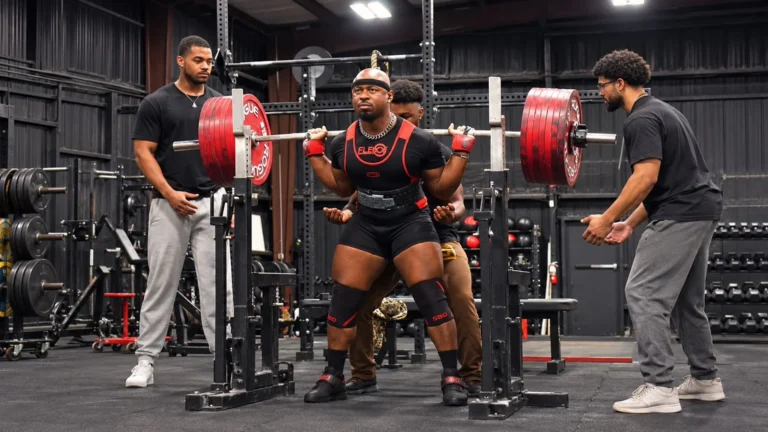
His training reportedly focuses on classic strength work, compound lifts and consistent volume in the weight room, rather than a shortcut routine or a dramatic crash program.
That is a notable contrast to the extreme transformation stories that usually dominate celebrity fitness coverage.
For an actor who spent years playing a high school student in a hit teen drama, the shift to a demanding medical drama role has also meant a shift in physical presentation.
Who Is Darren Barnet
Barnet was born in 1991 in Los Angeles and studied at Berry College before building a career in television and film starting in 2017.
He gained wide recognition playing Paxton Hall Yoshida in Netflix’s Never Have I Ever from 2020 to 2023, a role that made him a familiar face well beyond the show’s core audience.
He has also appeared in Love Hard, Anyone But You, Gran Turismo, and the 2024 action film Road House.
Barnet joined Chicago Med as Dr. John Frost starting in season 10, taking on a series regular role in one of television’s longer running medical dramas.
What Joining Chicago Med Meant for His Training
Chicago Med is part of the long running One Chicago franchise, which has aired on NBC since 2015 and produces demanding shooting schedules across multiple connected shows filming in the same city.
Joining a series like this as a new series regular means committing to months of long, physically taxing days on set, often with early call times and unpredictable hours.
A training routine has to survive that reality, not just look good in a single magazine feature.
That is likely part of why a straightforward, repeatable strength program tends to outlast a more elaborate one for actors juggling a network television schedule.
Complicated routines are often the first thing to get dropped when a shooting day runs long.
Why Compound Lifts Build the Kind of Shape That Holds Up
A medical drama does not require the kind of combat conditioning an action role might demand, but it does require an actor to look consistently strong and capable across months of long shooting days under studio lighting.
Compound lifts, such as squats, deadlifts, bench presses, and rows, work multiple muscle groups in a single movement.
A foundational review published in the Journal of Strength and Conditioning Research explained the underlying mechanisms behind muscle growth from resistance training, including the central role that progressive mechanical tension plays in building size over time (Schoenfeld, 2010).
Training built around these bigger, multi joint movements tends to produce a more balanced, functional physique than a routine built mostly around isolation exercises, which is likely part of why this approach shows up so often in actor training features.
The Case for Training Frequency Over Occasional Intensity
Consistency, not a single dramatic transformation, is what actually builds a physique that holds up over months of filming.
A systematic review and meta analysis published in Sports Medicine examined how training frequency affects strength gains across a wide range of resistance training studies (Grgić et al., 2018).
The researchers found that training each muscle group more than once a week generally produced better strength outcomes than training it just once, particularly when total weekly volume was matched between the two approaches.
That finding supports a fairly unglamorous conclusion: showing up regularly and hitting each muscle group a couple of times a week tends to beat sporadic, all out sessions squeezed in whenever time allows.
Steady training that shows up on the calendar every week tends to outperform occasional, all out effort, even when the total time invested looks similar on paper.
What This Evidence Does Not Prove
Neither study describes Barnet’s specific program, and the exact details of his training, including his split, volume, and diet, have not been fully detailed in public reporting beyond the general framing offered by Men’s Health.
The training frequency research also comes from studies on general resistance trained populations, not specifically from working actors balancing irregular filming schedules, so the ideal frequency for someone with an unpredictable calendar may look somewhat different in practice.
It is also worth noting that a physique built for the screen is not the same goal as training for athletic performance or a specific sport, even though both rely on many of the same underlying training principles.
Building a Career Playing Different Physical Types
Barnet’s career offers an interesting contrast in how differently the same actor can present physically depending on a role’s demands.
Never Have I Ever asked for a leaner, more conventional teen drama look befitting a high school character.
Chicago Med, by contrast, calls for the more filled out, capable presence expected of a physician managing high pressure emergency situations on screen.
That shift illustrates something useful for anyone training outside of Hollywood too.
The right training goal depends entirely on what you actually need your body to do, not on a single universal standard of what fitness should look like.
Training for Years, Not Just a Single Season
A hit medical drama can run for a decade or longer, which means a series regular is not training for a single transformation moment the way a one off film role might require.
That changes the calculation considerably.
A punishing short term program that produces fast results but is impossible to sustain works against an actor whose job depends on looking consistent season after season, sometimes for years at a stretch.
It is one more argument for the unglamorous approach: a program built to be repeated for years tends to beat one built to look impressive for a single photoshoot.
Common Mistakes People Make Chasing a Long Term Physique
Chasing variety for its own sake, constantly switching programs before giving one enough time to work, is one of the most common mistakes in strength training.
Most programs need at least six to eight weeks before their results become clear.
Training each muscle group only once a week is another common limitation, based on the frequency research above.
Splitting the same weekly volume across two sessions per muscle group tends to produce better results for most lifters.
Neglecting the exercises that do not show up in a mirror, such as posterior chain and upper back work, is a third frequent gap.
A balanced physique, and a body that holds up under physical demands, needs pulling movements as much as pressing ones.
Underestimating recovery is a fourth mistake, especially for anyone also managing a demanding filming schedule.
Sleep, nutrition, and rest days matter as much as the training sessions themselves for long term progress.
How to Build a Physique That Holds Up Over Months, Not Weeks
Center your program around compound lifts, including a squat pattern, a hinge pattern, a horizontal press, a vertical or horizontal pull, and an overhead press.
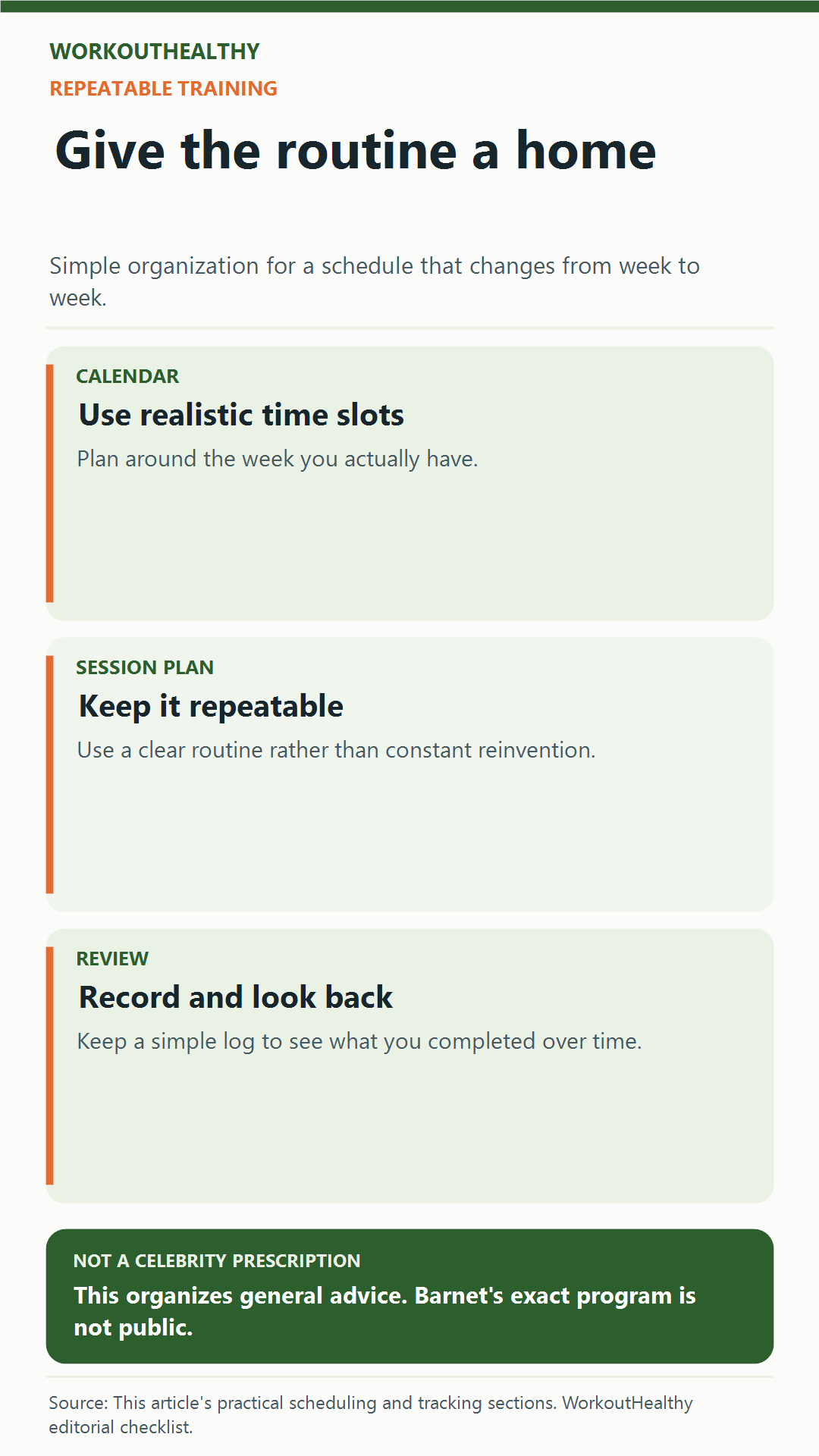
Plan your weekly training around a realistic schedule rather than an ideal one.
A program that assumes five perfect gym days will collapse the first week filming runs long, while a program built around three or four flexible sessions tends to survive a busier month.
Keep a simple, repeatable meal structure with a protein source at each meal, rather than trying to hit an exact number of grams every single day.
Consistency across weeks matters more than precision on any one day.
Train each major muscle group at least twice a week rather than once, splitting your weekly volume across more frequent, moderate sessions.
Track your lifts over time using a simple log.
Slow, steady progress on your main compound movements is a more reliable sign of results than how you look in the mirror on any single day.

Give yourself a genuine six to eight week block before judging whether a program is working, rather than switching plans every couple of weeks.
Build in at least one full rest day a week, and treat sleep as a non negotiable part of the plan, not an afterthought.
Add a caffeine strategy for your hardest sessions if it works for your body, since timing matters more than most people assume for getting the most out of a workout.
If you are new to compound lifting, learning correct pressing technique is a good place to start, since pressing form issues are common and can limit progress on several other lifts.
A personal trainer can also help you build a program with the right frequency and volume for your specific schedule and goals.
References
- Schoenfeld, B. J. (2010). The mechanisms of muscle hypertrophy and their application to resistance training. Journal of Strength and Conditioning Research, 24(10), 2857-2872. https://doi.org/10.1519/JSC.0b013e3181e840f3
- Grgić, J., Schoenfeld, B. J., Davies, T. B., Lazinica, B., Krieger, J. W., & Pedišić, Ž. (2018). Effect of resistance training frequency on gains in muscular strength: A systematic review and meta-analysis. Sports Medicine, 48(5), 1207-1220. https://doi.org/10.1007/s40279-018-0872-x
- Men’s Health. Train Like a Celebrity.
This article is for general educational purposes and is not medical advice. Talk to a doctor or qualified health professional before starting a new training program, especially if you have an existing health condition or have not exercised regularly in the past year.