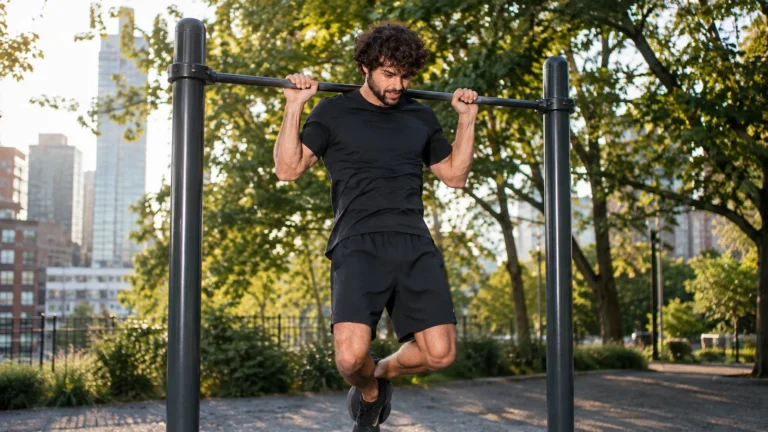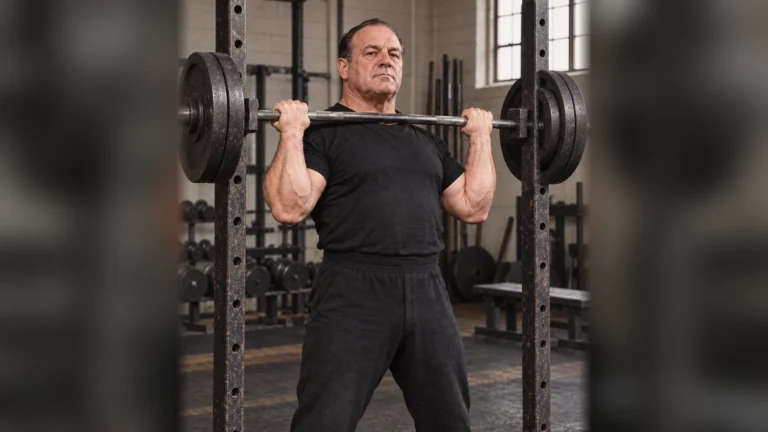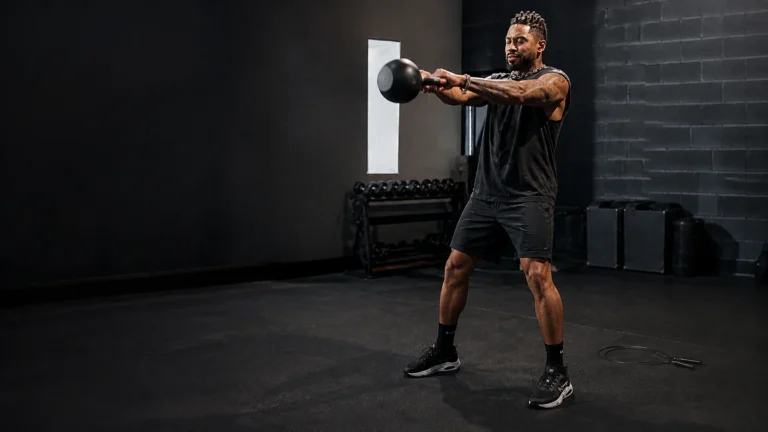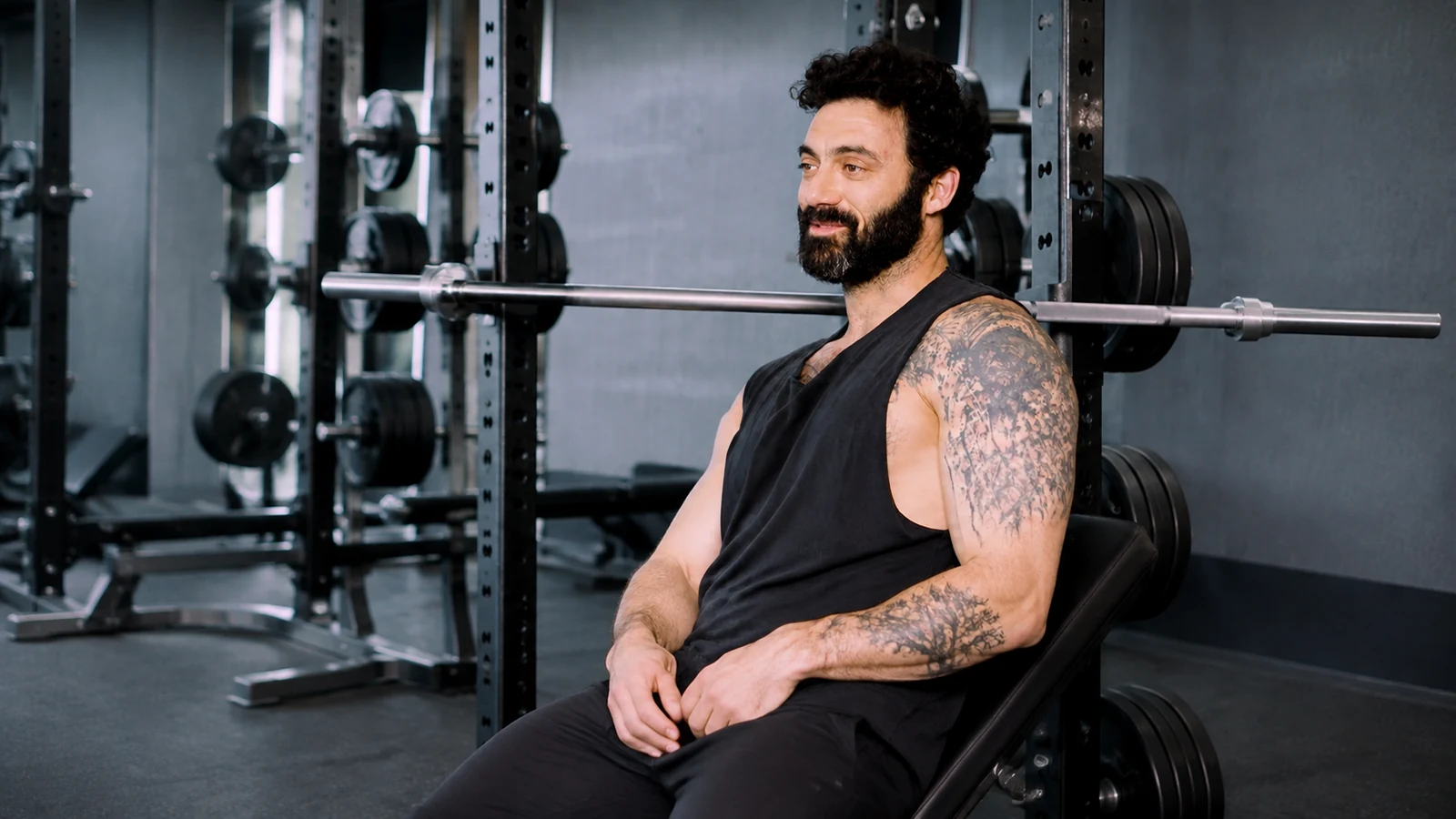

Morgan Spector has been lifting since he was 10 years old.
His father introduced him to powerlifting that young. The habit never really left. It stuck with him even after acting became his full time career.
Today Spector plays George Russell on HBO’s The Gilded Age. He still trains like the powerlifter his father raised. His leg day mixes mobility drills with heavy barbell box squats, front foot elevated reverse lunges, and single leg work taken close to failure.
He has said his goal is not bodybuilder size. He has joked that he just wants to stay a couple weeks away from feeling embarrassed shirtless. That honesty is part of what makes his approach feel relatable instead of intimidating.
Who Is Morgan Spector
Morgan Spector is an American actor born October 4, 1980, in Santa Rosa, California.
He grew up in Guerneville, California. His father was Jewish, with a mother who worked as a Yiddish Theatre actress. His mother was Irish Catholic.
Spector earned a degree from Reed College. He then trained further at the American Conservatory Theater in San Francisco. He worked in regional theater for years, including a national tour of The Lion King, before moving to New York City in 2006.
His television career grew through roles in Homeland. It grew further through the HBO miniseries The Plot Against America, where he starred opposite Winona Ryder.
Since 2022 he has played George Russell on The Gilded Age. George Russell is a powerful railroad tycoon. The role earned Spector a Screen Actors Guild ensemble nomination in 2023. He married actress Rebecca Hall in 2015, and the two have appeared in films together as well.
A Habit That Started With His Father
Most people who lift weights started as adults, often in their twenties or later.
Spector’s story is different. His father introduced him to powerlifting at age 10, decades before Hollywood or Broadway were part of the picture. That early introduction appears to have shaped how he thinks about training for the rest of his life, treating it as a constant rather than a phase tied to any one role or any one season of life.
Spector has framed his training as being about mental health as much as appearance. That framing sets him apart from many celebrity fitness stories. Most of those stories focus almost entirely on how a person looks, not how training makes them feel.
Inside His Leg Day
Spector’s reported leg day routine follows a clear structure.
He starts with mobility drills. These warm up the hips and knees before loading them with weight.
From there he moves into five sets of heavy barbell box squats. A box squat is a squat variation performed to a box or bench behind the lifter. It helps control depth and can reduce strain on the lower back compared to a free squat taken to full depth without a target.
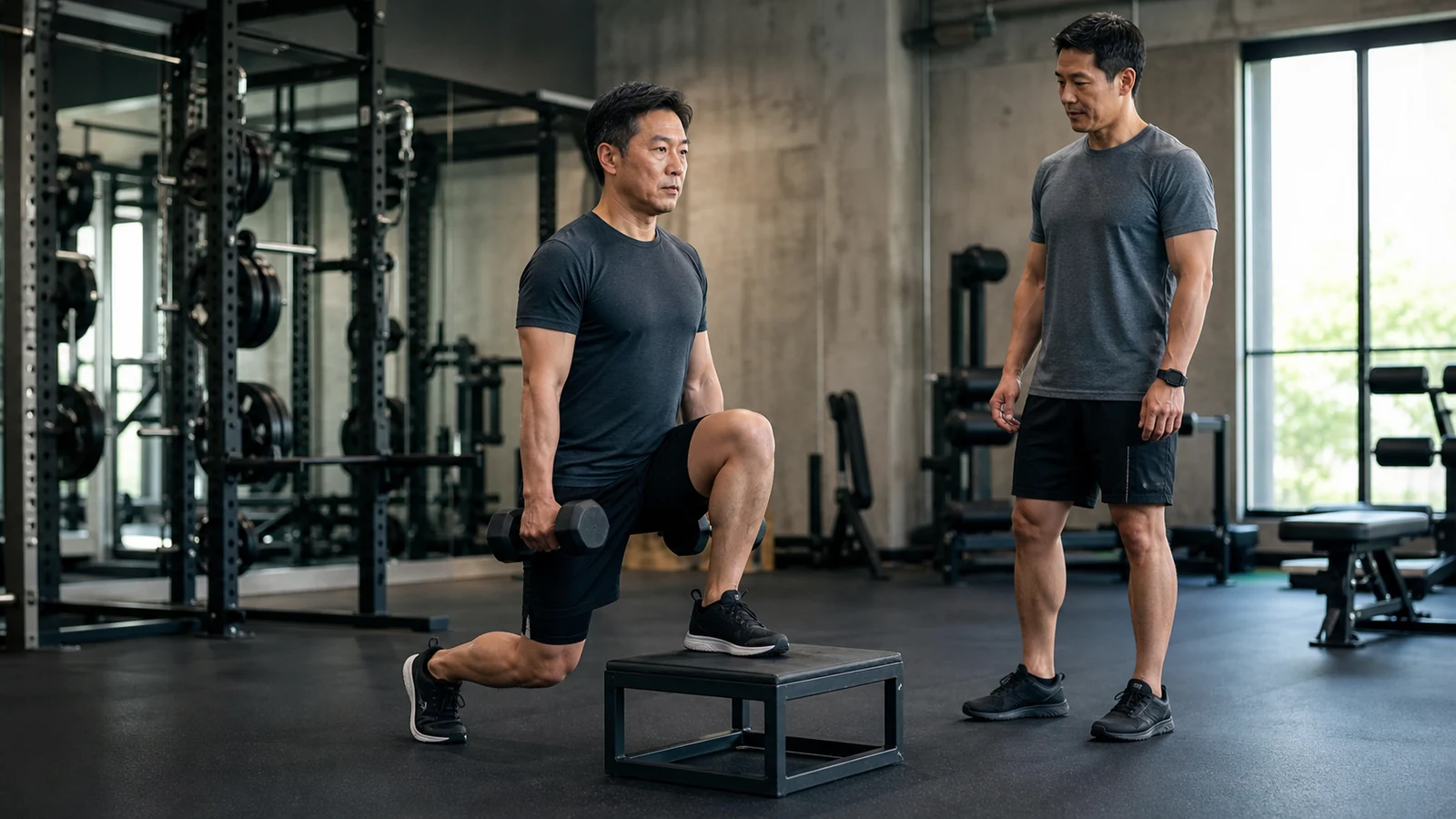
He follows that with front foot elevated reverse lunges. This is a single leg exercise that raises the front foot on a small platform. Doing so increases range of motion at the hip and knee compared to a standard lunge.
He finishes with single leg work taken close to failure. That means the working leg continues until it can no longer complete another clean rep with good form.
That combination blends heavy bilateral strength work with unilateral, single leg training, a pairing that shows up often in programs built by people who have trained for decades rather than months.
Why Starting Young Is a Safe Habit, Not a Risk
A common worry about youth strength training is that it might be unsafe or stunt growth in some way.
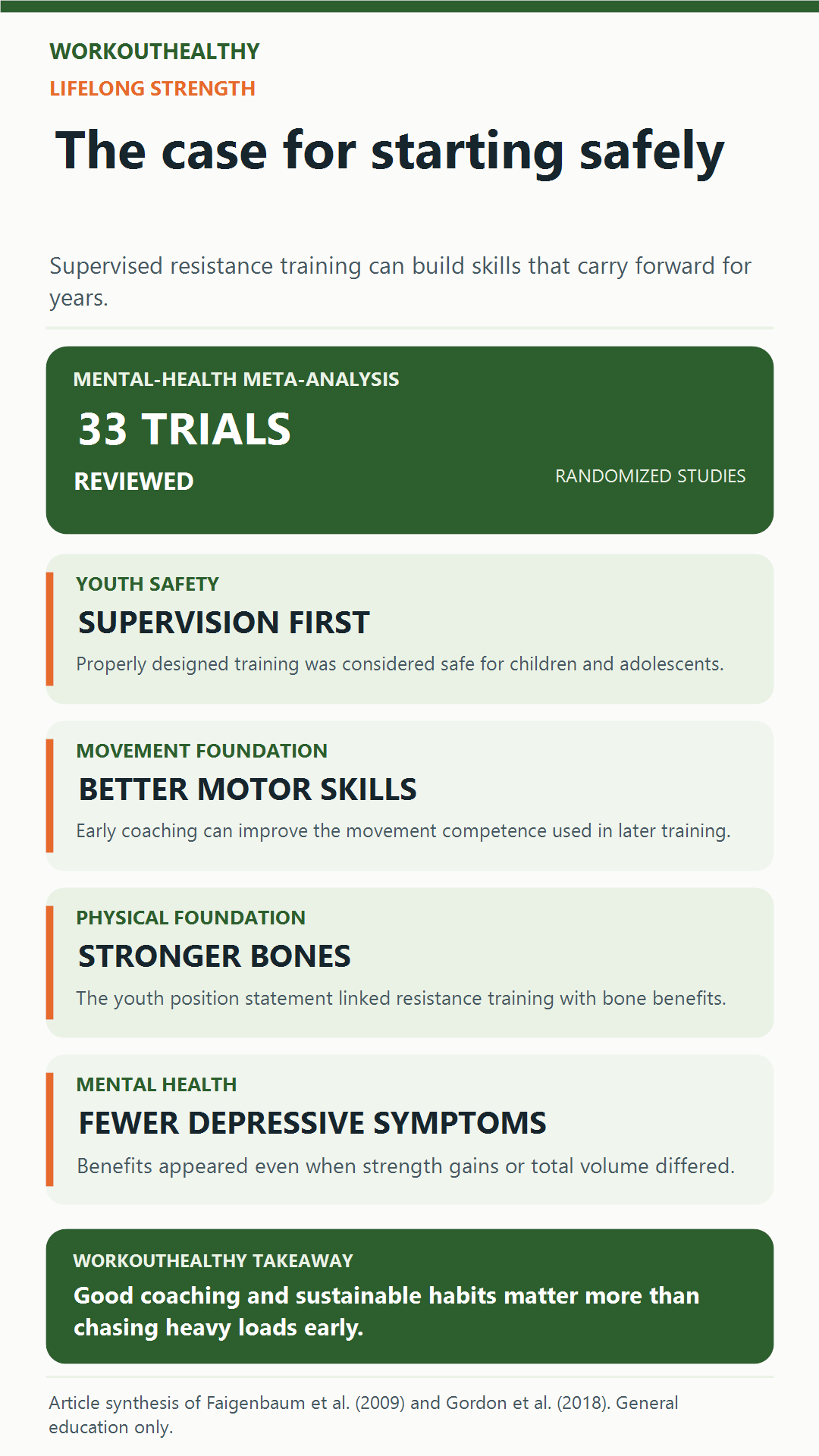
The research does not support that worry. The National Strength and Conditioning Association published an updated position statement in 2009, written by Avery Faigenbaum and a team of co-authors, reviewing the evidence on youth resistance training. The statement concluded that properly designed and supervised resistance training is safe for children and adolescents, and it does not stunt growth or damage growth plates when done correctly.
The same statement found real benefits tied to starting young. Youth resistance training was linked to improved motor skill performance, stronger bones, and a head start on the kind of movement competence that makes later, heavier training safer and more effective.
A habit built at 10 years old, done safely and consistently, can carry a person through decades of a demanding career in a way a habit picked up later sometimes cannot.
Spector’s decades long relationship with the barbell fits that pattern closely. What started as a father teaching his son a sport became a lifelong tool that has followed him through theater school, Broadway, and now a hit HBO drama.
The Mental Health Angle, Backed by Research
Spector’s comment about training for mental health is not just a nice sentiment. It lines up with a large body of real research.
A 2018 meta-analysis published in JAMA Psychiatry was led by Brett Gordon and colleagues. It pooled results from 33 randomized controlled trials on resistance exercise training and depressive symptoms.
The analysis found that resistance training significantly reduced depressive symptoms compared to control conditions. The effect held up regardless of a person’s health status. It held up regardless of total training volume too, and regardless of whether a person’s strength actually improved.
That last detail matters. The mental health benefit did not depend on getting stronger. It showed up simply from the consistent act of training itself. That connection between lifting and the brain shows up elsewhere in the research too, including in work looking at whether lifting weights keeps the brain young.
For someone like Spector, who has trained for over three decades, that finding offers a plausible explanation for why the habit has stuck through so many different chapters of his life, long after any single training goal was reached or abandoned.
What This Evidence Does Not Prove
It is worth being clear about what is confirmed here and what is not.
The general shape of Spector’s story is well supported by his own public comments. That includes an early start under his father’s guidance and a decades long, consistent habit since. The specific exercise selections and set and rep numbers described here come from reported details about his current routine. They do not come from a formally published training log.
The youth training safety research also comes with a real caveat. Supervision and proper technique are the operative words in that 2009 position statement. Unsupervised, poorly coached lifting at any age carries more risk than the same lifting done with good form and appropriate loading.
Common Mistakes People Make With Long Term Strength Training
A few patterns show up often in people trying to build a lifelong strength habit rather than a short term one.
The first mistake is treating strength training as a project with an end date. Spector’s approach works because he treats the gym as a constant, not something to finish once a goal is reached. Other lifters who have kept training for decades, like the brief, brutal sessions described in this look at Mike Mentzer’s Heavy Duty training system, show a similar pattern of longevity built on consistency rather than any single method.
The second mistake is skipping single leg work entirely. Bilateral exercises like squats build a lot of strength, but they can mask side to side imbalances that single leg training exposes and corrects over time.
The third mistake is chasing size instead of function. Spector has been open that his goal is not maximum size. That kind of realistic, sustainable target is often easier to maintain for decades than an extreme physique goal.
The fourth mistake is ignoring mobility work. Skipping a proper warm up before heavy squats and lunges raises injury risk and can limit how much weight a person can safely handle.
How to Build a Routine Like This
Anyone interested in Spector’s style of training can build something similar without needing decades of experience first.
Start each lower body session with five to ten minutes of hip and knee mobility work.
Leg swings, hip circles, and bodyweight squats are a reasonable starting point for most people.
Add a heavy bilateral movement next, like a box squat or a back squat. Four to five working sets is a reasonable target. A box or bench behind a person during squats can help build confidence with depth and control.
Follow that with a unilateral movement, like a front foot elevated reverse lunge. Three to four sets per leg works well for most people. Single leg work builds balance. It also corrects imbalances that bilateral lifts alone tend to miss.
Finish with one single leg accessory movement, like a step up or a single leg press, taken close to failure for two to three sets.
Most importantly, think in years rather than weeks. Spector’s story only makes sense as a decades long habit. A single great leg day will not replicate that. Showing up consistently, at a sustainable intensity, over a long stretch of time will.
The Takeaway
Morgan Spector’s story is less about a single dramatic transformation and more about consistency across an entire lifetime.
A habit his father gave him at 10 years old has survived a lot. It survived theater school and years on Broadway. It survives now on a demanding television schedule too.
The research on youth training safety helps explain part of why the habit lasted. The research on resistance training and mental health explains the rest. A habit started early and treated as a constant can outlast almost everything else in a busy career.
References
Faigenbaum, A. D., Kraemer, W. J., Blimkie, C. J. R., Jeffreys, I., Micheli, L. J., Nitka, M., and Rowland, T. W. (2009). Youth resistance training: Updated position statement paper from the National Strength and Conditioning Association. Journal of Strength and Conditioning Research, 23(Suppl 5), S60 to S79. https://doi.org/10.1519/JSC.0b013e31819df407
Gordon, B. R., McDowell, C. P., Hallgren, M., Meyer, J. D., Lyons, M., and Herring, M. P. (2018). Association of efficacy of resistance exercise training with depressive symptoms: Meta-analysis and meta-regression analysis of randomized clinical trials. JAMA Psychiatry, 75(6), 566 to 576. https://doi.org/10.1001/jamapsychiatry.2018.0572
Wikipedia. Morgan Spector. Retrieved September 2026.
This article is for general information and is not medical or fitness advice. Talk with a doctor before starting a new exercise program, especially if you have an existing health condition, joint issue, or injury. Individual results from any training plan will vary.