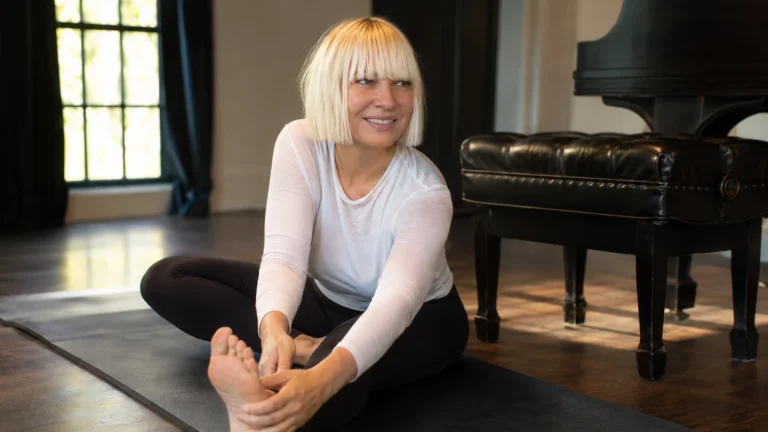

Miguel Jontel Pimentel has spent almost two decades as one of R&B’s most inventive voices.
He built a catalog that runs from “Sure Thing” to “Adorn” to a string of albums that keep pushing the genre in new directions.
In September 2025, he shared something new with fans on Instagram.
He revealed that he had become a father, with a child born in 2024.
That single fact reshapes almost everything about how a working musician plans a workout.
Hours that used to belong to the gym now belong to a baby’s schedule instead.
Miguel has talked about no longer having the free stretches of time he once spent training.
Rather than treating that as a loss, he rebuilt his routine around the time he actually has left over.
New parents lose free time in a very specific way.
It does not disappear all at once, it gets chopped into small, unpredictable windows scattered across the day.
A workout that depends on a clear ninety minute block stops being realistic once a baby’s nap schedule runs the household.
That is the practical problem Miguel’s routine seems built to solve.
What His Workout Actually Looks Like
Reports on Miguel’s current routine describe a structure built for speed, not length.
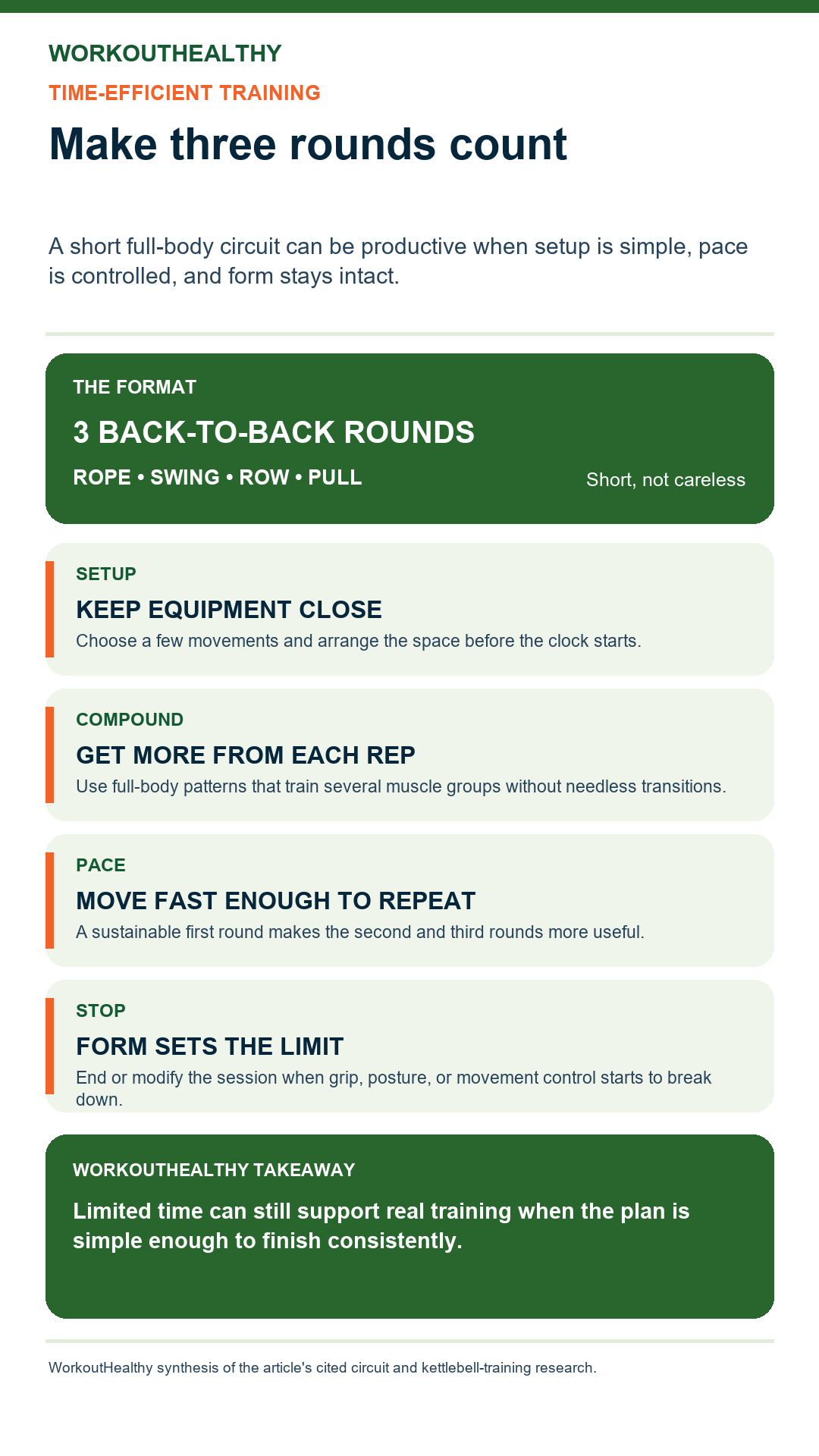
He runs three back to back rounds that mix jump rope, kettlebell swings, renegade rows, and pull ups.
Each round is designed to keep his heart rate elevated the entire time.
There is almost no rest built in between individual movements.
This style of training is often called circuit training or metabolic conditioning.
It packs strength work and cardio into the same block of time instead of spreading them across separate days.
For a new parent with unpredictable free time, that combination matters more than any single exercise choice.
A forty minute circuit can realistically replace what used to be two separate hour long sessions.
In Miguel’s Own Words
Miguel has not published a detailed training log or a formal interview walking through every set and rep.
What is publicly documented comes from brief comments tied to his “Train Like a Celebrity” profile and his own social posts about fatherhood and meditation.
He has described the gym as a place to detach from everything else going on in his life.
He has said that training in silence, without music playing, helps him center himself before the rest of the day takes over.
That framing matters, because it treats the workout as mental maintenance, not just physical upkeep.
For an artist whose entire career runs on rhythm and sound, choosing silence in the gym is a deliberate contrast.
Why He Trains in Silence
Meditation and quiet focus are not new ideas for Miguel.
He has practiced Transcendental Meditation as part of how he manages a demanding touring and recording schedule.
Research on structured meditation backs up why that kind of quiet time can matter for someone under constant pressure.
A major 2014 review published in JAMA Internal Medicine analyzed forty seven trials involving over three thousand participants.
The review found consistent, moderate improvements in anxiety, depression, and stress symptoms across meditation programs (Goyal et al., 2014).
The effect sizes were not enormous, but they were consistent across a wide range of study types.
Pairing a short, intense workout with quiet mental focus is not just a personal quirk.
It combines two separately well supported stress management tools into one daily habit.
The Science Behind Short, Intense Training
The idea that a short workout cannot be a real workout is outdated.
High intensity interval training, often shortened to HIIT, has been studied for well over a decade.
Researchers built that body of work specifically because short, hard sessions kept producing results similar to much longer ones.
A widely cited 2012 review in The Journal of Physiology examined the physiological effects of low volume, high intensity interval training.
It found that these sessions trigger many of the same cardiovascular and muscular adaptations as longer, steadier endurance training (Gibala et al., 2012).
That does not mean intensity fully replaces every benefit of a longer session.
It means a properly structured short session is not automatically an inferior one.
It is simply a different tool suited to a different amount of available time.
What This Evidence Does Not Prove
None of this research proves that short circuits are always superior to longer, traditional workouts.
The kettlebell study that measured aerobic capacity gains only followed twenty three participants for four weeks, which is a small and short trial.
The meditation review found real but moderate effects, not a cure for chronic stress or a substitute for professional mental health care when it is needed.
People with significantly more free time can still get real benefits from longer sessions with more variety.
The honest takeaway is narrower than a headline suggests.
When time is genuinely limited, a short and intense circuit is a legitimate, evidence backed option rather than a compromise.
What the Research Says About Kettlebells Specifically
Kettlebell swings sit at the center of Miguel’s routine, and that specific choice has research behind it too.
A 2015 study published in the Journal of Strength and Conditioning Research tracked twenty three participants through four weeks of kettlebell training.
Researchers measured aerobic capacity before and after the training block (Falatic et al., 2015).
The group that trained with kettlebells improved their estimated VO2 max, a standard marker of cardiovascular fitness.
Kettlebell swings move the hips, glutes, and core through a fast, repeated hinge pattern.
That combination builds power and burns energy in the same motion.
It fits naturally into a circuit built around time efficiency rather than isolated muscle work.
How This Compares to General Fitness Guidelines
Major health organizations, including the American College of Sports Medicine, generally recommend at least 150 minutes of moderate activity a week.
The alternative recommendation is 75 minutes of vigorous activity a week, or some combination of the two.
A circuit like Miguel’s, run three or four times a week for roughly thirty to forty minutes, can realistically land in that vigorous activity range.
Nothing in the official guidance requires one long, uninterrupted session.
Shorter, harder sessions are explicitly allowed to count toward the same weekly total.
That is the exact loophole busy parents, shift workers, and touring musicians tend to rely on.
Musicians in particular deal with a schedule that almost never repeats the same way twice.
A tour stop, a studio session that runs late, or a promotional appearance can wipe out an entire planned gym day without warning.
A routine built around three flexible, short rounds survives that kind of chaos far better than a rigid program tied to a specific gym or class time.
Common Mistakes People Make With Short, Intense Workouts
Skipping the warm up is one of the most common mistakes in time crunched training.
Jumping straight into kettlebell swings or jump rope without five minutes of movement prep raises injury risk for very little time actually saved.
Another common mistake is ignoring form once fatigue sets in during back to back rounds.
A kettlebell swing done with a rounded lower back late in a set is a frequent way people strain their spine.
People also tend to drop rest days entirely once they start seeing fast results from short workouts.
High intensity training still requires real recovery between hard sessions.
Stacking demanding circuits every single day raises the risk of overuse injuries and burnout.
Finally, many people abandon a routine the first week it does not fit their schedule perfectly.
A three round circuit is meant to flex around a busy week, not become another rigid obligation to feel guilty about missing, and it shares the same brief, high effort philosophy behind Mike Mentzer’s heavy duty training approach.

How to Build a Time Efficient Circuit Like This
Start every session with a five minute warm up of light cardio and dynamic stretching.
Pick four exercises that hit different muscle groups, similar to jump rope, kettlebell swings, rows, and pull ups.
Work each exercise for thirty to forty five seconds, then move immediately into the next one.
Rest for one to two minutes after completing all four exercises in order.
Repeat the full circuit two or three times, depending on how much time you have that day.
Keep a simple log of how many rounds you complete and how heavy your kettlebell is.
Tracking that over several weeks makes slow progress visible even on busy weeks.
If you are new to kettlebell training, start with a lighter weight and focus on hip hinge mechanics before adding load.
A trainer or coach can check your swing form in a single session, which lowers injury risk significantly, and it is worth reading through the basics of deciding whether you need a personal trainer before committing to ongoing sessions.
Consider building in one completely silent, phone free session a week, even if the rest of your workouts have music.
Treat the quiet as part of the training itself, not just an accident of the gym being empty.
If you only have twenty minutes on a given day, cut the circuit to two rounds instead of skipping the workout entirely.
A shorter session that actually happens beats a longer one that only exists in theory.
Plan your workout the night before, even loosely, so a tired morning brain does not have to make decisions on the spot.
Give yourself permission to swap kettlebell swings for goblet squats or step ups on days when your lower back feels off.
Consistency across months matters far more than any single session being perfect.
References
Falatic, J. A., Plato, P. A., Holder, C., Finch, D., Han, K., & Cisar, C. J. (2015). Effects of kettlebell training on aerobic capacity. Journal of Strength and Conditioning Research, 29(7), 1943 to 1947. https://doi.org/10.1519/JSC.0000000000000845
Gibala, M. J., Little, J. P., MacDonald, M. J., & Hawley, J. A. (2012). Physiological adaptations to low volume, high intensity interval training in health and disease. The Journal of Physiology, 590(5), 1077 to 1084. https://doi.org/10.1113/jphysiol.2011.224725
Goyal, M., Singh, S., Sibinga, E. M. S., Gould, N. F., Rowland-Seymour, A., Sharma, R., Berger, Z., Sleicher, D., Maron, D. D., Shihab, H. M., Ranasinghe, P. D., Linn, S., Saha, S., Bass, E. B., & Haythornthwaite, J. A. (2014). Meditation programs for psychological stress and well being: A systematic review and meta analysis. JAMA Internal Medicine, 174(3), 357 to 368. https://doi.org/10.1001/jamainternmed.2013.13018
This article is for general informational purposes only and is not medical or fitness advice.
Talk with a qualified healthcare provider or certified trainer before starting a new exercise program, especially if you have an existing health condition, an injury, or are returning to training after a major life change.