
Pedro Pascal spends a lot of his screen time getting hurt.
As Joel Miller in HBO’s The Last of Us, he crawls through wreckage, carries a teenager on his back, and takes hit after hit.
At 51, Pascal is not chasing a magazine cover physique for these roles.
Fitness outlets have pointed instead to a training approach built around mobility and functional strength, the kind meant to keep a body working under real physical stress.
Here is what is actually known about that framing, and what the research says about training for how your body moves rather than how it looks.
Who Pedro Pascal Is Today
Pascal was born on April 2, 1975, in Santiago, Chile, which makes him 51 years old as of this writing.
He trained as an actor at the Orange County School of the Arts and later at New York University’s Tisch School of the Arts.
His career built slowly for years before a run of major roles changed that.
He played Oberyn Martell in Game of Thrones, then took the title role in The Mandalorian, then moved into The Last of Us as Joel, a role that has earned him widespread critical praise.
All three of those roles share something in common. They are physically demanding, often filmed in costume, armor, or rough terrain, across long shooting schedules.
That kind of workload is very different from training to look good in a single photoshoot.
Playing Joel specifically involves repeated physical sequences across an entire filming season.
The character survives falls, fights, and long treks through rough terrain, all of which the show recreates through practical stunt work whenever possible.
A body that only looks strong but breaks down under repeated physical strain would create real production problems on a schedule like that.
The Mobility Focused Training Framing
A Men’s Health feature on celebrity workouts specifically discussed Pascal’s approach as one built around mobility and functional strength rather than pure size.
The framing described loaded carries, single leg stability work, and bodyweight circuits as the likely building blocks of his training, aimed at durability over aesthetics.
Not every detail of the described routine could be independently confirmed directly from the source for this article.
What we can say with confidence is that the framing fits the physical demands of Pascal’s recent roles closely.
Playing Joel across a full season of stunts, falls, and fight choreography requires a body that holds up over months, not one built only to look strong in a single scene.
Why Mobility Training Matters for Physical Roles
Mobility, in a training context, refers to how well a joint can move through its full range of motion under control.
Functional strength refers to strength that transfers directly to real movement patterns, like lifting, carrying, twisting, or catching your balance.
Both differ from training built purely around muscle size, which is often the goal in bodybuilding style programs.
An actor doing stunts needs joints that can absorb an awkward landing and a core that can stabilize the spine during an unplanned twist.
Pure size does not guarantee either of those things. Mobility and stability training is specifically aimed at building them.
This matters for stunt heavy roles because injuries during production can shut down filming and put the performer at real personal risk.
What the Research Says About Functional Training
The National Strength and Conditioning Association published a detailed position statement in 2019 on resistance training that emphasized functional outcomes, not just muscle size, as a core goal of a well designed program.
The statement, led by researcher Maren Fragala, reviewed evidence showing that training focused on movement quality and joint stability supports better long term physical function and lower injury risk.
A separate study in the Journal of Aging and Physical Activity looked at the effects of a structured program on leg power, balance, and functional mobility.
Researchers led by Roger Ramsbottom found that six months of targeted training produced large improvements in leg power and dynamic balance among previously sedentary adults.
That specific study focused on adults over 70, an older population than Pascal, so its findings should not be applied directly to a 51 year old actor without adjustment.
The underlying principle still holds broadly across ages. Training that specifically challenges balance, single leg stability, and controlled movement builds real world durability in a way that pure strength training alone does not always deliver.
Training for how your body moves tends to hold up over decades in a way that training only for how it looks in a mirror does not.
What Pascal Has Said About the Physical Side of the Job
Pascal has spoken in interviews over the years about the physical toll of stunt heavy productions, though he has not given a detailed public breakdown of a specific mobility routine in available interviews.
Much of the loaded carry and single leg training framing appears to come from outside fitness commentary rather than from Pascal describing his own program in his own words.
That gap matters, since the training details are not something Pascal has confirmed personally.
It remains entirely plausible that some version of that training is part of his preparation, since the approach lines up closely with what stunt coordinators commonly recommend for actors in physically demanding franchises.
Without a first hand, on the record account, though, the specific exercises attributed to him should be treated as informed reporting rather than confirmed fact.
What This Evidence Does Not Prove
This research does not confirm the exact exercises in Pascal’s personal routine.
It also does not prove that mobility focused training alone explains his ability to handle physically demanding roles.
Genetics, prior athletic background, and the specific demands of stunt choreography all play a role that general research cannot isolate.
The Ramsbottom study’s findings on older adults do not automatically transfer to a fit 51 year old actor with a very different starting point.
General findings about functional training’s benefits are well supported, but they describe group averages, not any one specific person’s results.
What This Means for the Rest of Us
Most people are not training for a stunt sequence, but the same principle applies to everyday life.
Carrying groceries, catching yourself on a curb, or getting up off the floor all depend on functional strength and joint mobility, not maximum muscle size.
Someone who only trains with machines in a fixed, seated position may build muscle without building the kind of stability that prevents a fall or a strained back during an everyday task.
Adding movements like single leg balance work, loaded carries, and controlled rotational exercises to a normal strength routine addresses that gap directly.
This does not require replacing traditional strength training. It works best as an addition to it.
There is also a age related argument for this style of training that goes beyond acting careers entirely.
Joint stiffness and balance decline are common concerns as people move through their 50s and beyond.
Functional and mobility focused training directly targets both of those concerns, rather than treating them as an inevitable side effect of aging.
That makes this approach relevant well beyond anyone preparing for a stunt heavy television role.
Common Mistakes People Make With Mobility Training
A common mistake is treating mobility work as a light warm-up rather than real training.
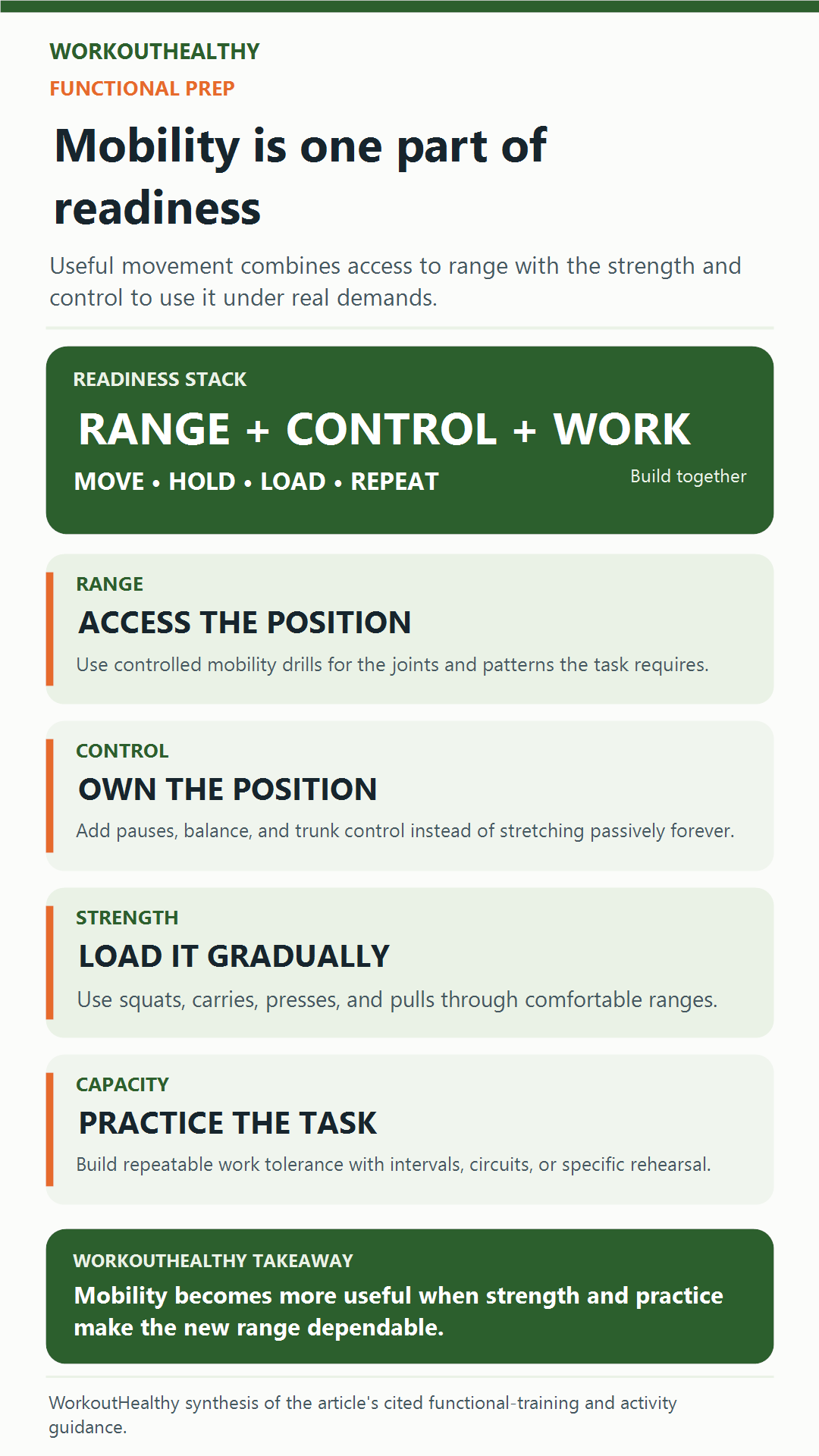
Mobility and stability exercises need progressive challenge over time, just like traditional lifting, to keep producing benefits.
Another mistake is skipping single leg and balance work entirely because it feels awkward or unfamiliar at first.
That initial awkwardness is often a sign the exercise is addressing a real weakness worth training.
Some people also load carries or single leg movements with too much weight before their balance and control catch up.
Building control at a lighter load first, then adding weight gradually, produces safer, more durable progress.
How to Build Functional Strength Into Your Routine
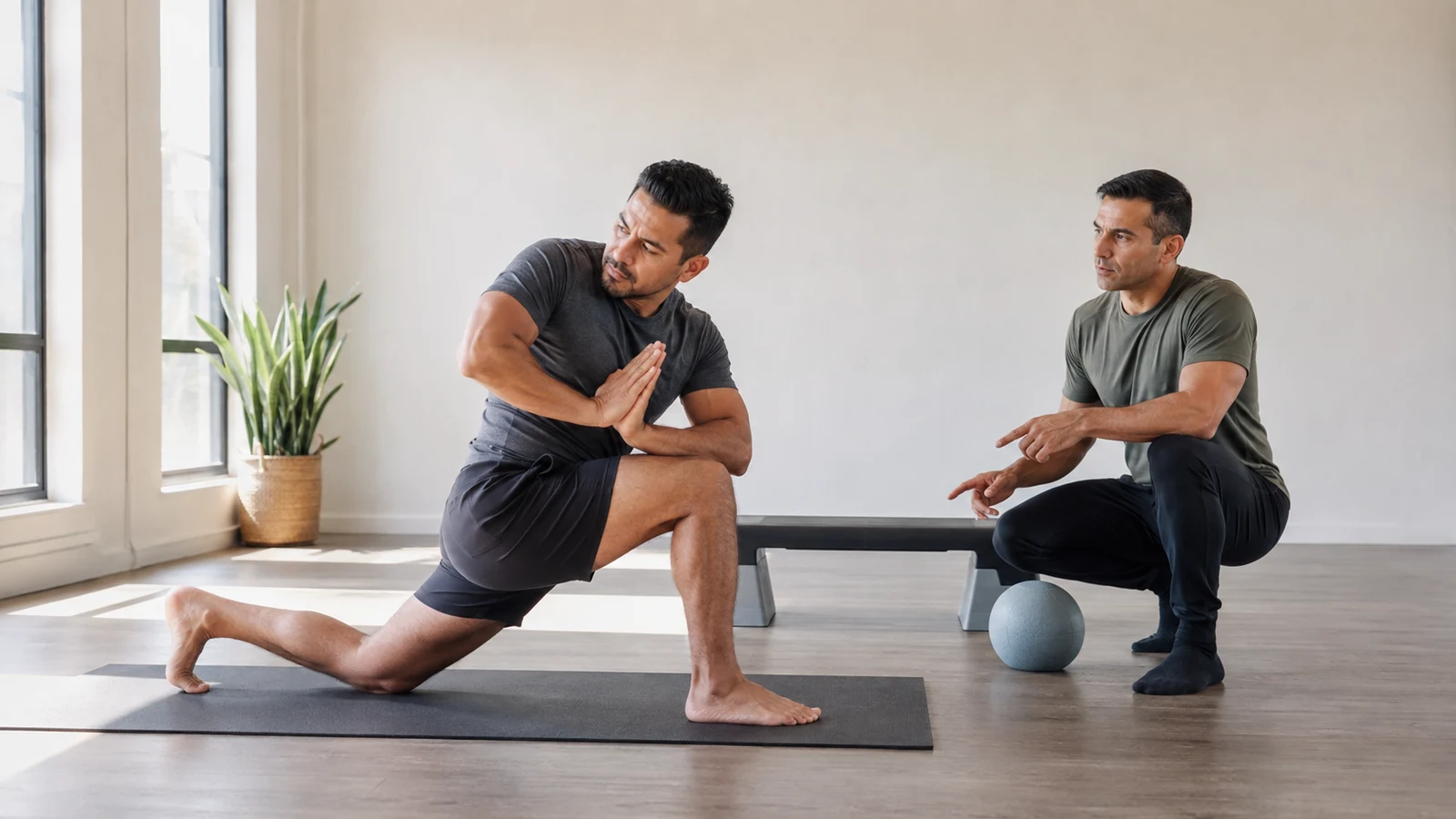
Start with basic balance work, like standing on one leg for 20 to 30 seconds per side, before adding movement.
Progress to single leg exercises with control, such as step-ups or split squats, once basic balance feels stable.
Add loaded carries, like a farmer’s walk with a dumbbell or kettlebell in each hand, walking a set distance while keeping the torso upright.
Include rotational core work, like a wood chopper or Pallof press, to build stability against twisting forces.
Keep two or three traditional strength sessions each week, since mobility work supplements a strength foundation rather than replacing it.
Warm up joints specifically before intense training, especially the hips, ankles, and shoulders, since these joints handle the most rotational stress in daily movement.
Progress slowly and prioritize control over speed, particularly on single leg and loaded carry exercises.
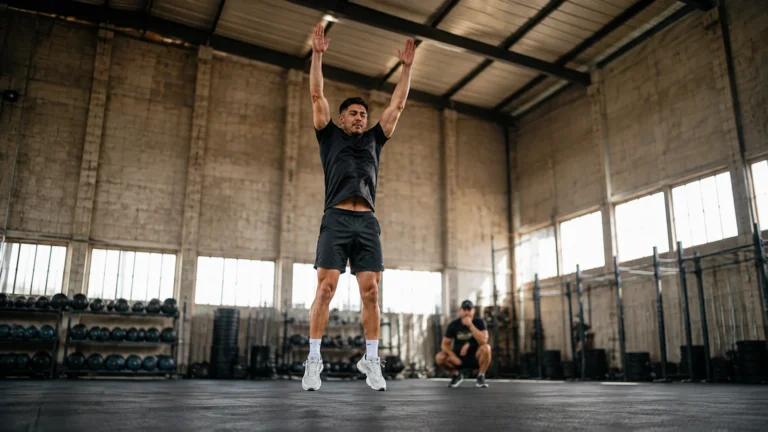
Our look at whether box jumps can build muscle covers a related question about how explosive, functional movements affect strength and power.
If you are new to structured training and want help building a program around mobility and stability, our guide on deciding whether you need a personal trainer walks through how to find the right coach.
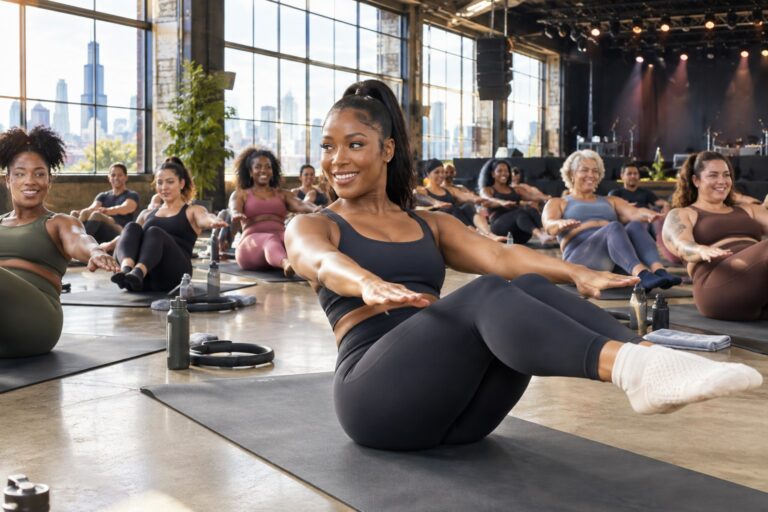
Research on Pilates and mobility in older adults shows a similar pattern in a different population, where structured, controlled movement training produced measurable improvements in balance and function.
References
Fragala, M. S., Cadore, E. L., Dorgo, S., Izquierdo, M., Kraemer, W. J., Peterson, M. D., & Ryan, E. D. (2019). Resistance training for older adults: Position statement from the National Strength and Conditioning Association. Journal of Strength and Conditioning Research, 33(8), 2019 to 2052. https://doi.org/10.1519/jsc.0000000000003230
Ramsbottom, R., Ambler, A., Potter, J., Jordan, B., Nevill, A., & Williams, C. (2004). The effect of 6 months training on leg power, balance, and functional mobility of independently living adults over 70 years old. Journal of Aging and Physical Activity, 12(4), 497 to 510. https://doi.org/10.1123/japa.12.4.497
U.S. Department of Health and Human Services. Physical Activity Guidelines for Americans, 2nd edition. Retrieved 2026 from health.gov.
Wikipedia contributors. Pedro Pascal. Retrieved 2026 from en.wikipedia.org.
This article is for general information only and is not medical or fitness advice. Details about Pedro Pascal’s personal training methods are based on public reporting and could not all be independently verified. Talk to a qualified coach or your doctor before starting a new exercise program, especially one involving loaded carries or balance work if you have an existing joint or balance condition.