
Hailey Bieber is a model, entrepreneur, and the founder of the skincare brand Rhode. She is married to Justin Bieber, and the couple is raising a young son.
Years before any of that made headlines this way, she survived something most people her age never think to prepare for.
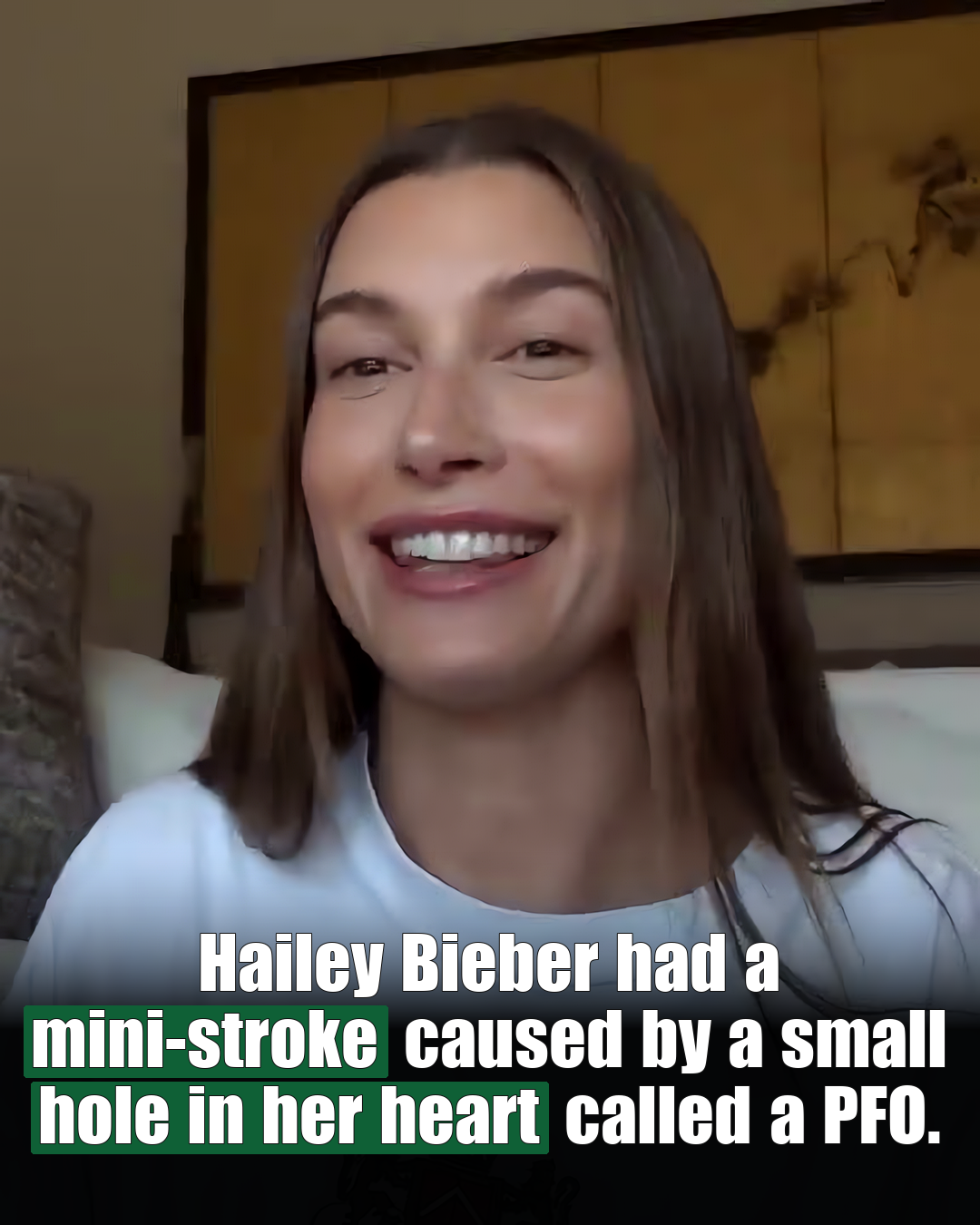
In March 2022, Bieber had what doctors call a mini stroke, caused by a small hole in her heart most people never know they have.
She has since spoken publicly, and in detail, about what happened. Her story is a useful, real world lesson in a condition that is far more common than most people realize.
What Actually Happened to Hailey Bieber
On March 10, 2022, Bieber experienced a sudden, frightening set of symptoms.
She felt a strange sensation travel from her right arm down to her fingertips, which went numb.
Then it got worse. She could not speak clearly, and the right side of her face began to droop.
The facial drooping lasted only about 30 seconds. Even so, doctors quickly identified what had happened.
A blood clot had traveled through a small opening in her heart and reached her brain.
That opening is called a patent foramen ovale, or PFO. It is a flap between the two upper chambers of the heart that is supposed to close shortly after birth.
In roughly one in four people, it never fully closes. Most of those people live their entire lives without ever knowing they have one.
Doctors classified Bieber’s PFO as a grade 5, the highest severity grade a PFO can receive.
She has said doctors identified three separate factors that likely combined to cause the clot.
She had recently started a new form of birth control, had recently recovered from COVID-19, and had just completed a long international flight from Paris.
Each of those factors on its own raises clotting risk somewhat. Together, combined with a large PFO acting as a shortcut for a clot to reach the brain, they created a real, serious event.
Bieber underwent a procedure shortly after her diagnosis to close the hole. Doctors accessed her heart through the femoral vein in her groin and placed a small closure device over the opening.
Over time, her own heart tissue grew over the device, sealing the flap permanently.
Bieber in Her Own Words
Bieber described the disorienting nature of her symptoms directly.
“I couldn’t speak, the right side of my face started drooping, I couldn’t get a sentence out,” Bieber said.
She has also explained the underlying mechanism in plain terms, in her own words.
“My blood clot actually escaped through the flap, or the hole in my heart, and it traveled to my brain,” Bieber said.
On the severity of her specific diagnosis, she has been direct.
“A grade 5 PFO, which is the highest grade that you can have. So mine was fairly large,” Bieber said.
More recently, she has reflected on how the experience changed her relationship with her own body and health.
“I am just so fascinated with the body and medicine and doctors. And I love it,” Bieber said.
She has described the lasting effect as heightened attention rather than ongoing fear, saying the experience made her “a little bit extra hyper aware” of her body in a way that shifted toward curiosity over time.
That shift matters. Plenty of people who go through a frightening health event end up avoiding the topic entirely afterward. Bieber has instead used the experience as motivation to learn more, including channeling some of that interest into how she talks about ingredients and formulation at her skincare company.
The Science Behind PFOs and Stroke
A PFO on its own is common and usually harmless. Roughly 25 percent of adults have one, and most never have a single symptom from it.
Heat is another everyday stress that puts real, temporary demand on the heart, covered in more detail in this piece on sauna use and heart health.
The picture changes for people who have already had an unexplained, or cryptogenic, stroke.
Researchers have studied whether closing a PFO after a cryptogenic stroke actually lowers the risk of another one.
One of the largest studies on this question is the RESPECT trial, led by researcher Jeffrey Saver and published in the New England Journal of Medicine in 2017.
Researchers followed 980 patients with an average age of about 46, comparing PFO closure to medical therapy with blood thinning medication alone.
Over a median follow up of nearly six years, patients who had their PFO closed had a lower rate of recurrent stroke.
The closure group had 18 recurrent strokes. The medical therapy group had 28.
That difference was even larger for strokes of unknown cause specifically, the exact category Bieber’s stroke fell into.
The trial did find one real tradeoff. Blood clots in the veins, called venous thromboembolism, were somewhat more common in the closure group than the medication only group.
That is part of why this decision is made carefully, case by case, rather than as an automatic response to any PFO.
Other major trials on this same question, including the French CLOSE trial, found similar results.
Patients who had already had a cryptogenic stroke and a PFO with certain higher risk features benefited more from closure than from medication alone.
Together, these studies changed how many cardiologists approach PFO closure after a first unexplained stroke, especially in younger patients.
Age matters here too. These findings apply most strongly to younger and middle aged adults, since the risk calculation looks different for older patients who often have other, more likely explanations for a stroke.
What This Means for the General Population
Most people with a PFO will never need to think about it. Having one is not, on its own, a reason to seek treatment or worry.
The combination of risk factors matters far more than any single one. A young, generally healthy person with a PFO who also starts hormonal birth control, gets sick, and takes a long flight is not automatically at high risk.
Bieber’s case shows how several ordinary, individually low risk factors can occasionally line up in a way that leads to a serious event.
That is a useful reminder, not a reason for panic. Long flights, new medications, and recent illness are extremely common, and the vast majority of people who experience all three at once never have a clotting event.
What matters more than any single risk factor is recognizing symptoms quickly if something does go wrong.
Who Should Talk to a Doctor First
Anyone who experiences sudden facial drooping, arm weakness, or difficulty speaking, even briefly, needs emergency medical attention right away.
Doctors and stroke organizations use a simple acronym to help people recognize these signs quickly, known as FAST.
Face drooping, arm weakness, and speech difficulty are the core three signs. Time refers to how urgently a person needs to call emergency services once those signs appear.
Symptoms that resolve on their own, the way Bieber’s facial drooping did after 30 seconds, are not a reason to wait and see.
A short episode can still signal a real stroke or a warning sign of one to come.
People starting hormonal birth control who also smoke, have a history of migraines with aura, or have a known clotting disorder should discuss their personal stroke risk with a doctor beforehand.
Anyone diagnosed with a PFO after a stroke should have a detailed conversation with a cardiologist and neurologist together, since the decision to close it involves weighing real benefits against real procedural risks.
A PFO discovered incidentally, with no history of stroke or clotting event, generally does not need treatment.
That conversation is still worth having with a primary care doctor for peace of mind.
A Practical Guide to Reducing Your Own Risk
Learn the FAST warning signs and share them with family members, especially older relatives and anyone with existing heart or clotting risk factors.
A simple at home check like the four flights of stairs test can also offer a rough, informal read on general cardiovascular fitness, though it is not a substitute for a real medical evaluation.
Move and stretch periodically during long flights or car rides, since prolonged immobility is a known contributor to clot formation.
Stay well hydrated during travel, since dehydration can thicken blood and add to clotting risk on long trips.
Tell your doctor about your full picture, not just one symptom at a time, including any new medications, recent illnesses, and upcoming travel plans.
Know your own family history of stroke, clotting disorders, or unexplained neurological events, since that history can change how a doctor weighs your individual risk.
If you ever experience sudden numbness, facial drooping, or trouble speaking, call emergency services immediately rather than waiting to see if it passes.
Acting within the first few hours of a stroke can meaningfully change long term outcomes, which is exactly why the FAST framework exists in the first place.
Bieber’s story stands out because she was young, generally healthy, and had no obvious warning signs before that day.
That is exactly why awareness matters for everyone, not just people with a known heart condition.
A hole in the heart does not announce itself. Most of the people walking around with a PFO right now will never find out, and that is normal. The goal is not to fear a hidden condition. It is to know what to do in the rare case something like Bieber’s story happens to you or someone near you.
References
Saver, J. L., et al. (2017). Long-Term Outcomes of Patent Foramen Ovale Closure or Medical Therapy after Stroke. New England Journal of Medicine.
TODAY, “Hailey Bieber Explains What Caused her Stroke and Latest Heart Procedure.”
Just Jared, “Hailey Bieber Says She’s ‘Hyper-Aware’ of Her Health Following Mini-Stroke & Heart Surgery.”
American Stroke Association, stroke warning signs and the FAST framework.
This article is for general information only. It is not personal medical advice. Anyone experiencing possible stroke symptoms should call emergency services immediately. Anyone with questions about a PFO diagnosis or stroke risk should talk directly with a cardiologist or neurologist.