
Snoop Dogg built a decades-long career as one of hip hop’s most recognizable voices.
Born Calvin Cordozar Broadus Jr. on October 20, 1971, he is 54 years old today.
He is still touring, recording, and showing up everywhere from awards shows to sports broadcasts.
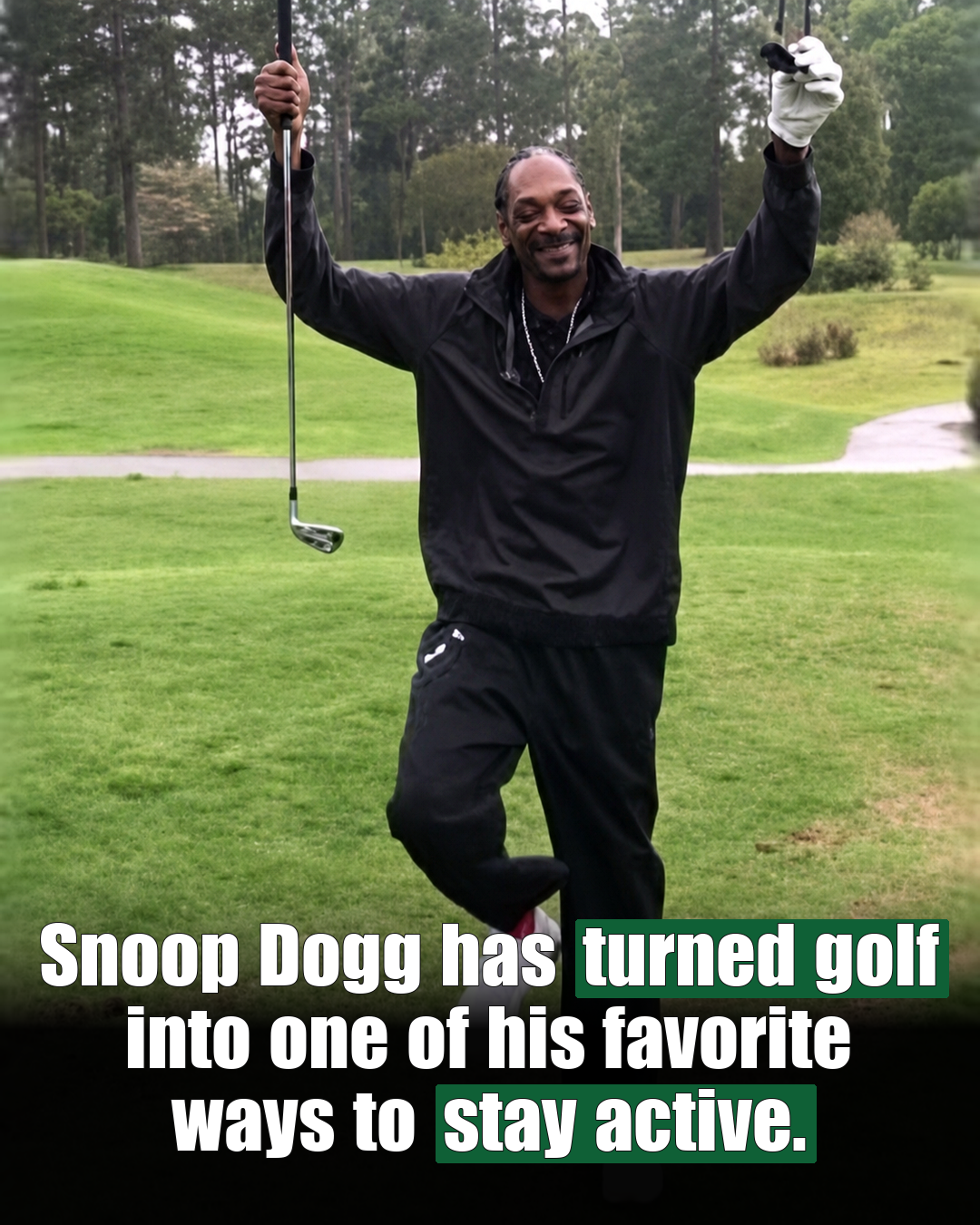
These days, one of his favorite ways to spend a free afternoon has nothing to do with a recording studio.
It involves eighteen holes, a set of clubs, and a group of friends.
It is a low-key habit compared to a stadium tour, but it may end up telling a more useful story about staying active later in life than anything on a concert stage ever could.
What Actually Happened
Snoop Dogg has become a familiar face on golf courses over the past several years.
He has played in celebrity pro-am events and appeared at the Masters.
He has even tried golf commentary, teaming up with actor Kevin Hart to call a broadcast together.
He has described himself as still learning the game rather than treating it like something he has fully mastered.
That kind of beginner’s mindset shows up again and again in people who stick with an activity for years.
Staying open to instruction well into your 50s is a habit that people who quit early tend to skip.
Part of that learning process included a private lesson with PGA teaching professional Seema Sadekar.
After that session, he talked about feeling a new level of connection with the sport.
It was enough to shift golf from a casual pastime into something closer to a real hobby.
What stands out about his golf habit is not that it is intense.
It is that it is consistent and social.
He clearly enjoys it enough to keep coming back to it, and that combination turns out to matter more than raw intensity for most people trying to stay active over the long run.
In His Own Words
Snoop has talked about golf mostly in terms of connection and enjoyment rather than fitness goals.
“Just getting to spend time with the boys. It’s nice to hit the course and have some time off, laugh, make a friendly competition out of it.”
He has also described his approach to learning the game as relaxed rather than obsessive.
“I like to have fun with it and go with the flow.”
After working with a golf pro, he described a shift in how seriously he was taking his progress on the course.
“I really got it going on the course. I might just have the golf bug now.”
Snoop has also talked more broadly about how he thinks about getting older, a mindset that lines up naturally with picking up a lower-impact sport in his 50s.
“You got to treat yourself like fine wine. They say fine wine, it gets better over time.”
He has connected that outlook directly to how he tries to live day to day, focusing less on age itself and more on what he does with the time he has.
“Every precious day you here to actually live another day, you should make the most of it. That’s what I focus on the most, trying to be the best version of me every day.”
The Science Behind Golf as Exercise
Golf gets dismissed sometimes as a leisurely activity rather than real exercise. The research tells a more interesting story.
A large study published in the Scandinavian Journal of Medicine and Science in Sports followed golfers in Sweden and compared their health outcomes to the general population.
The researchers, led by Bahman Farahmand, found that golfers had a 40 percent lower mortality rate than non-golfers of similar age and background.
That difference translated to roughly five additional years of life expectancy, a gap the researchers attributed largely to the sustained walking and moderate activity built into a normal round.
Walking is a big part of why. A full round covers anywhere from four to six miles depending on the course.
Players who walk rather than ride typically log more than 7,000 steps in a single round.
That is well beyond what most people log on an average desk-bound day.
Research on daily step counts and long-term health suggests that gap matters more than it might seem.
Golf also burns real calories. Estimates commonly cited by sports medicine sources put a walked 18-hole round at 1,200 to 1,600 calories for an average adult, compared to roughly 500 calories for a round played from a cart.
The golf swing itself is not a passive motion either.
Research on muscle activity during the swing tells a similar story.
A widely cited study by McHardy and Pollard, published in the British Journal of Sports Medicine, looked closely at this question.
The researchers found that the hips, torso, and shoulders generate substantial, rapid muscle activation through the downswing.
That rotational demand is part of why golf shows up in some physical therapy and older-adult exercise programs focused on core strength and balance.
Golf’s low-impact nature also matters for an aging body. Unlike running or jumping sports, walking a golf course does not repeatedly slam joints against hard pavement, which is one reason doctors sometimes suggest it to patients managing knee or hip concerns who still want to stay active outdoors.
None of that makes golf a substitute for structured resistance training. But it does mean the sport asks more of the body, particularly the core and hips, than its relaxed reputation suggests.
What This Means for Everyday Readers
Nine holes alone can meet a full day’s worth of the government’s recommended 30 minutes of moderate aerobic activity, according to physicians who study the sport’s health impact.
Eighteen holes, walked rather than ridden, typically takes four to five hours. That single outing can cover well over the recommended 150 weekly minutes of activity in one afternoon.
That does not mean golf replaces every other kind of exercise.
It has real limits, especially around building strength in the arms and chest. A golf swing works mostly the hips, core, and shoulders in a specific rotational pattern rather than pushing or pulling heavy loads.
What golf does offer, especially for people who find gyms boring or intimidating, is worth taking seriously.
It is a legitimate form of moderate aerobic exercise wrapped inside something people actually want to keep doing.
Snoop Dogg’s own framing points at exactly why that matters.
He describes golf as really being about spending time with friends. Exercise that feels like a chore rarely lasts. Exercise that feels like a hangout tends to stick, and adherence over months and years is what actually produces the health outcomes researchers measure.
Common Mistakes People Make With Golf as Exercise
The most common mistake is riding a cart for the entire round and assuming it still counts as meaningful exercise.
Riding drops the calorie burn dramatically. It also removes almost all of the walking benefit that drives golf’s health numbers in the research.
Another mistake is skipping any kind of warm up before swinging.
The golf swing is a fast, forceful, rotational movement. Starting cold raises the risk of back and shoulder strain, especially for beginners or anyone returning to the sport after time away.
Some golfers also treat the sport as their only form of exercise.
Skipping strength training entirely is a missed opportunity. Golf’s rotational demands benefit from a body that also has some baseline strength in the core, hips, and shoulders built through other kinds of training during the week.
Carrying a heavy bag with poor form is another common issue.
Always carrying the bag on the same shoulder, round after round, can lead to shoulder or back discomfort over time.
Alternating sides, or switching to a cart bag with a proper strap, distributes that load more evenly across a full round.
How to Get the Most Health Benefit From Golf
1. Walk the course when you can, instead of riding, if your health and the course allow it. Walking is where most of the aerobic and calorie-burning benefit actually comes from.
2. Warm up before you swing. Five to ten minutes of light movement and a few slow practice swings can meaningfully lower injury risk.
3. Build some rotational core strength off the course too. Simple exercises like standing cable rotations or medicine ball twists support the same muscles used in the swing.
4. Alternate which shoulder carries your bag, or switch to a push cart if carrying becomes uncomfortable over a full round.
5. Stay hydrated and wear sun protection. A full 18-hole round outdoors can run four to five hours, often in direct sun.
6. Play with people you actually enjoy being around. The social side is not just a nice bonus. It is a big part of why golf tends to have unusually high long-term adherence compared to solo workouts.
7. Take a lesson if you are new to the game, the same step Snoop Dogg took with a PGA pro. If you decide a longer-term coach makes sense, the same questions worth asking before hiring any fitness professional apply to golf instructors too.
8. Treat golf as one part of a broader activity routine, not your only source of movement. That matters especially if you also want the strength and flexibility benefits that golf alone does not fully provide.
References
- Men’s Journal, “Snoop Dogg on Golf, The Masters, and Elevating Gin and Juice”
- NBC Insider, “Snoop Dogg Has a Profound Philosophy About Aging”
- Golfmagic, “Watch: Snoop Dogg and Kevin Hart give golf commentary a try!”
- Farahmand, B., Broman, G., De Faire, U., Vagero, D., & Ahlbom, A. (2009). “Golf: a game of life and death, reduced mortality in Swedish golf players.” Scandinavian Journal of Medicine & Science in Sports, 19(3), 419-424.
- McHardy, A., & Pollard, H. (2005). “Muscle activity during the golf swing.” British Journal of Sports Medicine, 39(11), 799-804.
- UW Medicine, Right as Rain, “How to Make Golf a Good Workout”
This article is for general information only. It is not personal fitness or medical advice. Talk with a doctor before starting a new physical activity, especially if you have an existing joint, back, or heart condition.