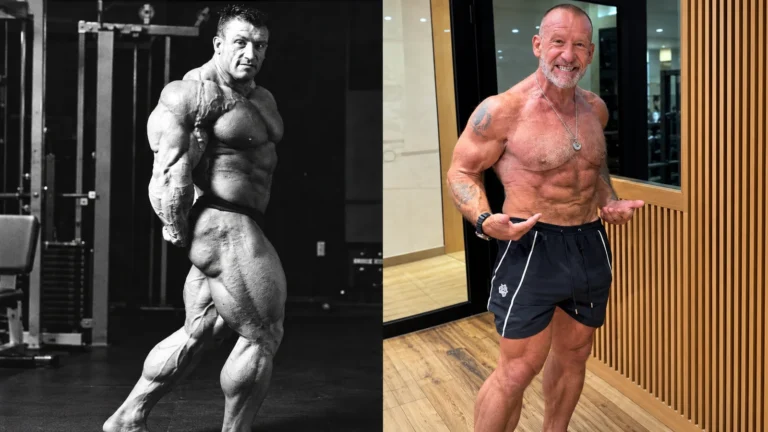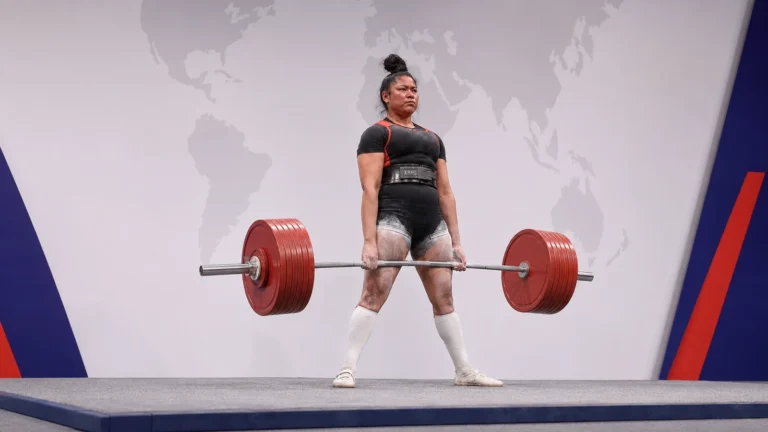

Image context: The opening gym scene is an editorial illustration, not an identified research participant or a verified exercise demonstration.
Power training for women in midlife raises a useful question: what is the purpose of a change to your routine? Keep the comparison, the people studied and the outcome together.
An interview with Eugene Teo on Dr. Vonda Wright’s channel prompted this article. The discussion below checks published research rather than treating the interview as a tested program.
Power and Strength in the Research
Power combines force and movement speed. The 2022 review compared quick lifting with controlled lowering against traditional controlled lifting and lowering.
Twenty trials included 566 healthy, community-living adults aged 60 or older; 65% were women.
Physical function modestly favored power training in 13 trials with 383 participants, with low-certainty evidence.
This was not a midlife-only study or a test of adding power work to an existing strength routine.
What the Aging Review Adds
Byrne and colleagues’ 2016 review found muscle power marginally more predictive of physical function than strength. An association between two measurements is different from testing which training plan causes better results.
The authors also identified 31 power-training studies, with small samples and incomplete intervention reporting. Fewer than one in five were judged at low risk of bias, and long-term maintenance remained an important gap.

Keep Menopause Context Separate
Wright and colleagues’ 2024 clinical review proposed the term “musculoskeletal syndrome of menopause.” It describes symptoms and changes associated with estrogen loss, including joint pain and changes in muscle and bone.
It is not a randomized test of a power-training program. It cannot establish that fast lifting reverses the whole symptom cluster or explain an individual woman’s new pain or weakness.
Choose the Question Before Changing the Routine
“I want more power” needs a practical meaning. You might be interested in a gym movement, a sport or an everyday task, and those goals need not use the same measure.
Write the change you want in your own words before selecting an exercise. That gives a coach a clearer starting point than copying an appealing movement from an illustration.
- A training goal: Which familiar exercise or movement would you like to perform differently?
- A daily-life goal: Which task feels difficult, and what makes it difficult?
- A practical constraint: What equipment, time, support or health restriction needs to be considered?
New or persistent symptoms deserve appropriate assessment rather than an assumption that more speed is the missing ingredient. An article cannot decide whether a change reflects technique, a training issue or a medical problem.
A Practical Plan-Review Example
The following is an editorial discussion example, not a study-tested workout or a personal starting prescription. Bring an existing routine and one movement goal to a qualified exercise professional.
For example, someone already familiar with a supported lifting exercise could ask whether a different movement intent fits their goal. The useful answer includes how to perform and observe the movement, rather than only a number on the weight stack.
- Name the purpose. Ask what the proposed exercise is intended to improve and how that relates to your goal.
- Clarify the movement. Ask which part should be quicker, which part stays controlled and how the variation will be taught.
- Clarify the dose. Ask how resistance, repetitions, rest and weekly placement will be selected for your experience and current routine.
- Agree on a review. Ask what observations would lead to an adjustment and who to contact if pain, dizziness or another concerning symptom occurs.
A familiar exercise can still need adaptation when the intended speed changes. This example does not label throws, jumps or step-ups as universally low-risk entry points.
Keep useful parts of an existing routine while discussing the purpose of a proposed change. A paper’s average result does not supply a reason to replace every strength session.
Keep a Short Decision Record
Use four fields: goal / proposed change / reason for the change / question still unanswered. Record the actual advice you receive rather than filling the gaps with a generic online schedule.
For instance, “move faster” is incomplete until the exercise, movement cue and method of review are clear. You do not need to test a maximum lift or reproduce a research assessment to prepare these questions.
Our guide to men versus women strength training addresses sex-based programming claims. Our separate menopause muscle-loss guide covers nutrition and muscle-health evidence.
Watch the Original Video
References and Review Scope
Balachandran, A. T., Steele, J., Angielczyk, D., Belio, M., Schoenfeld, B. J., Quiles, N., Askin, N., & Abou-Setta, A. M. (2022). Comparison of power training vs traditional strength training on physical function in older adults: A systematic review and meta-analysis. JAMA Network Open, 5(5), e2211623. PubMed abstract.
Byrne, C., Faure, C., Keene, D. J., & Lamb, S. E. (2016). Ageing, muscle power and physical function: A systematic review and implications for pragmatic training interventions. Sports Medicine, 46(9), 1311 to 1332. PubMed abstract.
Wright, V. J., Schwartzman, J. D., Itinoche, R., & Wittstein, J. (2024). The musculoskeletal syndrome of menopause. Climacteric, 27(5), 466 to 472. PubMed abstract.
These summaries use complete published abstracts, not a fresh review of all underlying manuscripts.
The original video’s title, channel and description were checked. The study comparisons above do not rely on its unreviewed exercise demonstrations.
Medical disclaimer: This article provides general fitness information, not medical advice or an individual training plan. If you have an injury, ongoing pain or a medical condition, ask a qualified healthcare professional which activities are appropriate for you.