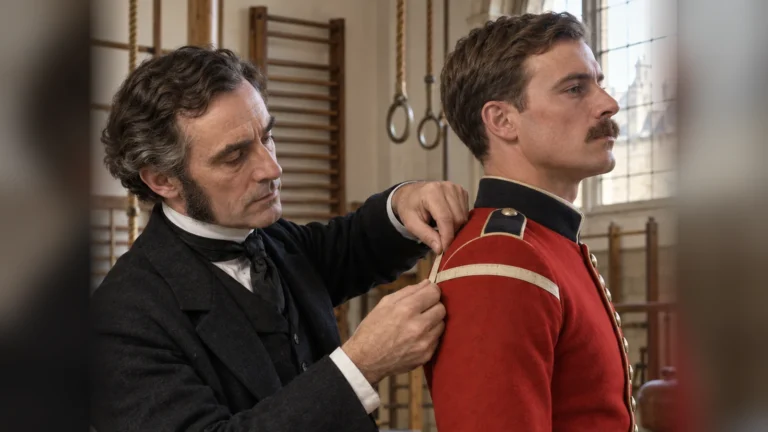

Aaron Pierre spent most of his screen time in Rebel Ridge either running, fighting, or absorbing hits, and the role asked for a body that could hold up to all three.
The 2024 Netflix action thriller, directed by Jeremy Saulnier, cast Pierre as Terry Richmond, a former Marine.
Richmond gets pulled into a fight against a corrupt small town police department after officers seize the cash he needs to bail out his cousin.
Pierre stepped into the role after John Boyega left the production for family reasons, and the physical bar was already set high.
Rebel Ridge leans on close quarters combat sequences throughout. Pierre’s character uses restraint and control rather than brute force, a choice that made the fight choreography more technical, not less demanding.
Pierre has talked about the toll the role took physically. He has said there was not one day of filming Rebel Ridge that passed without a bruise or a cut, a detail that says as much about the training that prepared him for it as it does about the shoot itself.
Pierre has built a fast rising career well beyond that single role. He voiced young Mufasa in Disney’s Mufasa: The Lion King in 2024. He played Malcolm X in the National Geographic series Genius: MLK/X the same year, and he was cast as John Stewart, the Green Lantern, in an upcoming DC Studios series. That range, from animated voice work to a civil rights drama to an action franchise, means his physical training demands shift significantly from project to project.
What Pierre’s Training Reportedly Involved
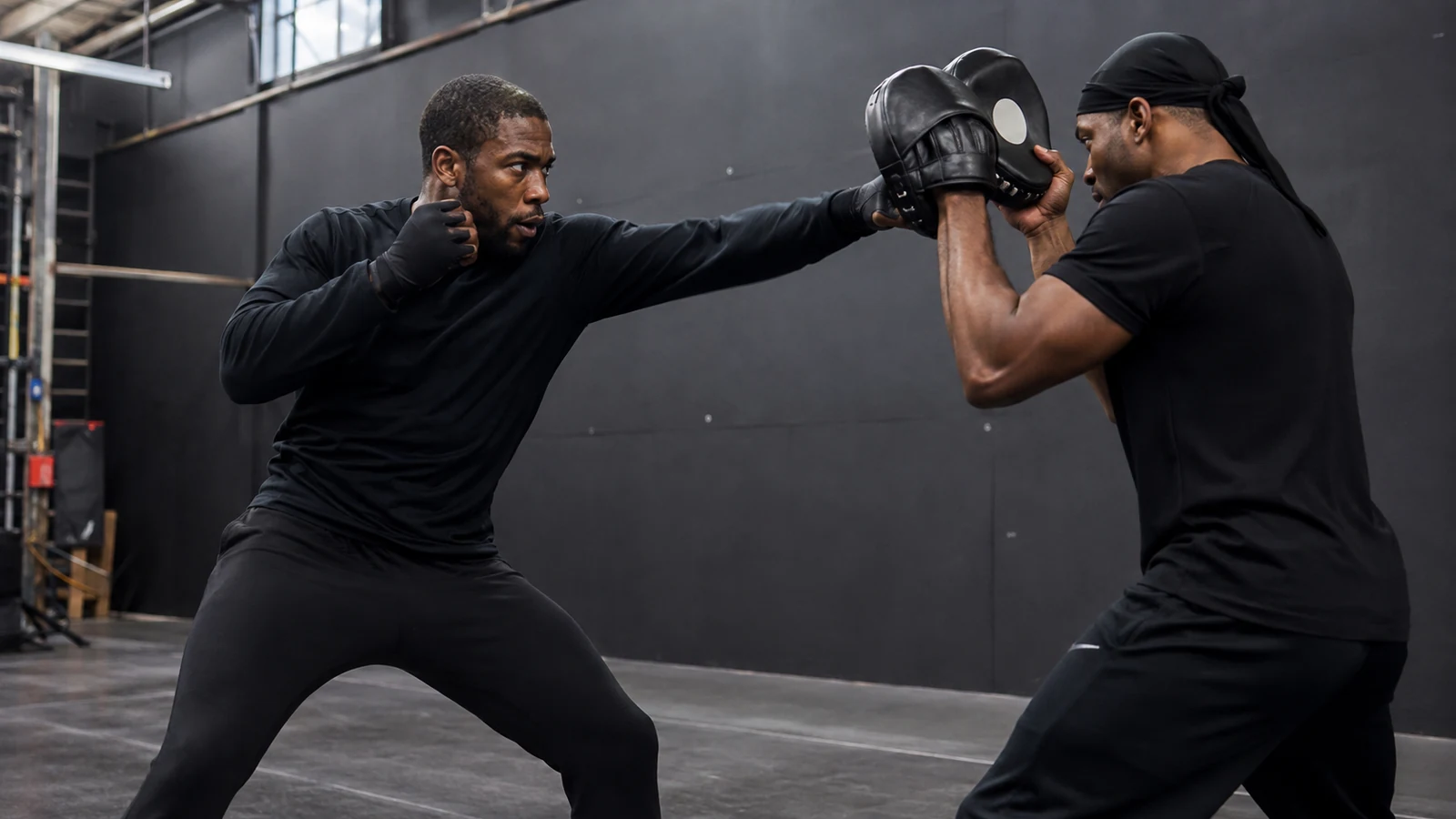
Rather than training to add size, Pierre’s preparation reportedly leaned on calisthenics and martial arts drills, an approach built around control and explosive movement instead of maximum muscle mass.
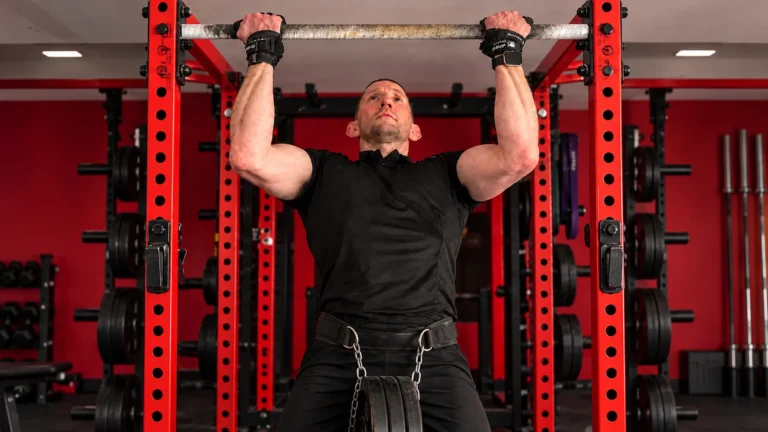
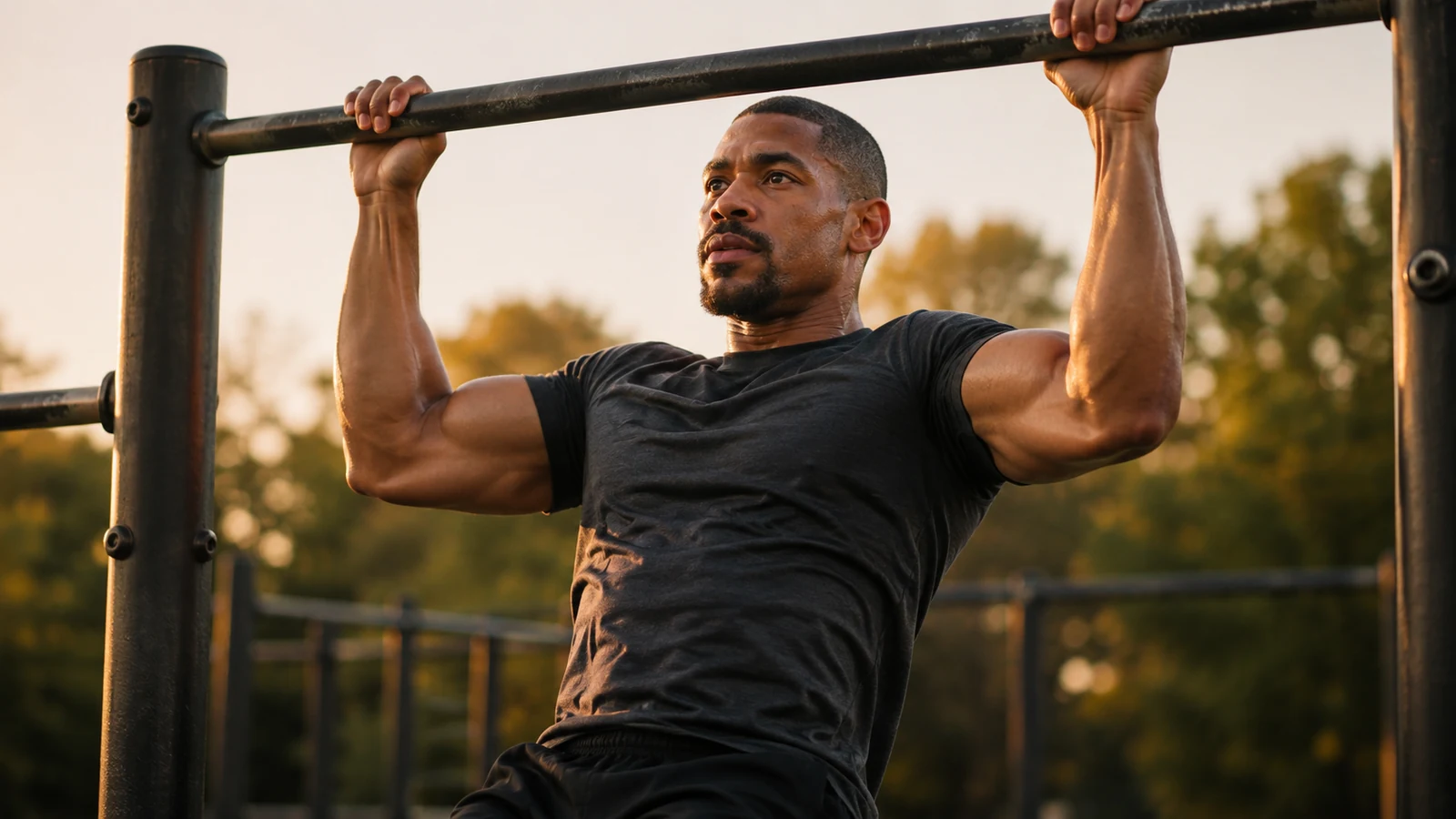
Pull-ups, dips, and other bodyweight strength work were reportedly central to building the kind of functional power his fight choreography needed.
That approach lines up with what is known about Pierre’s broader athletic background. He competed in sprinting as a young athlete, idolizing sprinter Maurice Greene before shifting his focus to acting as a teenager. As an adult, he took up boxing in 2016 and Brazilian jiu-jitsu in 2019, later winning his first jiu-jitsu tournament in 2023. That combination, sprint speed, boxing, and grappling, builds a very different kind of athleticism than pure weightlifting does.
Sprinting in particular builds explosive power, the ability to generate a large amount of force in a very short amount of time.
That quality transfers directly to the kind of quick, controlled bursts a fight scene needs, whether the movement is a strike, a takedown escape, or a sudden change of direction.
A background in track carries over into acting in ways that are easy to overlook.
Martial arts conditioning added the coordination and speed his fight scenes needed to look convincing on screen.
Fight choreography is not just about strength. It requires precise timing, spatial awareness, and the ability to move explosively while staying controlled enough to protect a scene partner.
Pierre’s own words about the shoot back this up. A day of filming that reliably leaves bruises and cuts, even with careful choreography and padding, points to a physically taxing production schedule where the margin for being unprepared was small. Preparing the body ahead of time is what allows an actor to absorb that kind of repeated physical toll across weeks of filming without breaking down.
A Wider Shift in How Actors Train for Physical Roles
Pierre’s approach reflects something broader happening in how actors prepare for physically demanding parts. For years, the standard formula for an action role leaned heavily on bulk, chasing visible size through traditional bodybuilding style training. That is shifting toward movement quality, functional strength, and skills that read as believable on camera rather than just impressive in a photo.
Calisthenics and martial arts both reward that kind of training. A pull-up or a dip demonstrates real, usable strength relative to bodyweight, which tends to translate more directly to on screen physicality than an isolated bicep curl ever could. Boxing and jiu-jitsu build the reflexes, footwork, and controlled aggression that a fight scene needs to look real rather than choreographed.
None of this means traditional weight training has disappeared from Hollywood preparation. It means a wider range of tools is now considered normal, and the choice of tools tends to follow the specific demands of the role rather than a single default approach.
The Evidence Behind Calisthenics and Martial Arts Training
Bodyweight training has a long history in strength and conditioning, and it holds up well against more equipment heavy approaches for building functional strength.
A review in the Strength and Conditioning Journal describes calisthenics as foundational training that develops relative strength, meaning strength measured against a person’s own bodyweight, which carries over directly to movement skills like the ones an action role demands (Harrison, 2010).
Brazilian jiu-jitsu, one of the disciplines in Pierre’s training background, carries its own well documented physical demands.
A systematic review in Sports Medicine Open examined the physical and physiological profiles of BJJ athletes.
It found the sport builds a distinct combination of grip endurance, anaerobic capacity, and full body strength, driven by the repeated grappling exchanges that define competition (Andreato, Díaz-Lara, Andrade, & Branco, 2017).
That combination of endurance and explosive strength maps closely onto what a physically demanding action role requires, the ability to perform intense bursts of effort repeatedly across a long filming day.
How This Compares to General Fitness Guidance
Most people training for general fitness rather than a film role do not need Pierre’s specific combination of boxing, jiu-jitsu, and calisthenics.
The underlying principle still holds value for anyone building a well rounded routine.
General strength guidelines recommend building strength across major movement patterns, not just chasing size in a few visible muscles.
Bodyweight training, in particular, is accessible and requires little to no equipment. It also builds real, transferable strength that supports everyday movement, not just how a person looks.
Martial arts training, even at a casual, non competitive level, adds a conditioning and coordination benefit that pure strength training does not replicate on its own.
Pierre’s training is an extreme, professional version of a very ordinary idea. Strength that actually functions in movement tends to serve a person better than strength built in isolation.
Common Mistakes People Make With Calisthenics Training
A few mistakes come up often for people building a calisthenics based routine on their own.
The first is skipping progressions and attempting advanced bodyweight skills, like one arm push-ups or muscle ups, before building a strength base with the basics.
Bodyweight training scales through leverage and difficulty, not just added weight, and skipping steps raises injury risk significantly.
The second is neglecting pulling movements in favor of pushing ones. Push-ups and dips are more familiar to most people than pull-ups and rows, and that leads to muscular imbalances between the front and back of the upper body over time.
The third is starting martial arts training, especially anything involving sparring or live grappling, without proper instruction.
Boxing and jiu-jitsu both carry real injury risk when technique is missing, and a qualified instructor matters far more in these disciplines than in most other forms of exercise.
The fourth is underestimating recovery needs. Combining strength training with martial arts conditioning, the way Pierre’s routine reportedly does, adds up to a heavy overall training load, and recovery has to scale up to match it.
The fifth is training only strength and conditioning while ignoring the actual skill practice that makes martial arts effective.
Technique work, drilling the same movement patterns repeatedly with correct form, matters as much as the conditioning that supports it, if not more.
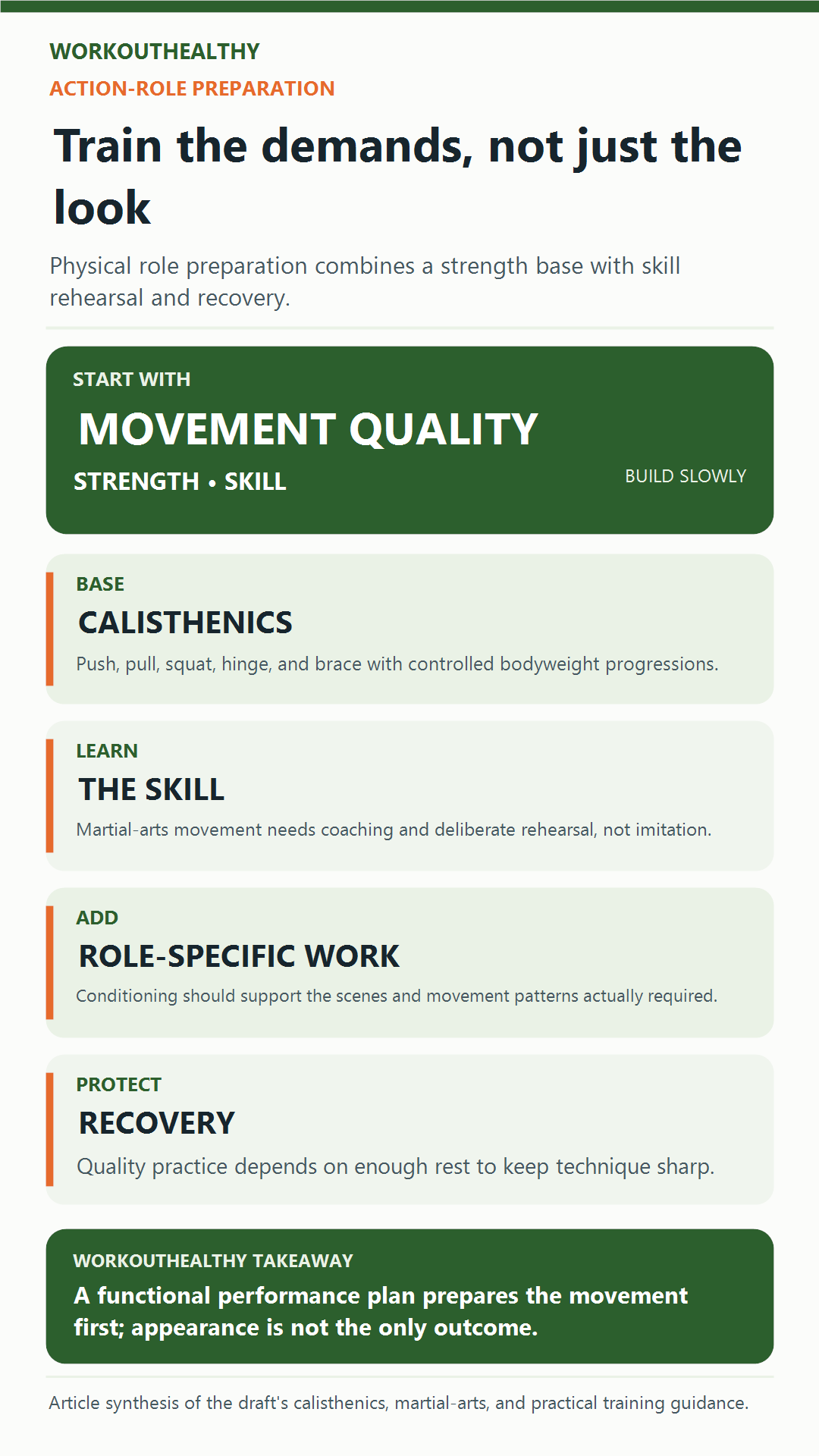
A Practical Way to Start Calisthenics Training
Building strength the way Pierre’s training reportedly emphasizes does not require a film role or a stunt team.
It starts with a handful of fundamental bodyweight movements done consistently.
Push-ups and their progressions, from an incline version against a wall or bench up to a full floor push-up, build pressing strength and core control together.
Pull-ups or their assisted versions, using a resistance band or an assisted machine, build the pulling strength that balances a routine out.
Bodyweight squats and lunges build lower body strength along with the single leg stability that supports agility and quick direction changes.
Planks and hollow body holds build the core control that connects upper and lower body movement, the same quality that makes a fight sequence, or a sprint, look coordinated rather than stiff.
Progress in a bodyweight routine usually comes from adding reps or slowing down a movement before it comes from adding difficulty.
Getting five clean push-ups before chasing ten, and getting ten clean ones before adding a harder variation, keeps form intact and lowers injury risk along the way.
For anyone interested in adding a martial arts element, starting with a structured beginner class is the safest way in.
Whether the choice is boxing, jiu-jitsu, or another discipline, working with a certified instructor matters.
These are skill based disciplines first and conditioning tools second, and learning proper technique protects against most of the injury risk that comes with training them alone.
References
Harrison, J. S. (2010). Bodyweight training: A return to basics. Strength & Conditioning Journal, 32(2), 52-55. https://doi.org/10.1519/ssc.0b013e3181d5575c
Andreato, L. V., Díaz-Lara, F. J., Andrade, A., & Branco, B. H. M. (2017). Physical and physiological profiles of Brazilian jiu-jitsu athletes: A systematic review. Sports Medicine Open, 3(1), 9. https://doi.org/10.1186/s40798-016-0069-5
This article is for general information and is not personalized medical or fitness advice. Martial arts training, including boxing and Brazilian jiu-jitsu, carries a real risk of injury and should be learned under qualified instruction. Talk to a doctor before starting any new exercise program, especially one involving contact sport or high intensity training.