
The Big Promise in the Video
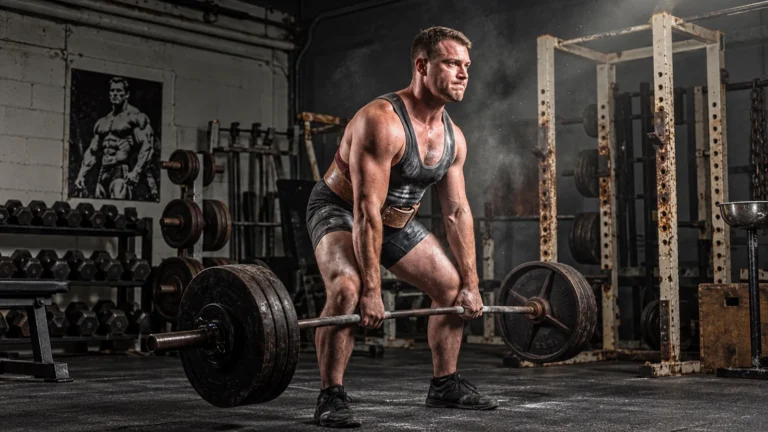
A YouTube video called Lose Belly Fat Fast promises a full body fat loss workout you can do at home with no equipment.
The video comes from the channel Vinod Weight Loss. Its title makes a claim worth checking against the evidence.
That claim is really about spot reduction, the old fitness idea that exercising one body part burns fat from that exact spot first.
This article checks that claim against real research, and looks at what actually drives fat loss across your whole body, belly included.
What the Spot Reduction Research Actually Shows
Scientists have tested the spot reduction idea many times over several decades. Most of the classic studies found it does not work the way people hope.
In one well known study, researchers named Kostek and colleagues had healthy adults train only one arm with resistance exercise for twelve weeks.
They measured fat under the skin in the trained arm, the untrained arm, and other body sites using detailed scans.
The training built real muscle in the trained arm, but it did not cause extra fat loss there compared with the rest of the body.
That study was published in the journal Medicine and Science in Sports and Exercise in 2007, and it remains one of the most cited pieces of evidence against spot reduction.
More recent studies complicate the picture a little.
A 2021 study by Paoli and colleagues had one group do a mixed circuit that paired ab and triceps exercises with cardio.
After eight weeks, the group that did the mixed circuit training showed a measurable drop in abdominal fat thickness, but no real change in triceps fat.
That is a small hint that something regional might be happening, at least for the abdomen specifically.
A separate 2023 study by Brobakken and colleagues found something similar using abdominal endurance exercise instead of ordinary running, and the authors argued their data showed spot reduction exists.
Other exercise scientists have pushed back on that conclusion.
Independent reviewers have called the leap from that data to a firm yes on spot reduction too strong for what was actually measured.
Losing fat from one exact spot on command is not something exercise science can currently promise, no matter which muscle you train first.
So where does that leave the video’s claim?
The honest answer is that the research is mixed, small, and far from a clear yes.
A couple of small studies hint at a modest regional effect for the abdomen under specific conditions.
Most of the larger body of research still does not support it.
Nothing in this research supports the idea that you can lose belly fat fast just by training your midsection, at home or anywhere else.
Why Full Body Workouts and Calorie Balance Drive Fat Loss Instead
If targeting one spot is not reliable, what actually works? The research points strongly toward two things working together.
The first is an overall calorie deficit, meaning you burn somewhat more energy than you eat over time.
The second is training that uses a lot of muscle at once, since that raises how much energy your whole session and your whole day cost.
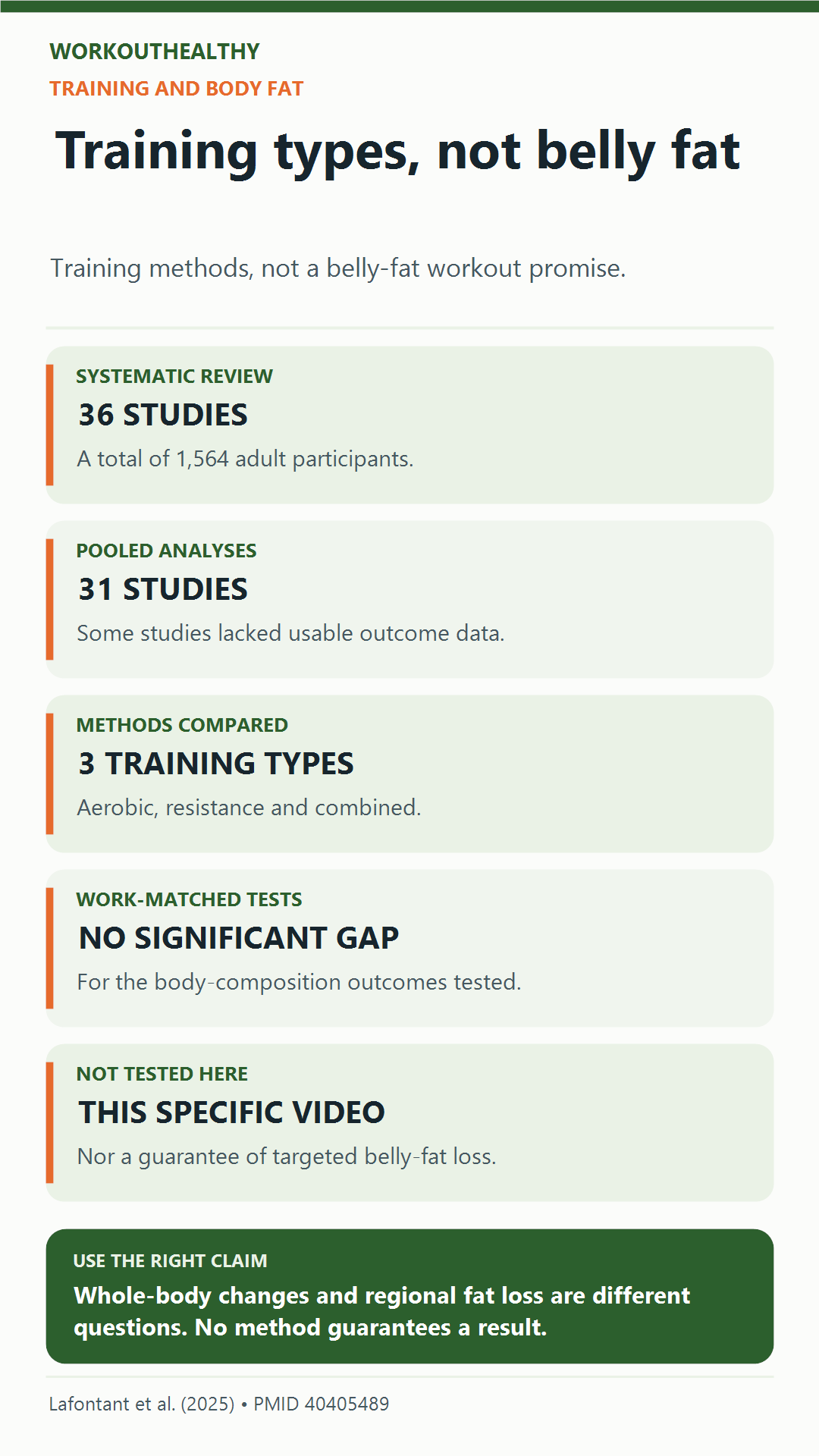
A large 2025 review by Lafontant and colleagues pooled the results of many separate studies into one combined analysis, a method scientists call a meta analysis.
It compared resistance training, aerobic training, and a mix of both for fat loss.
Aerobic and combined training edged out resistance training alone for reducing total fat mass in that analysis.
However, when the researchers matched total training workload across groups, the differences between methods mostly disappeared.
Their conclusion was that overall workload and duration mattered more than which specific method a person chose.
That is consistent with older evidence too.
A full body circuit and a longer run can produce similar fat loss when they use similar amounts of energy and are done consistently.
This is also why simple, repeatable cardio still earns a place in a fat loss plan.
Something as basic as jumping rope for calorie burn can add up over a week when it is done regularly alongside strength work.
A full body, no equipment routine like the one in the source video can absolutely help someone lose fat, just not because it targets the belly specifically.
It helps because moves like squats, lunges, and push ups use large muscle groups, which burns more total energy than isolated ab work would.
What the Evidence Does Not Prove
It is worth being just as honest about what the research does not show, since overclaiming in the other direction is its own mistake.
The evidence does not prove that any single workout format is the uniquely best one for fat loss.
Running, cycling, swimming, bodyweight circuits, and resistance training all show up as effective in the research when total effort and consistency are similar.
Explosive, full body movements can be part of an effective routine too.
An exercise like a box jump uses the same large muscle groups a fat loss workout depends on.
In fact, the research on whether box jumps build muscle shows the same pattern seen throughout this topic.
The effects are modest and real, not a single miracle exercise that beats everything else.
The research also does not prove that everyone loses fat from the same place first.
Genetics plays a real role in where your body stores fat and, it appears, where it tends to release fat from first.
A 2021 genetics review by Sun, Kovacs, and Guiu Jurado found that hereditary factors explain a large share of the variation in fat distribution between people.
The same review found that this pattern differs somewhat by sex and by ancestry, independent of a person’s total body fat level.
Where your body chooses to release fat first has more to do with your genes and hormones than with which exercises you happen to choose.
In plain terms, two people can follow the exact same program and lose fat from noticeably different places, and neither one is doing it wrong.
Common Mistakes People Make Chasing Belly Fat
A few patterns show up again and again in people trying to lose belly fat specifically.
The first mistake is doing hundreds of daily crunches or sit ups while ignoring diet and total activity entirely.
Ab exercises build the muscle underneath the fat, which matters for strength, but they burn relatively few calories on their own.
The second mistake is cutting calories too aggressively in search of faster results.
Very low calorie crash diets often cause the body to lose muscle along with fat, which can leave someone lighter but softer looking, not leaner looking.
This is exactly the trap covered in an earlier look at why some people lose weight and muscle mass together, which is rarely the outcome anyone actually wants.
The third mistake is expecting a fast timeline. Real, lasting fat loss tends to happen gradually over weeks and months, not days.
The fourth mistake is skipping resistance training entirely and doing only cardio, which can make it harder to hold onto muscle while losing weight.
The fifth mistake is judging progress purely by how the belly looks in a mirror from one day to the next, when normal water retention and digestion can hide real progress for days at a time.
Who Should Check With a Doctor First
A home workout routine like the one in the video is not risk free for everyone.
Anyone with a heart condition, uncontrolled high blood pressure, or a history of fainting during exercise should talk to a doctor before starting a new intense routine.
People who are pregnant or recently gave birth should also check in with a doctor or physical therapist first, since core exercises may need to be modified.
Anyone recovering from a hernia, abdominal surgery, or a back injury should get clearance before doing planks, sit ups, or similar core focused moves.
People new to exercise, or returning after a long break, generally do fine easing in gradually rather than jumping straight into a fast paced full body circuit.
If a workout ever causes chest pain, dizziness, or sharp joint pain, that is a signal to stop and get it checked out rather than pushing through it.
None of this means home workouts are dangerous for most healthy adults.
It simply means a quick check with a professional is worth it when any of these situations apply to you.
A Realistic No Equipment Full Body Workout Structure
If the goal is genuine full body fat loss, the structure matters more than any single move.
A sensible session starts with five to ten minutes of easy movement to warm up the joints and raise heart rate gradually.
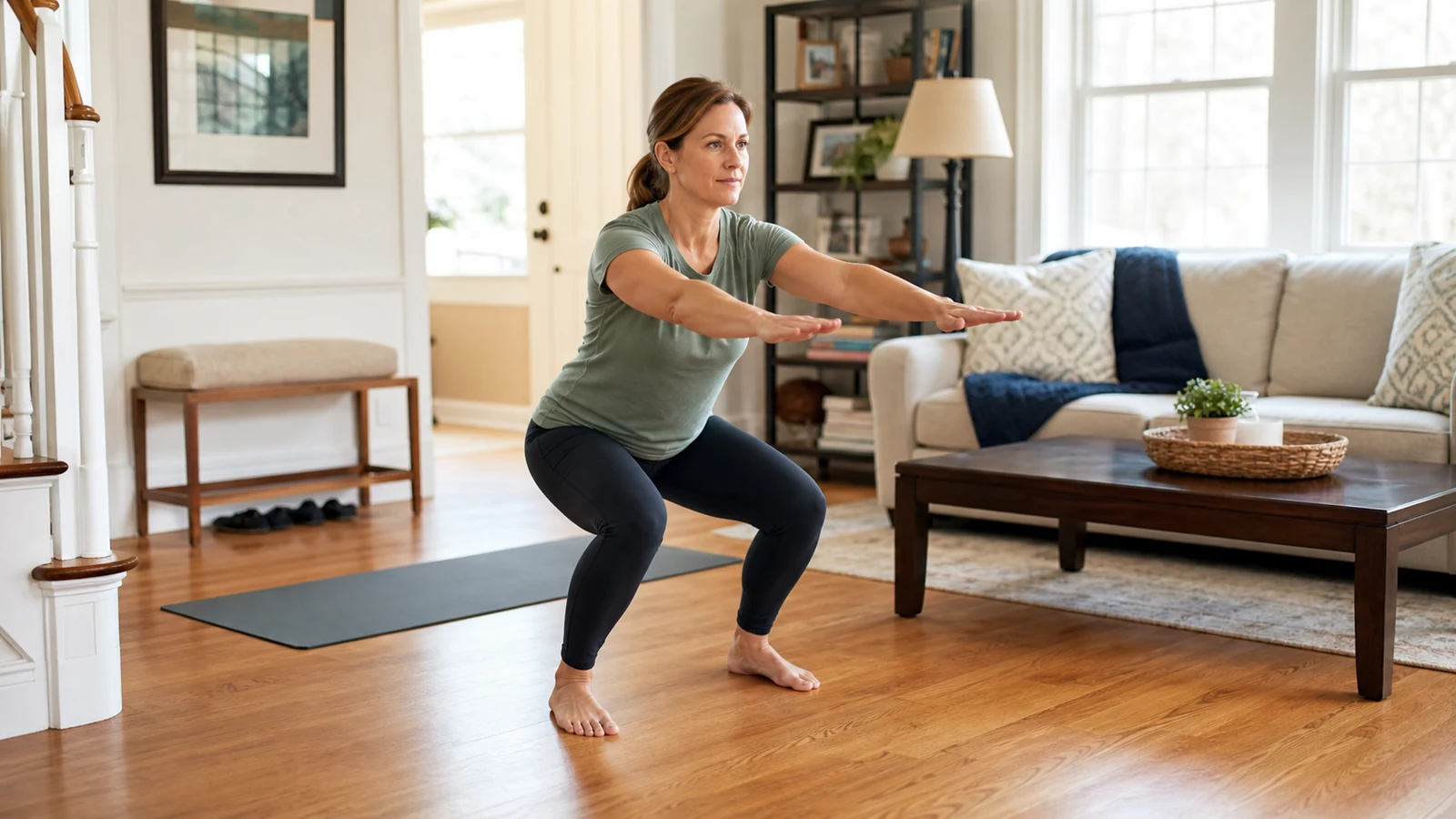
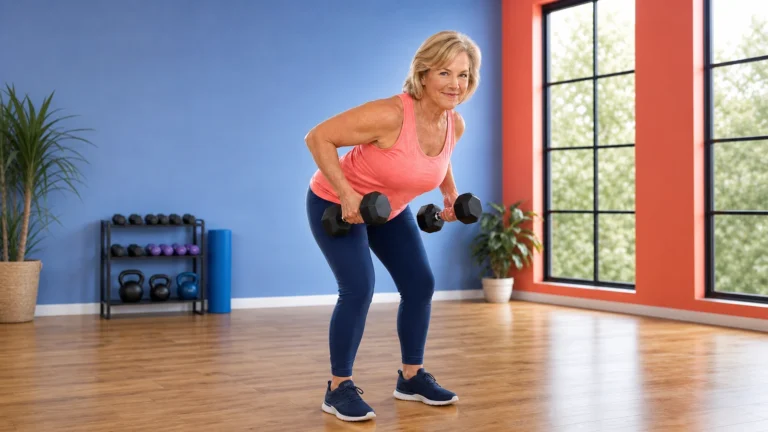
The main block can rotate through squats, push ups, walking lunges, glute bridges, and a plank hold, done as a circuit with brief rest between exercises.
Three rounds of that circuit, two to four times a week, is enough to challenge most beginners without requiring any equipment at all.
Adding short bursts of jumping jacks or high knees between strength moves raises the heart rate and adds a cardio element to the same session.
Progress comes from adding reps, adding rounds, or shortening rest, not from adding more ab specific moves on top.
Consistency over weeks matters far more than the intensity of any single workout.
Someone who does a moderate version of this routine four times a week for three months will typically see more fat loss than someone who does an intense version twice before quitting.
Pair the routine with reasonable eating habits, and give it real time before judging whether it is working.
Watch the Original Video
Want more like this? Subscribe to WorkoutHealthy Insider for practical explanations behind popular fitness claims.
References
Brobakken, M. F., Krogsæter, I., Helgerud, J., Wang, E., & Hoff, J. (2023). Abdominal aerobic endurance exercise reveals spot reduction exists: A randomized controlled trial. Physiological Reports, 11(22), Article e15853. https://doi.org/10.14814/phy2.15853
Kostek, M. A., Pescatello, L. S., Seip, R. L., Angelopoulos, T. J., Clarkson, P. M., Gordon, P. M., Moyna, N. M., Visich, P. S., Zoeller, R. F., Thompson, P. D., Hoffman, E. P., & Price, T. B. (2007). Subcutaneous fat alterations resulting from an upper-body resistance training program. Medicine and Science in Sports and Exercise, 39(7), 1177 to 1185. https://doi.org/10.1249/mss.0b0138058a5cb
Lafontant, K., Rukstela, A., Hanson, A., Chan, J., Alsayed, Y., Ayers-Creech, W. A., Bale, C., Ohigashi, Y., Solis, J., Shelton, G., Alur, I., Resler, C., Heath, A., Ericksen, S., Forbes, S. C., & Campbell, B. I. (2025). Comparison of concurrent, resistance, or aerobic training on body fat loss: A systematic review and meta-analysis. Journal of the International Society of Sports Nutrition, 22(1), Article 2507949. https://doi.org/10.1080/15502783.2025.2507949
Paoli, A., Casolo, A., Saoncella, M., Bertaggia, C., Fantin, M., Bianco, A., Marcolin, G., & Moro, T. (2021). Effect of an endurance and strength mixed circuit training on regional fat thickness: The quest for the “spot reduction”. International Journal of Environmental Research and Public Health, 18(7), Article 3845. https://doi.org/10.3390/ijerph18073845
Sun, C., Kovacs, P., & Guiu Jurado, E. (2021). Genetics of body fat distribution: Comparative analyses in populations with European, Asian and African ancestries. Genes, 12(6), Article 841. https://doi.org/10.3390/genes12060841
This article is for general information only and is not medical advice. If you have an injury, ongoing pain, or a medical condition, talk to a doctor or physical therapist before you change how you train or eat.