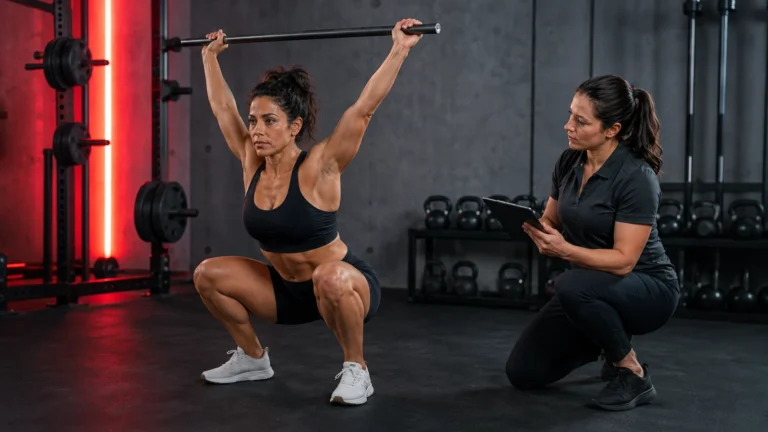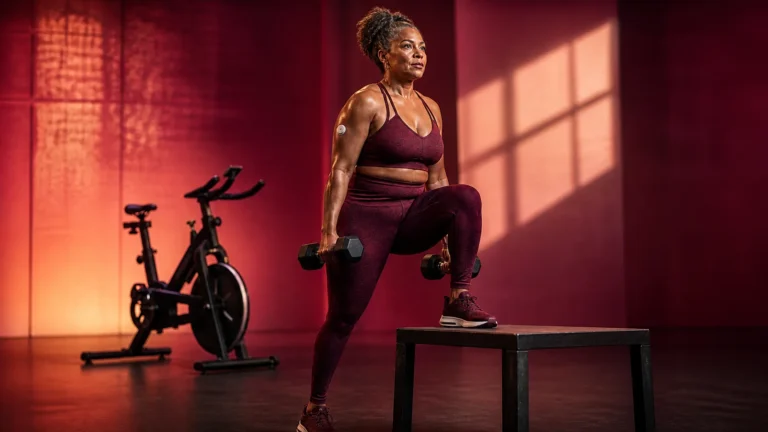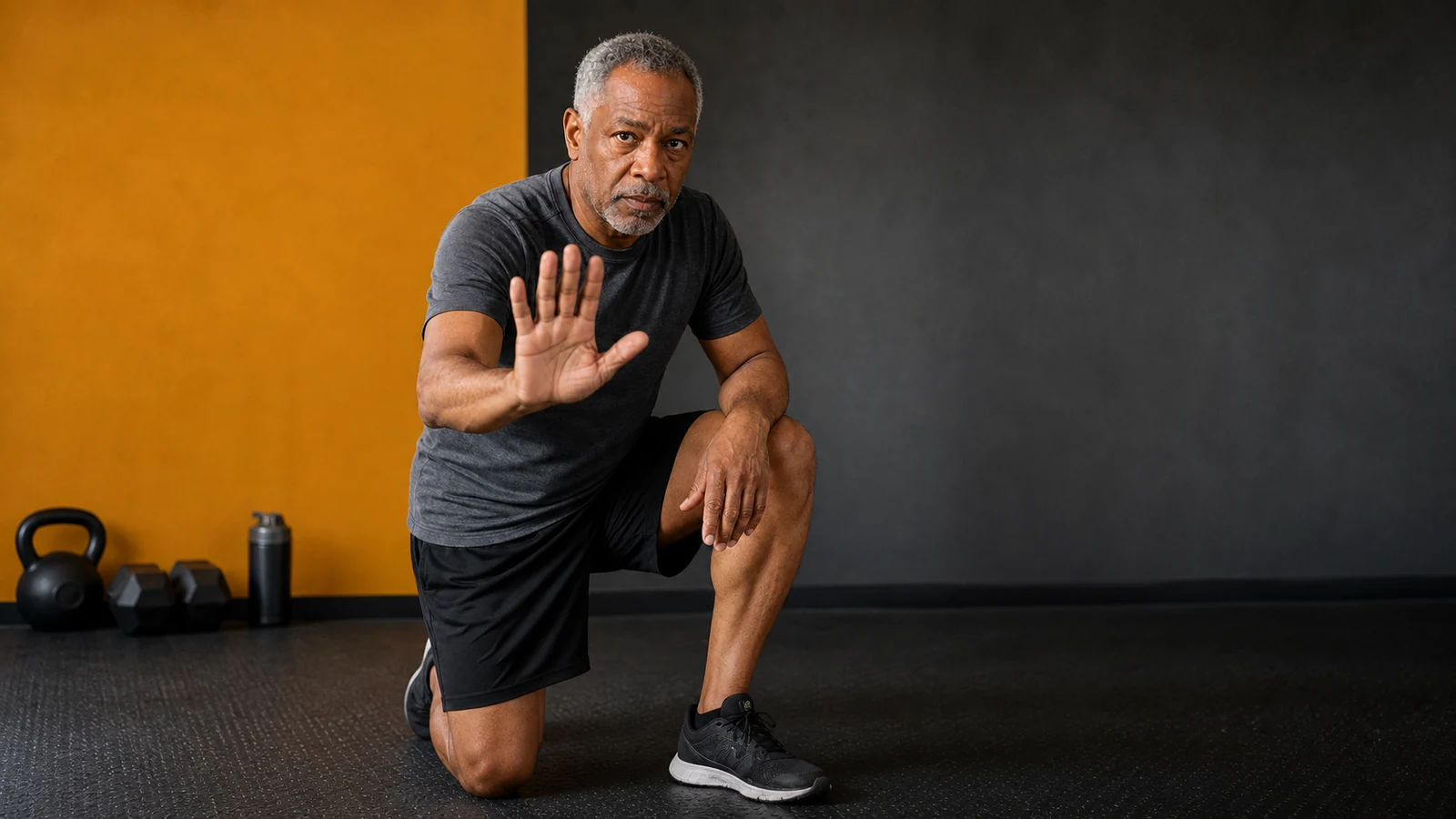

A viral fitness video says some exercises get too risky once you pass 60.
Dr. Suneel Dhand names a specific list in his video. High impact jumps. Heavy overhead lifts.
He also flags deep spinal twists and certain contact sports moves.
The claim raises a fair question. Does turning 60 actually change which exercises are safe?
We checked the research on aging, bones, tendons, falls, and heart strain to find out.
What the Video Claims
Dr. Suneel Dhand is a physician who posts fitness and health content on YouTube.
In his video, he lists exercise categories he says carry more risk for people over 60.
His list includes high impact plyometrics, like box jumps and depth jumps.
It also includes heavy overhead barbell lifts, such as max effort overhead presses.
He flags deep, unsupported spinal flexion and twisting movements as well.
Finally, he warns against certain contact sports, where a hard fall or collision is likely.
These are his own clinical observations and opinions, drawn from his medical background.
They are not a single formal published guideline with a citation attached.
Physicians often build lists like this from years of seeing patients in clinic.
A doctor who has treated many fall injuries or joint replacements tends to notice patterns.
That kind of pattern recognition has real value, even without a controlled trial behind it.
That does not make his list wrong. It means it is worth checking against the actual research separately.
Turning 60 does not switch exercise from safe to dangerous overnight, but it does change the margin for error.
What the Research Actually Shows
The American College of Sports Medicine has published formal guidance on this exact question.
Their position stand recommends that older adults do aerobic, strength, flexibility, and balance training every week (Chodzko-Zajko et al., 2009).
The guidance does not ban high impact work or heavy lifting outright.
Instead, it says the right exercise choice depends on a person’s current health, fitness level, and joint history.
The same position stand also explains why age changes the calculation in the first place.
Aerobic capacity, or VO2 max, declines gradually starting around midlife (Chodzko-Zajko et al., 2009).
Muscle mass and bone density also tend to peak decades earlier and slowly decline after that.
None of these changes make exercise dangerous. They just mean the body has less reserve capacity for sudden, unaccustomed effort.
That is the actual mechanism behind most age related caution, not a hard cutoff at any specific birthday.
Bone health research actually supports some impact work, not less of it.
A 2023 meta-analysis pooled 28 randomized trials on impact exercise and bone structure.
It found that moderate to high impact training improved bone density at the hip and shin (Ng et al., 2023).
The same review noted a real gap in the evidence.
There were not enough trials in older men to draw firm conclusions for that specific group (Ng et al., 2023).
So impact training can help bones, but the right dose still needs to be personalized with age.
Falling, not lifting, is actually the bigger threat to independence after 60.
A 2025 systematic review pooled 37 randomized trials on exercise and fall prevention.
It found that structured exercise programs cut fall incidents by roughly two thirds (Yu et al., 2025).
The most effective programs combined balance work with strength training three times a week for several months (Yu et al., 2025).
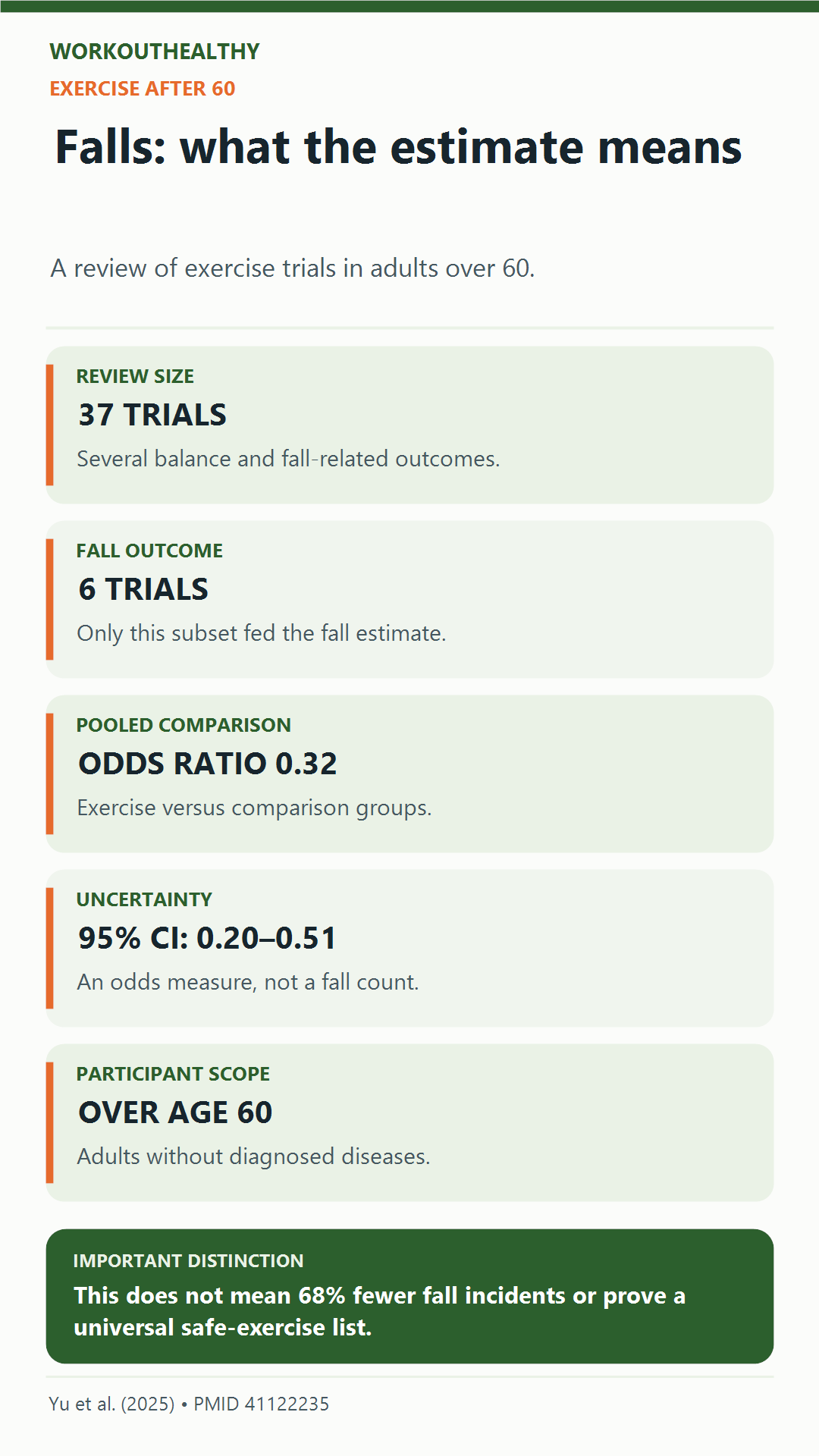
Avoiding challenging movement out of caution can raise fall risk instead of lowering it.
Heart strain is where age related caution has the most real support.
A 2020 American Heart Association scientific statement reviewed exercise related cardiac events in detail.
It found that sudden cardiac events during exercise are rare overall.
But the relative risk rises sharply during unaccustomed, vigorous effort (Franklin et al., 2020).
People with the lowest baseline fitness face the largest jump in short term risk when they jump straight into intense exercise (Franklin et al., 2020).
The statement’s actual advice is not to avoid vigorous exercise forever.
It is to build up to it gradually, with a proper warm up and cool down.
Our own look at heat and cardiovascular strain covers a related idea in our sauna and heart health article.
What This Evidence Does Not Prove
None of this research proves that any single exercise is unsafe for any specific 60 year old.
The bone and fall prevention studies mostly used supervised programs, not solo gym sessions.
The heart risk statement looked at large exercising populations, not one person’s individual risk.
We also could not find a strong human study measuring tendon injury rates from heavy overhead lifting in older lifters specifically.
That gap does not clear heavy overhead lifting as risk free.
It means the evidence is not solid enough yet to call it settled either way.
Dr. Dhand’s specific list, especially deep spinal twisting and contact sports collisions, reflects clinical judgment more than a single controlled trial.
That judgment may be reasonable, since joints do change with age.
But it is not the same thing as a randomized study measuring injury rates in those exact movements.
We are treating his specific claims as informed caution, not as proven fact, until better data exists.
Tendons do change with age at a tissue level, becoming somewhat less elastic over time.
That general pattern is well accepted in sports medicine and rehabilitation research.
What is missing is a clear number showing how much that raises injury risk from one specific lift, like a heavy overhead press.
Until that number exists, the honest answer is caution based on physiology, not a proven injury rate.
Common Mistakes People Make
The first common mistake is going from zero to intense with no buildup at all.
Someone who has not exercised in years should not start with heavy lifts or jump training on day one.
The second mistake is stopping all impact and strength work out of fear.
The research above shows that avoiding challenging movement can raise fall risk instead of lowering it (Yu et al., 2025).
The third mistake is skipping a proper warm up before vigorous effort.
A real warm up helps protect the heart during harder exercise (Franklin et al., 2020).
The fourth mistake is ignoring joint pain and pushing through it anyway.
Pain during a movement is a signal to modify that exercise.
It is not proof that the whole category of exercise is unsafe.
The fifth mistake is copying someone else’s program without adjusting it.
Two people at age 65 can have very different starting points for the exact same lift.
Our piece on whether box jumps build muscle covers how to scale one high impact movement safely.
A sixth mistake is treating balance training as optional rather than a core part of the plan.
Balance work is a separate skill from strength and cardio, and it needs its own dedicated time (Yu et al., 2025).
A seventh mistake is loading an overhead press to a heavy weight before shoulder mobility has been checked.
Building full, pain free overhead range of motion first makes the loaded version much safer later.
Who Should Check With a Doctor First
Anyone with a diagnosed heart condition should talk to a doctor before starting vigorous exercise.
The same caution applies to anyone with uncontrolled high blood pressure.
People with osteoporosis or a past fracture should ask about impact loading specifically.
Anyone recovering from a joint replacement or spine surgery needs individualized clearance first.
Recovery from a hip replacement shows how slow and staged that clearance process really is.
People with balance problems or a recent fall should be evaluated before adding jumping or heavy lifting.
A physical therapist can assess movement quality before someone returns to a demanding exercise.
People with diabetes and any nerve related numbness in the feet should also ask about balance training first.
Numbness can make it harder to feel foot position during landing or twisting movements.
Anyone taking blood thinning medication should mention that before adding contact sports or fall prone activities.
A fall carries a higher bleeding risk on those medications, even if the fall itself is minor.
None of this means avoiding exercise altogether.
It means getting the right starting point first, with the right supervision.
Practical Takeaway
Age alone does not disqualify someone from strength training, brisk walking, or supervised impact work.
What changes after 60 is the size of the safety margin, not the entire menu of exercise options.
Start any new intensity gradually, especially vigorous cardio or heavy lifting (Franklin et al., 2020).
Keep some impact and resistance work in the plan.
Both support bone density and balance over time (Ng et al., 2023; Yu et al., 2025).
Edith Connor’s late life strength record is a real example of serious training built patiently after 60.
Warm up properly and build technique before adding load or jump height.
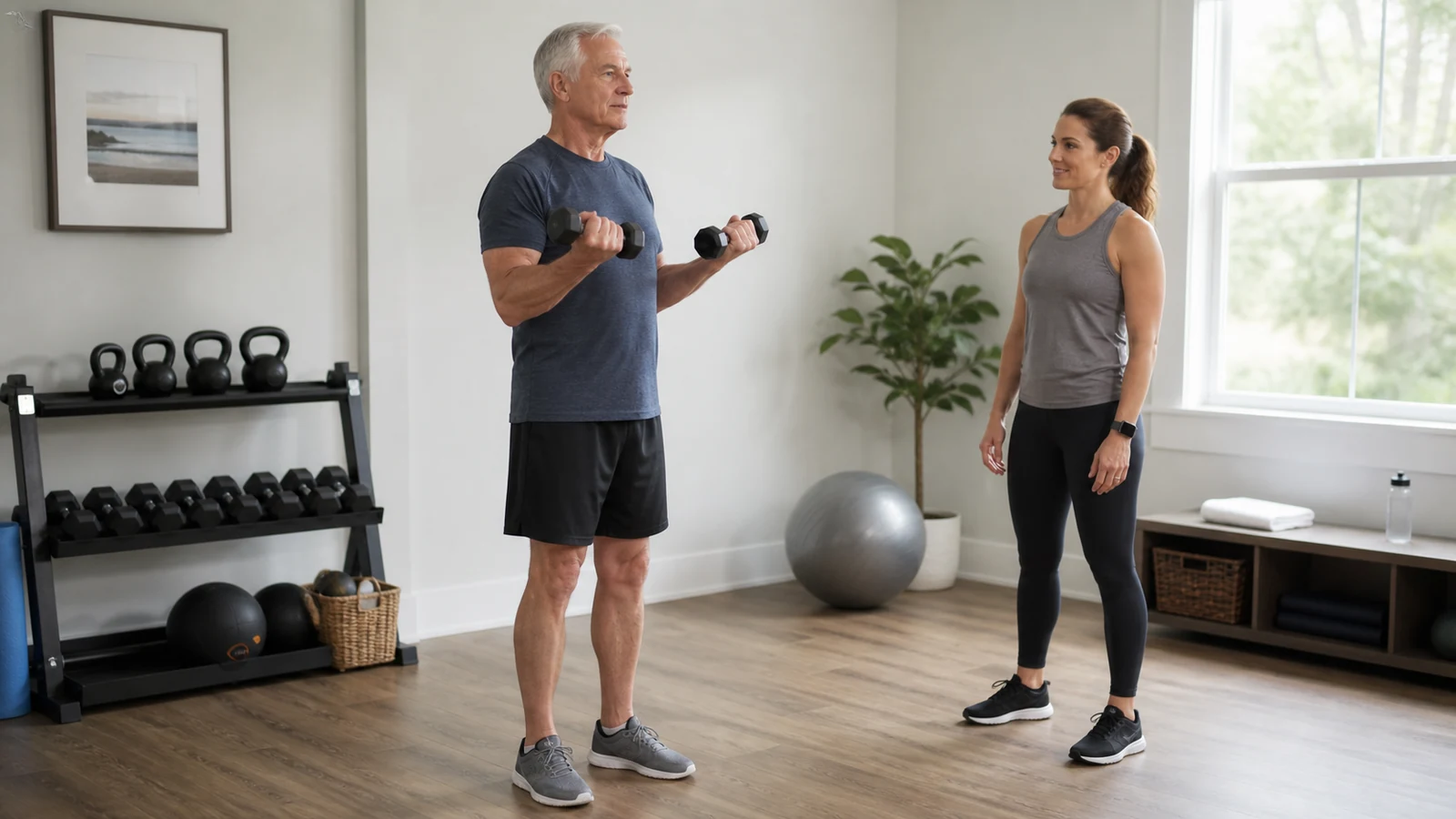
For jumping, start with small hops on a soft surface before adding any box height.
For overhead pressing, build the movement with light weight first, and add load in small steps.
For twisting movements, keep the range controlled and supported rather than deep and fast.
Add one new variable at a time, whether that is weight, height, speed, or range of motion.
Get cleared by a doctor first if any of the risk factors above apply to you.
If a movement causes pain, change the exercise instead of pushing through it.
Track how a session feels the next day, not just during the workout itself.
The goal is staying active for decades, not proving a point in a single workout.
Watch the Original Video
Want more like this? Subscribe to WorkoutHealthy Insider for practical explanations behind popular fitness claims.
References
Chodzko-Zajko, W. J., Proctor, D. N., Fiatarone Singh, M. A., Minson, C. T., Nigg, C. R., Salem, G. J., & Skinner, J. S. (2009). American College of Sports Medicine position stand: Exercise and physical activity for older adults. Medicine & Science in Sports & Exercise, 41(7), 1510 to 1530. https://doi.org/10.1249/MSS.0b013e3181a0c95c
Franklin, B. A., Thompson, P. D., Al-Zaiti, S. S., Albert, C. M., Hivert, M. F., Levine, B. D., Lobelo, F., Madan, K., Sharrief, A. Z., & Eijsvogels, T. M. H. (2020). Exercise related acute cardiovascular events and potential deleterious adaptations following long term exercise training: Placing the risks into perspective, an update: A scientific statement from the American Heart Association. Circulation, 141(13), e705 to e736. https://doi.org/10.1161/CIR.0000000000000749
Ng, C. A., Gandham, A., Mesinovic, J., Owen, P. J., Ebeling, P. R., & Scott, D. (2023). Effects of moderate to high impact exercise training on bone structure across the lifespan: A systematic review and meta-analysis of randomized controlled trials. Journal of Bone and Mineral Research, 38(11), 1612 to 1634. https://doi.org/10.1002/jbmr.4899
Yu, H., Zhong, J., Li, M., & Chen, S. (2025). Effects of exercise intervention on falls and balance function in older adults: A systematic review and meta-analysis. PeerJ, 13, e20190. https://doi.org/10.7717/peerj.20190
This article is for general information only and is not medical advice. If you have an injury, ongoing pain, or a medical condition, talk to a doctor or physical therapist before you change how you train or eat.