
A recent WorkoutHealthy Facebook post described Vanna White’s weekly routine as three pillars: indoor cycling, pull-ups, and weight training. The post did not link a source, so we checked.
The general shape holds up. Wheel of Fortune’s longtime co-host, who turned 69 in February 2026, has talked about cycling, pull-ups, and weight training in her own words across two documented interviews in the past year.
What Vanna White Has Actually Said
In a Women’s Health interview published in September 2025, White described riding a stationary bike as a regular part of her routine. She said she stands and climbs hills on the bike rather than staying seated, leaning forward into the handlebars to work her arms.
I stand up and ride hills a lot; you’re using your backside more that way. I use my arms, as well; I lean forward and push [into the handlebars].
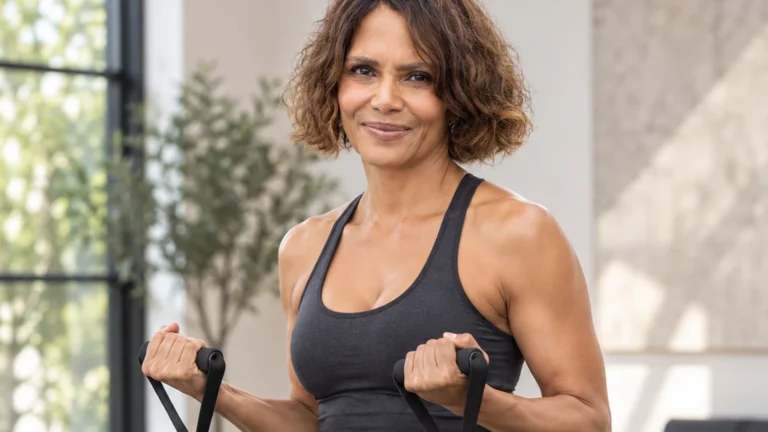
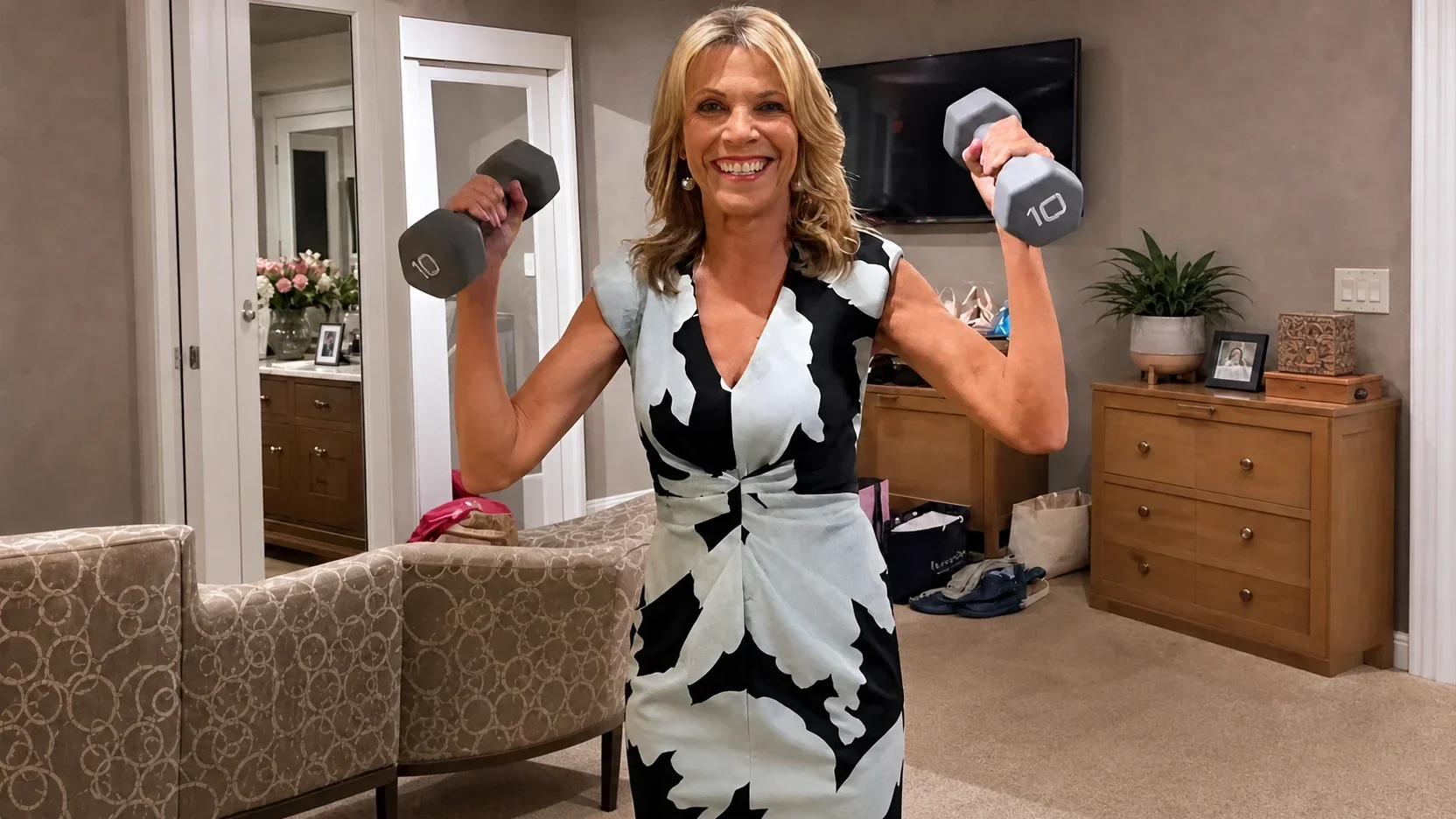
She also keeps a set of 10-pound weights at home and on the Wheel of Fortune set for upper body work between takes.
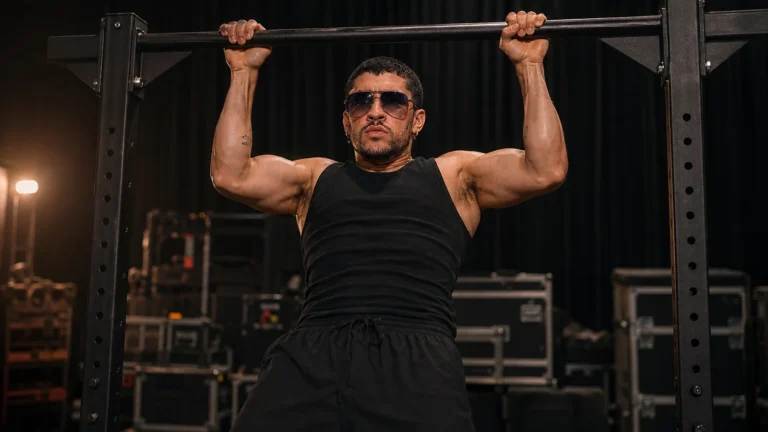
The pull-ups are real too. She uses a bar her son left behind and can reportedly complete about five reps, a genuinely strong result at any age.
Why She Says She Does It, and Why the Rest Is Inference
The original Facebook post attributed White’s routine to building stamina, supporting bone health, and keeping her joints stable. We could not find White saying any of that herself.
What she has said is more specific. In an April 2026 interview tied to Wheel of Fortune’s WishMaker charity campaign, she connected her workouts directly to wardrobe: a new dress every taping day, many of them sleeveless.
“I exercise all the time because I have to wear a different dress every single day, and I need to fit into those dresses,” she told Woman’s World. “A lot of them are sleeveless, too, so I really concentrate on my arms, because they’re always exposed.”
That is a real, stated reason, and it is about wardrobe, not physiology.
Cycling, pull-ups, and light weights can genuinely support stamina, bone health, and joint stability. White just has not publicly connected her own routine to those specific outcomes herself.
A Realistic Version of the Three-Pillar Routine for a 60-Something Beginner
White’s results did not happen overnight. Five pull-ups is a strong benchmark at any age, and it reflects real, sustained training rather than a starting point.
What follows is WorkoutHealthy’s own general planning framework, not anything White has described doing herself. It scales the same three categories, cardio, pulling strength, and full-body strength, down to a realistic starting point for a sedentary adult in their 60s with no training history.
This assumes no diagnosed heart or joint condition and no current exercise habit, using only a stationary bike or a walking route, a resistance band, and a light pair of dumbbells. Anyone with an existing condition should get medical clearance first.
Cardio: Minutes Before Miles
Three sessions a week of 15 to 20 minutes on a bike or a brisk walk is a realistic starting volume. Add 5 minutes every one to two weeks before adding intensity.
A simple talk test works better than a heart rate target here: if a full sentence is hard to get out, ease off. White’s habit of standing and climbing hills on the bike is a later-stage progression, not a starting point.
Pull Strength: Almost Nobody Starts With a Pull-Up
A dead-hang pull-up is genuinely difficult for most adults over 60 with no training history, regardless of how many push-ups or squats they can already do. Starting there usually ends in frustration or a strained shoulder.
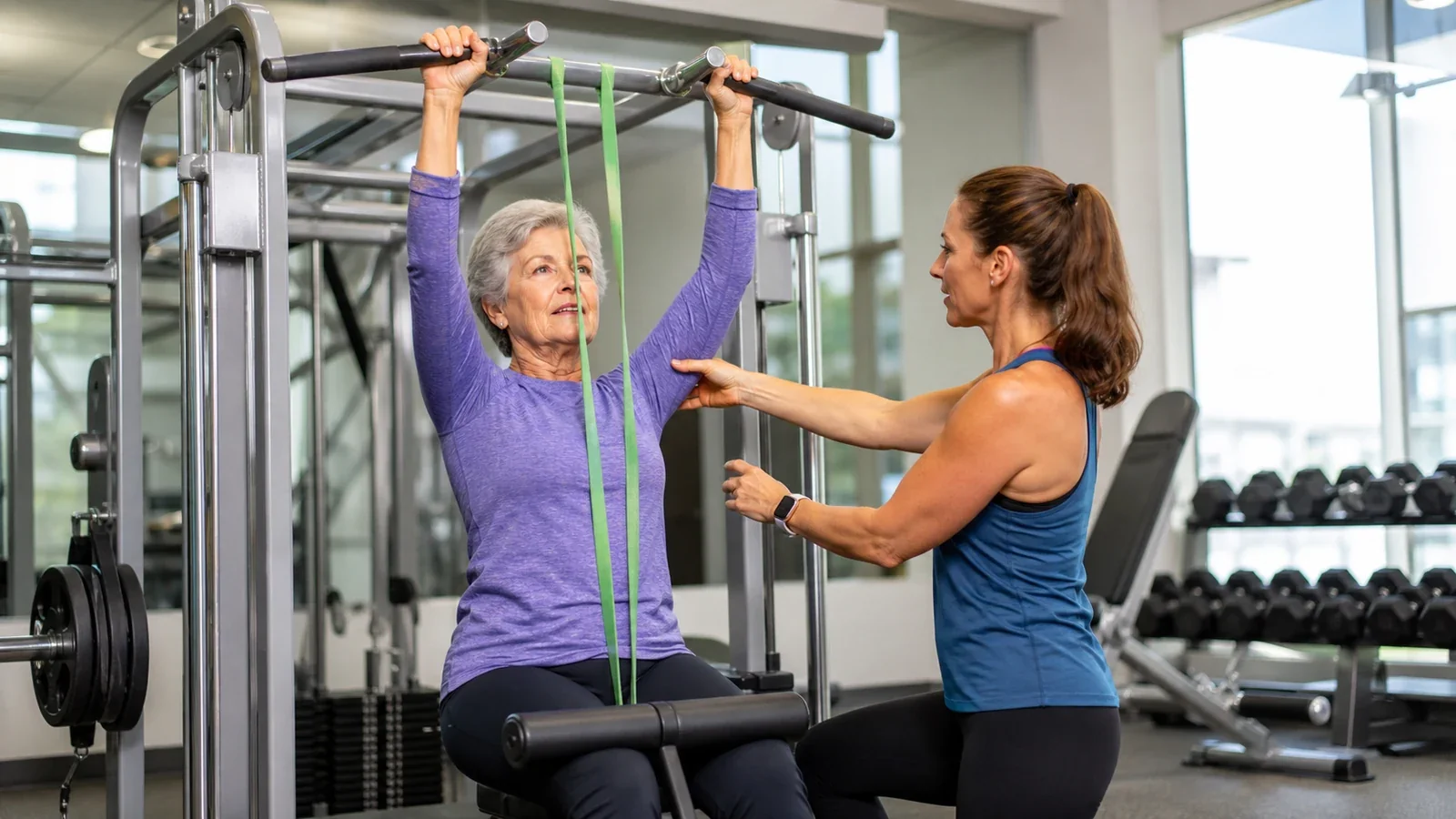
A resistance-band row, a seated cable row, or an assisted pull-up machine builds the same pulling muscles without requiring full bodyweight control on day one. Our guide to dumbbell training for older adults covers a realistic entry point using equipment most people already own.
Full-Body Strength: Light Weight, Real Consistency
Two sessions a week with a pair of light dumbbells, roughly 3 to 10 pounds depending on the exercise, covers the major muscle groups without a gym membership. Controlled rows, presses, and squats matter more than the number printed on the weight.
This is also where the bone health and balance benefits the original post mentioned are real and well documented, even though White has not personally attributed her own routine to those outcomes. Our breakdown of what resistance training actually does for an aging brain and body covers the research in more depth.
A realistic pull-up progression for someone in their sixties takes months, not one determined afternoon. Picking the scaled version of a movement and repeating it beats chasing the version somebody else can already do.
What This Is Not
This is not an endorsement. White has no connection to WorkoutHealthy, and nothing here implies she uses, likes, or recommends anything we sell.
It is also not proof that every detail of her routine is exactly as reported, only that the core claims trace back to her own words in real interviews. For a much later strength-training start, see our piece on Edith Connor’s Guinness World Record, who began lifting in her sixties.
See our Celebrity Fitness sourcing standards for how stories like this one get reported.
This article reports what public figures have said about their training. It is not medical advice and nobody covered here endorses WorkoutHealthy or any product. How we cover celebrity fitness.