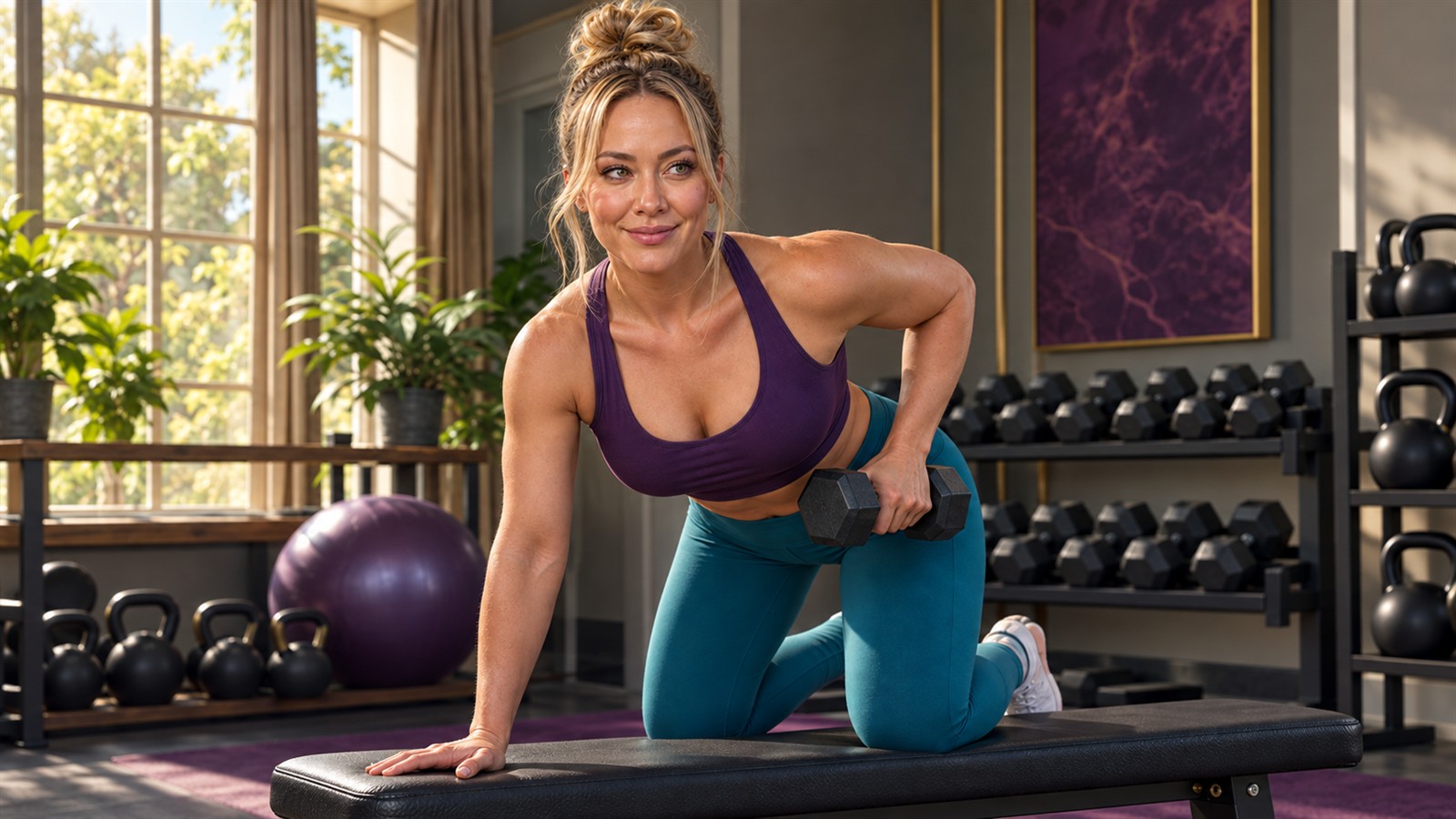

Hilary Duff’s most useful fitness message is not a set, rep, or celebrity transformation. It is that strength training can change how daily life feels.
Across interviews, Duff has discussed lifting for strength, mood, and capability. Women’s Health reported that she shifted away from relying on cardio and embraced bodybuilding-style training.
That does not make her exact routine a universal template. It does make the larger idea worth examining: resistance training can produce benefits that are difficult to photograph but easy to notice.
What Duff Has Said About Lifting
Duff has described strength work as mentally valuable as well as physical. She has trained with coaches, used structured sessions, and adjusted around work and parenting.
Those resources matter. A celebrity schedule may include professional programming, equipment, and recovery support that many people do not have.
Strength Shows Up in Ordinary Tasks
Carrying groceries, lifting luggage, getting up from the floor, and moving furniture all draw on strength. Training can make those tasks feel less demanding.
The effect is gradual. A person learns the movement, adds resistance, and builds tolerance across weeks and months.
The Mood Benefit Is Real but Not Magic
Exercise can improve mood and help some people manage stress. A focused lifting session also creates a clear sequence of tasks at a time when the rest of life may feel less predictable.
That does not make exercise a replacement for mental-health treatment. It is one supportive behavior among sleep, relationships, nutrition, medical care, and professional counseling when needed.
Why Progressive Overload Matters
The body needs a reason to adapt. Progressive overload means gradually increasing a training demand by adding a little weight, another repetition, better range of motion, or more control.
Progress does not need to happen every session. Repeating a weight with cleaner form can be progress, especially for a newer lifter.
A plan that changes randomly may feel exciting but makes improvement harder to measure. Keep several core movements long enough to learn them.
A Simple Full-Body Structure
A practical session can include a squat or sit-to-stand, a hinge, a push, a pull, and a carry or trunk exercise. Two or three sessions per week can be enough for meaningful progress.
Machines, dumbbells, resistance bands, and bodyweight exercises can all work. The best tools are the ones a person can use safely and consistently.
If lower-body confidence is a concern, our article on chair squats explains a scalable foundational pattern.
Recovery Is Part of the Program
Strength improves between sessions when the body has time and resources to adapt. Adequate protein, total energy, sleep, and spacing hard sessions all matter.
Persistent joint pain, declining performance, or unusual fatigue can signal that volume or intensity needs adjustment.
A sustainable program leaves room for work, family, and unpredictable weeks. Missing one workout is not failure; abandoning the plan because it was too rigid is the larger problem.
Strength Training and Body Image
Appearance goals are common, but they can become unstable because the mirror changes slowly and perception changes from day to day.
Performance goals provide additional feedback. More repetitions, improved technique, or easier daily tasks are concrete signs of adaptation.
The goal is not to ignore appearance. It is to build a broader definition of success so the routine has reasons to continue even when visual change slows.
How to Start Without Copying a Celebrity Plan
Begin with movements that match current ability. Learn them from a qualified coach or clinician when possible, especially with an injury history or medical condition.
Use a weight that allows several controlled repetitions in reserve. Add load only when technique remains stable.
Pair strength work with low-impact aerobic activity. Our guide to standing cardio without jumping offers one equipment-free option.
The Bottom Line
Hilary Duff’s routine is not valuable because it belongs to a celebrity. It is valuable because her description points to outcomes many people can recognize: energy, confidence, mood, and physical capability.
Strength training works best as a long practice rather than a short correction. Choose repeatable movements, progress them gradually, and notice what becomes easier outside the gym.