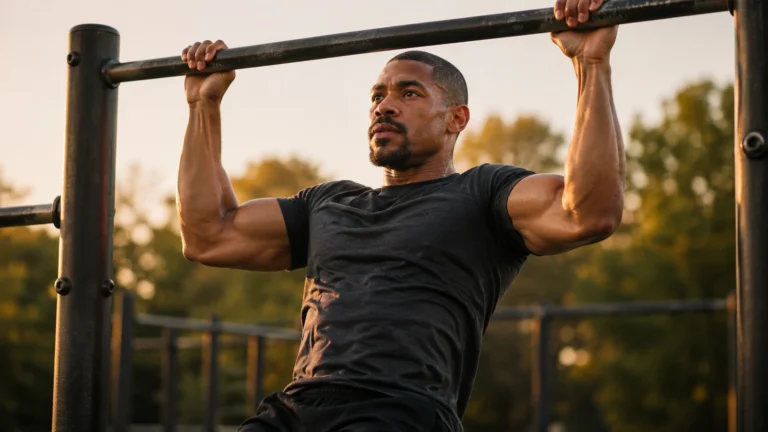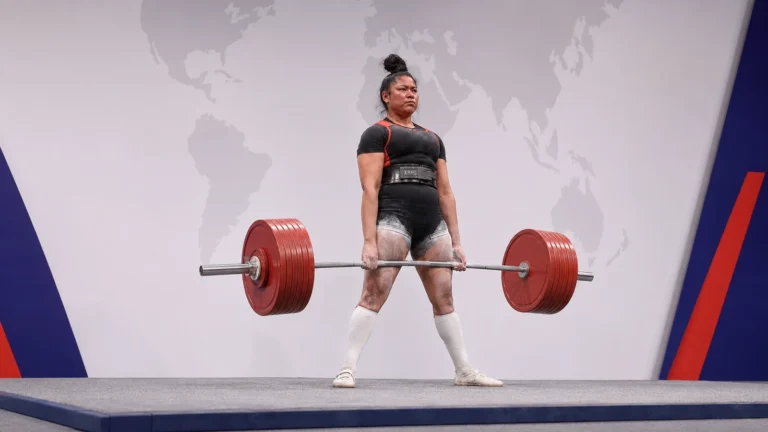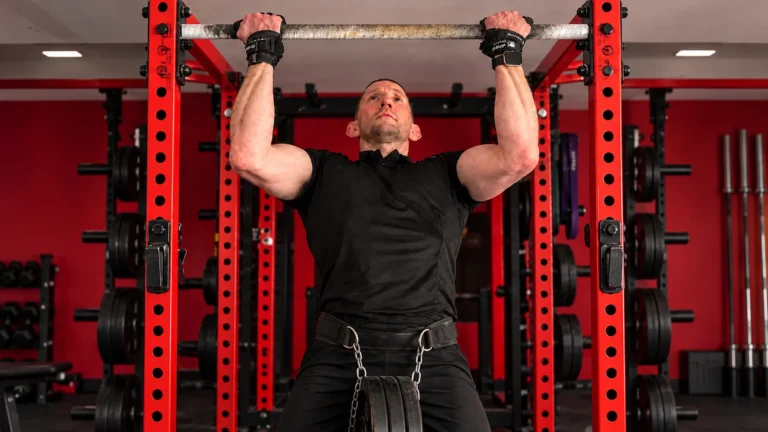

The useful answer to sandbag vs barbell depends on what you want to improve. Keep barbell practice when the goal is a better barbell lift; use a sandbag when handling that awkward object is part of the task.
Neither choice requires a promise that unstable weight builds more muscle or produces better “real-world strength.” A direct comparison often cited for that claim found its greater muscle-activity signal with a water bag, rather than the sandbag.
Choose the training task first
The table below applies a simple principle: measure the performance you actually want to change. It is a practical decision guide, rather than a trial establishing that one implement wins every training goal.
| Your priority | Useful choice | What to track |
|---|---|---|
| A stronger barbell squat, press or deadlift | Retain practice with that barbell lift | Load and repetitions under comparable technique and range |
| Picking up or carrying a particular bulky bag | Practice that sandbag task | The same bag, grip, position, route and completed work |
| Both kinds of performance | Give each a defined role in the program | Separate lift and bag-task records |
| General resistance training | A method you can perform and repeat with appropriate progression | Coverage of your goals, completed sessions and progress in the chosen exercises |
The 2026 ACSM position stand emphasizes specificity and individualization for healthy adults. It also recognizes that training can carry over to other tasks, especially in less advanced trainees, so specificity does not mean that every benefit stays trapped inside one exercise (Currier et al., 2026).
What changes when the load is a bag?
A barbell provides a standardized grip and lets you change the load with plates. A sandbag’s shape, handles, fill and contact against your body become part of the task.
Do not assume that every sandbag shifts equally. A tightly packed bag, a loose handled bag and a large handleless bag can create different handling problems even when their measured mass matches.
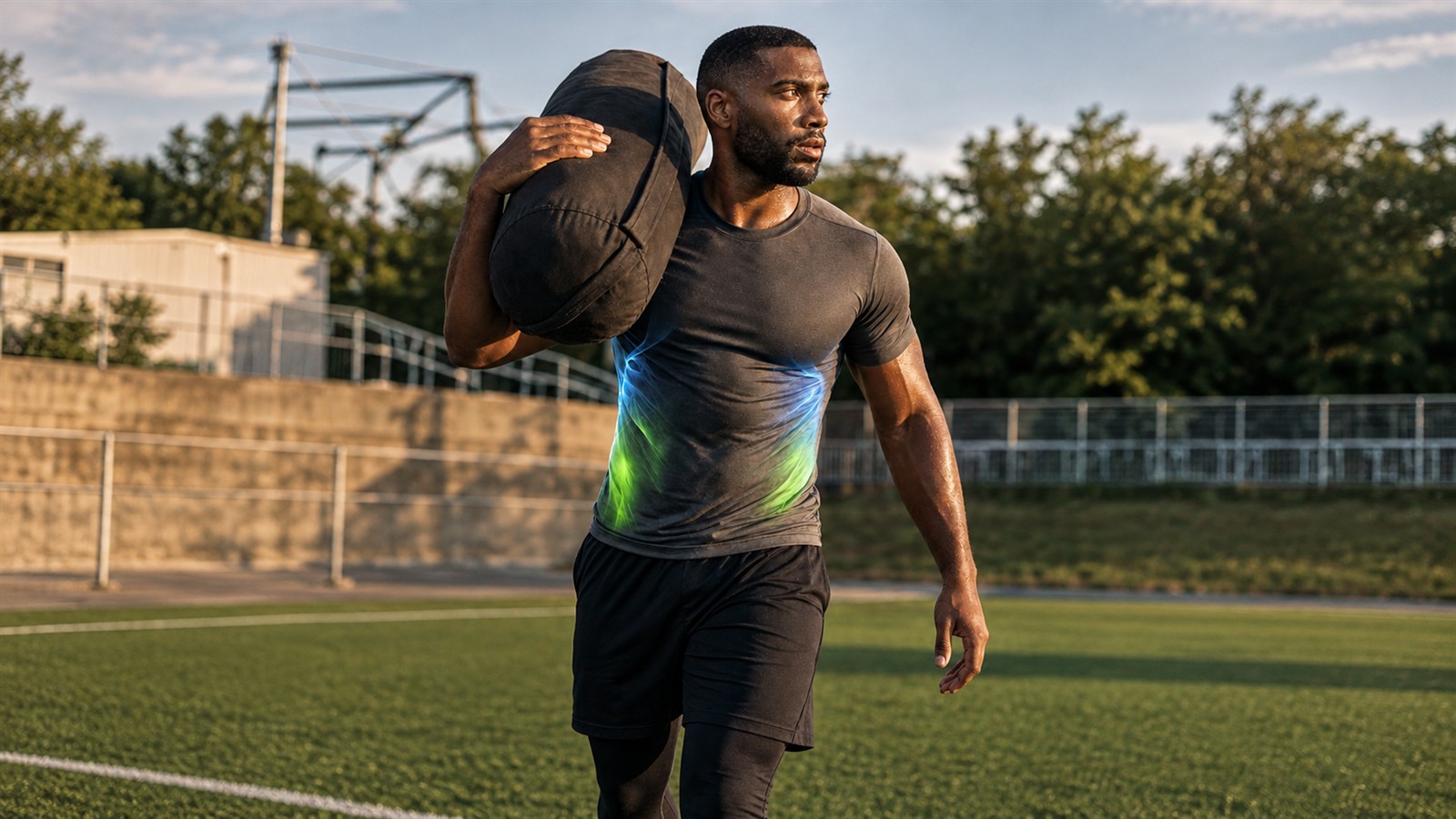
The featured image shows a shoulder carry. That is different from a bear-hug carry, a barbell deadlift or the clean-and-jerk experiment below, so it should not stand in for all of them.
Feeling less familiar or more awkward describes your experience of an exercise. It does not isolate whether muscle activity, balance, grip, breathing demand or technique familiarity caused that experience.
The direct study separated sand, water and a barbell
Calatayud and colleagues studied 21 fit young men performing a clean and jerk with three implements, each weighing 20 kilograms. After familiarization, the researchers recorded surface electrical muscle activity during three repetitions in each condition (Calatayud et al., 2015).
| Measured muscle | Barbell | Sandbag | Water bag |
|---|---|---|---|
| Anterior deltoid | 70 | 69 | 77 |
| External oblique | 26 | 27 | 60 |
| Lumbar erector spinae | 74 | 70 | 85 |
| Gluteus medius | 23 | 22 | 29 |
Researchers averaged the peak readings from three repetitions, then expressed them relative to each muscle’s maximal reference contraction (%MVIC). The table shows the reported least-square means and omits their standard errors and confidence intervals.
The values are not percentages of strength gained or a basis for comparing how hard different muscles worked. They describe the measured electrical signal during this experiment.
The water-bag condition was significantly higher for the oblique, erector-spinae and gluteus-medius signals; the anterior-deltoid comparison was not significant. The experiment did not establish a sandbag advantage over the barbell or compare months of training, muscle growth or injury rates.
Flexible-bar results are a different comparison
Two bench-press studies help explain why “unstable load” is too broad a label for a universal training benefit. Both used flexible bars with suspended loads, rather than sandbags.
| Study | Actual comparison | Bounded finding |
|---|---|---|
| Ostrowski et al., 2017 | 15 trained men; standard bench at 75% of maximum versus flexible-bar bench at 60% | Higher biceps and left middle-deltoid activity in the unstable condition; not a sandbag or long-term training trial |
| Lawrence et al., 2021 | 12 male powerlifters; a five-repetition maximum in standard and three flexible-bar conditions | More variable bar motion and higher biceps activity; most measured stabilizer activity did not differ |
The first experiment’s loads differed by 15 percentage points of maximum. That is not a prescription to make every sandbag exercise “15% lighter.”
An older review also describes a possible trade-off: instability can reduce externally measured force while muscle activation remains high (Behm & Anderson, 2006). A demanding stabilization task and maximum external force are different outcomes.
Do not convert kilograms between the two exercises
Mass is a useful measurement, but it is not a conversion rate between exercises. A 40-kilogram sandbag and a 40-kilogram barbell weigh the same without creating identical grips, ranges, body positions or movement demands.
Equal mass was the experimental choice in the clean-and-jerk study. It did not establish equal relative effort or equal percentages of each participant’s maximum in all three conditions.
That matters when someone says a lighter bag feels harder than a heavier bar. The observation can be valid without proving that the bag produces more muscle growth or replaces the heavier lift.
Avoid inventing a multiplier such as “one bag kilogram equals two barbell kilograms.” Record each exercise on its own terms and judge progress against comparable previous attempts.
Two practical ways to make the choice
If your main goal is a barbell lift
Keep the named lift as the performance reference. If you add a bag exercise, decide which separate task it serves instead of treating fatigue from the bag as proof of carryover.
For example, a lifter may want to improve both a barbell deadlift and a bag carry. Better carry performance answers the carry question; a comparable later deadlift performance answers the lift question.
Changing both programs at once makes it difficult to identify which change affected the result. This is a tracking limitation, rather than a reason that everyone must use only one tool.
If you want general training with a sandbag
Start by checking the exercises you intend to perform, rather than calling one bag a complete program. Ask whether its shape, available grip and load let you perform each selected movement under control.
A bag that suits a lower-body exercise may be unsuitable for a press. Replacing an implement does not guarantee that you have replaced the original movement, its range or its progression options.
ACSM’s broader evidence review supports flexible approaches to resistance training for healthy adults. Its general equipment findings do not constitute a direct trial proving that a sandbag-only routine equals a particular barbell program.
Make a bag exercise repeatable before interpreting progress
For an exercise you already know how to perform, record the configuration as well as the weight. A different grip, shorter route or fewer turns can change the result without showing greater strength.
| Keep or record | Why it matters |
|---|---|
| Bag identity, measured mass and fill | Distinguishes a load change from a different object |
| Exercise, grip and support position | Separates shoulder, front-hold and handled tasks |
| Repetitions or route and distance | Defines what work was completed |
| Sets, rest and effort | Makes the session comparison easier to interpret |
| Control and reason for ending | Separates a planned finish from grip loss, discomfort or an interrupted route |
This is a record template, not a newly tested workout. Keep the prescription from your own program instead of turning the laboratory repetitions above into a universal carry schedule.
Learn an unfamiliar pickup or carry with suitable instruction before treating it as a performance test. Check the bag’s closure and condition, and use a clear area appropriate to the movement.
If pain, a previous surgery or another limitation affects the movement, get individual guidance rather than assuming that a softer or lighter object is automatically suitable. Changing equipment is not a diagnosis or a treatment.
Questions worth asking before replacing a lift
Will the sandbag build more core strength?
The direct experiment above does not establish that claim. Its larger signals belonged to the water bag, and immediate muscle activity is a different outcome from future strength.
Is a barbell required for muscle growth?
The general ACSM guidance does not require one particular implement for every healthy adult. Choose exercises and progression that fit your goal, while recognizing that the studies here do not identify a sandbag-versus-barbell hypertrophy winner.
Can I use both?
Yes, if each has a useful role and the overall work fits your program. Keep their records separate and avoid adding work solely because a different object makes the session feel novel.
Our training-frequency guide explains how repeated sessions fit into a program. For another distinct task, our medicine-ball core workout describes a source-attributed partner circuit.
Choose the task, then track the training.
Five practical fitness stories, every Friday.
One email a week. No product pitches. Unsubscribe in one click.
References
Behm, D. G., & Anderson, K. G. (2006). The role of instability with resistance training. Journal of Strength and Conditioning Research, 20(3), 716 to 722. Primary review abstract.
Calatayud, J., Colado, J. C., Martin, F., Casaña, J., Jakobsen, M. D., & Andersen, L. L. (2015). Core muscle activity during the clean and jerk lift with barbell versus sandbags and water bags. International Journal of Sports Physical Therapy, 10(6), 803 to 810. Full primary study.
Currier, B. S., D’Souza, A. C., Fiatarone Singh, M. A., Lowisz, C. V., Rawson, E. S., Schoenfeld, B. J., Smith-Ryan, A. E., Steen, J. P., Thomas, G. A., Triplett, N. T., Washington, T. A., Werner, T. J., & Phillips, S. M. (2026). American College of Sports Medicine position stand. Resistance training prescription for muscle function, hypertrophy, and physical performance in healthy adults: An overview of reviews. Medicine & Science in Sports & Exercise, 58(4), 851 to 872. https://doi.org/10.1249/MSS.0000000000003897
Lawrence, M. A., Ostrowski, S. J., Leib, D. J., & Carlson, L. A. (2021). Effect of unstable loads on stabilizing muscles and bar motion during the bench press. Journal of Strength and Conditioning Research, 35(Suppl. 1), S120 to S126. Primary study abstract.
Ostrowski, S. J., Carlson, L. A., & Lawrence, M. A. (2017). Effect of an unstable load on primary and stabilizing muscles during the bench press. Journal of Strength and Conditioning Research, 31(2), 430 to 434. https://doi.org/10.1519/JSC.0000000000001497
Medical disclaimer: This article is general fitness information, not medical advice. If you have an injury, ongoing pain or a medical condition, talk to a doctor or physical therapist before changing how you train.