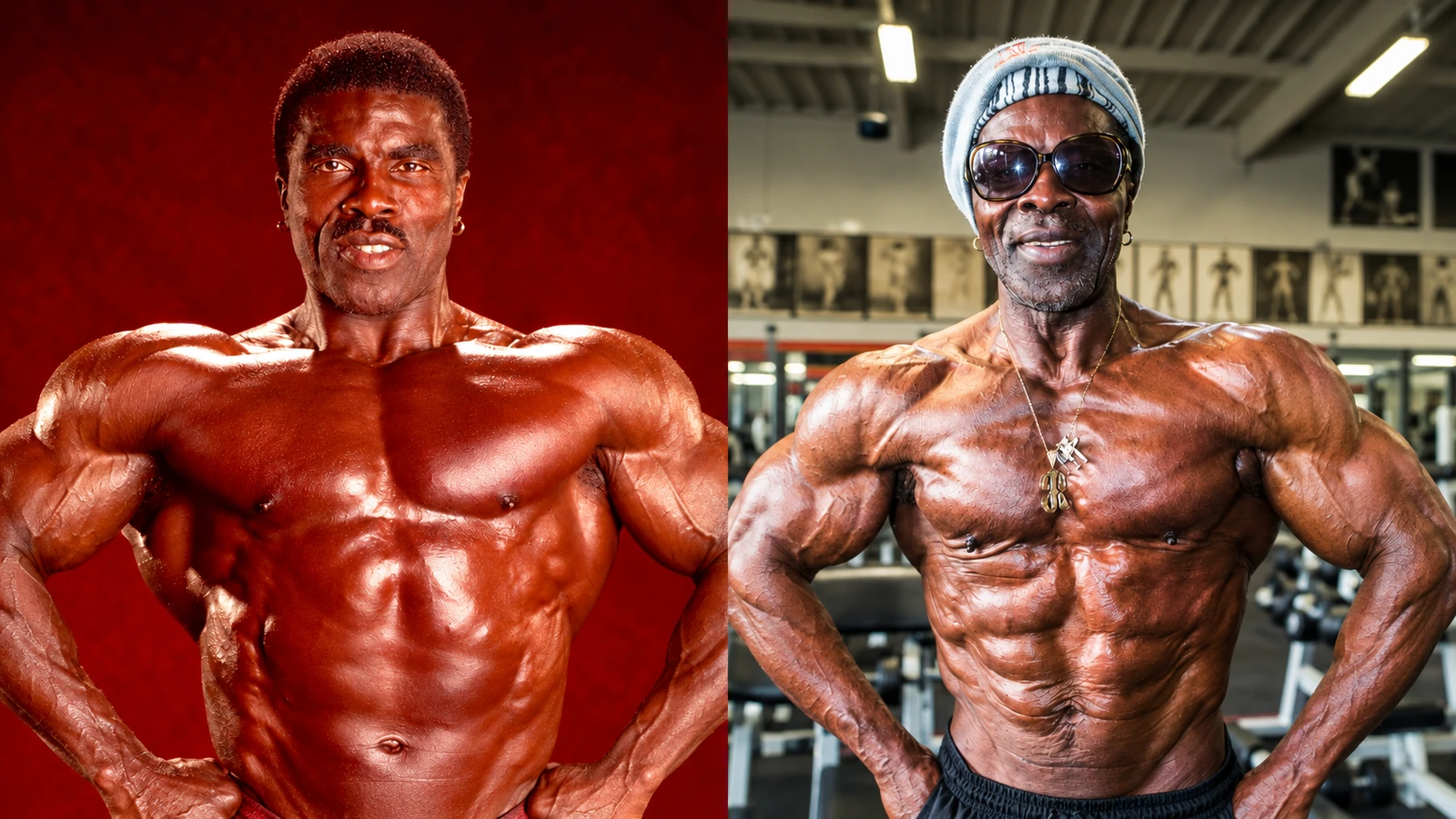

Robby Robinson’s most useful lesson is the length of his commitment, rather than a physique that everyone else should try to copy.
The former Masters Olympia champion was still training and maintaining a strikingly muscular build when Muscle & Fitness profiled him at 77.
His explanation centered on the habits he had kept after competition, even as getting older made the effort harder.
That is a worthwhile story for anyone whose reasons for exercising have changed since their first gym membership.
A training habit can outlast the goal that first got you into the gym.
What Robinson actually said
In Bill Dobbins’s interview, Robinson described bodybuilding as a way of life that continued long after his early ambitions.
He said his approach to living, training, and eating had stayed broadly consistent with his younger years.
He also acknowledged a less glamorous reality: responsibilities, physical challenges, and the difficulty of maintaining an earlier standard can make motivation harder.
Those observations are his account of his own life. They do not establish that one routine explains every part of his appearance.
The distinction matters because an exceptional athlete’s story can inspire a reader without becoming a universal training prescription.
A champion with a long history
Known as the Black Prince, Robinson was part of bodybuilding’s Golden Era and won the Masters Olympia in 1994.
His career gives the later photographs context: this was an experienced competitive bodybuilder, rather than someone starting resistance training in retirement.
Comparing your beginning with his later years leaves out everything that happened before the camera arrived.
A more useful comparison is with your own recent ability, using a repeatable movement and similar conditions.
For example, getting through the same session with better control tells you something practical that a stranger’s photograph cannot.
Why the photo needs context
The Facebook comparison uses an image associated with Robinson’s training at 77.
It should not be mistaken for a newly documented assessment of his current health.
A photograph records a moment, with its own pose, light, camera angle, and presentation.
It cannot show blood pressure, cardiovascular fitness, medical history, or how a person feels during ordinary activities.
It also cannot tell us which parts of an athlete’s approach would suit a different person.
Admiring the image is reasonable.
Using it to diagnose health, infer private medical details, or judge another older adult is a much larger leap.
Keep strength in a broader plan
For adults 65 and older, CDC guidance includes aerobic activity, muscle strengthening, and balance work.
The general weekly targets include at least 150 minutes of moderate aerobic activity and muscle strengthening on at least two days.
People who cannot meet those targets should be active within their abilities and health conditions.
That broader view helps keep a bodybuilding story in perspective: maintaining visible muscle is only one possible aim.
Our guide to strength training for longevity explains why training outcomes deserve more attention than appearance alone.
The keep, adjust, review rule
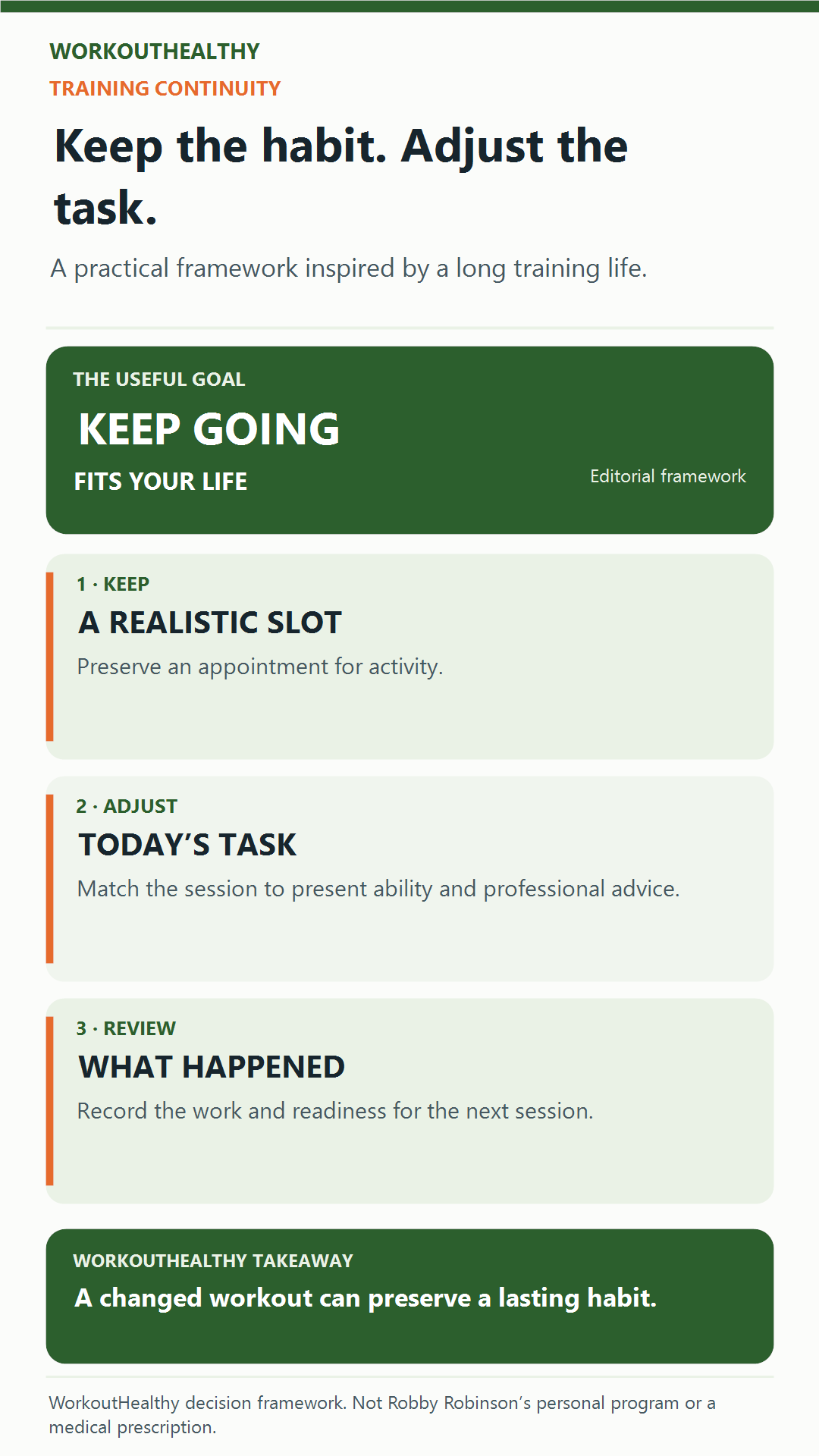
WorkoutHealthy’s practical framework is to keep the habit, adjust the task, and review what happened afterward.
Keep: Preserve a realistic appointment for activity, even when the original goal no longer fits your life.
Adjust: Choose a version of the session that matches your present ability and any professional advice you have received.
Review: Note what you completed and whether the effort leaves you ready for the next planned session.
This is an editorial decision rule, not Robinson’s personal program or a validated medical score.
Its value is the decision it makes easier: changing a workout can help you continue participating instead of treating every adjustment as failure.
Make the next session specific
Start by naming one thing you want training to help you do, such as carrying groceries or returning to a familiar exercise.
Then choose a manageable session you can repeat and record what you actually complete.
A short note about the movement, resistance, and repetitions can make the next decision less vague.
Avoid guessing at Robinson’s current sets, supplements, or diet from a comparison image.
If you want exercise options and progression considerations, our guide to sarcopenia exercises offers a more useful starting point than copying a champion’s appearance.
Changing the task can be a way to protect the habit.
When to get individual guidance
The NHS advises speaking with a GP before starting if you have not exercised for some time or have medical conditions or concerns.
Your activity and its intensity should fit your fitness and circumstances.
New pain or a change in your ability deserves attention, rather than an attempt to match someone else’s highlight reel.
A qualified professional can help translate a broad goal into appropriate exercise choices.
Consistency includes making those decisions. It does not require preserving a routine unchanged through every stage of life.
What to borrow from his story
Robinson’s example is strongest when it makes continuing seem possible, rather than making ordinary progress seem inadequate.
You do not need a competition physique to have a worthwhile reason to train.
Keep a goal you can explain, choose activity you can repeat, and judge progress against your own starting point.
For your next step, read the linked exercise guide and identify one manageable change to discuss or try within your current plan.
Robby Robinson training arms with Mike O’Hearn
This video shows Robinson training with Mike O’Hearn, providing a direct view of the long-running gym habit behind the photographs.
It is a training session from an earlier period, not a current assessment or a beginner workout to follow rep for rep.
Medical disclaimer: This article is general product information, not medical advice. The equipment described here is not a treatment for any condition. If you have an injury, ongoing pain, or a medical condition, talk to a doctor or physical therapist before using any of it.