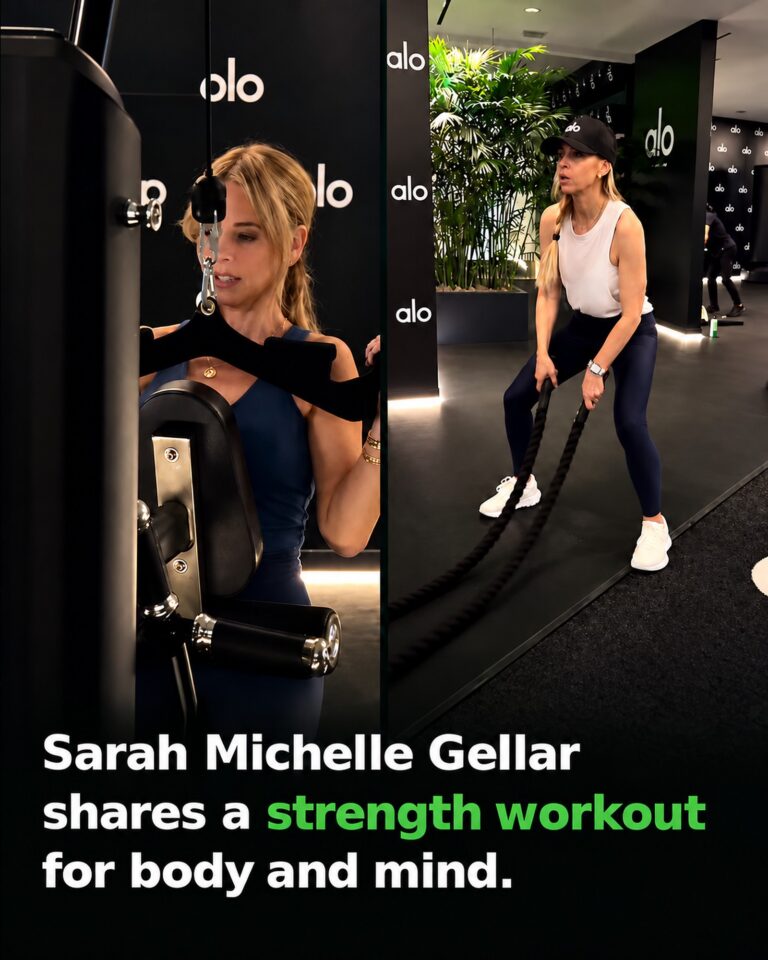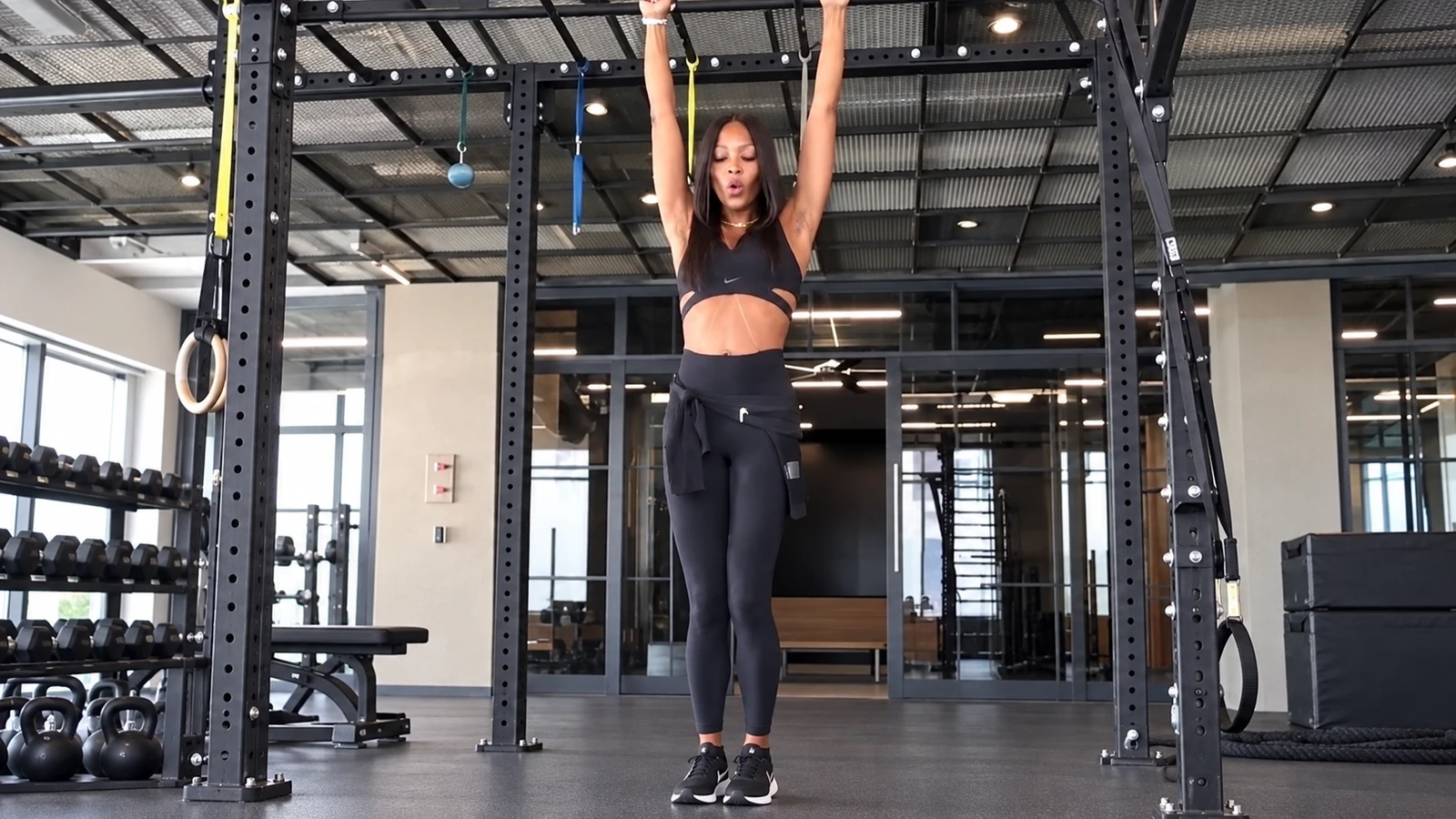

Naomi Campbell has described a routine that includes boxing, yoga, stretching, and circuit training. Her trainer Joe Holder has also discussed her use of jump rope, bodyweight work, resistance bands, TRX, weights, and drills that strengthen the hips.
The social post is therefore broadly accurate that Campbell does not rely on one kind of exercise. The larger claim that variety is her timeless secret goes too far, because appearance and aging reflect genetics, work, health care, sleep, nutrition, camera conditions, and many other factors that a workout list cannot explain.
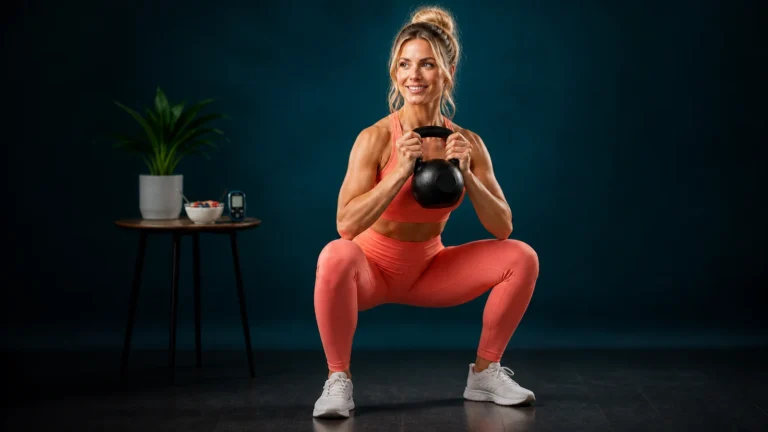
Visual note: the featured gym scene is an editorial illustration of Campbell, not a verified photograph of her training.
Campbell Said Movement Grounds Her
In a 2019 interview with W Magazine, Campbell said movement had become important in her life. She named boxing, yoga, stretching, and circuit training as parts of her daily routine and linked the work to flexibility and staying grounded while traveling.
That description is more personal than a promise to sculpt a certain body. It connects movement to the demands of a career built around travel, long shoots, runway work, and changing schedules.
During the early months of the pandemic, Campbell broadcast daily workouts online, including sessions with Holder. In a 2020 interview, she said physical activity helped her mind while normal schedules were disrupted.
Regular structure can be useful, but daily movement does not require hard training every day. A walk, mobility practice, or easy recovery session creates a very different dose from boxing intervals or loaded deadlifts.
Joe Holder Helped Her Find Training She Enjoyed
Campbell has said that she did not enjoy working out before training with Holder. That matters because a program that looks perfect on paper has little value if a person avoids it.
Holder described Campbell as someone who liked being challenged in a way that connected with her background in dance and athletics. He also used varied tools instead of keeping every session on standard cardio machines.
Enjoyment does not mean every minute feels easy. It means the activity, coaching, environment, and goal provide enough value for the person to return.
This is a better explanation for adherence than celebrity discipline alone. The right coach may help a client find movements that feel purposeful, adjust frustration, and turn training into a skill rather than a punishment.
Jump Rope and Boxing Add Conditioning
Holder said jump rope was a major part of Campbell’s training. Rope work can challenge coordination, calf and foot tolerance, rhythm, and cardiovascular fitness in a small space.
It is not automatically low impact for every body. Each landing produces repeated load, so beginners, people returning from lower-leg injuries, and those with balance concerns may need shorter intervals or a different conditioning option.
Boxing can combine footwork, trunk rotation, upper-body endurance, and repeated bursts of effort. Campbell has used both bag work and coached combinations.
Learning technique from a qualified coach matters because punching hard with poor wrist alignment or shoulder control can turn conditioning into an avoidable injury. Sparring also adds risks that are not necessary for a general fitness session.
Walking, cycling, rowing, or low-impact circuits can provide similar heart-and-lung benefits for someone who does not enjoy or tolerate rope and boxing. The modality is less important than an appropriate dose performed consistently.
Strength Work Was Part of the Mix
Reports of Campbell’s sessions include TRX rows, planks, squats, resistance-band exercises, weighted deadlifts, hand weights, and battle ropes. Holder said he often chose hip exercises seen in rehabilitation settings, such as side-lying leg lifts and clamshell variations.
Those details challenge the idea that weightlifting must mean a traditional bodybuilding split or maximal loads. Resistance can come from body weight, dumbbells, cables, suspension straps, bands, or a heavy object controlled through a useful range.
Strength work helps maintain muscle, bone, balance, and the ability to produce force. Federal guidelines recommend muscle-strengthening activity for all major muscle groups on at least two days per week for adults, alongside aerobic activity.
Campbell’s reported 105-pound deadlift is not a starting target. The useful load is the one a person can control with sound technique while leaving enough capacity to recover and train again.
Readers who want a simpler entry point can use our evidence-based full-body dumbbell guide. The principles of gradual loading apply across age and celebrity status.
Yoga and Stretching Serve a Different Purpose
Campbell has repeatedly named yoga and stretching among her preferred activities. These practices can build movement awareness, range of motion, balance, and control when they are matched to the participant.
They do not replace every benefit of progressive resistance training or aerobic work. Flexibility, strength, and cardiovascular capacity are related but distinct qualities, which is why combining methods can make sense.
More range is not always better. A person who already has very mobile joints may need control and strength within the available range rather than aggressive stretching.
Likewise, a tight sensation does not always mean a muscle must be forced longer. Pain, nerve symptoms, or a sudden loss of motion deserves assessment rather than a harder stretch.
Variety Works When the Program Still Has Structure
Changing activities can reduce boredom and distribute stress across tissues. It can also create a balanced week that includes aerobic conditioning, strength, mobility, coordination, and recovery.
Random novelty is different. If every session uses unfamiliar exercises and no movement is repeated long enough to improve, it becomes difficult to measure progress or learn technique.
A useful mixed program keeps a few anchors. The trainee may repeat a squat, hinge, row, press, carry, and chosen cardio method for several weeks while using boxing, yoga, or circuits as complementary work.
Our review of strength and endurance training together explains how both qualities can improve when weekly volume and recovery are managed. The concern is not that cardio automatically destroys strength, but that too much poorly scheduled fatigue can reduce training quality.
Recovery is the part of mixed training that social clips rarely show. Rope work can leave the calves sore, boxing can fatigue the shoulders, and a hard circuit can reduce the quality of strength work the following day. Placing demanding sessions back to back may be manageable for an experienced athlete, but it is not required for general health.
A simple rule is to watch performance rather than chasing constant soreness. If loads, coordination, sleep, or motivation decline for several sessions, the week may need less volume, easier conditioning, or another recovery day.
The article on cardio, strength, and heart health adds why adults generally benefit from including both rather than treating one as the only valid path.
A Realistic Week Inspired by the Principles
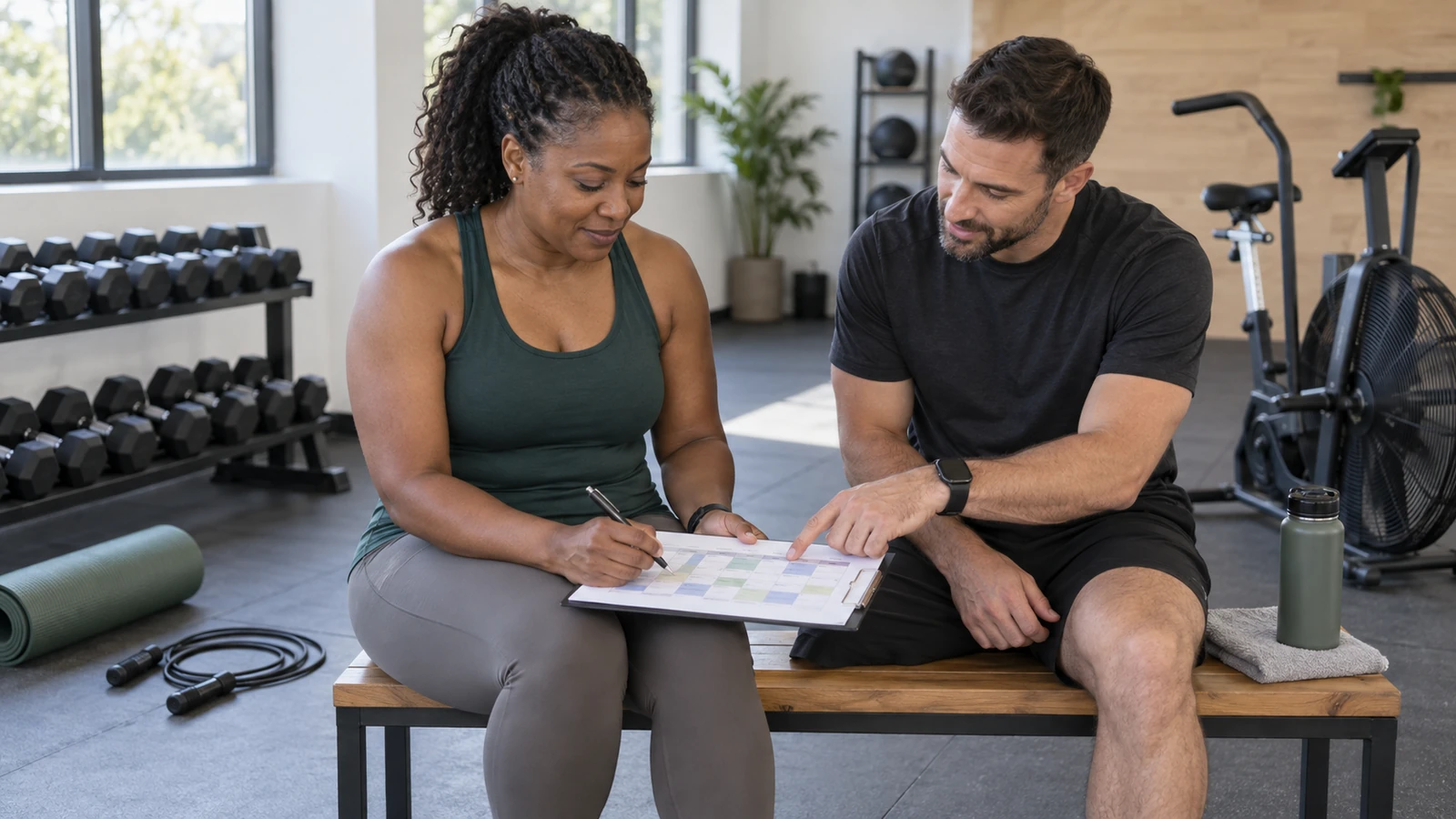
- Day one: Full-body strength using a squat, row, press, hinge, and trunk exercise.
- Day two: Easy aerobic work plus ten to twenty minutes of mobility or yoga.
- Day three: Rest or light walking.
- Day four: A second full-body strength session with small progressions.
- Day five: Coached boxing, a low-impact interval session, or short jump-rope intervals if the joints tolerate them.
- Weekend: One enjoyable activity and at least one lower-load recovery day.
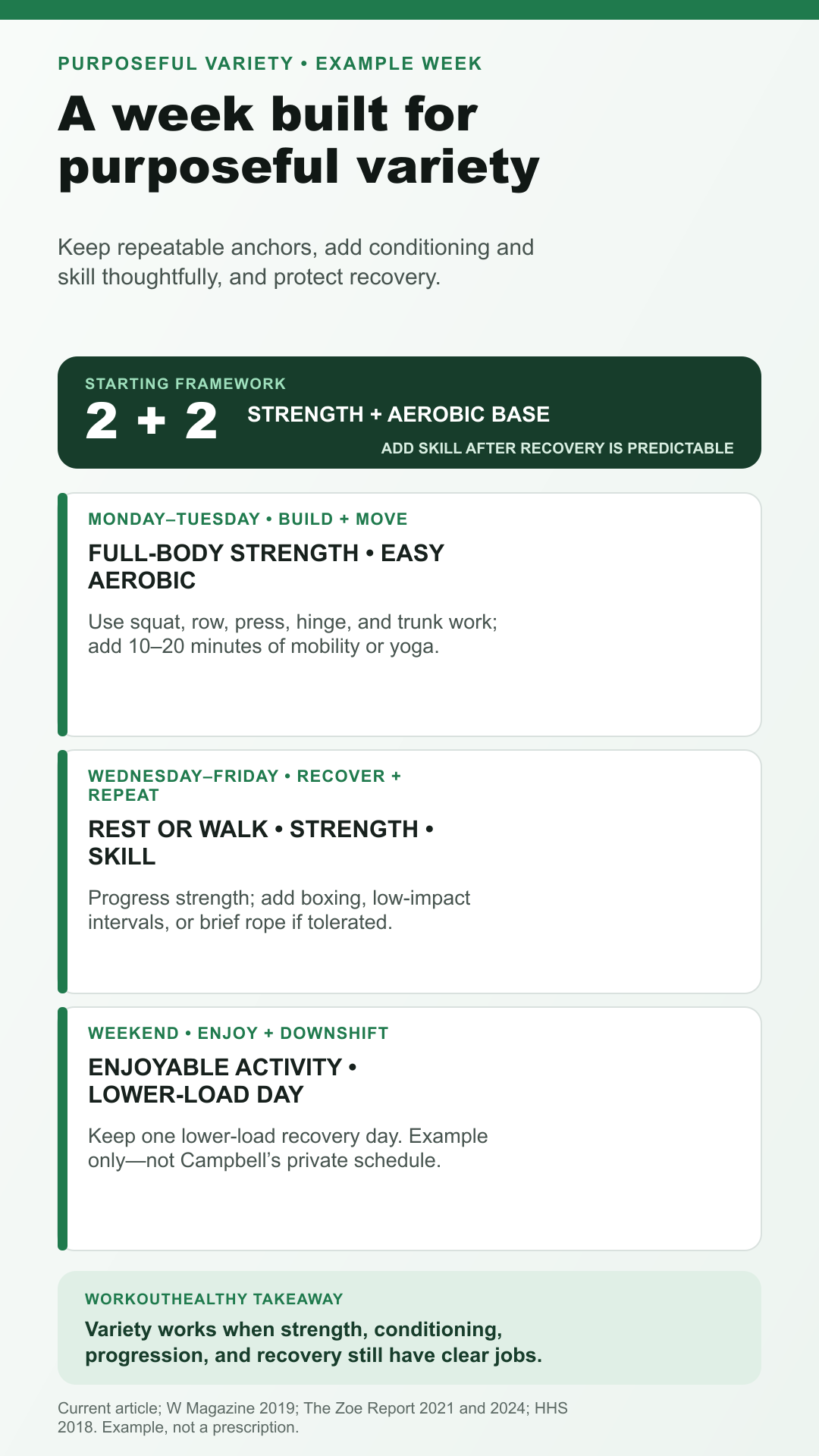
This is only an example, not Campbell’s private schedule. A new trainee could begin with two strength days and two walks, then add a skill session after recovery is predictable.
Someone with a physically demanding job may need less gym volume than a person who sits most of the day. Sleep, soreness, joint symptoms, and performance should guide adjustments.
What the Celebrity Routine Cannot Prove
A public workout clip cannot establish body-fat percentage, metabolic health, hormone status, or the cause of someone’s appearance. It also does not show the full training year, missed sessions, medical care, or edited-out rest.
The claim that Pilates protects Campbell’s body is possible as a general training goal, but no public evidence shows that one modality prevents injury for her. Pilates can train control, trunk endurance, and movement skill, while injury risk depends on exposure, recovery, technique, and individual history.
Similarly, weightlifting does not produce one guaranteed kind of definition. Visible muscle depends on muscle size, body composition, genetics, lighting, and styling.
Celebrity content becomes useful when it offers ideas, not when it turns one person’s appearance into proof of a formula.
The Best Lesson Is Purposeful Variety
Naomi Campbell’s training mix is not invented. Her own interviews and her trainer’s comments support a blend of boxing, jump rope, circuits, strength work, yoga, stretching, and bodyweight exercise.
The better lesson is not to collect every method at once. Choose a few activities that cover strength, aerobic fitness, and movement quality, then repeat them long enough to learn and progress.
Variety can keep training interesting and spread the workload, while structure shows whether the body is adapting. Recovery keeps both useful.
Campbell found forms of movement she wanted to return to, and that may be the most transferable part of the story. A sustainable routine is not the one with the most impressive list; it is the one that fits the person and keeps producing useful capacity.
Get the next evidence check.
Five practical fitness stories worth your time, every Friday.
One email a week. No product pitches. Unsubscribe in one click.
References
- McCarthy, L. (2019). Naomi Campbell on movement, travel, and her training routine. W Magazine.
- Buckman, A. (2021, updated 2024). Naomi Campbell’s go-to workouts and comments from Joe Holder. The Zoe Report.
- Wally, M. (2020). Naomi Campbell on her daily live workouts and staying active during quarantine. W Magazine.
- U.S. Department of Health and Human Services. (2018). Physical Activity Guidelines for Americans, second edition.
Medical disclaimer: This article is for general information only and is not medical advice. If you have an injury, ongoing pain, or a medical condition, talk to a doctor or physical therapist before you change how you train or eat.