
A War Machine Who Keeps Showing Up
Don Cheadle has spent more than a decade playing James Rhodes, known as War Machine, in the Marvel Cinematic Universe.
He first took on the role in 2010’s Iron Man 2 and has returned to it in nearly a dozen films and shows since then.
Cheadle was born in November 1964, which makes him 61 years old in 2026.
That timeline matters, because War Machine is not a role built for standing still.
The character fights, flies, and takes physical hits on screen, and Cheadle has kept playing him well past the age when many actors move away from action roles.
An upcoming film called Armor Wars is reportedly still in development, which would keep him in that world even longer.
Cheadle’s career includes plenty of other physically active work too, from Ocean’s Eleven’s fast paced heist sequences to Hotel Rwanda’s demanding dramatic role.
He has also directed and produced projects, work that comes with its own long hours and physical demands on set.
Very few actors in their 60s are still signing on for roles that require fight training, stunt coordination, and repeated physical takes, in the same way few 63 year olds still walk a swimsuit runway the way Christie Brinkley did in her own well documented return to modeling.
That alone makes his approach to staying capable worth a closer look.
The Numbers Behind Age Related Muscle Loss
Muscle loss with age has an actual name in medical research: sarcopenia.
Studies generally estimate that adults lose somewhere between three and eight percent of their muscle mass per decade after age 30, with the rate speeding up after age 60.
Strength tends to decline even faster than muscle size does, since the nervous system’s ability to recruit muscle fibers also weakens with age.
That decline is not inevitable in the way it is often described.
Consistent resistance training can slow it dramatically, and in many people it can partially reverse it, even starting later in life.
That is the biological backdrop behind why Cheadle’s reported shift toward smarter, more sustainable training matters more than it might sound at first.
Cardiovascular fitness also declines with age, but resistance training and cardio work together rather than competing for the same limited time.
A well rounded plan for someone in their 60s typically blends strength work with some form of steady aerobic activity, since heart health and muscle health both matter for staying capable long term.
A Different Kind of Training Goal
Cheadle has talked publicly about staying capable for physical roles without training the exact same way he might have in his 30s or 40s.
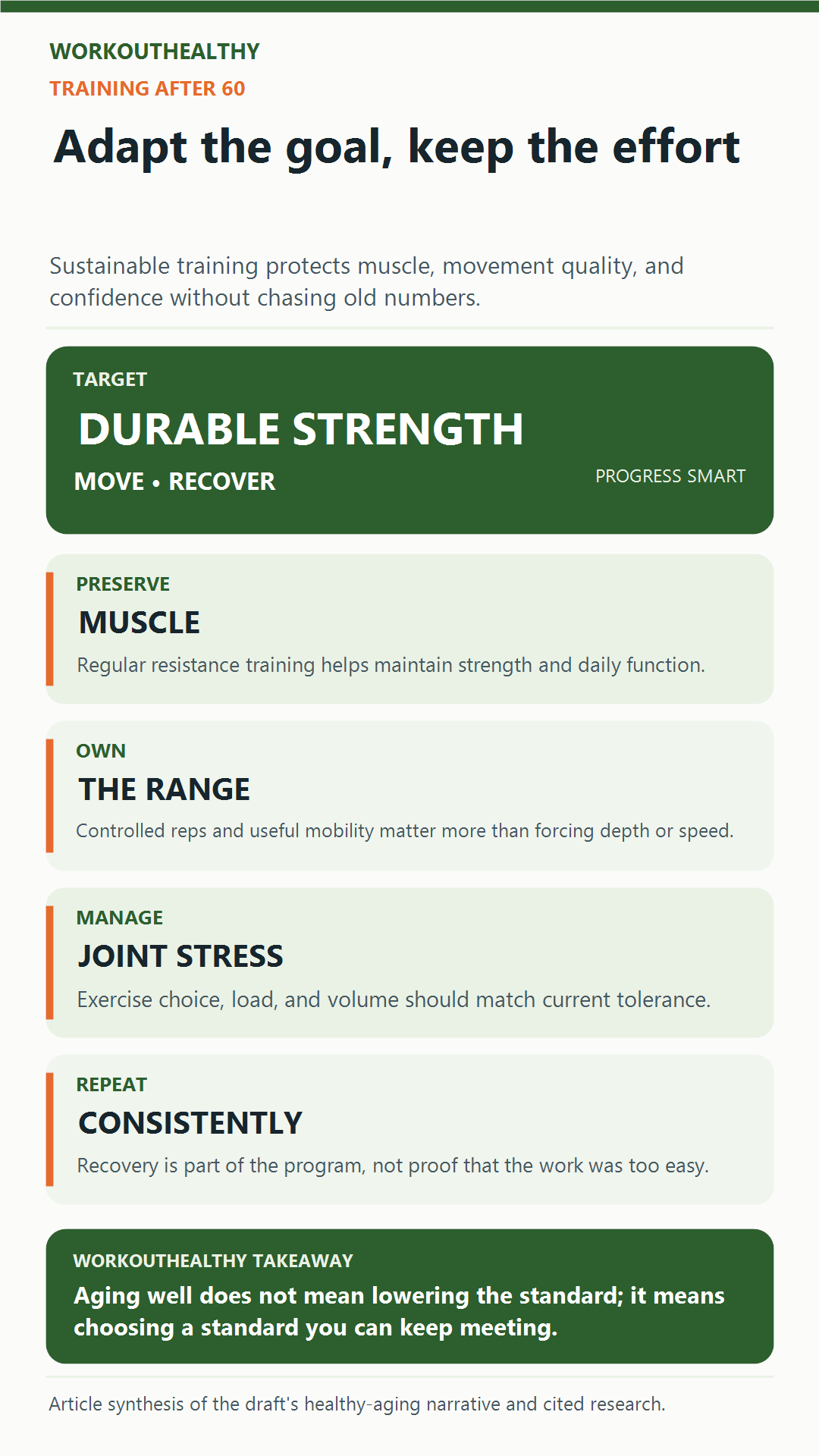
The shift he describes moves away from chasing maximum intensity and toward training that holds up over years, not just for one shoot.
That means paying closer attention to recovery time between hard sessions.
It also means prioritizing movement that keeps his joints working well, rather than always pushing for a new personal best.
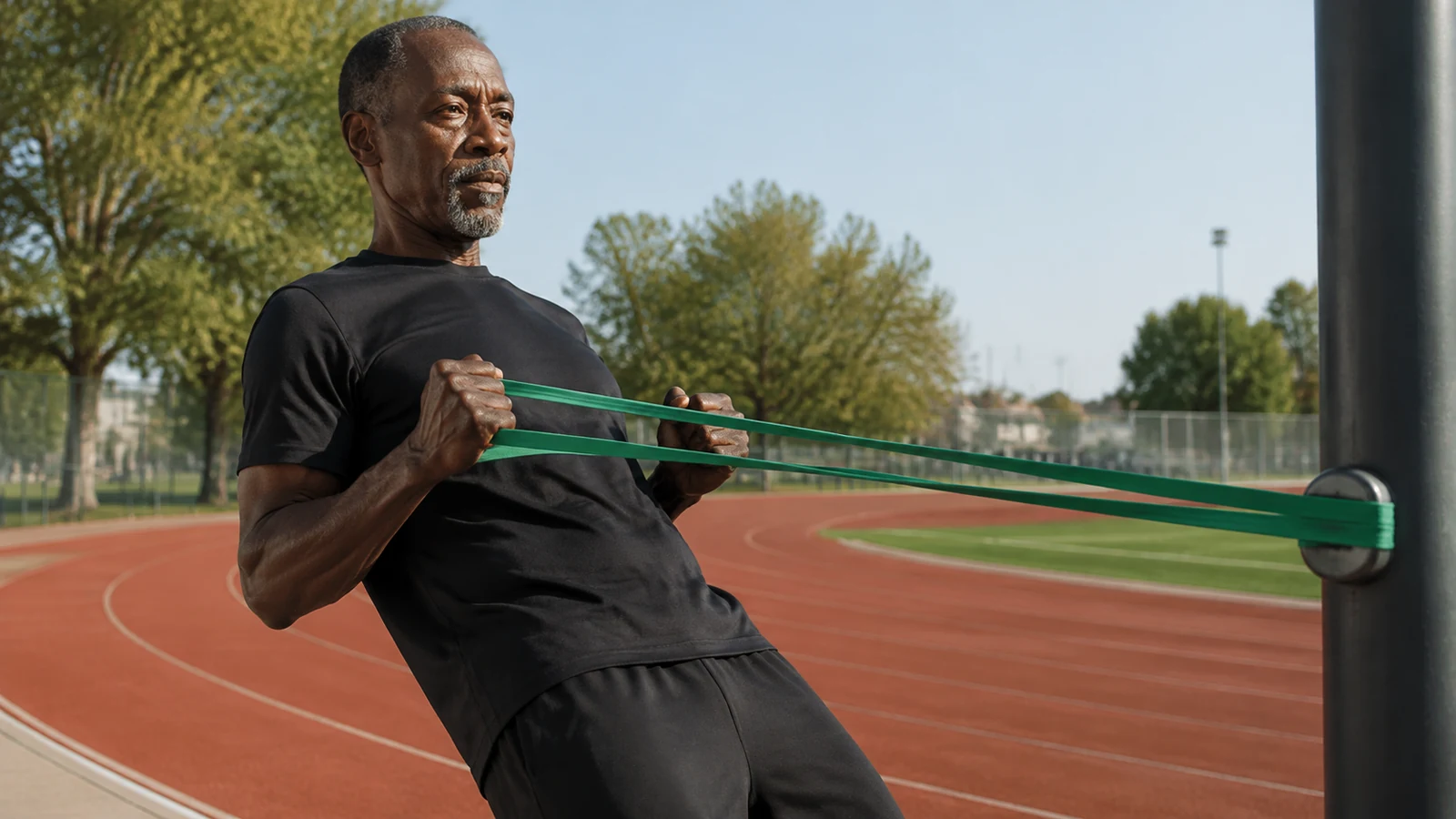
He has also described resistance training as a steady part of his routine, not something reserved for a specific role.
None of this means Cheadle has slowed down his effort.
It means the target he is training toward has changed, from doing as much as possible to doing as much as his body can actually sustain long term.
Why This Shift Makes Sense Physiologically
People naturally lose muscle mass and strength as they age.
That process tends to speed up after about age 50 if nothing is done to counter it.
Resistance training is one of the few tools that reliably slows or reverses that decline.
But the way it works best does change with age.
A 2016 meta-analysis by Csapo and Alegre, published in the Scandinavian Journal of Medicine and Science in Sports, compared moderate loads to heavy loads in older adults.
Both approaches improved muscle mass and strength, but heavier loads produced somewhat larger strength gains overall.
The catch is that heavier loads also demand more from the joints and the nervous system.
That is exactly where recovery becomes the real limiting factor, more than motivation or effort.
The muscle you can build after 50 depends less on how hard one session was and more on how consistently you can keep showing up for the next one.
What the Research Says About Training Older Adults
The National Strength and Conditioning Association published a formal position statement in 2019, led by Fragala and colleagues in the Journal of Strength and Conditioning Research.
It laid out how resistance training should be adjusted for older adults specifically.
The statement recommends progressive resistance training that includes both moderate and heavier loads.
It also recommends building programs around movements that mimic real daily tasks, like pushing, pulling, and carrying.
The statement stresses that recovery between sessions needs to be planned on purpose, not treated as an afterthought.
A separate 2018 review by Dupuy and colleagues in Frontiers in Physiology looked specifically at recovery techniques after hard training.
Active recovery methods, including light movement and stretching, generally outperformed doing nothing at all for reducing soreness and fatigue.
Put together, this research lines up closely with the pattern Cheadle describes.
Real strength work, paired with real attention to how the body bounces back.
What This Evidence Does Not Prove
None of this research is about Don Cheadle specifically.
No study can confirm the exact routine behind any single celebrity’s physique.
The research also cannot promise that any particular training split will keep someone camera ready at 61.
Genetics, access to trainers and physical therapists, and years of accumulated training experience all play a role a general study cannot capture for one individual.
What the research does support is the general direction Cheadle describes.
Heavier compound lifts paired with deliberate recovery is a well supported strategy for maintaining strength later in life, even without a specific guaranteed outcome.
How This Compares to General Guidance
The American College of Sports Medicine and most major health bodies recommend at least two days a week of resistance training for adults of any age.
That training should work all the major muscle groups, not just a favorite few.
For adults over 60, guidance shifts slightly toward including balance and mobility work alongside strength training.
Falls become a bigger health risk with age, which is part of why that balance work matters more over time.
Cheadle’s described approach, compound lifts plus mobility work plus attention to recovery, tracks closely with that general guidance rather than departing from it.
That is a meaningful point, because it means the routine attributed to him is not some special Hollywood secret.
It is closer to the same advice a sports medicine doctor might give any active older adult.
Common Mistakes People Make Training Past 50
One common mistake is treating every workout like a competition with a younger version of yourself.
That mindset usually leads to overtraining and more soreness than progress.
Another mistake is dropping resistance training altogether once joints start feeling stiffer.
The research actually points the other way. Strength training tends to protect joints rather than wear them out when done with proper form.
A third mistake is skipping warm ups, which matter more as connective tissue becomes less elastic with age.
People also tend to under eat protein as they get older.
Muscle maintenance requires more dietary protein per pound of body weight in older adults than in younger ones.
Many people also ignore sleep as a training variable.
Poor sleep directly undermines both strength gains and recovery at any age.
Another overlooked mistake is training the same few movements forever without any variation.
Small changes in grip, stance, or range of motion can keep joints healthier over years of training than repeating the exact same pattern indefinitely.
People also frequently ignore balance and single leg work, even though falls become a leading cause of injury with age.
A Practical Way to Train Like This
Start with two to three resistance training sessions a week.
Build them around compound movements such as squats, presses, rows, and hip hinges that use several muscle groups at once.
Warm up for five to ten minutes with light cardio and dynamic stretching before lifting anything heavy.
Choose weights that challenge you within the last two or three reps of each set, rather than always maxing out.
Add ten minutes of mobility work, focused on hips, shoulders, and ankles, on both training days and rest days, an approach that overlaps with what research on Pilates and mobility training in older adults has found for improving balance and joint control.
Schedule at least one full rest day between hard sessions that target the same muscle group.
Treat that rest day as part of the plan, not as a day off from progress.
Track how you feel the next morning, not just how much weight moved.
Adjust the following session’s intensity based on that feedback.
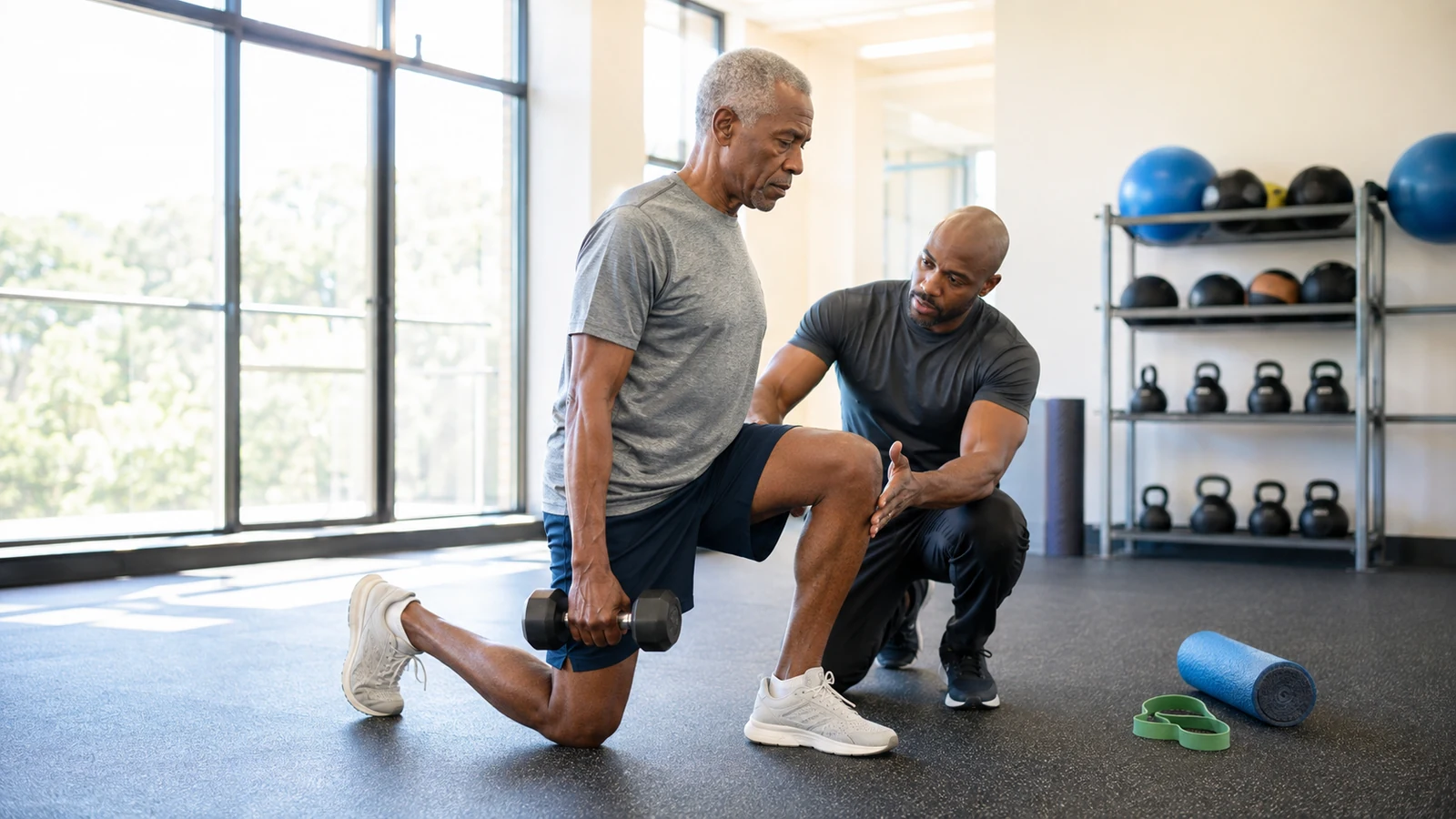
If you are over 50 and new to resistance training, or you have any existing joint or heart conditions, talk to a doctor or physical therapist before starting a new lifting program, and consider whether working with a personal trainer for your first several sessions would help you build safe habits early.
They can help build a plan around your specific health history.
Consider a single leg balance exercise, like a step up or a split stance hold, once or twice a week to keep coordination and stability sharp.
Reassess your program every eight to twelve weeks, and adjust exercises or loads based on how your joints and energy have responded, not just on a fixed schedule.
References
- Csapo, R., & Alegre, L. M. (2016). Effects of resistance training with moderate vs heavy loads on muscle mass and strength in the elderly: A meta-analysis. Scandinavian Journal of Medicine & Science in Sports, 26(9), 995 to 1006. https://doi.org/10.1111/sms.12536
- Fragala, M. S., Cadore, E. L., Dorgo, S., Izquierdo, M., Kraemer, W. J., Peterson, M. D., & Ryan, E. D. (2019). Resistance training for older adults: Position statement from the National Strength and Conditioning Association. Journal of Strength and Conditioning Research, 33(8), 2019 to 2052. https://doi.org/10.1519/JSC.0000000000003230
- Dupuy, O., Douzi, W., Theurot, D., Bosquet, L., & Dugué, B. (2018). An evidence based approach for choosing post exercise recovery techniques to reduce markers of muscle damage, soreness, fatigue, and inflammation: A systematic review with meta-analysis. Frontiers in Physiology, 9, Article 403. https://doi.org/10.3389/fphys.2018.00403
This article is for general educational purposes and is not medical advice. Talk with a qualified healthcare provider before starting any new exercise program, especially if you have an existing health condition or are new to resistance training.