
For deadlift alternatives at home, first choose what you want to replace: a hip hinge, hamstring work, glute work, grip practice or the skill of lifting a load from the floor. A dumbbell Romanian deadlift is a practical loaded hinge, while a supported single-leg hinge, floor bridge and secure-band pull-through cover different pieces with different equipment.
None duplicates a heavy barbell floor pull, and none is automatically safe for a painful back. The equipment-and-goal guide below starts with home choices, then explains when gym options such as trap-bar deadlifts and rack pulls make sense.
Choose a home deadlift alternative by equipment and goal
| What you have | Try | Best match | What it does not replace |
|---|---|---|---|
| A pair of dumbbells | Dumbbell Romanian deadlift | Loaded hip hinge and hamstring practice | Starting a heavy bar from the floor |
| One dumbbell and a stable support | Supported single-leg Romanian deadlift | One-side-at-a-time hinge with manageable balance | Heavy bilateral pulling or grip loading |
| A clear floor | Floor glute bridge | Hip extension with no purchased weight | Hamstring loading through a long hinge range |
| A sturdy bench or stable low platform | Supported hip thrust | More hip-extension range and optional load | Floor-start and grip skills |
| A band and a verified low anchor | Band pull-through | A hinge against resistance from behind | Heavy deadlift strength; anchor safety must be checked |
Start with the setup you can perform consistently, then select a load you can control. An unweighted bridge may teach hip extension, but it cannot provide the same resistance as a heavy deadlift without later progression.
How to do the five home options
1. Dumbbell Romanian deadlift
Stand with the weights beside your thighs and a comfortable bend in the knees. Move the hips back while the weights stay close, stop before your back position changes, and stand by driving through the floor.
This starts from standing, so it removes the floor-start problem while preserving a loaded hinge. In a 21-man laboratory comparison, conventional and Romanian deadlifts produced different muscle activity and joint demands; that does not prove either one causes fewer injuries.
2. Supported single-leg hinge
Keep one hand on a stable counter or rail, put most weight on one leg, and send the hips back as the other foot moves lightly behind. Use a kickstand stance with the rear toes on the floor if balance distracts from the hinge.
A light dumbbell can add resistance after the motion is repeatable. The support lets you train the hip pattern without pretending that wobbling is the main goal.
3. Floor glute bridge
Lie on your back with knees bent and feet planted, lift the hips to a comfortable height, then lower with control. Begin without a weight; if you later add resistance, keep the load stable and avoid forcing the lower back into an exaggerated arch.
This is an easy-equipment hip-extension choice when floor access is comfortable. It is less similar to a deadlift than an RDL because it does not train a long standing hinge or grip.
4. Supported hip thrust
Place the upper back against a stable bench, keep feet planted and move through a comfortable hip-extension range. Check that the bench will not slide, and begin without a bar before considering added load.
A nine-week randomized trial in untrained college-age adults found similar average glute growth from hip-thrust and squat programs, with strength gains specific to the trained exercise. It compared those two programs, not hip thrusts with deadlifts, and it does not make this home setup a back-pain treatment.
5. Band pull-through
Only use a band if the low anchor is designed and secured for pulling; do not improvise with a loose door or furniture. Face away from the anchor, hold the band between the legs, hinge back and stand without jerking it.
The band pulls from behind rather than straight down, so the resistance feels different from a dumbbell or barbell. If the anchor or band condition is uncertain, choose a dumbbell RDL or bridge instead.
What would you do with zero equipment?
Practice the hip hinge without a load and use floor bridges if they are comfortable. Those choices teach a position and create some effort, but progressive strength eventually needs enough resistance, a harder variation or another suitable implement.
A stable chair can help you learn to sit back and stand, though a chair squat is more knee-dominant than a Romanian deadlift. Do not label every lower-body exercise a full deadlift replacement simply because it trains the legs.
Compare the home options with the gym alternatives
A gym can offer more load, a floor-start setup or a different training emphasis. Use the same goal question before choosing an implement.
| Gym option | Why it may fit | Limit of the evidence |
|---|---|---|
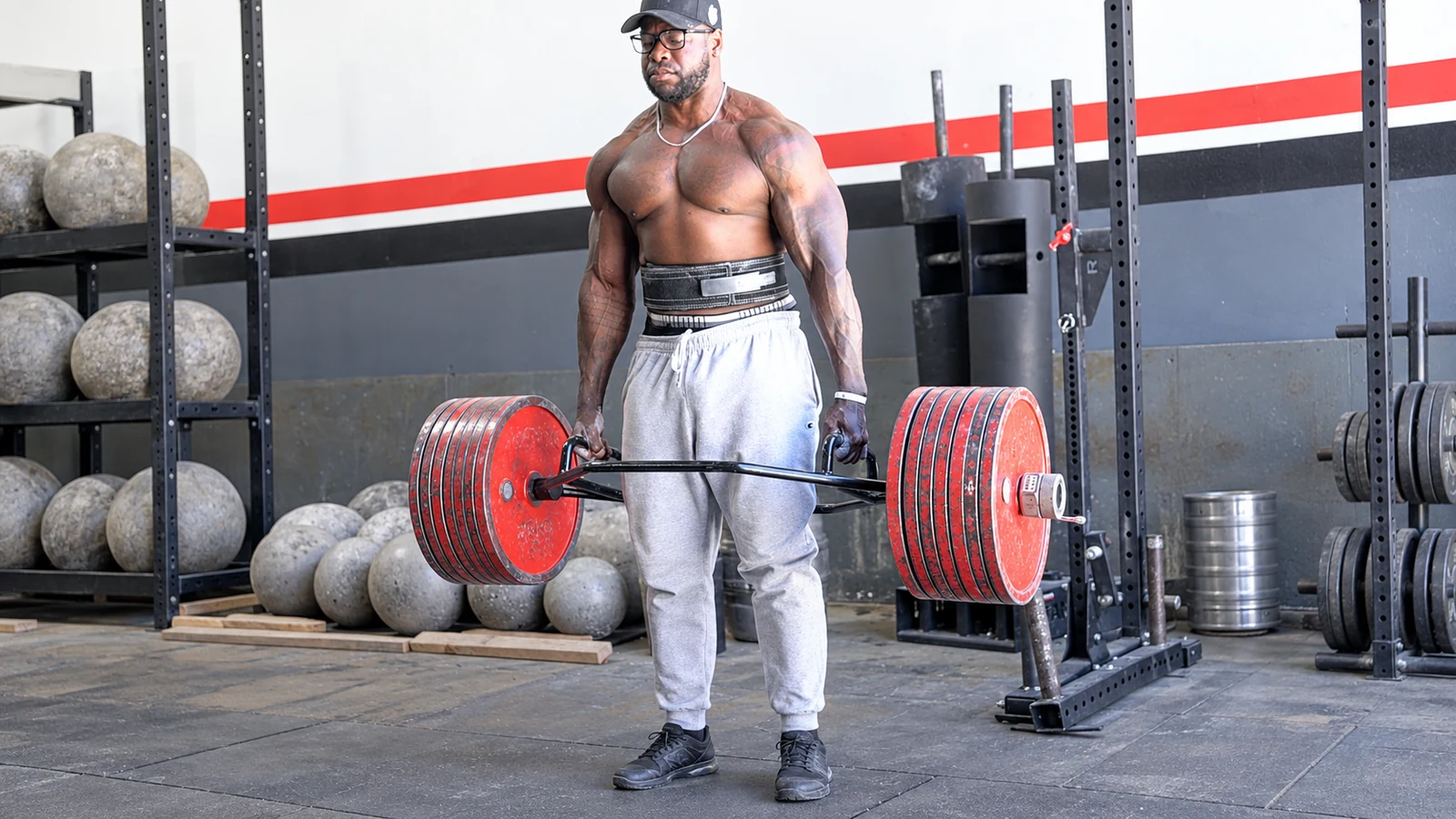
| Trap-bar deadlift | Centered handles and a floor pull that uses both hip and knee extension. | In 19 male powerlifters, a hex bar changed joint moments, with lower measured lumbar moment and higher knee moment than a straight bar; this was not an injury trial. |
| Rack pull | Shorter range to practice a top-half pull or lockout. | It is a different range and can invite heavy loads; shorter is not automatically safer. |
| Farmer’s carry | Loaded grip, trunk and walking practice. | It does not replace a deep hip hinge or floor-start skill. |
| Barbell hip thrust | Progressive hip-extension loading. | Glute training is not the same as complete deadlift transfer or back-pain treatment. |
In the trap-bar biomechanics study, participants lifted a heavier one-repetition maximum with the hex bar, and peak force, velocity and power differed at tested loads. These short-term mechanical measures help compare exercises, but they cannot tell you which variation prevents injury over years of training.
If your back hurts, make a symptom decision before an exercise swap
Back pain is a symptom, not a diagnosis, and a new implement does not automatically remove it. A lighter load, shorter range or different movement may be reasonable to discuss with a clinician or physical therapist when pain persists.
The NHS back-pain guide advises emergency care for back pain with new bladder or bowel changes, loss of feeling around the genitals or anus, or pain, tingling, weakness or numbness in both legs. Sudden severe worsening or feeling generally unwell also calls for prompt medical advice.
For ordinary training discomfort, note the exact movement, range and load that provoke symptoms instead of assuming a trap bar or hip thrust is universally protective. Our hip-hinge setup guide offers more movement questions, but it cannot diagnose a cause of pain.
A simple home progression without false equivalence
The example below is an editorial practice sequence, not a trial-tested dose or rehabilitation protocol. If you already train, enter at the step that matches your skill rather than spending a fixed number of weeks on each stage.
| Step | Example | What earns the next step |
|---|---|---|
| Learn the hinge | Unweighted hip hinge or kickstand hinge with support. | You can repeat the movement without balance or trunk position changing. |
| Add a manageable load | Dumbbell Romanian deadlift through a comfortable range. | Repetitions stay similar from first to last and the next session remains tolerable. |
| Progress one variable | Add a repetition, a small load increase or a second set. | The change serves your goal without escalating symptoms or sacrificing control. |
| Revisit the floor pull if desired | Practice a lighter conventional or trap-bar start with appropriate equipment. | You can rebuild the specific skill instead of assuming home-hinge strength fully transfers. |
Keep a consistent log of the exercise version, load, repetitions, range and any symptoms. The training-log guide explains how to use those notes, while the complete-program audit can show whether swapping one deadlift leaves another training gap.
The 2026 ACSM guidance for healthy adults emphasizes regular strength training and individualization; it does not require a deadlift or a particular alternative. A useful replacement lets you train your chosen quality and return for the next planned session.
Bottom line
For deadlift alternatives at home, choose a dumbbell RDL for a loaded hinge, a supported single-leg hinge for unilateral control, or a bridge or thrust for glute-focused hip extension. A secure-band pull-through is another option, while trap bars, rack pulls and carries remain useful gym choices for different goals.
The best substitute preserves the part of the deadlift you care about and fits your equipment and current tolerance. No alternative guarantees a painless back or copies every benefit of a heavy barbell floor pull.
References
- Lee S, et al. Conventional versus Romanian deadlift muscle activity and kinetics. 2018 laboratory comparison in 21 men.
- Swinton PA, et al. Straight versus hexagonal barbell deadlift biomechanics. 2011 study in 19 male powerlifters.
- Plotkin DL, et al. Hip thrust and squat training effects. 2023 randomized nine-week trial in untrained college-age adults.
- American College of Sports Medicine. 2026 resistance training guidelines summary. Individualization and regular participation.
- NHS. Back pain. Symptoms requiring urgent assessment.
Medical disclaimer: This article is general product information, not medical advice. The equipment described here is not a treatment for any condition. If you have an injury, ongoing pain, or a medical condition, talk to a doctor or physical therapist before using any of it.